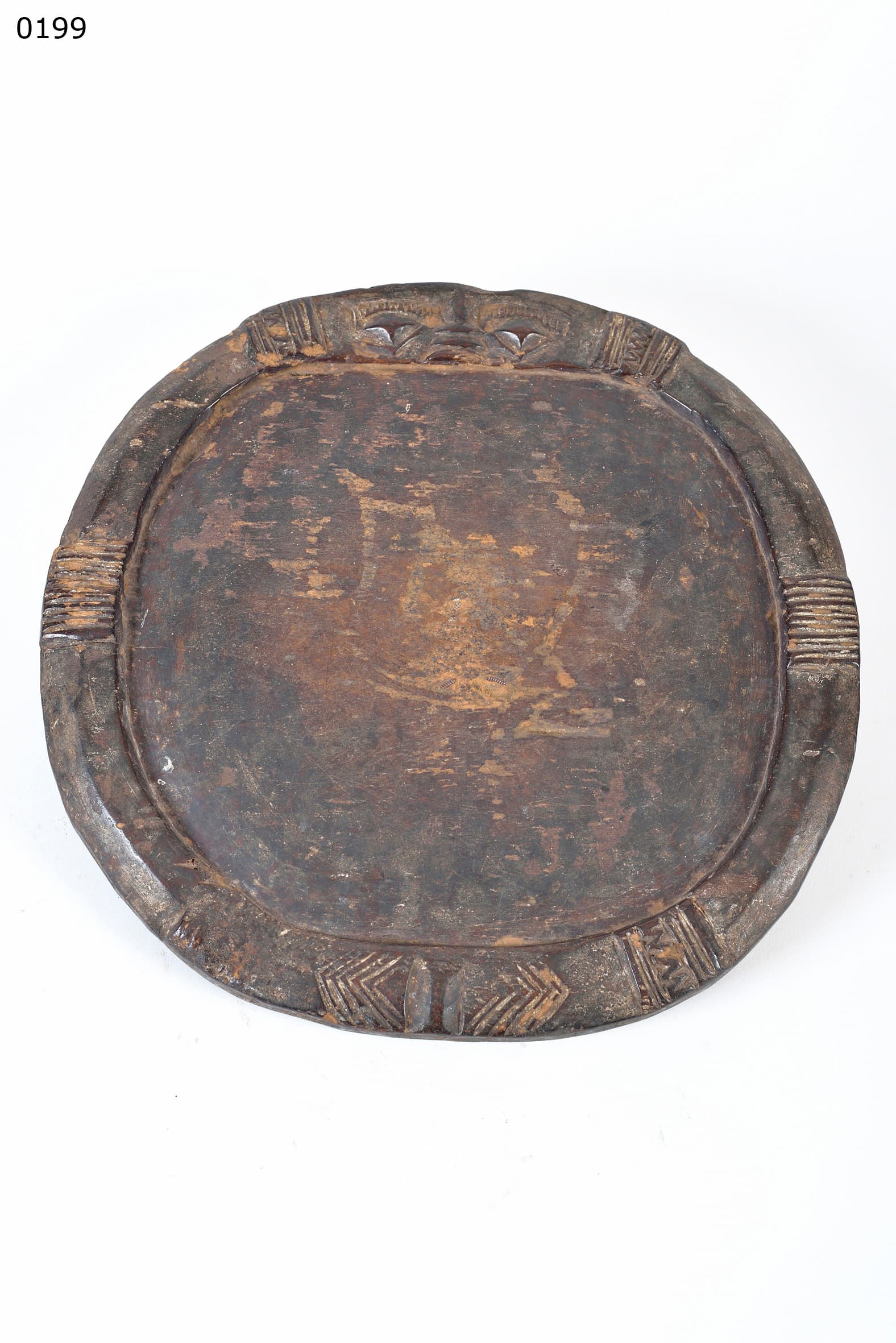
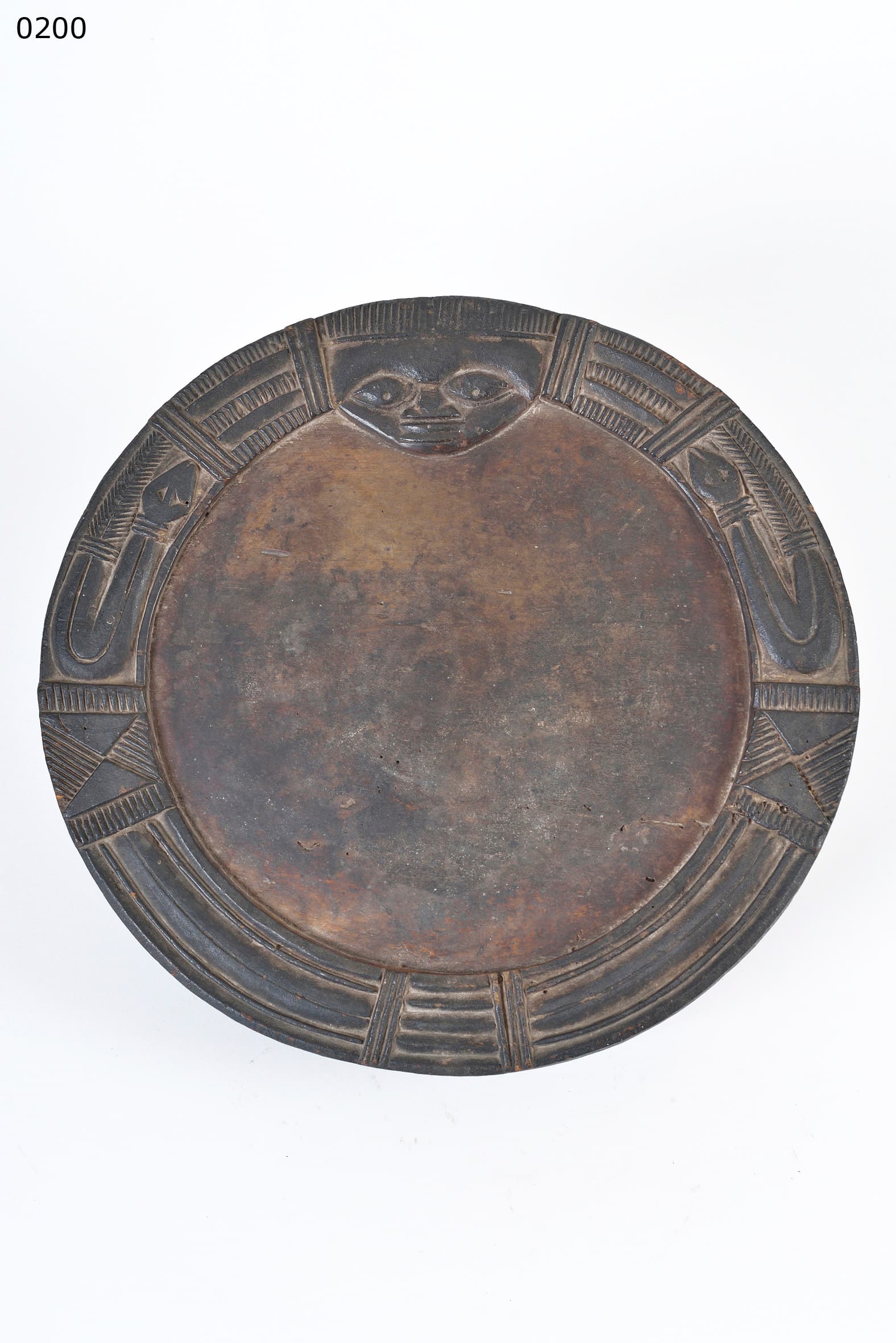
A highly realistic Yoruba Gelede mask (1st half 20th C., 29 cm) from Nigeria — full naturalistic lips, wide pierced eyes, classical Yoruba scarification marks, and surmounted by a complex, voluminous coiffure constructed from thick woven cords of actual hair / fibers, the wood bearing a deep polished dark brown patina. Published in the Kunsthaus Zürich 1970 catalogue by Elsi Leuzinger (p. 177), accompanied by a Künzi factsheet.
1. Gelede realism and mixed media
The Yoruba Gelede masquerade tradition honors the spiritual power of women — and this mask represents a highly developed expression of that aesthetic.
- Realistic Features: Smooth sweeping planes of the face, precise tribal marks on cheeks and forehead, and a serene expression are masterfully executed.
- Organic Hair Coiffure: The use of a massive woven cap of actual hair or organic fiber elevates the mask from a mere carving to a strikingly lifelike mixed-media entity — a rare trait in standard Gelede masks.
2. Placating "our mothers"
The Gelede festival is an elaborate social mechanism designed to appease, honor, and entertain Awon Iya Wa ("Our Mothers") — the collective term for female ancestors, elderly women, and female deities possessing the power of witchcraft (aje).
- Head-Top Performance: The masks are worn flat on top of the dancer's head, angled down toward the audience.
- Flattery as Strategy: By portraying women with grace, beauty, and elaborate high-status hairstyles, male dancers flatter these powerful female forces — ensuring they use their potent spiritual energy for the community's fertility and agricultural success rather than its destruction.
3. Documented provenance and exhibition history
Beyond its visual qualities, this mask is accompanied by notable documentation.
- Leuzinger / Kunsthaus Zürich 1970: Published in the Kunsthaus Zürich catalogue in 1970 (p. 177) by scholar Elsi Leuzinger, and accompanied by a Künzi factsheet — placing it in the context of mid-20th-century European institutional collecting.
- Pre-Exhibition Active Life: The deep lustrous patina on the wood — achieved through palm oil application and ceremonial friction — is consistent with an active life before its 1970 exhibition.
Summary
Featuring realistic carving, a rare organic hair coiffure, and a documented publication history, this Gelede mask is a significant work of Yoruba art, notable for its exhibition record.
Written with AI assistance from the collection appraisal, object photography and our own research; editorially reviewed. Mistakes are possible — corrections are welcome. How we work →