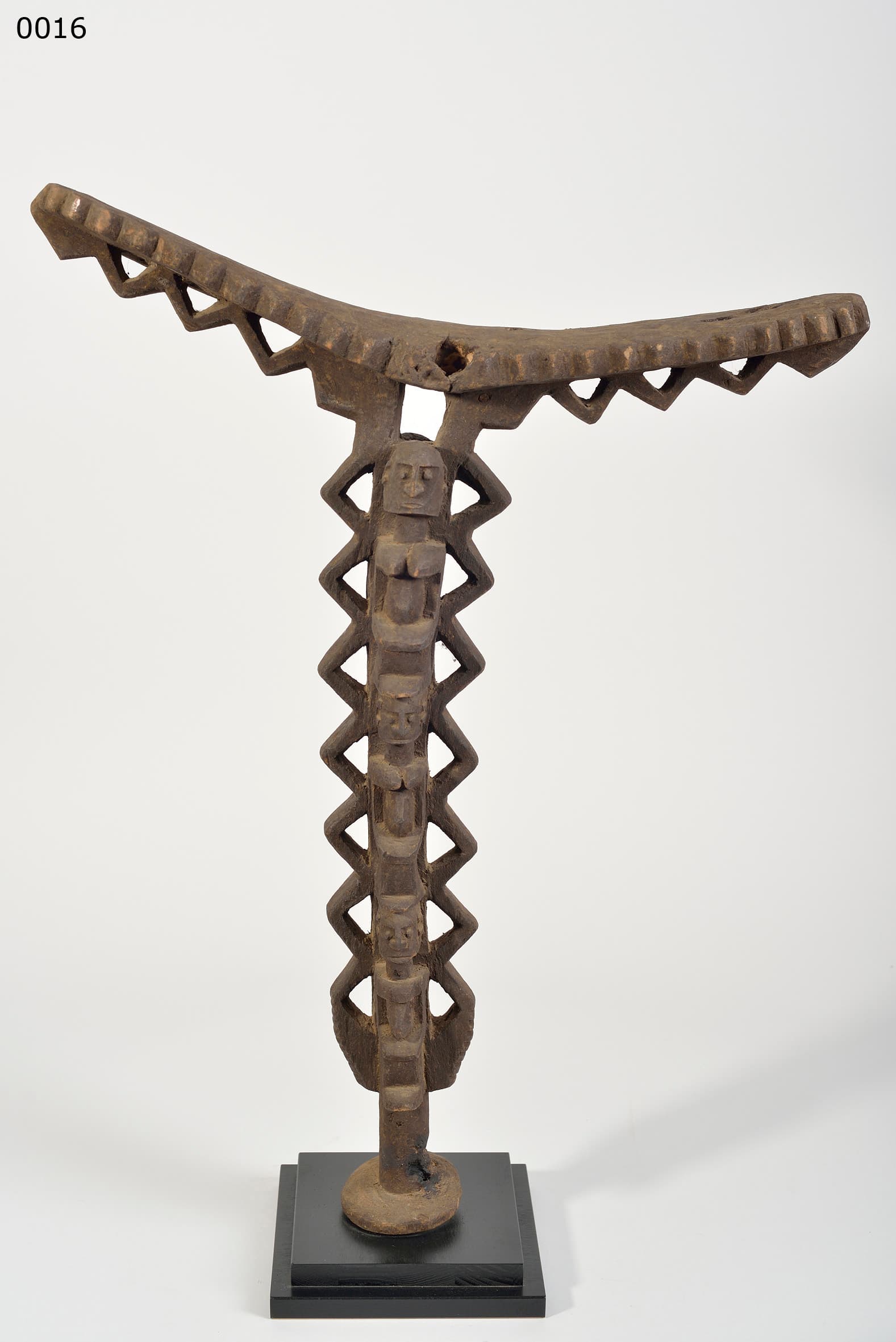
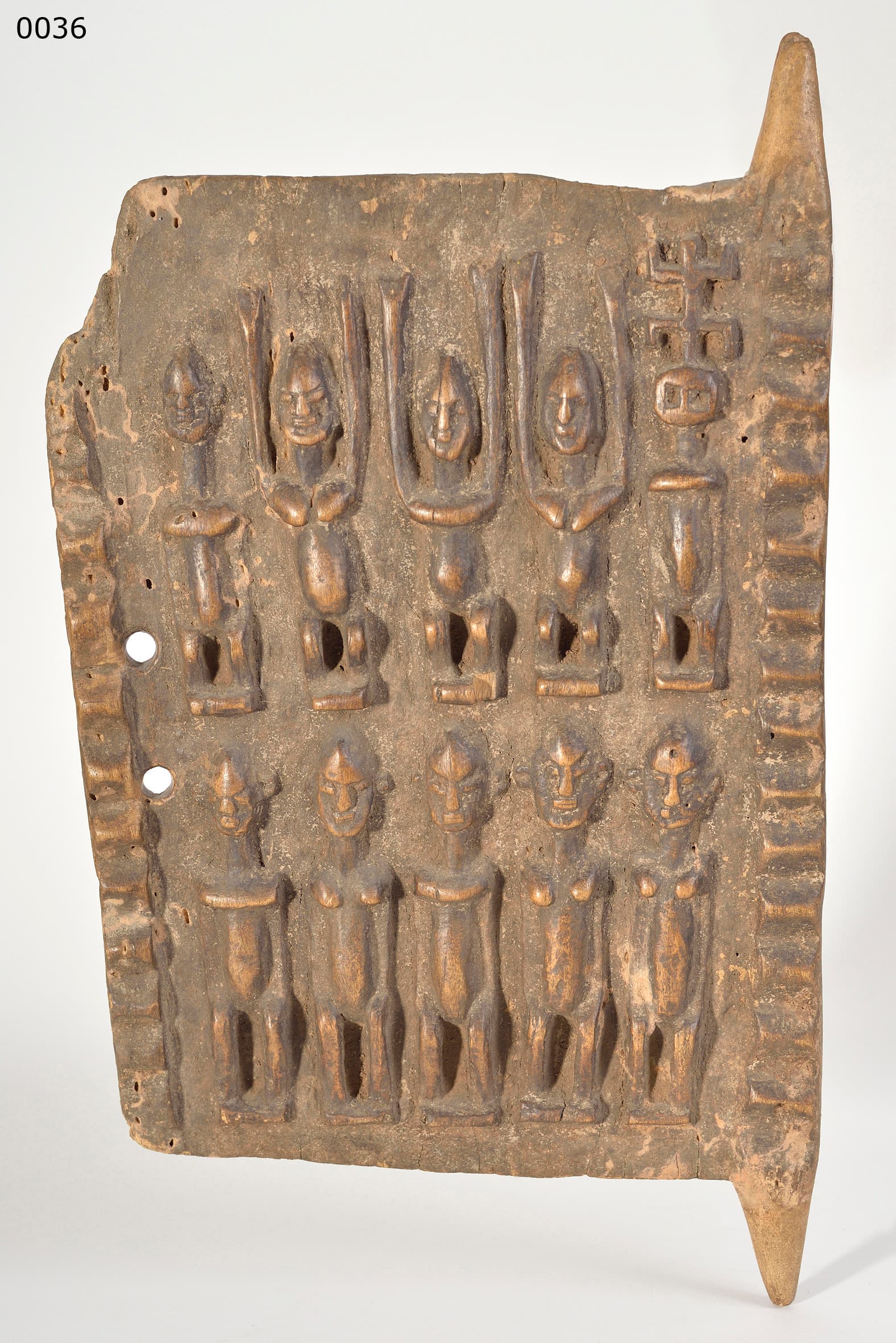
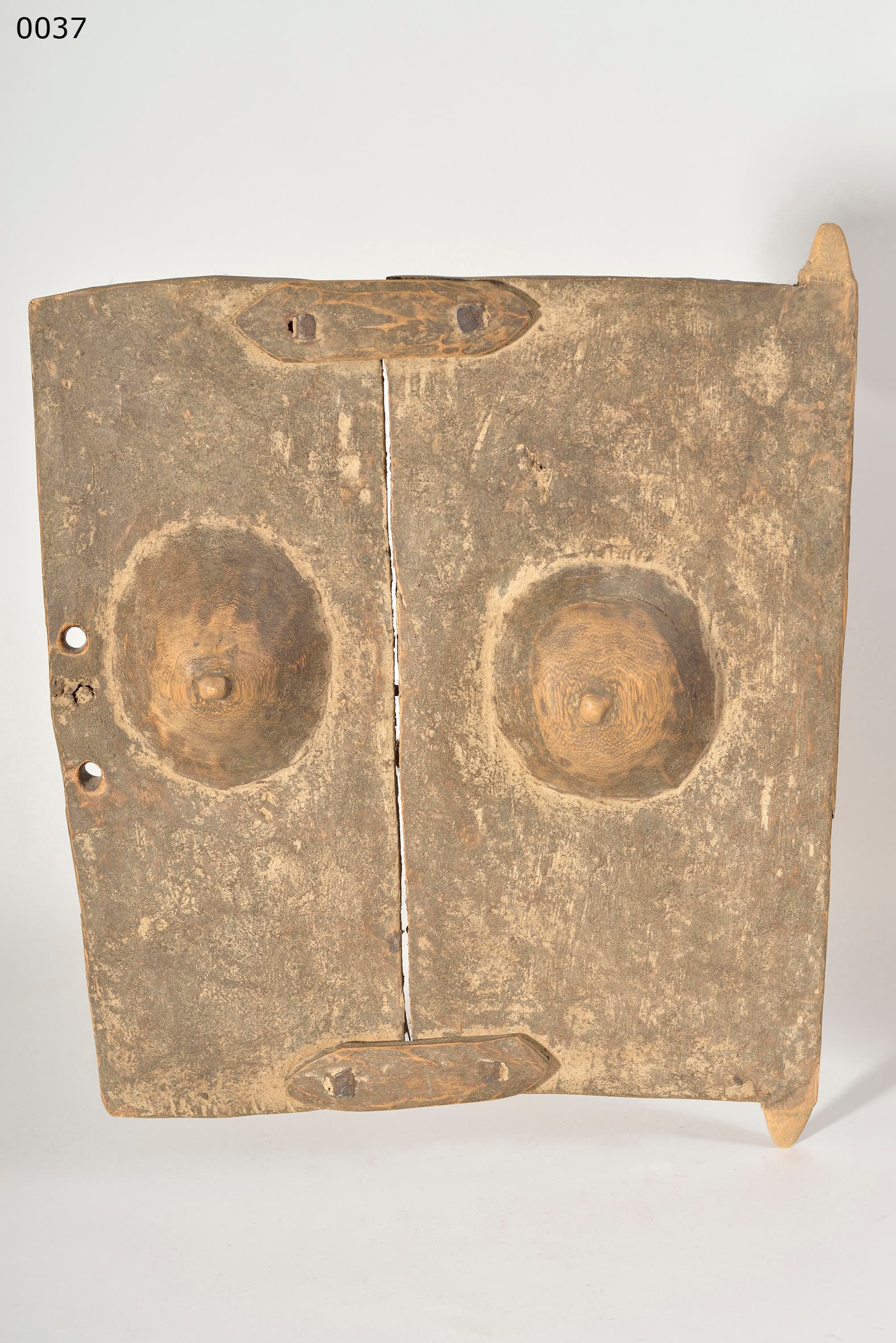
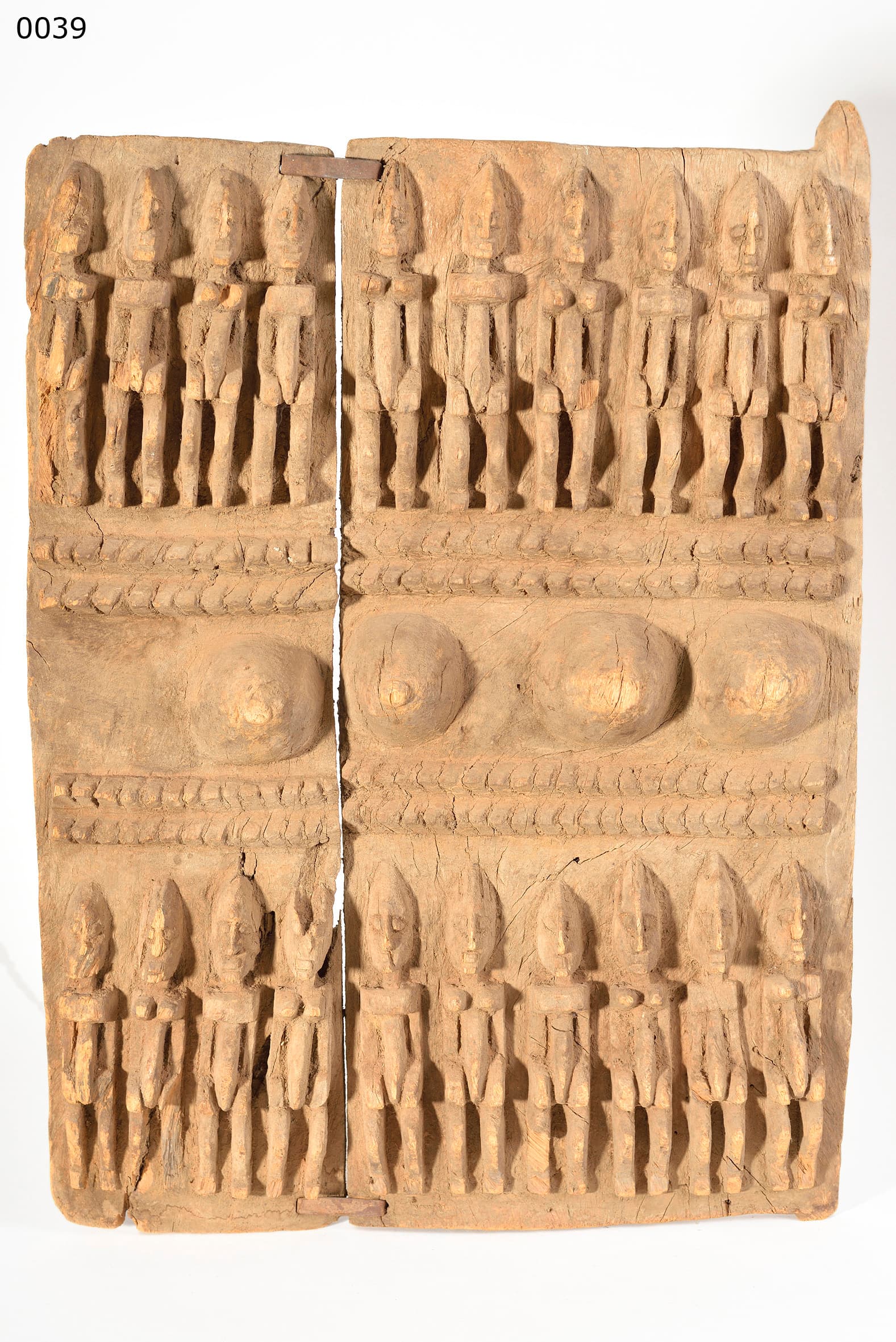
A heavy rectangular wooden granary shutter (19th C. – 1st half 20th C., 58 cm) from the Dogon of Mali — carved in high relief with a Nommo figure alongside a large reptilian form.
1. The granary as the center of the universe
For the Dogon, the granary is the most important architectural structure in the village.
- Not Just a Silo: It is a physical scaled-down model of the universe, referred to as the "Sanctuary of Food" — representing the survival of the lineage. These heavy wooden doors and shutters are installed to protect the harvest from physical thieves and, more importantly, from spiritual contamination.
2. Nommo and the binu water spirit
- The Reptilian Form: A lizard or crocodile is carved in high relief alongside the Nommo figure. In Dogon cosmology this reptile represents the water spirit (Binu) — an embodiment of the aquatic origins of life and a custodian of moisture in the arid Sahel.
- Moisture Invocation: The presence of the Binu invokes rain and keeps the stored millet from rot.
3. Protection and storage
- A Spiritual Alarm System: The reptile is both a prayer for water and a fierce predator guarding against thieves (human and spiritual). Its teeth and reptilian silhouette announce hostility to anyone who would breach the grain.
- Ancestor Plus Element: By pairing Nommo with Binu, the shutter layers ancestor and water-spirit onto a single wooden plane — the Nommo prays to the sky while the Binu guards the stored grain.
Summary
This shutter layers ancestor and water-spirit onto a single wooden plane. The Nommo prays to the sky while the Binu guards the stored grain, producing a small cosmogram that keeps the family's food supply metaphysically intact.
Written with AI assistance from the collection appraisal, object photography and our own research; editorially reviewed. Mistakes are possible — corrections are welcome. How we work →