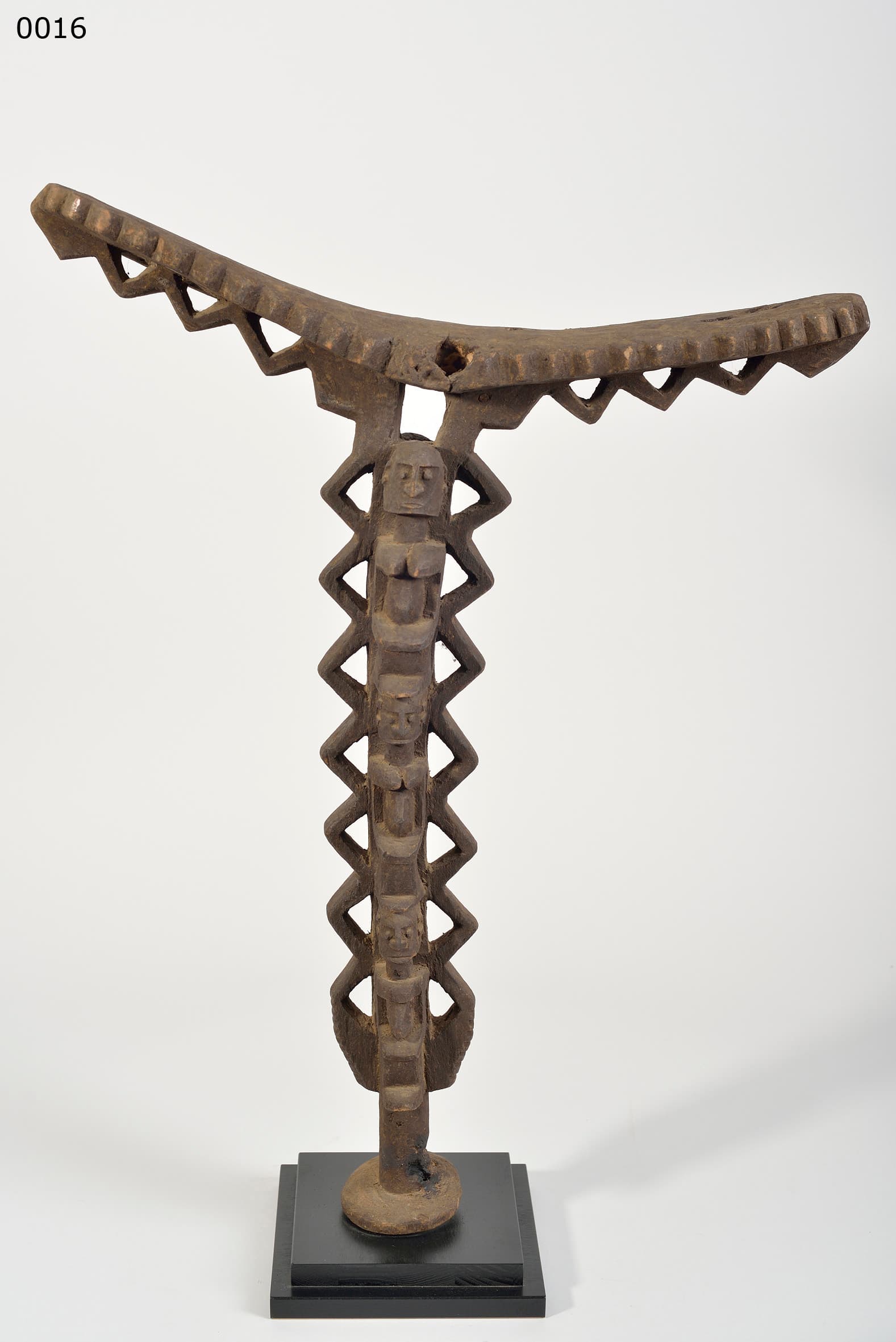
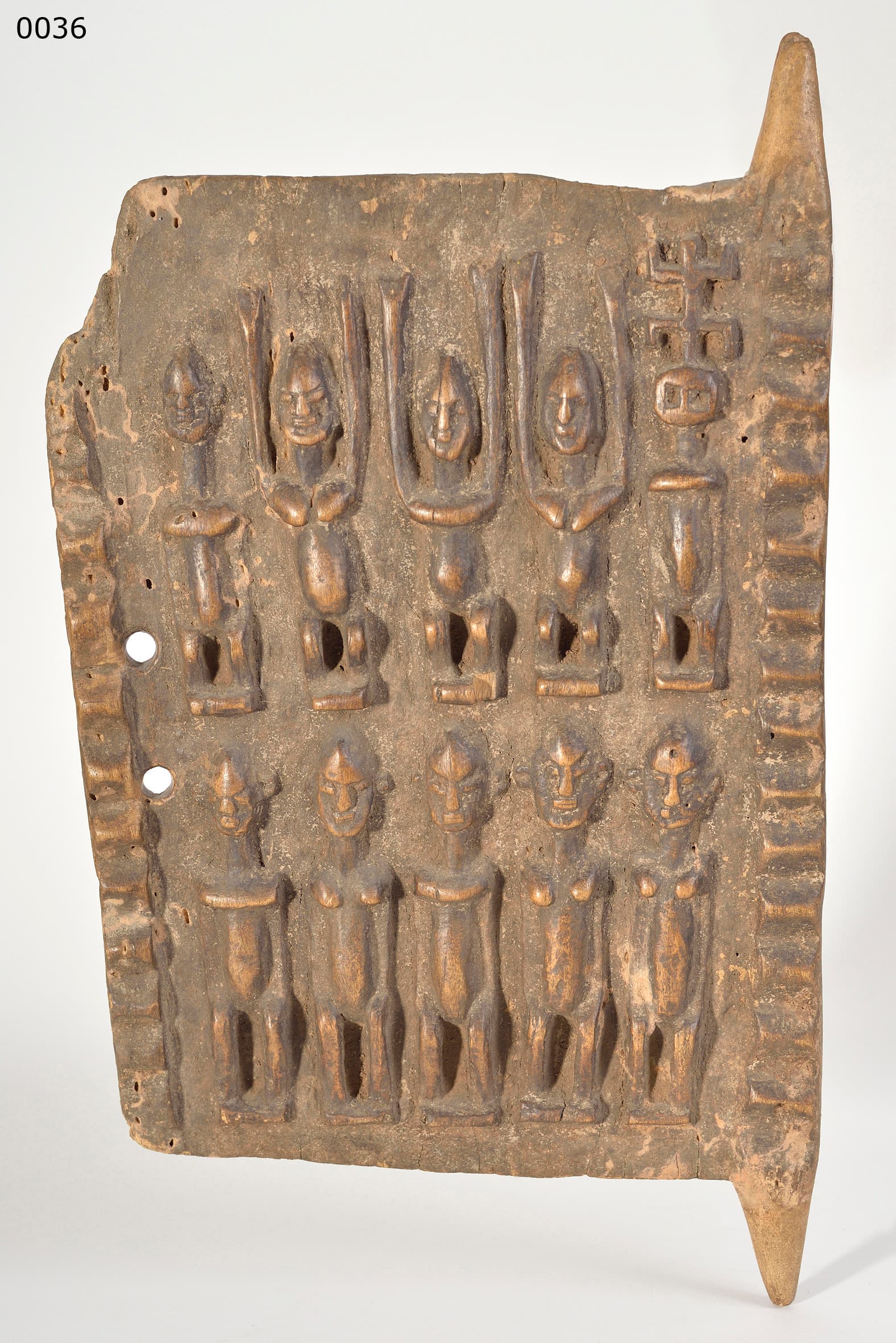
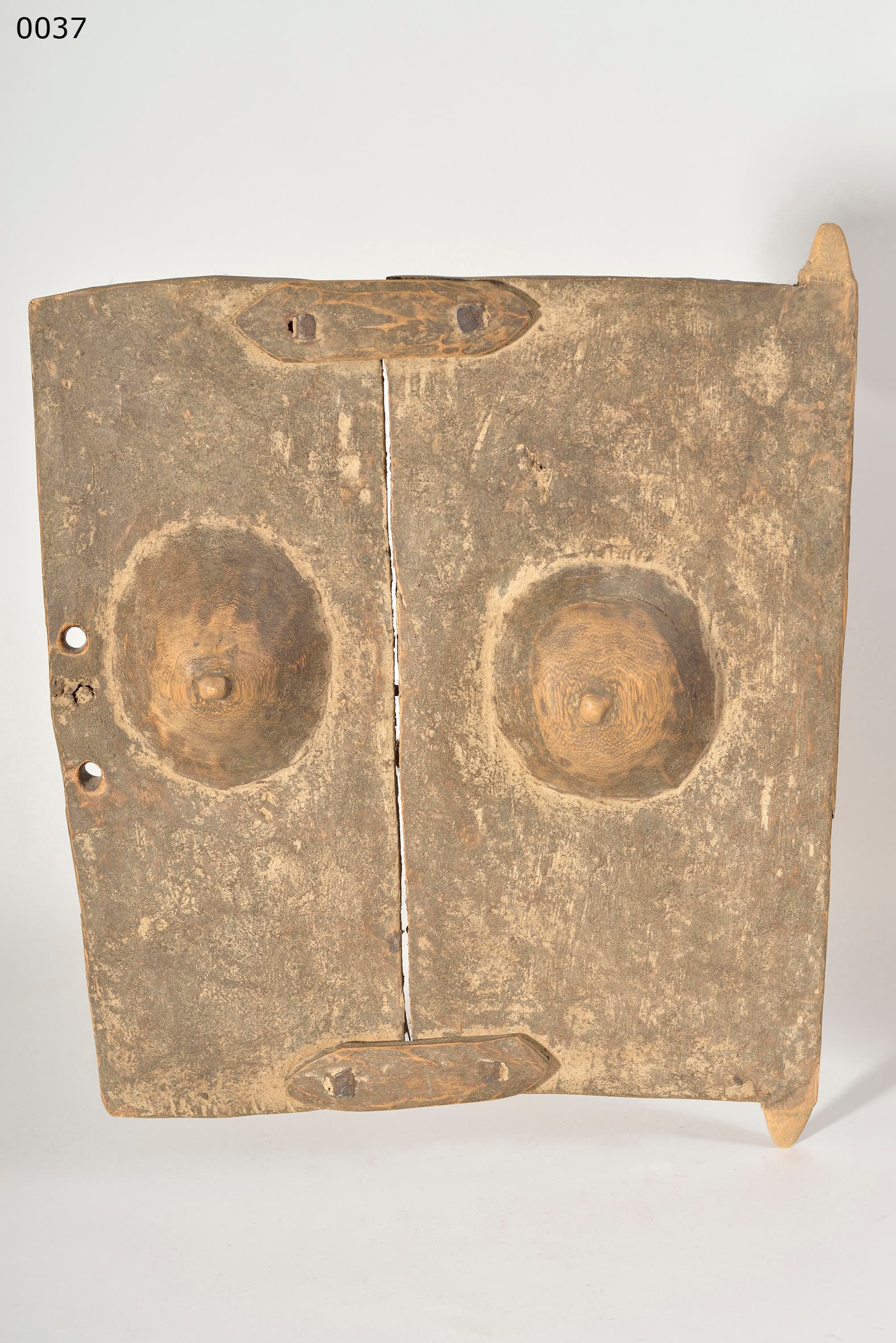
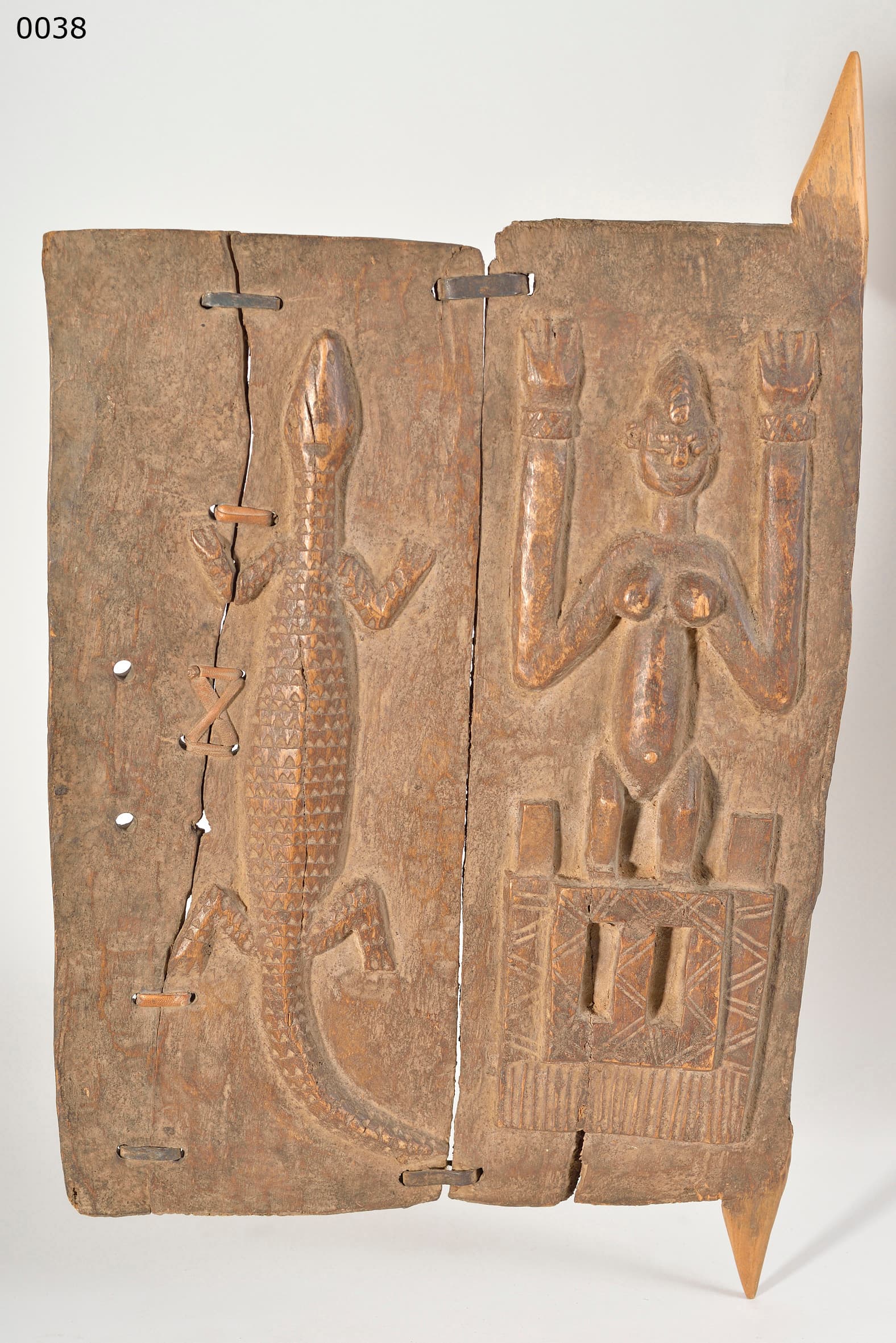
The Dogon are a Malian people of the Bandiagara cliffs, known for cruciform kanaga masks, vertically elongated ancestor figures and shrine altars encrusted by generations of libation.
Overview
The recent settlement area of the Dogon is primarily concentrated on the topographically extreme central plateau region in Mali (Mopti region), especially on the impassable terrain of the Bandiagara cliffs, whose rock massifs extend over a length of almost 150 kilometres and reach across the territorial border to Burkina Faso in their southern foothills (Microsoft Encarta 1999). The entire cliff system was designated by UNESCO in 1989 as a mixed world heritage site (nature and culture), which has since significantly structured international protection efforts for the Tellem and Dogon material culture deposited in the rock caves (UNESCO 1989). Demographic estimates put the current population at between 400,000 and 800,000 individuals, with a consensus figure of around 600,000 often serving as a reliable reference figure in recent ethnological literature (Obeisance-Baha 2023). The ethnic group traditionally uses the self-designation Dogon (or Dogo), while the term Habbe is a historically traditional, strongly pejorative foreign designation of the neighbouring, Islamised Fulbe nomads, which refers pejoratively to the non-Islamic, indigenous-religious status of the Plateau inhabitants (Museum Rietberg 1943).
The linguistic classification of the ethnic group proves to be highly complex in academic discourse and is characterised by far-reaching research controversies. Traditionally, the Dogon languages are categorised as an isolated and highly differentiated branch of the Niger-Congo language family, which is divided into over 15 distinct dialects - such as Tombo, Jamsai and Bankass - that are often not mutually intelligible (Yale HRAF 2023). A far more massive classification controversy concerns Bangime, a language spoken by only around 3,500 people (the Bangande) in seven isolated valley villages (Blench 2007). The source situation in this context is ambiguous and highly controversial: While the Bangande vehemently claim a Dogon identity, rigorous linguistic analyses prove that Bangime is an absolute language isolate with no genealogical connection to the surrounding Dogon languages or other West African language families (Hantgan 2013). Blench dates this linguistic substrate to a pre-Dogon phase 3,000 to 4,000 years ago and postulates that Bangime historically formed as an "anti-language" - a cryptographic code used to conceal escaped slaves seeking refuge in the cliffs from outsiders (Blench 2015).
Linguistic classification
| dialect/language | number of speakers / relevance | phylogenetic status |
|---|
| Central Dogon (Tombo) | High | Niger-Congo (isolated) |
| Eastern Dogon (Jamsai) | High | Niger-Congo (isolated) |
| Ritual language Sigi So | Initiates only (Awa) | Secret language (reduced vocabulary) |
| Bangime (anomaly / isolate) | ca. 3,500 (Bangande) | language isolate (pre-Dogon substrate) |
The social structure of the Dogon is fundamentally acephalous; there is no centralised, superordinate state authority (Britannica 2023). The basic social unit is the patrilineal extended family, which is centred around the house of the lineage head (ginna) in densely staggered, architecturally interlocking settlements (101LastTribes 2023). The kinship and inheritance system is strictly regulated: Collective property passes preferentially to the younger brother of the deceased before the eldest son becomes eligible to inherit, while private property is handed down in direct lineage (Yale HRAF 2023). The society is also characterised by a rigid, occupation-based caste system. Farmers, who primarily cultivate rain-fed crops (millet, sorghum) and onion cultivation in the irrigated valley bottoms, claim the highest social status. Craft specialists - especially blacksmiths (jemme) and leather workers, who are the producers of the essential material and ritual culture - occupy the lowest rank, are regarded as carriers of "polluting" energetic forces and live endogamously and spatially separated (Microsoft Encarta 1999). Life in this landscape defined by dramatic scarcity is described in recent research (van Beek 2005) as a physical and ontological "containment model" in which architectural and ritual boundaries are existential.
The relationship to historical neighbouring peoples and predecessor populations, primarily the Tellem, manifests itself as one of the most virulent debates in West African archaeology. The Tellem colonised the cliffs in front of the Dogon and left behind enormous quantities of skeletal material and material culture in the high-altitude caves. While the older ethnographic hypothesis assumed a gradual cultural and genetic continuity between Tellem and Dogon, modern forensics paints a contrary picture: A (older generation of researchers) dates a peaceful assimilation, while B (Rogier Bedaux), through precise C14 dating and geochemical and isotopic analyses (strontium/oxygen) of bone material from the cave tombs of Karkarichinkat, has established an abrupt demographic population replacement in the period between the 11th and 13th (or 16th) centuries. and 13th (respectively 16th) century (Bedaux et al. 2005). These stratigraphic discontinuities significantly structure the provenance research of large European collections; for example, the Museum Rietberg Zurich relies on this revised chronocultural sequence when cataloguing its predynastic Tellem and Classical Dogon holdings (especially the Eduard von der Heydt collection) (Homberger 1995; Museum Rietberg 1943).
Cultural context
The Dogon religious paradigm reveals an esoteric complexity and cosmological depth that radically differentiates it structurally from the belief systems of neighbouring Mande populations. For example, while the N'domo initiation system of the neighbouring Bamana is primarily based on linear, sociological age-class socialisation and agri-cultural pragmatics, the Dogon religion centres on a profound eschatological order, ritual dictates of cosmic balance and the repetitive remediation of a primordial creation trauma (Scirp 2015; ObeisanceBaha 2023).
| Structural feature | Dogon (Awa/Lebe complex) | Bamana (N'domo/Kore complex) |
|---|
| Central orientation | Eschatological, cosmological, funerary | Age group socialisation, agri-cultural |
| Cosmological basis | restoration of primordial duality (twinness) | transmission of knowledge through succession of secret societies |
| Mask utilisation | Cult of the dead (Dama), expulsion of the Nyama of the ancestors | Status transition of the living (initiation of youth) |
| Authority structure | Decentralised: Hogon (priest), Awa (mask society) | Hierarchically structured initiation levels (e.g. Ci Wara, Kore) |
The theological cosmogenesis of the Dogon focusses on the creator god Amma and the universal concept of duality (twinship). Amma created the Nommo, androgynous water and spirit beings who are considered the ancestors of humanity (SacredSites 2023; Wikipedia 2023). However, the cosmic harmony was destroyed by the preemptive birth eruption and rebellion of a being called Ogo (the "pale fox" / Yurugu), resulting in the loss of perfect androgyny. This theological premise has profound socio-cultural consequences: Humans are seen as incomplete and endangered by a dual gender. The physical interventions of circumcision for men and excision for women function as a compelling ritual remedy to metaphysically remove the "second", disruptive sex and establish distinct identities in a world obsessed with duality (Griaule 1948).
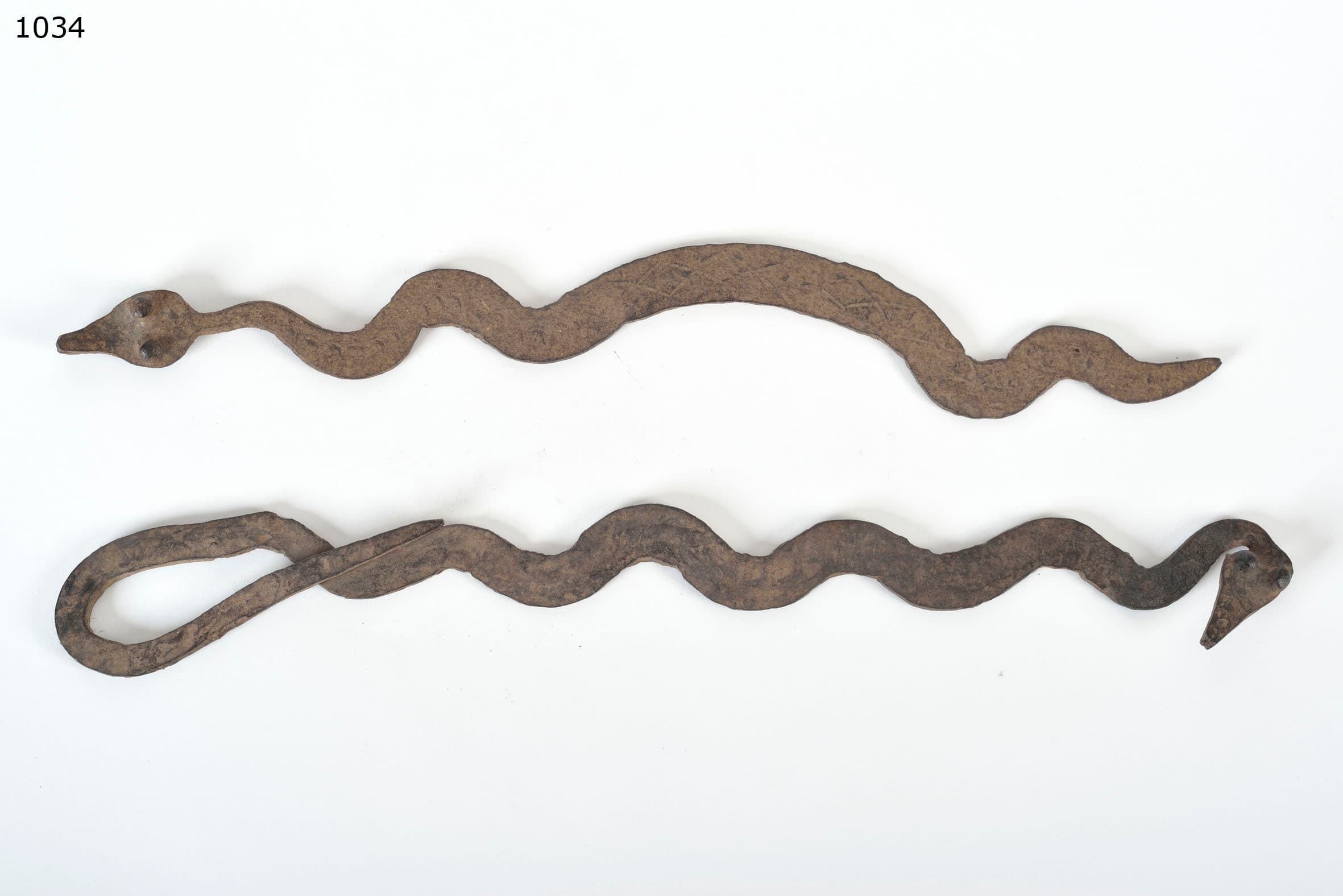
Ritual authority is institutionally and functionally organised in a strictly dichotomous way. On the one hand there is the hogon, the highest spiritual leader of a region and priest of the chthonic cult of life, who regulates the agri-cultural cycle and the fertility of the earth. The enthronement of a Hogon requires a profound physical and social separation: after his initiation, he wears a red fez, a sacred bead bracelet and is subject to extreme taboos - he may not be touched by anyone and lives in isolation (Wikipedia 2023). According to Dogon cosmology, the Hogon is visited at night by the sacred serpent Lebe, who purifies his body and transmits esoteric wisdom to him (Wikipedia 2023). The hermetic antithesis to the hogon is the Awa men's society (the masked society), which holds the absolute monopoly over funerary rituals and interaction with the souls of the deceased (Microsoft Encarta 1999).
A remarkable structural singularity in this strictly patriarchally regulated cult concerns the role of women. Although women are excluded from the Awa secret society and physical contact with masks under threat of draconian sanctions, the myth grants them primordial authorship. The figure of Yasigne (or Satimbe) represents the "sister of the masks". According to tradition, it was a woman who first discovered the red fibres of the andoumboulou (spirits) and performed masked dances before this ritual technology was violently usurped by the men. The Yasigne - a selected woman born during the Sigi festival - is the only female dignitary allowed to physically approach the masks during rites (Griaule 1938; NOMA 2023). The central collective initiation and transition ritual is the Sigi festival, a massive, cyclical rite that only takes place every 60 years to renew the generational succession of mask wearers (Olubaru) and to commemorate death on earth. The cryptic ritual language Sigi So is taught in the caves, which is drastically reduced lexically and is used exclusively for cosmological exegesis (Apter 2023; Elouard 2016).
However, the decoding of this cosmology is the scene of probably the most massive, polarising research controversy in modern African ethnography. At the centre is the Sirius controversy (Griaule vs. van Beek). After a 33-day series of interviews in the 1930s with the blind Dogon elder Ogotemmêli, Marcel Griaule and Germaine Dieterlen (1948 Dieu d'eau; 1965 Le renard pâle) published a system that attributed highly complex astronomical knowledge to the Dogon that was impossible to see with the naked eye - primarily knowledge of the invisible white dwarf star Sirius B (Sigu tolo), its 50-year orbit and massive density, as well as the rings of Saturn and the moons of Jupiter (Sagan 1979; Temple 1976). In the 1970s, this fuelled popular scientific theories about extraterrestrial bringers of civilisation (Robert Temple, The Sirius Mystery). The academic correction was made in 1991 by Walter E.A. van Beek in Current Anthropology: The source situation here is clearly tilted in Griaule's favour. While Griaule dated this knowledge as authentic, indigenous esotericism, van Beek proved through extensive field studies that the alleged Sirius knowledge was completely unknown to the recent Dogon and could not be reproduced. Van Beek demonstrated that Griaule's methodology had serious flaws (dependence on a single informant, leading questions) and that the result was most likely a "co-construction" - a product of the knowledge that Griaule himself (or other Western visitors) unwittingly introduced into the discourse and that Ogotemmêli adapted out of politeness (van Beek 1991: 139). Institutions such as the Musée du quai Branly, which houses a large part of the artefacts acquired by Griaule during the Dakar-Djibouti expedition, are now forced to critically deconstruct this ethnological projection of Western search for meaning onto Dogon culture in their permanent exhibitions (Doquet & Karambé 2023).
Aesthetic features
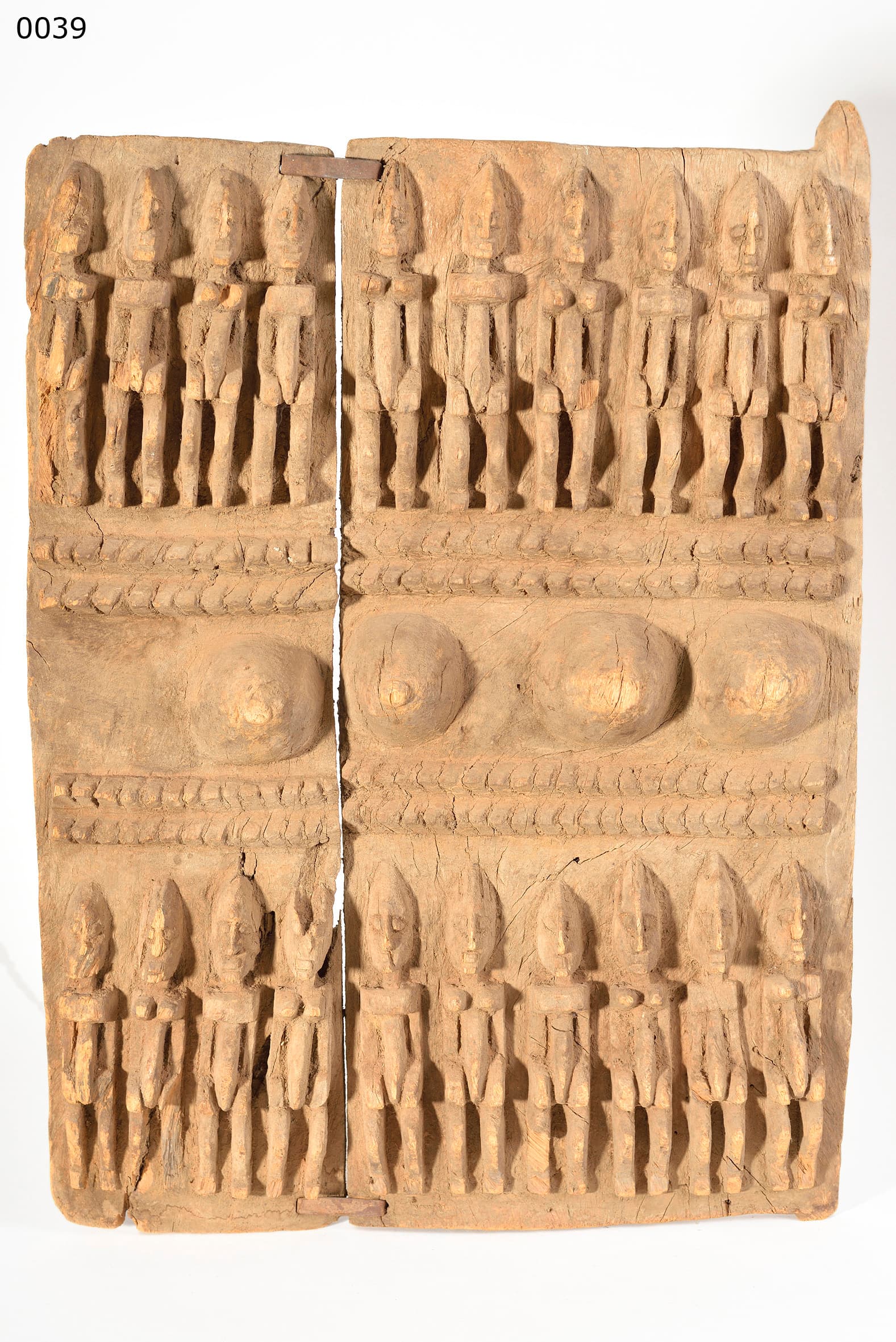
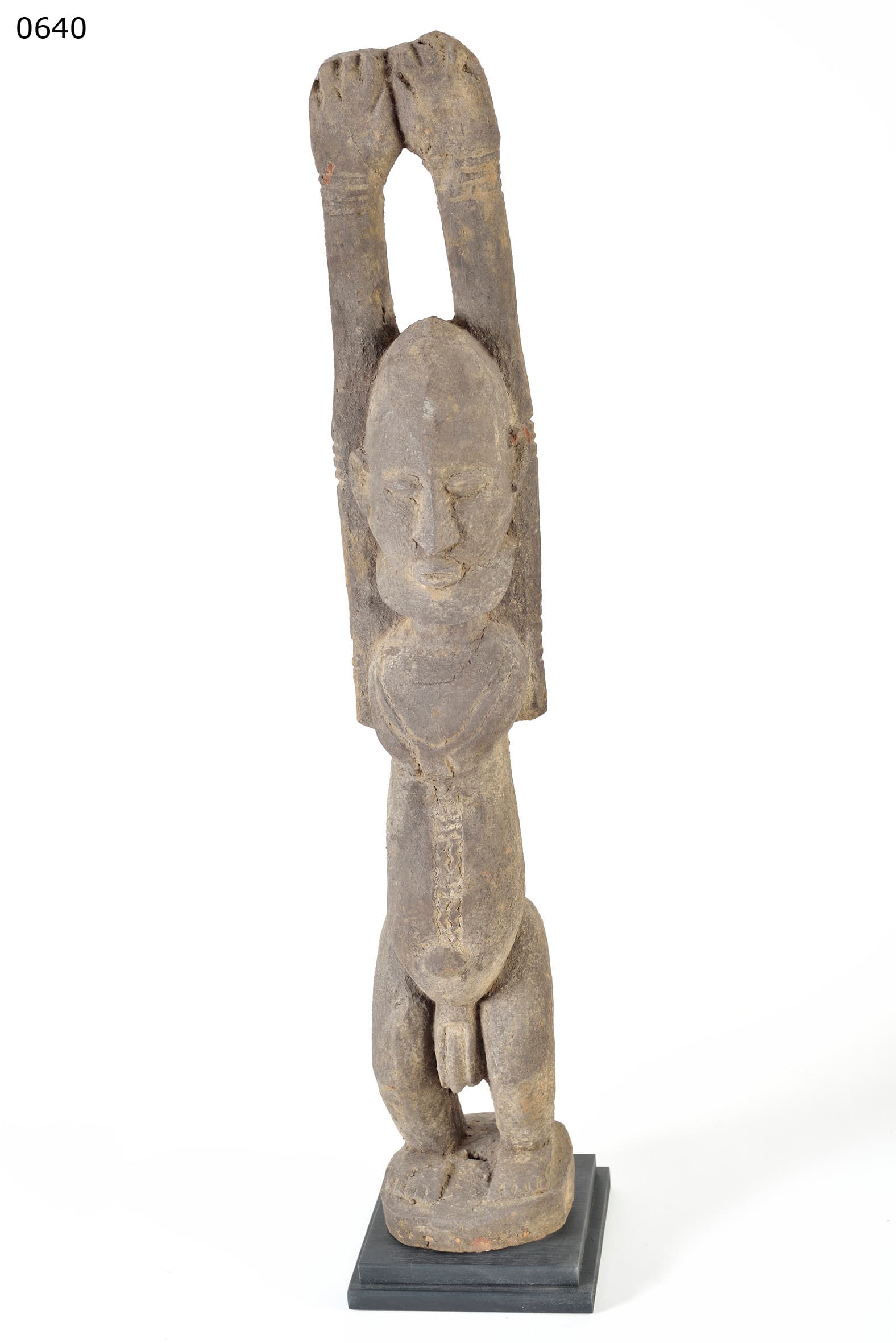
The visual culture of the Dogon is articulated in a canonical object typology, which is dominated by drastic geometric abstraction and architectural proportions. The statuary primarily includes freestanding ancestor figures (tonu), whose iconography is often characterised by vertically raised arms - a gesture that is traditionally decoded in the specialist literature as "praying for rain" (connection between the chthonic and celestial spheres) (Leloup 1994). Equally canonical are hogon figures on horseback, which visualise absolute social authority and cosmological dominance, and pairs of hermaphroditic sculptures (often sitting back to back or side by side), which evoke the primordial, indispensable duality of the androgynous Nommo primordial beings (LaGamma 2004; Leloup 1994). The size spectrum is enormous: it ranges from hand-sized, amulet-like figures from the Tellem layer to Dege dal nda (terrace sculptures) over 100 centimetres high, which were designed for display at the burials of high-ranking lineage members (Metropolitan Museum 2023).
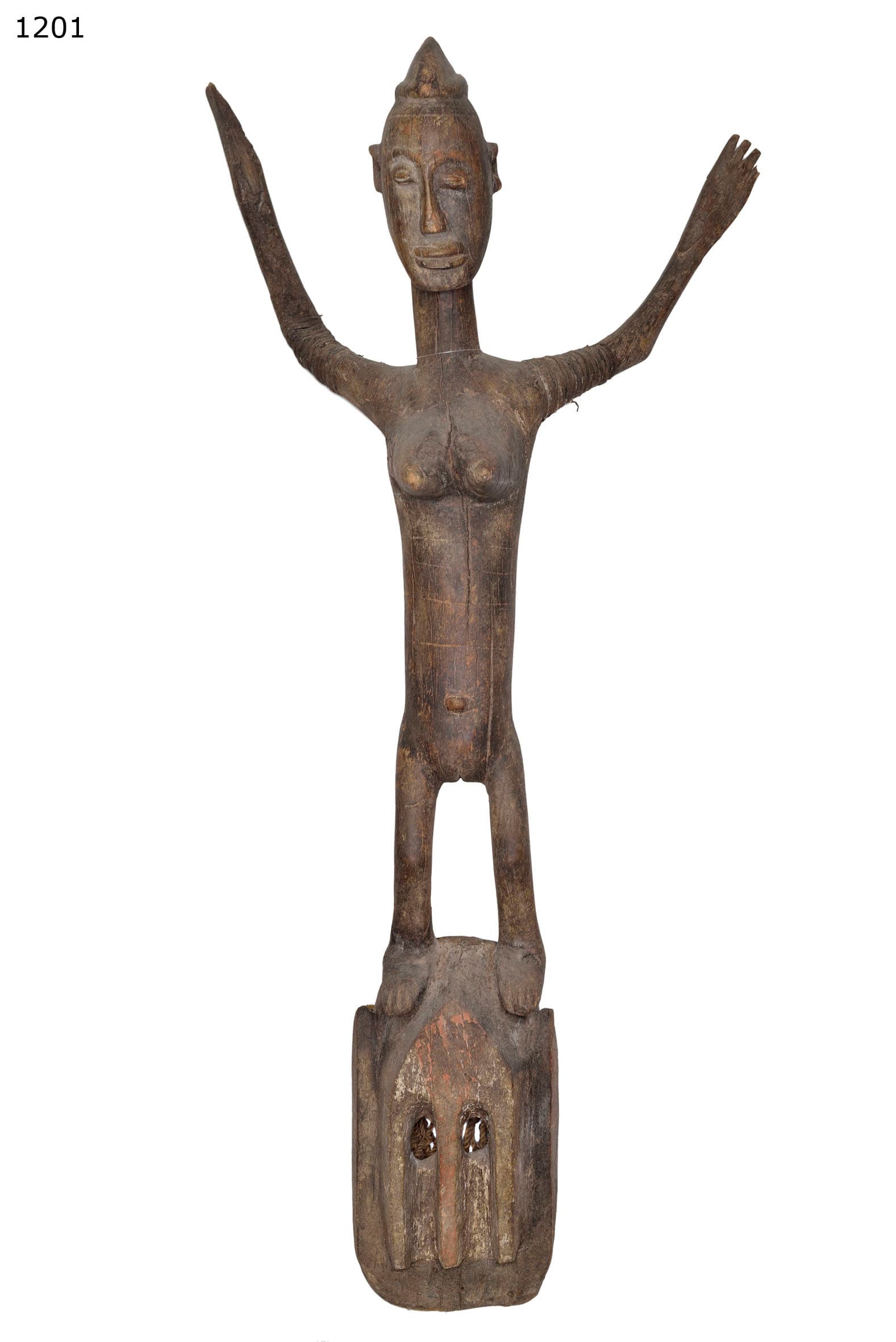
In addition to the statuary, the more than 78 documented mask types of the Awa League form the second centre of design (SacredSites 2023). The most striking type is the Kanaga mask, whose supra-structure consists of a vertical bar with two horizontal crossbars (double cross) angled upwards and downwards at the ends (British Museum 2023; Met Museum 2023). Other subtypes include the up to five-metre-high, mast-like Sirige High Mask (which symbolises the multi-storey architecture of the Ginna and the descent of the cosmic ark), the Walu Antelope Mask and the rare Satimbe Mask, which is crowned by a standing female figure and celebrates the mythical first discovery of masks by women (Yasigne) (NOMA 2023; Amherst 2023).
One of the most profound iconographic research controversies (author vs. author) arose around the exact meaning of the Kanaga mask. Marcel Griaule (1938) postulated that the double cross was a deeply esoteric representation of the creator god Amma, whose arms point to the sky and legs to the earth, thus depicting the structural arrangement of the entire cosmos (Griaule 1938; Metropolitan Museum 2023). This theological exaggeration is vehemently disputed by contemporary field researchers and many indigenous informants: Other authors and Dogon actors date and interpret the motif purely profanely as a stylistic representation of a bird (Kommolo tebu), a flying insect (Barâmkamza dullogu) or a crocodile in motion (Wikipedia 2023; SmartHistory 2023). The source situation is still ambiguous on this point and reflects precisely the stratified, elitist distribution of knowledge in which initiators of the Awa League (Olubaru) maintain a diametrically different exegesis than the village public (MDPI 2018).
Style analysis of Dogon statuary (after Leloup 1994)
| Sub-style | Morphological characteristics | Geographical / cultural reference |
|---|
| Ireli sub-style | Organic curves, deeply encrusted patina, androgynous | Central plateau, Tellem influence (De Grunne 1993) |
| Sanga sub-style | Plank-like abstraction, angular cubature | Eastern cliffs |
| N'duleri sub-style | Architectural construction, kneeling, naturalistic details | Northern plateau, strong Djennenke influence |
The stylistic taxonomy of Dogon art was established by the groundbreaking work of Hélène Leloup (Dogon Statuary, 1994), which broke down the vague categorisation and defined geolocalisable sub-styles such as Ireli, Sanga and N'duleri (Leloup 1994). The N'duleri style represents a fascinating hybrid: it fuses the naturalistic, archaic prototypes of the Djennenke culture that migrated from the inland delta of the Niger with the radical geometric monumentality of the Dogon worldview (Christie's 2017). A qualitative singularity of Dogon research is the identification of documented "master hands" - a novelty in a field that has long devalued African art as an anonymous tribal collective. The "Master of Ogol" (active ca. 1730-1850), whom Jean Laude identified in 1964 as an independent individual on the basis of his uncompromising geometric rigour, sagittal crest hairstyle, arched ears and detailed labret jewellery, is outstanding. Today, masterpieces by this artist form the nucleus of the collections at the Musée Dapper and the Metropolitan Museum of Art (Laude 1964; de Grunne 2011).
An ontological abyss separates the purely handcrafted wooden object from the activated ritual sculpture. The choice of wood material (often hard heartwood) is secondary to the development of the patina. A freshly carved object is profane and ineffective. Only through the ritual application of a thick crust of ground millet, baobab extracts, shea butter and animal blood does the surface become a carrier and receptacle for the nyama, the vital, potentially volatile life force (Metropolitan Museum 2023). Forgery criteria on today's art market focus excessively on this patina: artificial replicas for the antique trade often use synthetic binders and glues that are immediately revealed in forensic analyses (e.g. mass spectrometry) as recent and not resulting from ritual, successive protein deposits (ResearchGate 2013).
Ritual practice
The material culture of the Dogon is not conceived as a static work of art, but as a kinetic and processual instrument. The lifecycle of a ritual object is determined by a precise sequence of phases from initiation to desacralisation. The creation takes place away from the village gaze: altar sculptures are mostly made by blacksmiths of the endogamous Jemme caste, as they have mastered the use of shape-shifting forces (Metropolitan Museum 2023). Masks, on the other hand, are carved by the members of the Awa covenant in hidden cliff caves and are adorned with plant pigments and a costume made of dyed Sansevieria fibres (SmartHistory 2023).
Altar use manifests itself most vividly in the practices of lineage chiefs and priests. The aduno koro (the "ark of the world"), a massive trough-like receptacle carved from a single block of wood, plays a central role here. This ark is activated during the Goru ritual, which celebrates the end of the millet harvest and the guarantee of moisture and fertility at the winter solstice. The eight primordial ancestors are carved in relief on the sides of the vessel; the ends indicate the horse's head of Nommo. The priest places pieces of meat from freshly sacrificed goats, sheep and mice caught at dawn in the vessel, with the sacrificial blood flowing directly over the altar and the sculptures. This bloody activation appeases Amma and the ancestors, forcing the nyama into a form beneficial to the community (SmartHistory 2023; 101LastTribes 2023).
The mask performance reaches its absolute climax in the dama ceremonies, the collective, second funerals. The functional purpose of the dama is to finally expel the vagabond, dangerous soul (nyama) of the deceased from the village space into the afterlife and to consecrate his transition into the status of a protective ancestor (British Museum 2023; Met Museum 2023). The kinetic energy of this performance is unprecedented. Dozens of dancers storm the village square. The wearer of the Kanaga mask performs dramatic, whirling rotations in which he bends his upper body so low that the upper edge of the double cross ritually touches the dusty ground. This gesture is no mere dance, but a metaphysical act: it connects the heavenly sphere (Amma) with the earth and thus ensures the fertile cycle of life (British Museum 2023). The dance with the up to five-metre-high Sirige stick mask, whose angle of inclination towards the ground imitates the mythological descent of the heavenly ark to earth, is similarly dangerous (Amherst 2023).
The cycle of an object inevitably ends with its deactivation or disposal. In contrast to the Western logic of preservation, a ritual object has no inherent eternal value for the Dogon. Once the spiritual discharge has occurred, the object structurally fails due to excessive termite infestation, or a specific ceremonial cycle (such as the 60-year sigi) ends, the object is stripped of its power. Historically, thousands of these deactivated wooden sculptures were deposited in the deep ossuaries and tellem caves of the cliffs (Bedaux et al. 2005). The dry microclimate and alkaline sediments preserved the pieces for centuries until Western collectors excavated them. Drastic regional variations of this practice exist: in the plains, where Islam has now assimilated around 35 per cent of the Dogon, altars and masks were systematically destroyed as "idols". In the villages of the plateau (Ireli, Sanga), on the other hand, the ritual practice has been partially modified and adapted as a secular spectacle for cultural tourism, which means the loss of esoteric depth in favour of economic subsistence (Wikipedia 2023; Fowler UCLA 2021). Significant ensembles of active (and formerly active) ritual objects that document this performative density are now central research objects in the Fowler Museum at UCLA and in the British Museum (Fowler Museum 2023; British Museum 2023).
Historical context
The historical genesis of the Dogon is deeply rooted in the volatile migratory movements of West Africa. According to indigenous oral tradition, the ancestors of today's Dogon migrated from the Mande region to the west towards the central Niger Plateau between the 10th and 13th (or 15th) centuries (Microsoft Encarta 1999). The primary catalyst for this flight was the military expansion of the centralised, emerging empires (such as the Mali Empire) and the imperative pressure to convert to Islam. The impassable, rugged Bandiagara massif provided a natural fortress against mounted slave hunters and enemy armies (101LastTribes 2023). The dating controversy surrounding the replacement of the pre-existent Tellem population by the arriving Dogon remains a central archaeological dispute: A dates a coexistence and gradual cultural fusion in the 15th century, while B (Rogier Bedaux) concedes through C14 analyses that the Tellem culture collapsed abruptly, but that the Dogon adapted ritual cave use and architectural fragments of the defeated (Bedaux et al. 2005). In addition, the Dogon assimilated fleeing groups such as the Saman in the 15th century, which further fragmented the linguistic and ritual diversity of the plateau (101LastTribes 2023).
The colonial encounter with the French administration in the early 20th century irreversibly changed the socio-cultural tectonics of the cliff villages. Although the plateau remained protected from direct settlement, French tax systems forced an immense labour migration. Young Dogon men were forced to migrate to the Gold Coast (Ghana, Kumasi). Andrew Apter and other ethnologists point out that this economic migration radically restructured the initiation cycle: the return from Ghana with European goods and clothing increasingly replaced the arduous, esoteric ascent within the ritual Sigi cycle and degraded the learning of the mask language Sigi So from a survival necessity to a folkloric relic (Apter 2023).
The market development of Dogon art in the West began almost simultaneously. Belgian avant-garde dealers such as Henry Pareyn acquired the first examples as early as 1910 (Mitchell Pluto 2023). The decisive turning point for museums, however, was marked by Marcel Griaule, whose large-scale Dakar-Djibouti expedition (1931-1933) confiscated over 3,000 Dogon artefacts for the Musée de l'Homme (now Quai Branly) (SacredSites 2023). The definitive breakthrough on the American market came in 1973 with the monumental exhibition "African Art of the Dogon" at the Brooklyn Museum, largely fed by the collection of the advertising manager Lester Wunderman (who later donated his holdings to the Metropolitan Museum) (Ezra 1988; Metropolitan Museum 2023). This museum canonisation evoked an unprecedented price development: top works of Dogon statuary (such as those by the "Master of Ogol" or from the Leloup collection) escalated from a few thousand francs in the 1930s to auction records that easily exceeded the USD 500,000 mark at Sotheby's and Christie's (Kamer 1974; Sotheby's 2004).
Forensic methods of authentication
| Method | Analysed material | Gained knowledge |
|---|
| xylology (wood anatomy) | wood fibres, cell structure | detection of indigenous hardwoods (Diospyros mespiliformis, Sclerocarya birrea) vs. recent tropical wood. |
| C14 radiocarbon method | heartwood of the sculpture | determination of the felling date of the tree. Limited significance for "old wood effect". |
| SIMS (mass spectrometry) | Patina encrustations | Differentiation between artificial glues and historically grown animal lipids/proteins. |
| Entomological morphology | Feeding traces in the wood | Asymmetrical termite feeding along the fibres as an indicator of long periods of lying in caves. |
This financial boom created a massive, transnational forgery market in the 1970s, which radically tightened the authenticity criteria of ethnology (Mitchell Pluto 2023; Kamer 1974). Today, museums and collectors no longer rely primarily on stylistic connoisseurship, but on hard forensics. Forgery workshops in Bamako often use soft, quick-to-carve woods, which is why botanical xylology verifies whether heavy, dry hardwood such as African ebony (Diospyros mespiliformis) or Sclerocarya birrea (Marula) was used (WWF 2023; ResearchGate 2013). The C14 dating of the wood alone is compromised by the "old wood effect", as forgers re-carve historical tellem beams (Artemis Gallery 2023). Therefore, secondary ion mass spectrometry (SIMS) of the patina is essential to distinguish genuine animal sacrificial proteins accumulated over decades from smeared-on recent bitumen encrustations (ResearchGate 2013). Physical markers such as extreme, natural heartwood cracks (caused by centuries of desiccation in the cave climate) and asymmetrical termite feeding that respects the fibre direction remain the final barriers against artificial ageing, as the strict acquisition protocols of the holdings in the Royal Museum for Central Africa (RMCA/Tervuren) continuously prove (AfricaMuseum RMCA 2023).
Sources & References
This dossier draws on standard scholarship in Dogon studies. For deeper reading and image archives, see:
Inline citations in this dossier refer to canonical scholarly works on Dogon art; full bibliographic resolution is pending a researcher pass.