A tall Lobi Bateba (attributed to the first half of the 20th century, 90 cm) from Burkina Faso — a dynamic interlocking pair with a larger male figure standing rigidly while supporting a female figure on his front / back in an intimate suspended posture, the dense heavy wood exhibiting a deeply oxidized dark brown heavily crusted patina consistent with ritual use. Exhibited at the French Embassy.
1. Sculptural complexity and the Bateba phuwe
Lobi woodcarving is famously austere — typically solitary rigid vertically oriented figures.
- Sculptural Anomaly: This interlocking two-figure composition represents an unusual sculptural form and a complex example of Burkinabe woodcarving — creating two distinct engaged bodies from a single block of timber requires significant skill.
- Dynamic Tension Plus Classic Rigor: Severe angular facial features and taut muscular geometry are classic Lobi aesthetics, but the dynamic tension of the suspended female figure suggests a departure from traditional Bateba statuary toward more complex narrative forms.
2. Thil intercession and the "marriage" votive
In Lobi theology, Bateba are physical bodies carved to house invisible protective spirits called thila.
- Crisis-Specific Commission: While standard bateba protect against general witchcraft, highly specific multi-figure carvings like this are traditionally understood to have been commissioned by diviners to address specific crises.
- Planted on the Dithil: Placed on the earthen altar (dithil) within a family compound — invoked to cure barrenness, ensure the successful union of two prominent lineages, or pacify a particular thil causing discord between a husband and wife.
3. Elite provenance and earthen shrine crust
Beyond its complex carving, this object has a documented exhibition history at the French Embassy.
- Millet Beer and Blood: Lobi figures were not rubbed with palm oil like coastal carvings — they were repeatedly doused with millet beer, animal blood, and mud in outdoor or semi-outdoor shrines.
- Layered Sacrificial Crust: The deeply oxidized friable layered encrustation is consistent with decades of sacrificial use prior to its exhibition.
Summary
A rare complex interlocking composition, this Lobi marriage statue represents an unusual development in Voltaic woodcarving. Its French Embassy exhibition history and thick shrine patina make it a highly significant piece.
Written with AI assistance from the collection appraisal, object photography and our own research; editorially reviewed. Mistakes are possible — corrections are welcome. How we work →
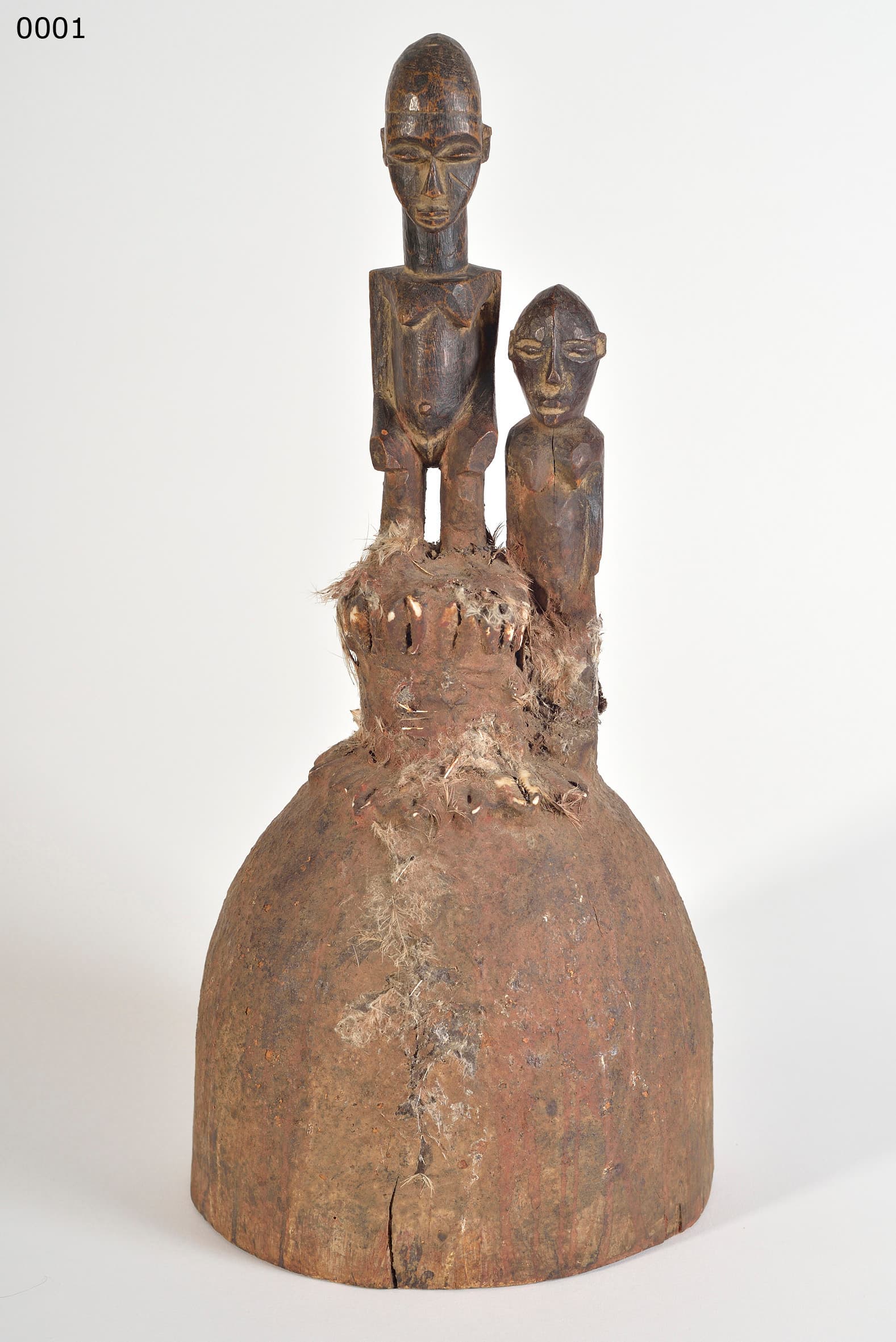
shrine altar with BATEKE couple
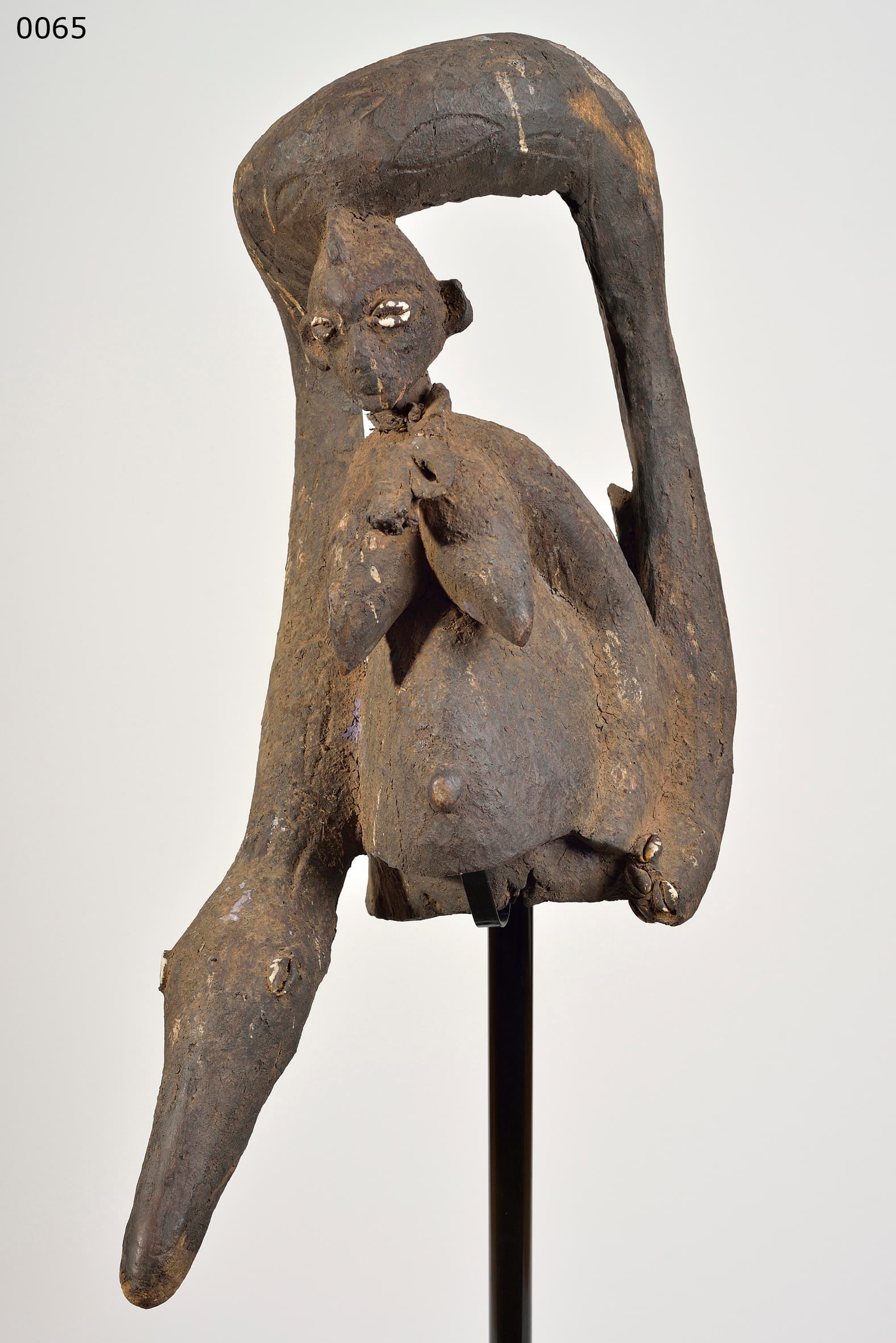
rare head crest mask
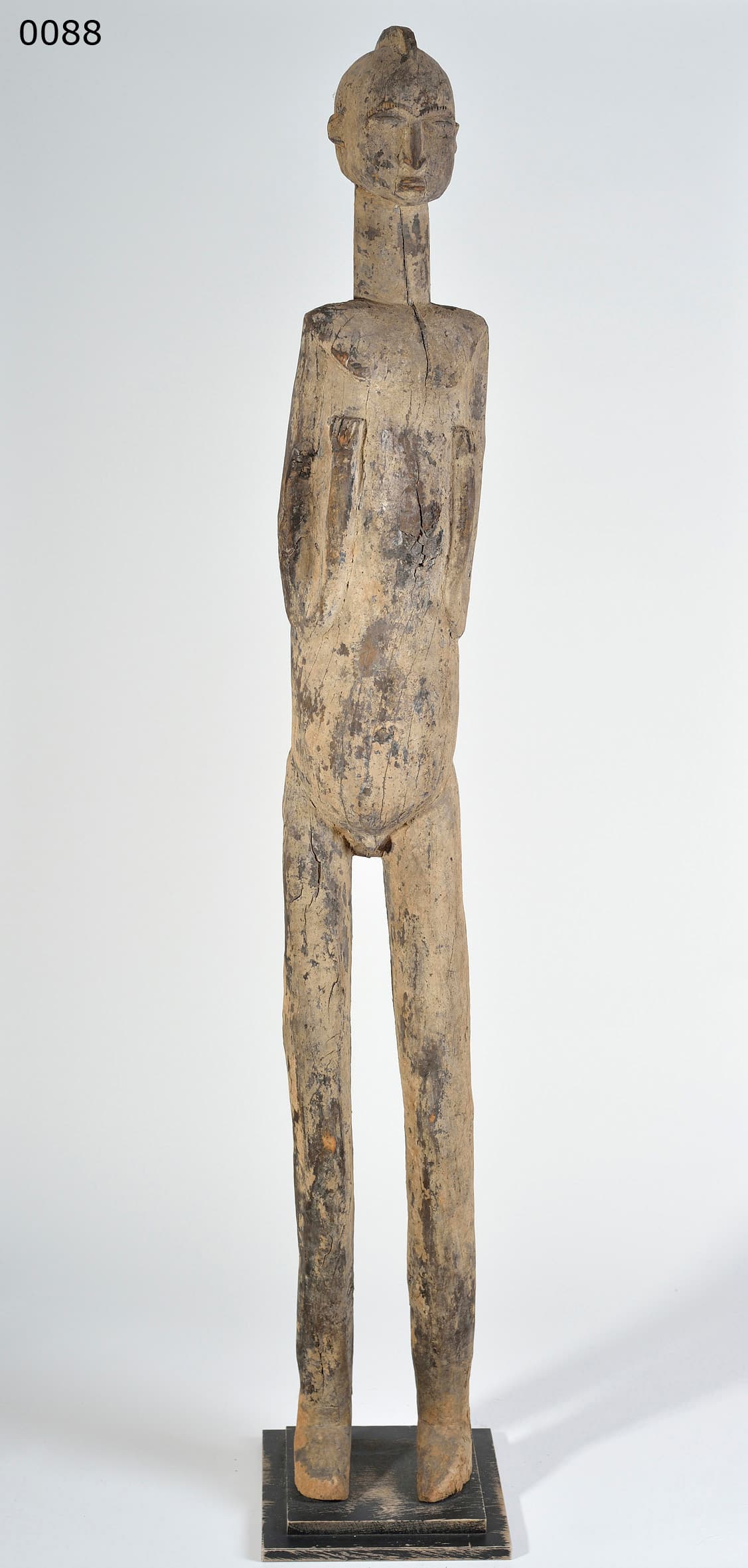
shrine figure representing a BATEBA spirit (unusually tall, rare)