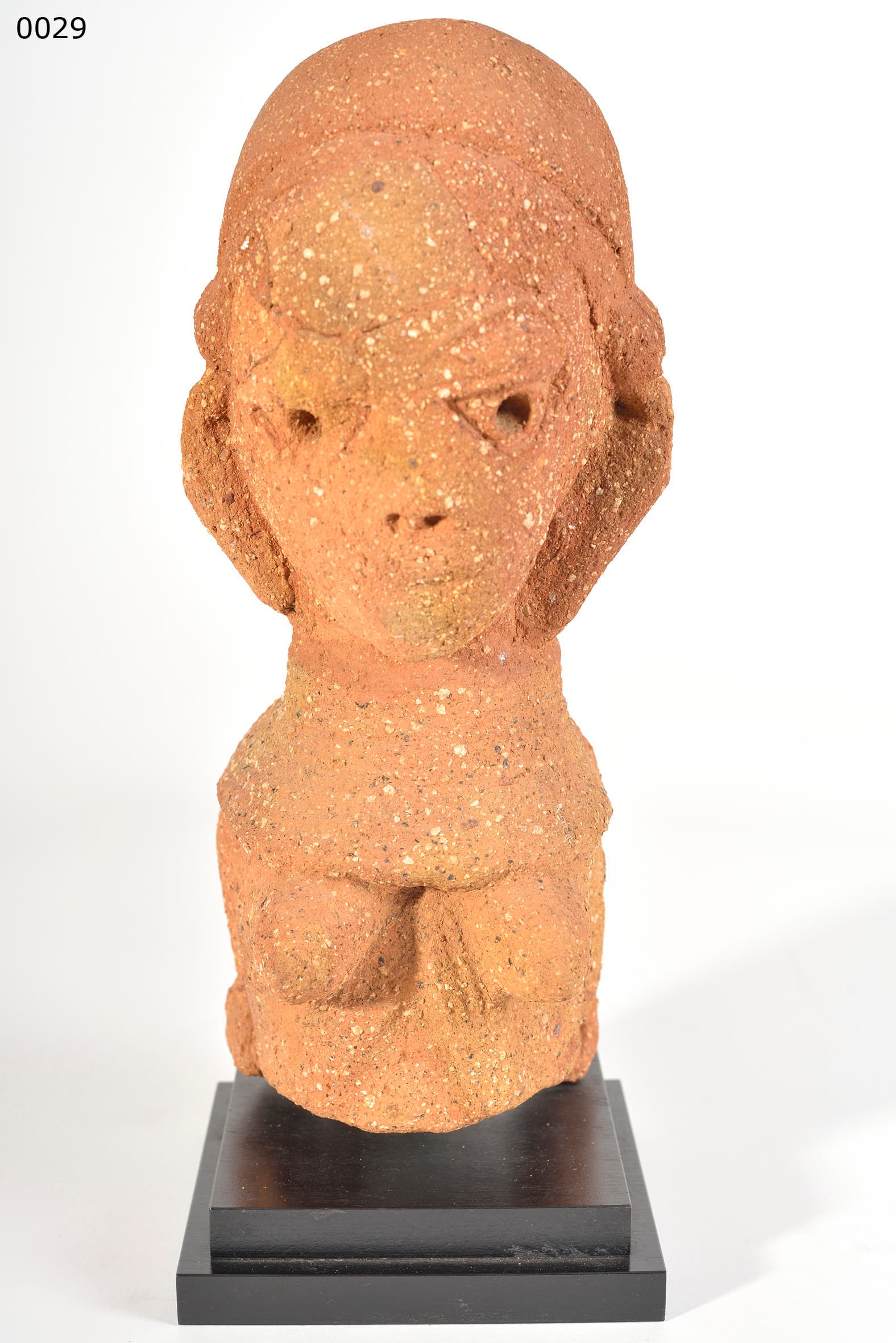
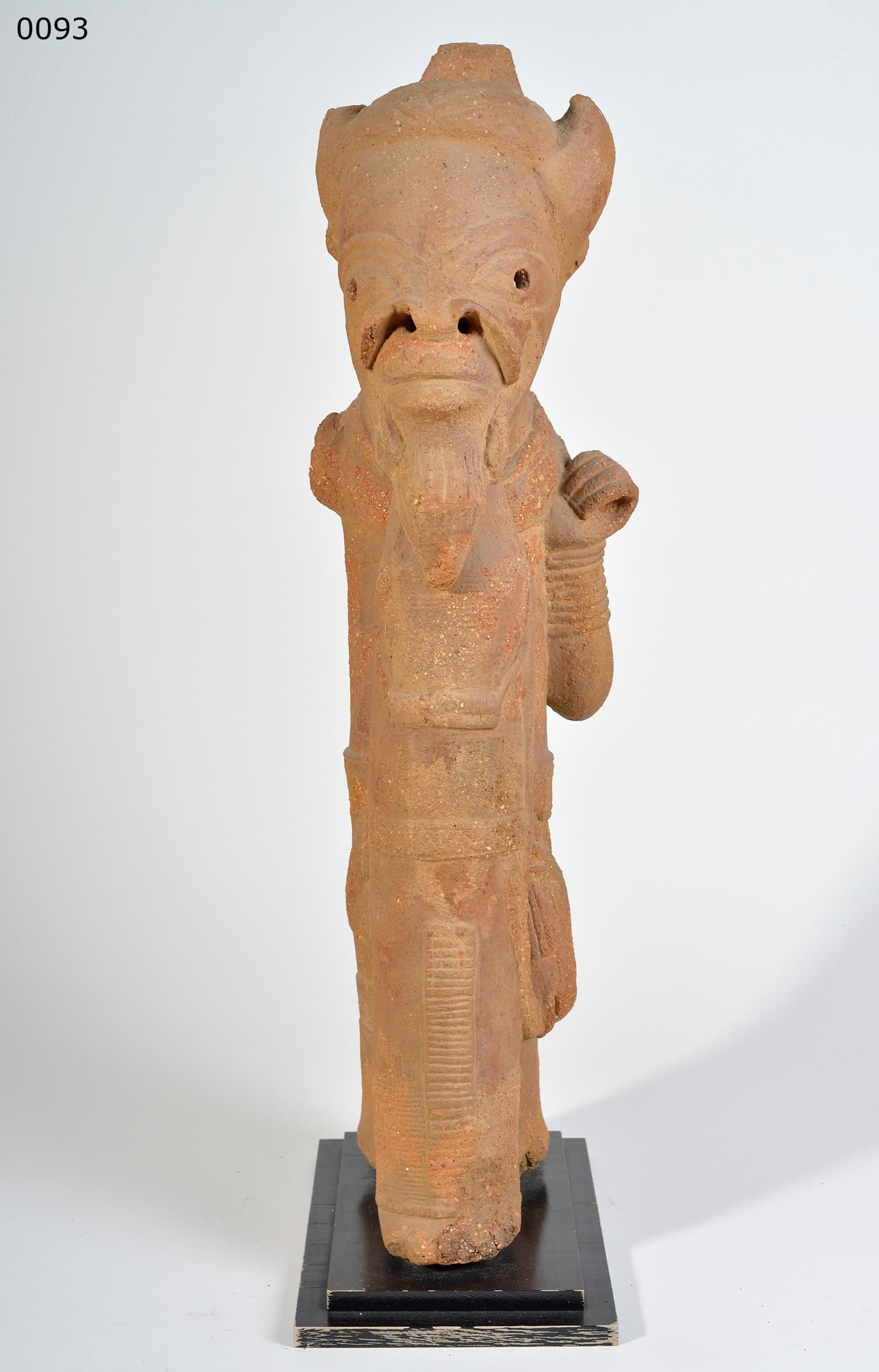
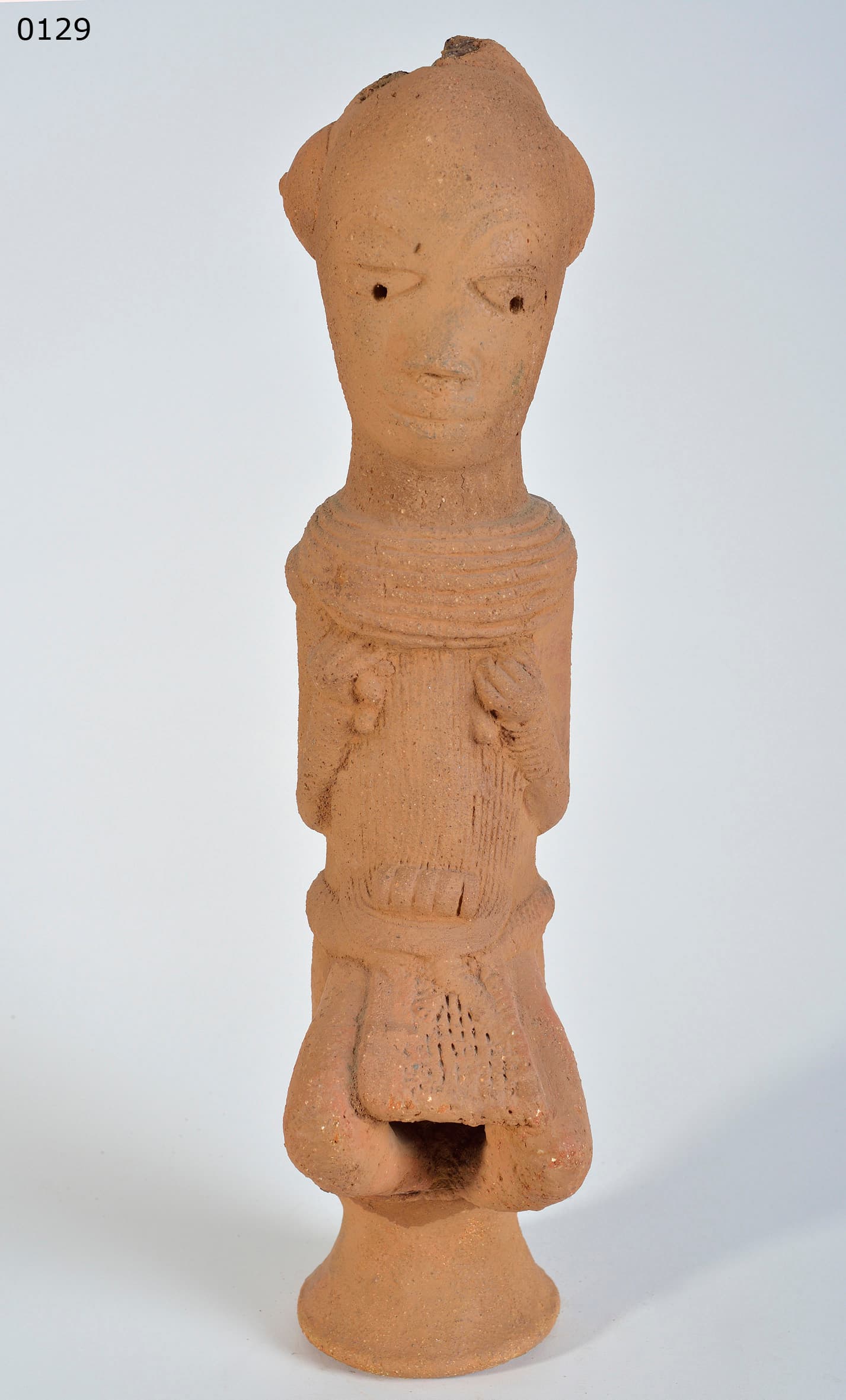
A massive Nok terracotta altar figure (~2000 years old, 43 cm) from Nigeria — a kneeling figure with an elongated tubular head, heavy flared lips, and the signature pierced triangular eyes. Coarse grog-tempered clay body covered in thick pale earthen calcification. Part of a trio of Nok pieces in the collection (0456, 0458, 0459).
Note: Excel catalog lists "1st half 20th cent," but the grog-tempered clay body, deep calcification, and morphology are consistent with its 2,000-year-old Nok counterparts — suggesting a clerical dating error.
1. The morphological genius of the African iron age
The Nok civilization (c. 1500 BC – 500 AD) produced a foundational style for sub-Saharan sculptural abstraction.
- Tubular Cranial Elongation: The artists moved away from human naturalism, opting to stretch and distort the craniums into soaring tubular cones — this figure exemplifies a highly pronounced form of the elongation.
- Pierced Triangular Eyes: Deep subtractive piercing for eyes and mouth was both a stylistic choice creating dramatic dark voids in the clay, and a functional engineering technique allowing heat to escape during firing to prevent the thick-walled figure from shattering.
2. Agricultural shrine with rare bodily posture
Unlike fragmented Nok busts (typified by 0458), this figure is rare because it retains its complex kneeling bodily posture.
- Deified Harvest Ancestor: These massive figures are traditionally interpreted as components of large open-air agricultural shrines — positioned in the earth, they may have represented deified ancestors or spirits of the harvest.
- Intentional Ritual Breaking: Petitioned by early iron-smelting communities to ensure rainfall and fertility; archaeological theories suggest when these shrines were abandoned, the figures were intentionally broken to release their accumulated spiritual energy back into the earth.
3. Millennium-old calcification and quartz grog
The physical geology supports its antiquity.
- Quartz-Tempered Body: The clay is heavily tempered with large chunks of quartz grog, visible across the eroded surfaces — a technique used by ancient potters to prevent thick-walled ceramics from shattering in open-pit fires.
- Crystalline Burial Calcification: Prolonged burial in acidic soil is consistent with the loss of slip and the formation of a hard white crystalline calcification bonded to the porous terracotta.
Summary
A rare kneeling Nok figure with classic tubular cranial elongation, this terracotta represents the distinctive abstraction of the ancient Nok civilization. Its morphology and geological calcification are consistent with its attribution as a significant archaeological work.
Written with AI assistance from the collection appraisal, object photography and our own research; editorially reviewed. Mistakes are possible — corrections are welcome. How we work →