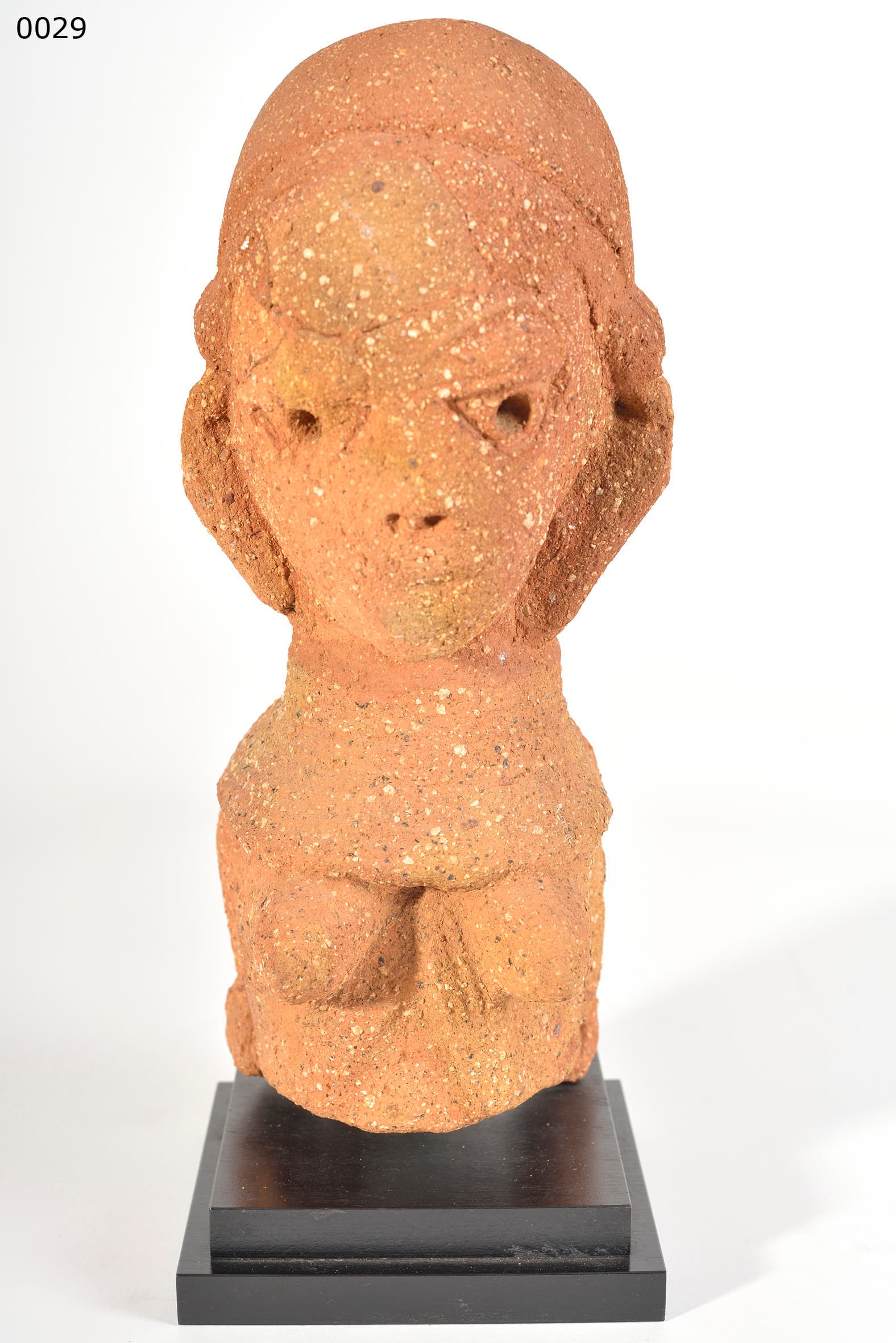
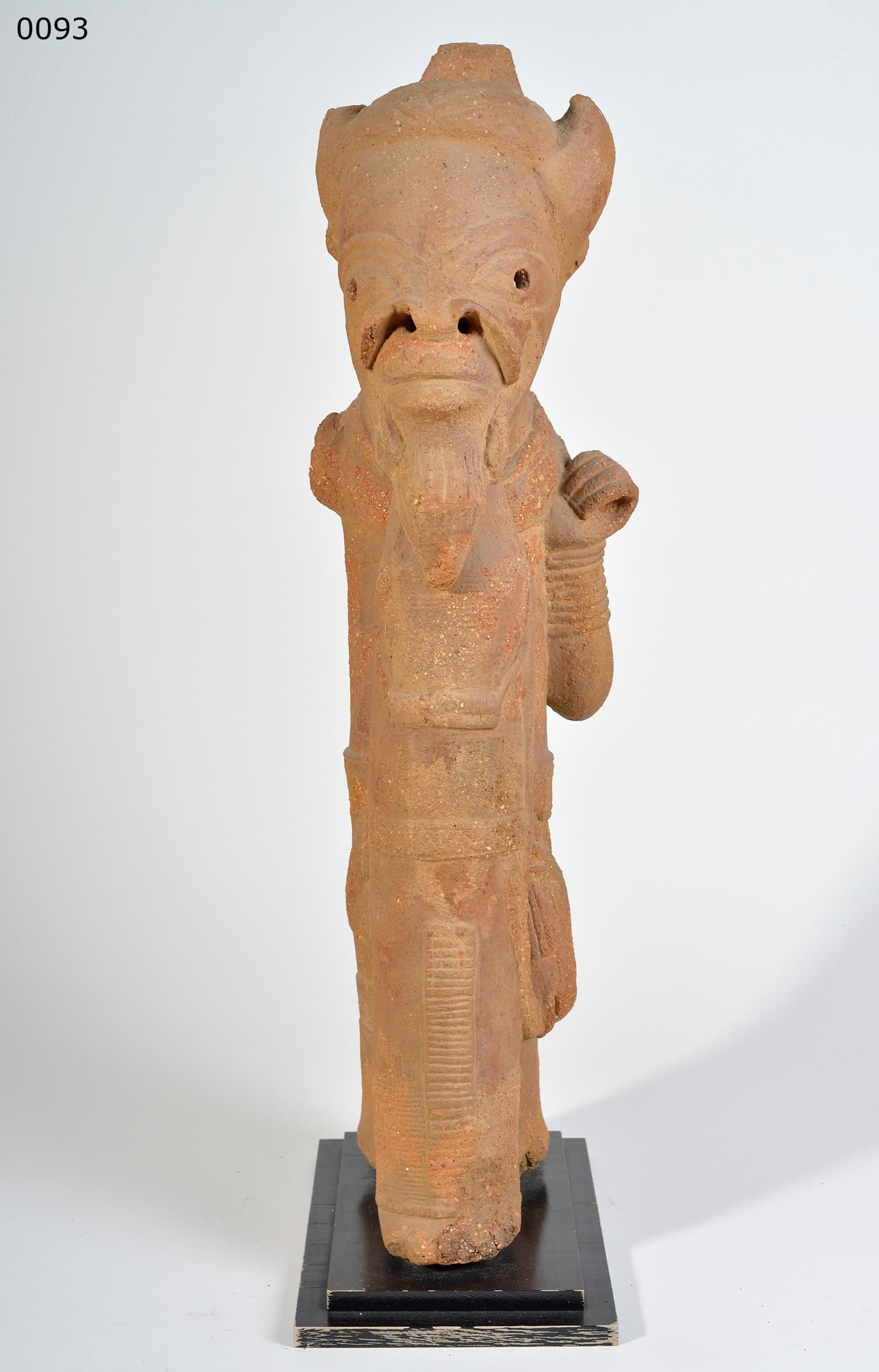
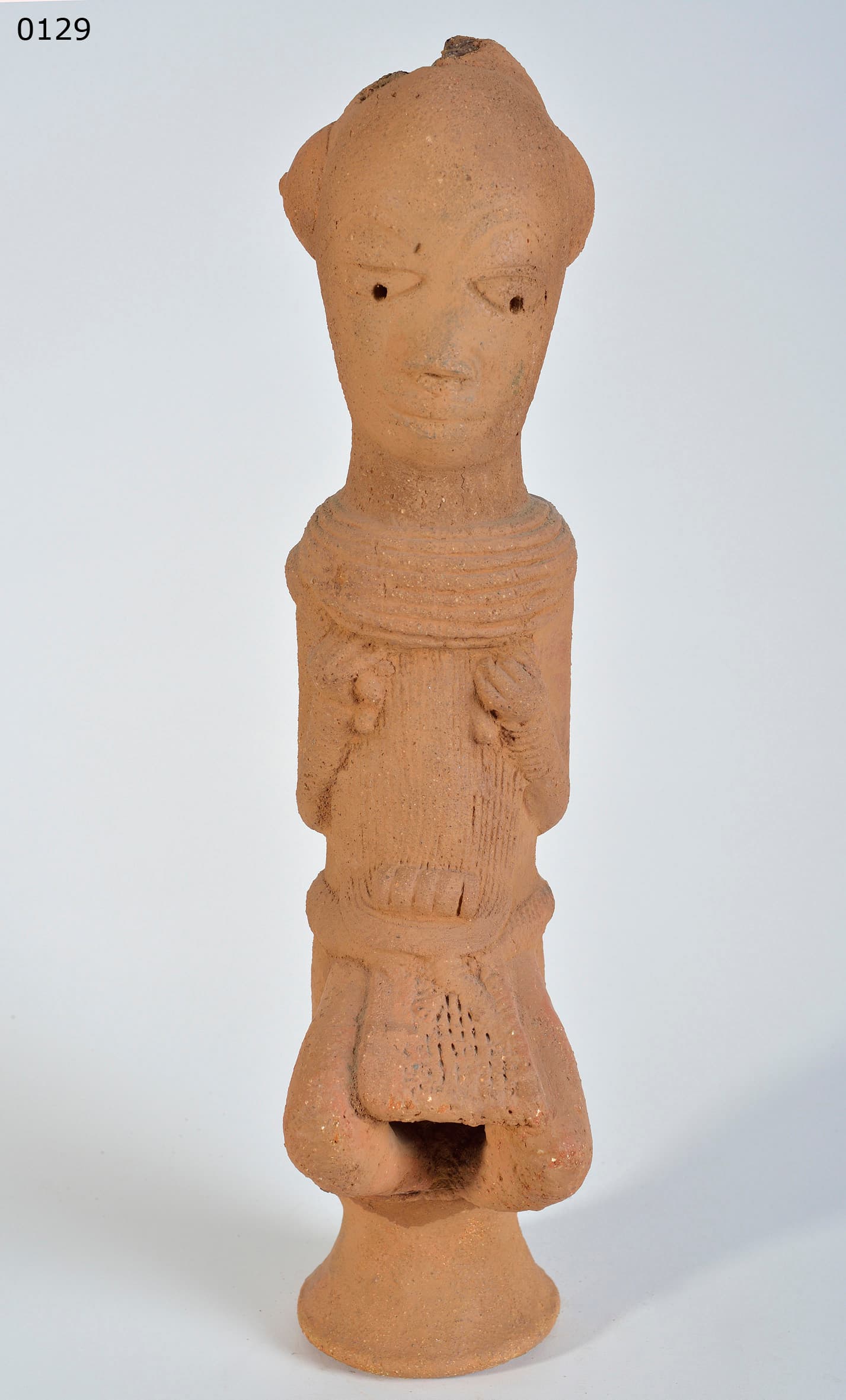
A Nok terracotta altar figure (~2000 years old, 29 cm) from Nigeria — a seated/kneeling figure with its arms wrapped around its legs, elongated tubular cranium, classic pierced triangular eyes, and heavy flared lips. Coarse grog-tempered clay body covered in thick pale earthen calcification. Part of a trio of Nok pieces in the collection (0456, 0458, 0459).
1. The morphological genius of the African iron age
The Nok civilization (c. 1500 BC – 500 AD) produced a foundational style for sub-Saharan sculptural abstraction.
- Full-Body Survival: Like 0456, this figure is rare because it retains its complex seated bodily posture with arms wrapped around legs — most Nok pieces survive only as fragmented heads (compare 0458).
- Compositional Unity: The artist achieved a compact self-contained silhouette — the tubular cranium, triangular voids for eyes and mouth, and the limbs enclosing the torso create a tight architecturally sound mass engineered to survive open-pit firing and burial.
2. Agricultural shrine sentinels
These figures are traditionally associated with large open-air agricultural shrines in the Nigerian Iron Age.
- Deified Ancestor or Harvest Spirit: Positioned in the earth of shrines belonging to early iron-smelting communities, they are traditionally understood to represent deified ancestors or spirits of the harvest.
- Intentional Ritual Breaking: Petitioned to ensure rainfall and fertility; when shrines were abandoned, archaeological consensus suggests figures were intentionally broken to release their spiritual energy back into the earth.
3. Millennium-old calcification and quartz grog
The physical geology supports an attribution of immense antiquity.
- Quartz Grog Temper: The clay is heavily tempered with large chunks of quartz grog, visible across the eroded surfaces — essential for preventing failures during open-pit firing of thick-walled ceramics.
- Crystalline Burial Crust: Deep burial in acidic soil has stripped the slip and entombed the figure in hard white crystalline calcification that has bonded to the porous terracotta.
Summary
This seated Nok figure with its arms enclosing its legs is a notable survival from the West African Iron Age — rare for retaining its complete bodily posture. Its geological calcification and grog-tempered structure support its attribution to this ancient ceramic tradition.
Written with AI assistance from the collection appraisal, object photography and our own research; editorially reviewed. Mistakes are possible — corrections are welcome. How we work →