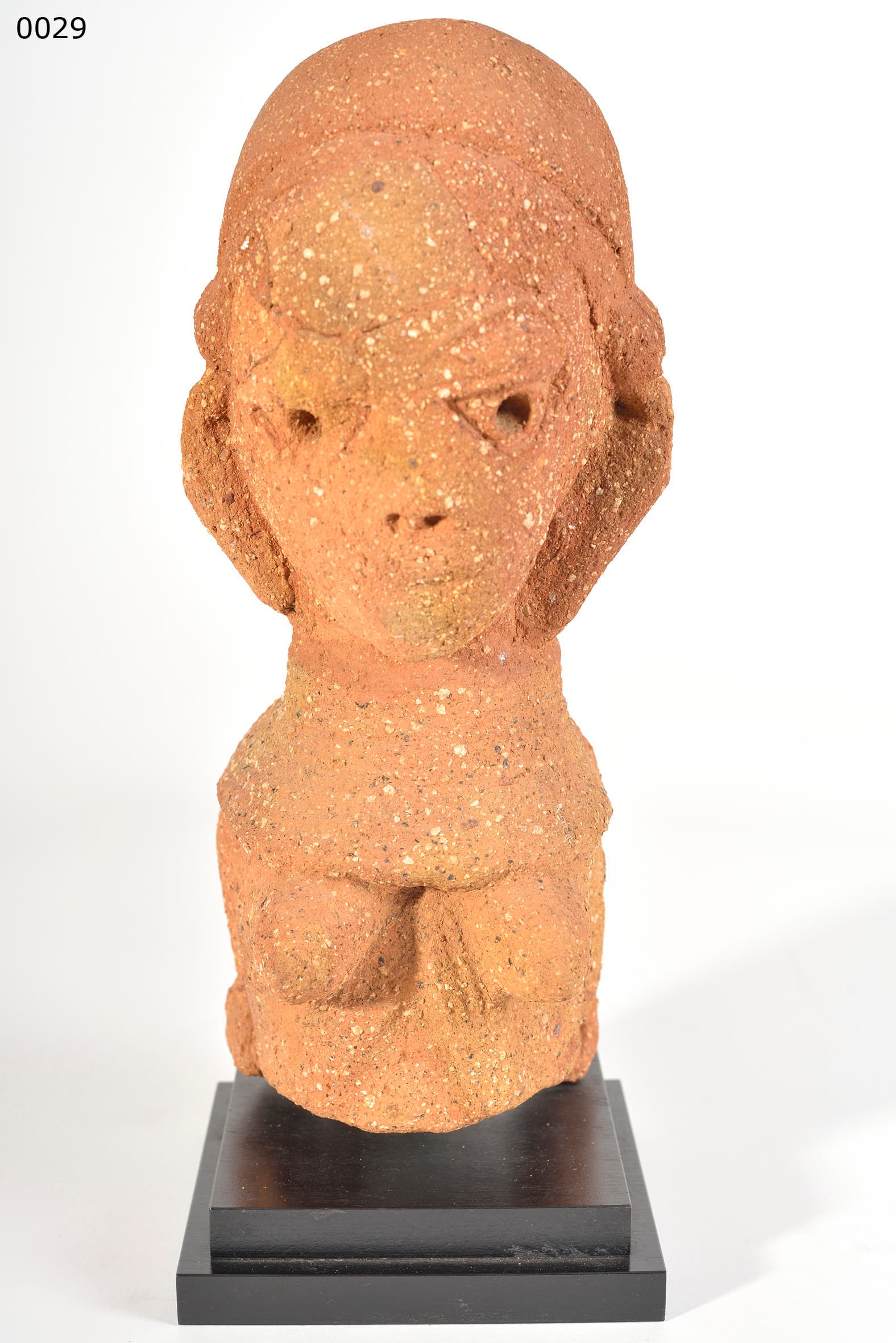
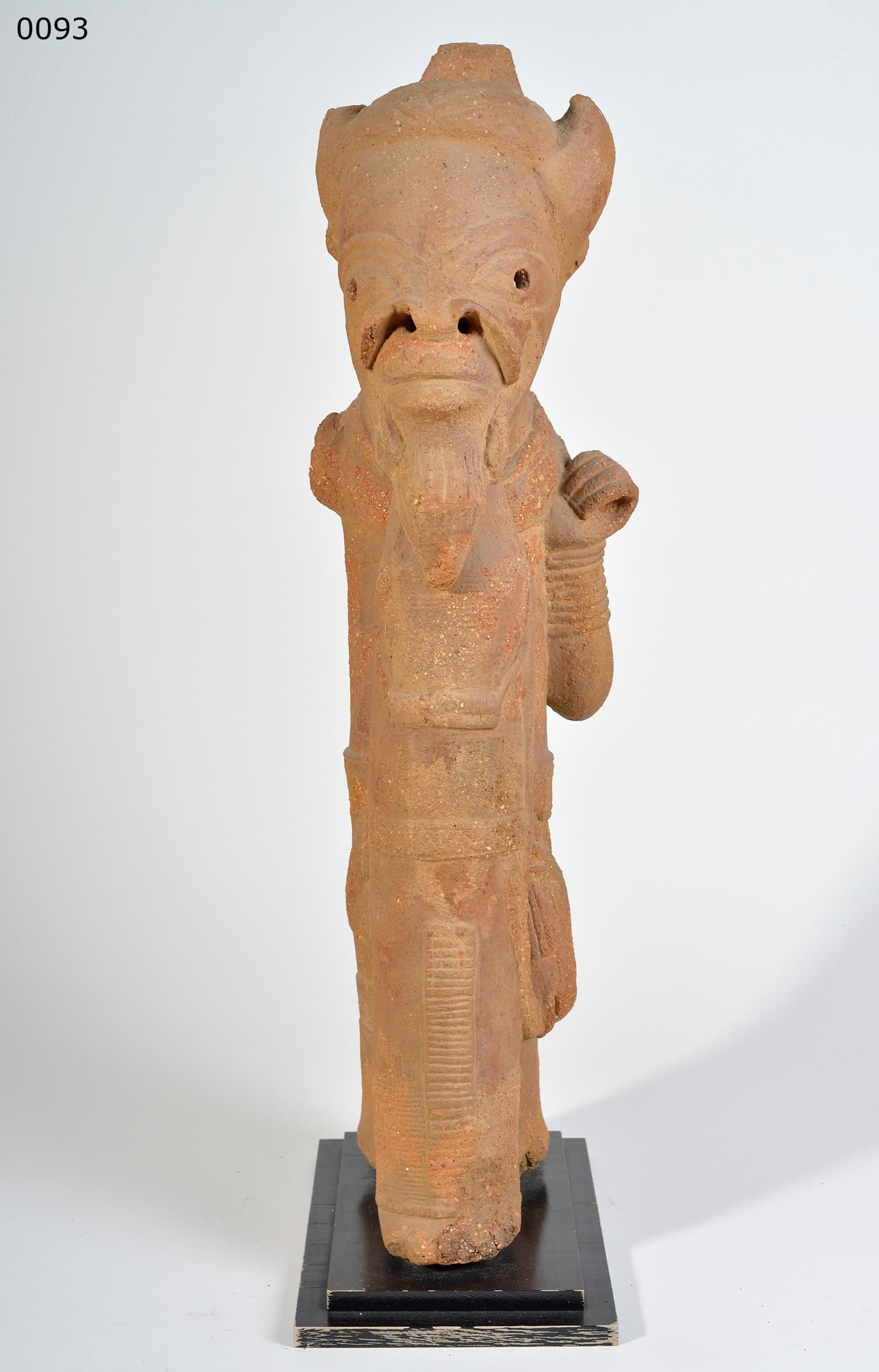
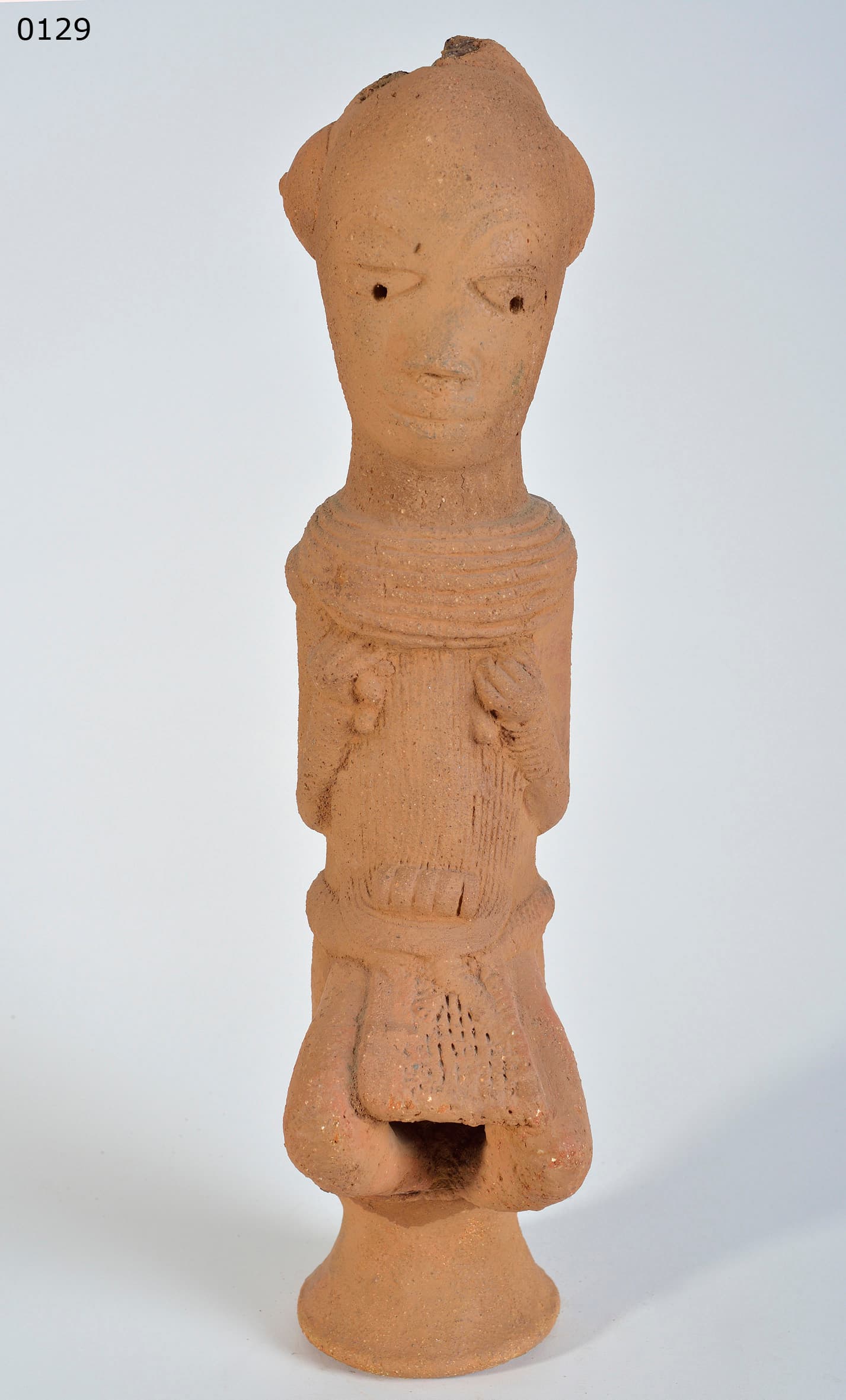
A massive terracotta altar figure attributed to the Nok culture (~2000 years old, 70 cm) from Nigeria — a kneeling individual with a highly stylized elongated head, pierced triangular eyes, and an elaborate multi-tiered coiled necklace. The deeply degraded grog-tempered clay is completely coated in a thick white crystalline soil calcification, with the right arm raised in a gesture of supplication.
1. The colossal apex of iron age clay
The Nok civilization (c. 1500 BC – 500 AD) is widely regarded as an early origin point of monumental sculpture in sub-Saharan Africa.
- Structural Engineering at Scale: Finding a relatively intact figure of this 70 cm scale is highly unusual — advanced coil-building techniques support the heavy elongated tubular cranium.
- Piercing as Kiln Vents: The deep subtractive piercing of triangular eyes and mouth creates intense dramatic shadows while functionally serving as vital exhaust vents, preventing the massive thick-walled clay body from exploding in the ancient open-pit kilns.
2. Kneeling supplication and the earth shrine
The survival of the torso reveals the figure's posture — kneeling upon the earth with one arm raised.
- Universal Reverence Posture: A sign of reverence, ritual concentration, and the grounding of power into the soil.
- Central Deity of Agricultural Shrine: This massive statue is traditionally interpreted as a central deity or ancestral anchor of an open-air agricultural shrine — early iron-smelting communities may have petitioned such figures to ensure soil fertility, bring rainfall, and provide protection against disease; the elaborate multi-tiered coiled necklace signifies elite / deified status.
3. Two millennia of geological calcification
The age of the piece is indicated by its physical geology.
- Coarse Quartz Grog Packing: The clay is visibly packed with massive coarse chunks of quartz grog — an ancient tempering technique required for such large-scale ceramics.
- Crystalline Soil-Absorbed Crust: Long burial in the acidic Jos Plateau environment has completely eroded the original smooth slip — the highly porous surface has acted like a sponge, absorbing minerals to create a thick hard white crystalline calcification consistent with natural deposition over a significant period.
Summary
Towering at 70 cm, this remarkably intact altar statue is a significant monument of the African Iron Age. Its profound geometric elongation and geological calcification are consistent with an ancient origin, supporting its attribution as an important example of early West African sculpture.
Written with AI assistance from the collection appraisal, object photography and our own research; editorially reviewed. Mistakes are possible — corrections are welcome. How we work →