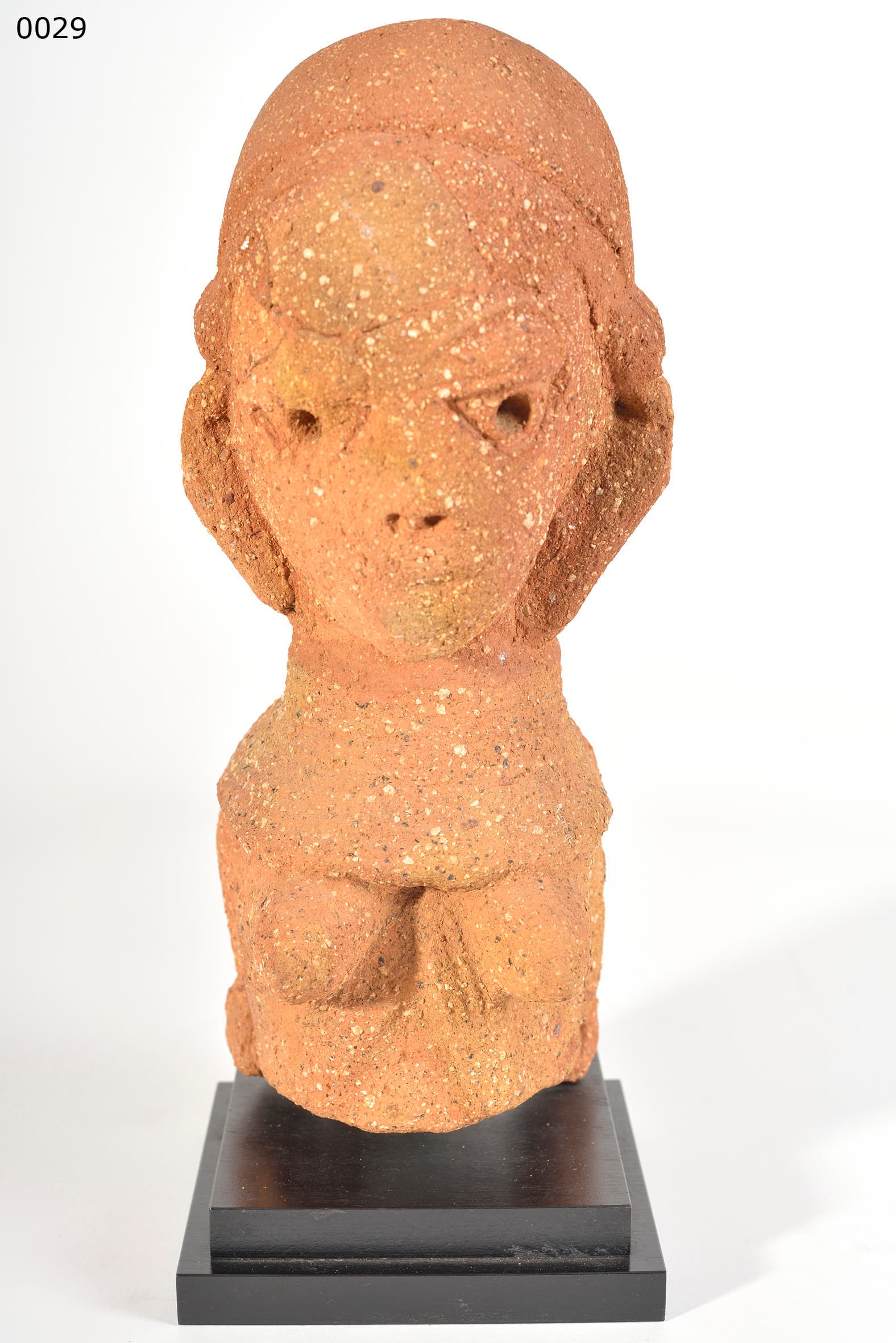
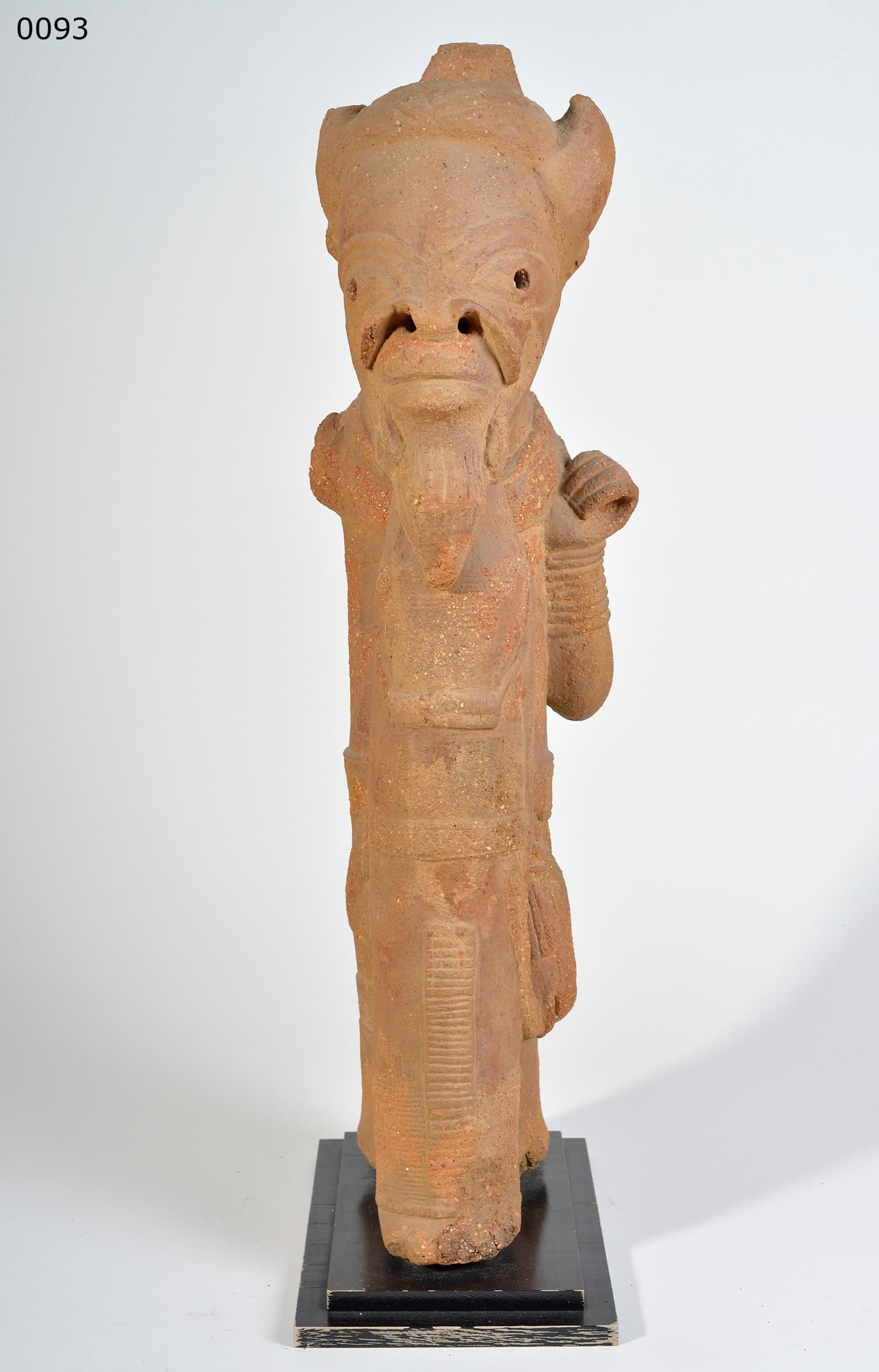
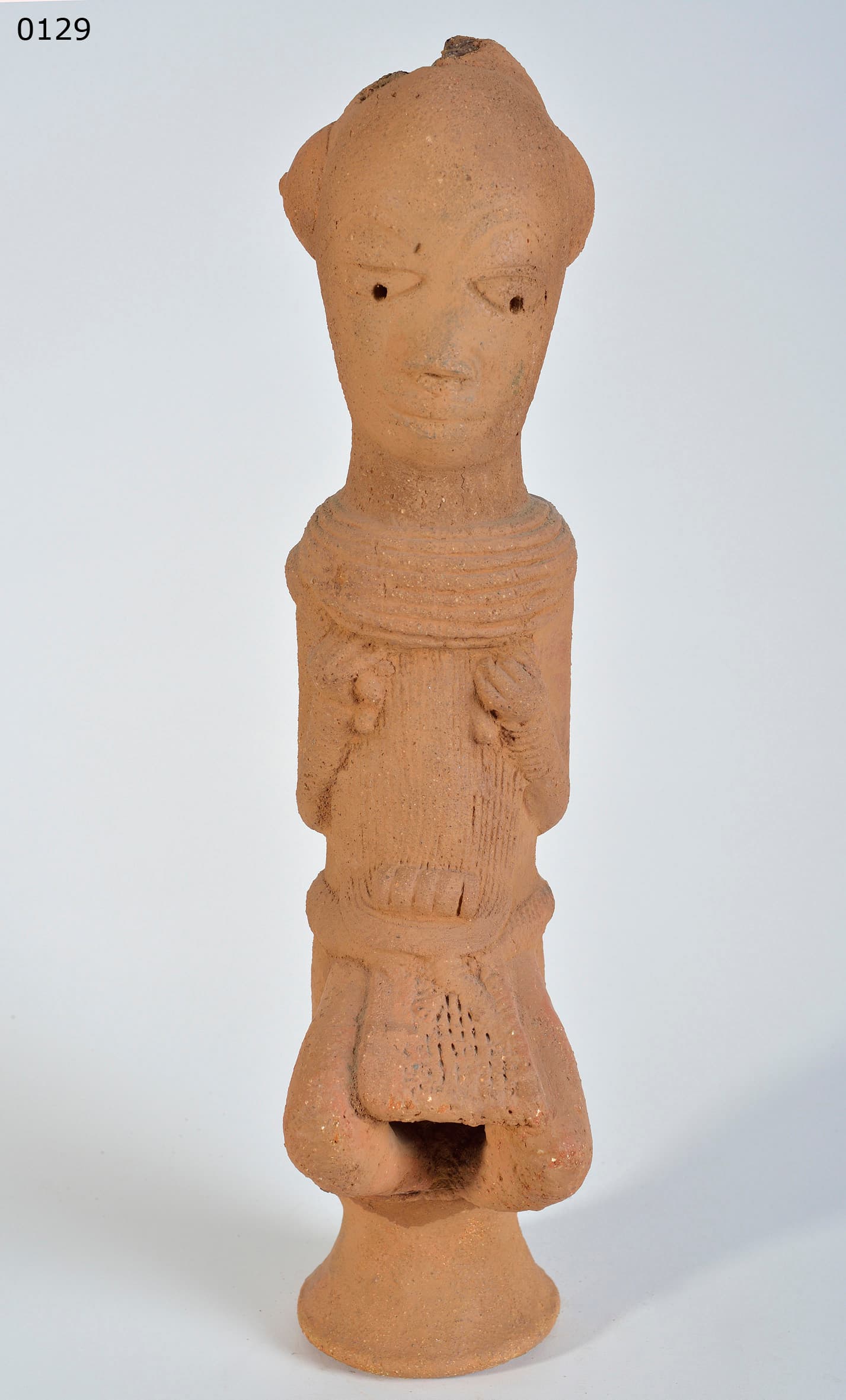
This monumental terracotta figure depicts an elaborate, kneeling individual with a massive head, adorned in thick, multi-ringed necklaces and body bands, holding an object or small entity. The low-fired, heavily quartz-tempered red clay is entirely encased in a thick, ancient, calcified archaeological crust.
1. Aesthetic style and regional traits
This colossal piece represents a highly developed phase of the Nok tradition (500 BC – 200 AD), one of the earliest known figurative sculptural traditions in Sub-Saharan Africa. The scale alone — at 85 cm — is a remarkable technical achievement for ancient, low-fired ceramics. The figure showcases classic Nok iconography: the elaborate, high-status bodily adornment (represented by the heavy clay coils), and the triangular, pierced eyes. The level of detail achieved in the wet clay suggests a complex ancient society capable of supporting skilled artisans.
2. Ritual function and religious meaning
Statues of this scale are not typically classified as common grave goods; they are often interpreted as central temple or sanctuary figures. The figure's kneeling posture is a traditional sign of supplication and reverence. Placed within a communal shrine, this towering effigy may have been the focal point for major agrarian festivals, sacrifices, and the mediation of cosmic forces. It is thought to represent a deified founding ancestor or a deity associated with fertility, traditionally invoked to protect the iron-age settlement against drought and plague.
3. Physical patina and surface characteristics
The antiquity of this monument is consistent with a period of approximately 2,000 years, as suggested by its physical degradation. The terracotta has suffered severe vitrification, and the original smooth slip has eroded to expose the coarse quartz grit added by the ancient potters to stabilize the thick clay walls. The entire surface is chemically bonded with thick, immovable layers of calcified Laterite soil and salt blooms — an archaeological condition consistent with extraction from deep stratigraphic layers.
Summary
This colossal Nok-style statue is of significant archaeological interest, offering a compelling glimpse into the spiritual complexity of Africa's early iron-age civilization. Its sheer scale, elaborate adornment, and profound ancient encrustation make it a highly significant artifact of global human history.
Written with AI assistance from the collection appraisal, object photography and our own research; editorially reviewed. Mistakes are possible — corrections are welcome. How we work →