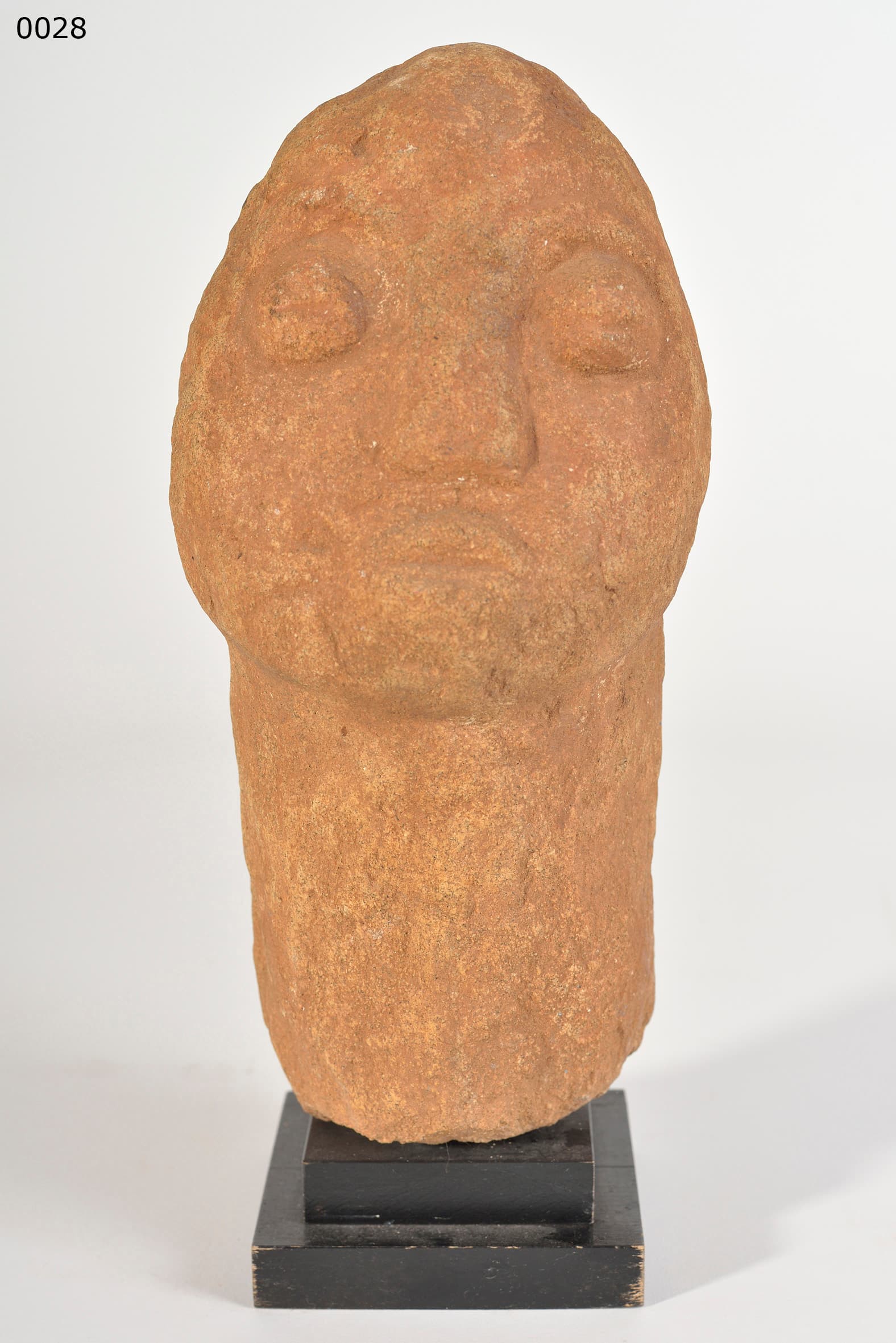
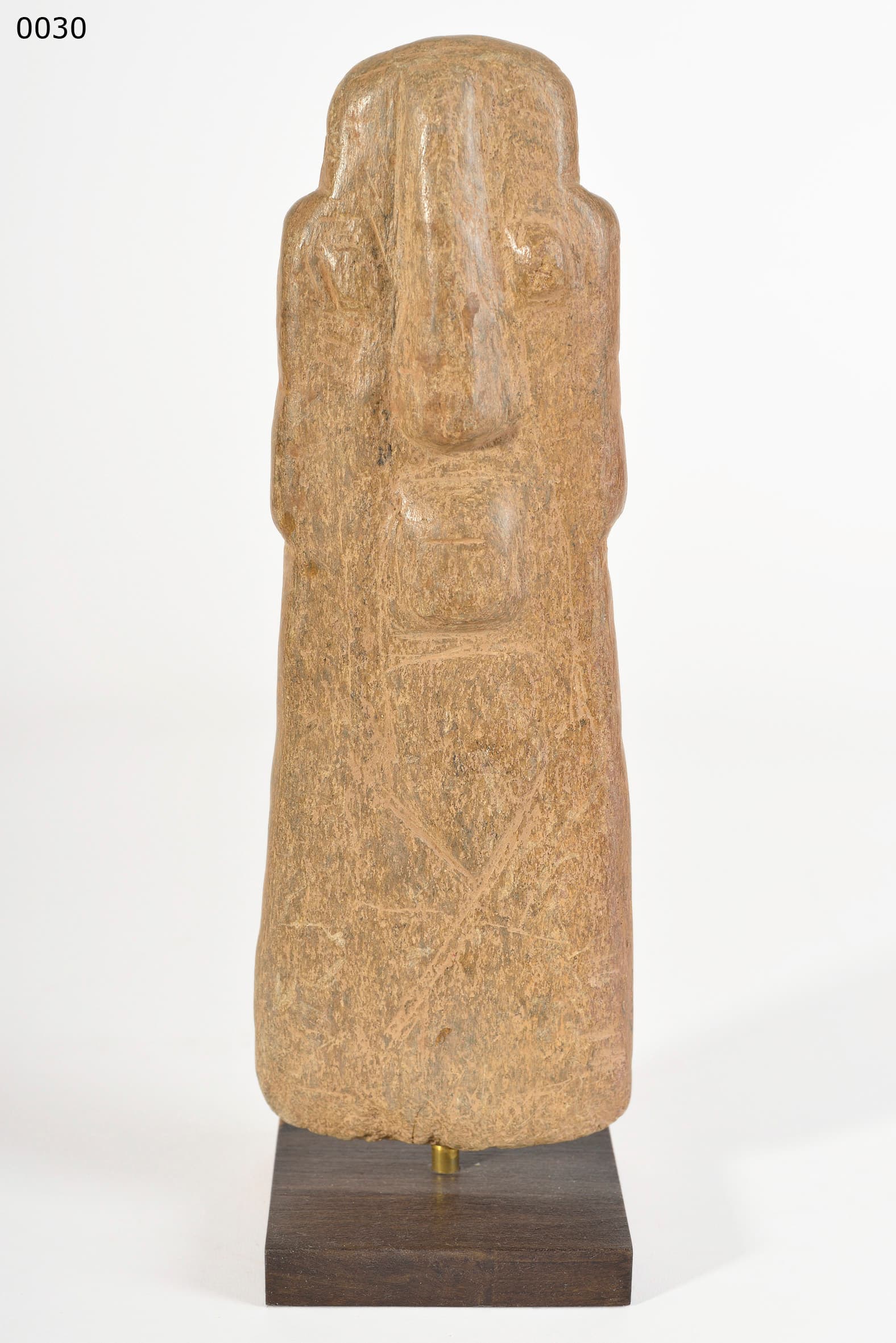
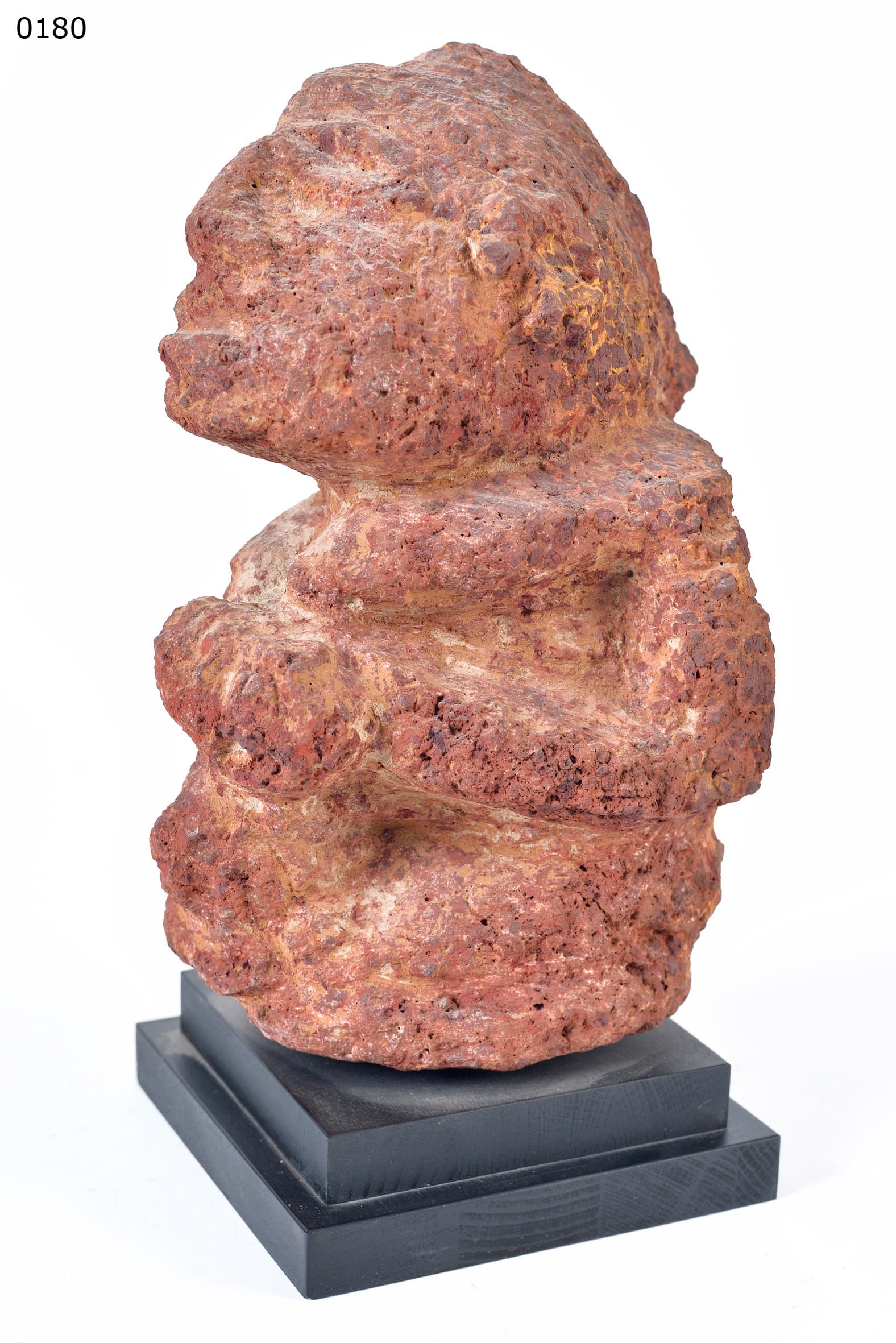
Carved from a dense, heavy, reddish-brown stone, this archaic head features minimal, heavily weather-worn facial details, characterized by a pronounced brow line and a smooth, jutting jaw. The entire lithic surface is rounded and softened, consistent with long-term environmental erosion and burial.
1. Aesthetic style and regional traits
Stone carving is rare in Sub-Saharan Africa, making this archaic Kurumba-associated piece of significant interest. The aesthetic is one of pronounced minimalism. The sculptor reduced the human head to a massive geometric block, utilizing deep cuts to indicate the brow and the jaw. This reductionist approach, likely influenced by the difficulty of carving dense stone without metal tools, results in an artwork that projects a sense of permanence and gravity.
2. Ritual function and religious meaning
Traditionally associated with ancient necropolises or shrines in the Sahel, these stone heads are believed to have served as grave markers or ancestral effigies. In early animist societies, wood was known to rot and succumb to termites; therefore, to anchor an ancestor's spirit to the earth, their effigy was carved from durable stone. Placed into the ground, the head served as a conduit, allowing descendants to pour libations and seek agricultural blessings associated with deep earth spirits.
3. Physical patina and age estimation
The 2,000-year age estimation is consistent with the pronounced lithic degradation of the object. Original tool marks, striations, and delicate facial details appear largely worn away by long-term exposure to wind, water, and subsurface soil friction. The stone possesses a smooth, undulating patina, with its pores packed with calcified minerals and Sahelian earth — a level of geological weathering consistent with a long-buried archaeological origin.
Summary
A rare survivor of ancient Sahelian lithic art, this stone head reflects early human desires for spiritual permanence. Its geometric abstraction and significant geological weathering make it a notable artifact of prehistoric West Africa.
Written with AI assistance from the collection appraisal, object photography and our own research; editorially reviewed. Mistakes are possible — corrections are welcome. How we work →