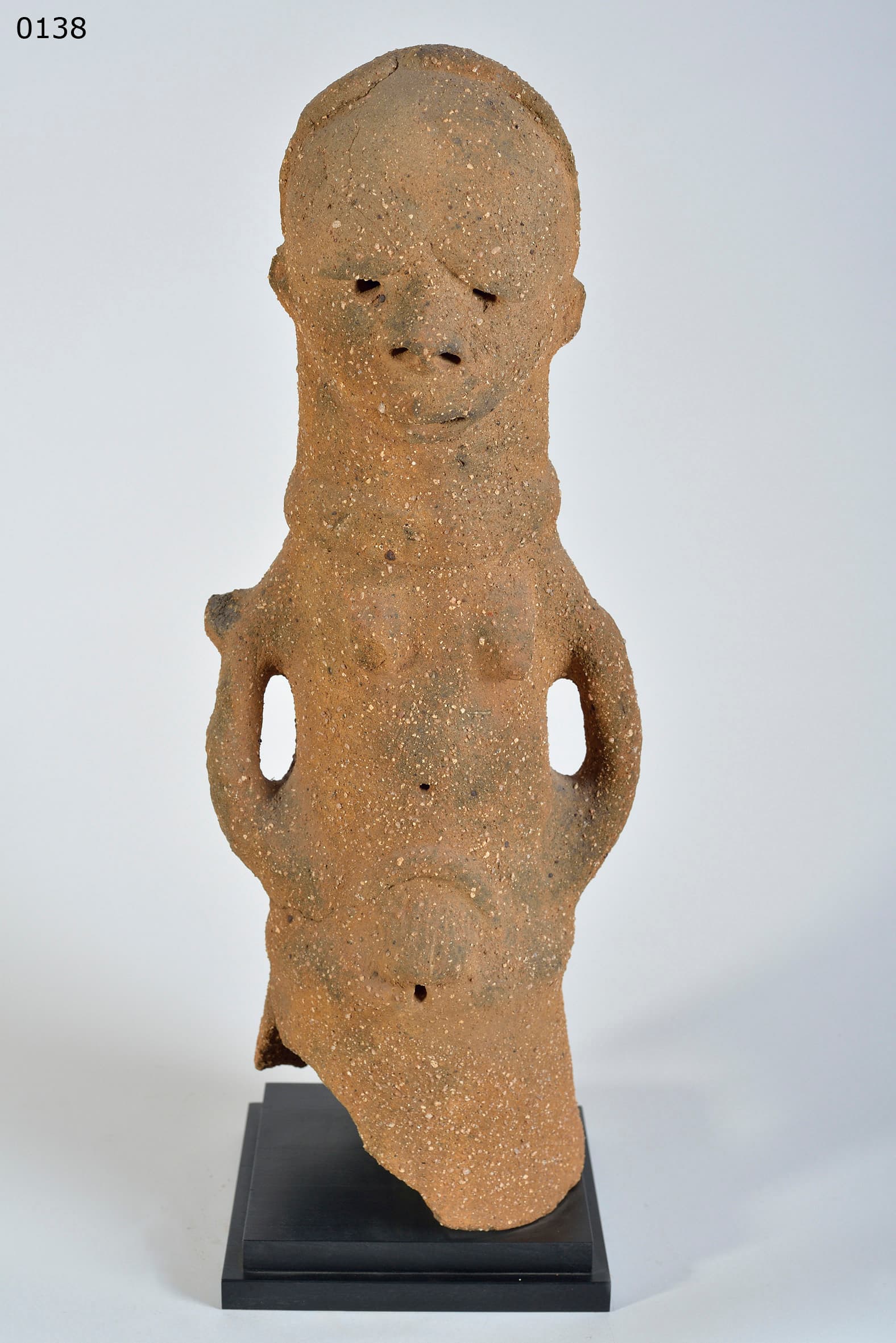
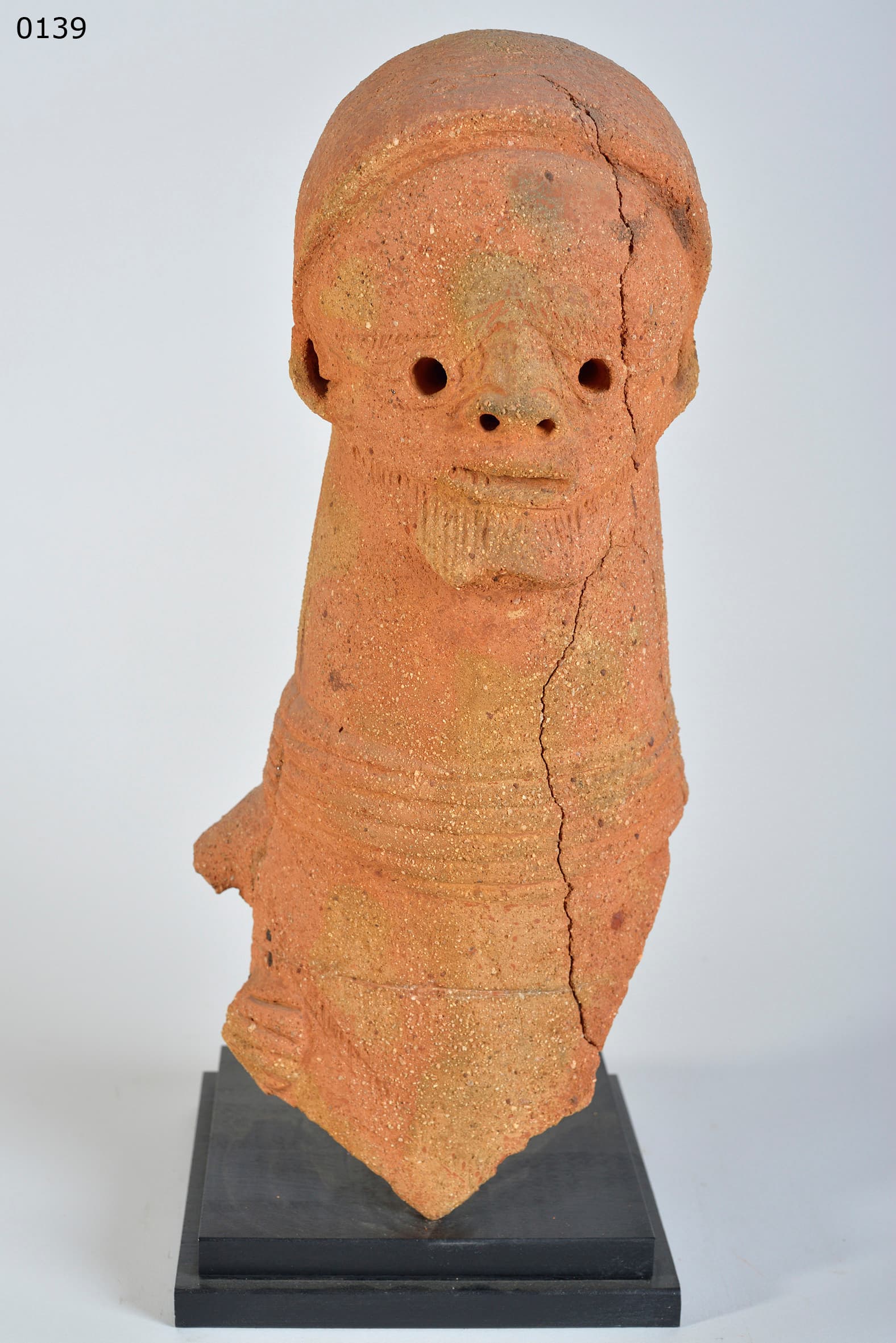
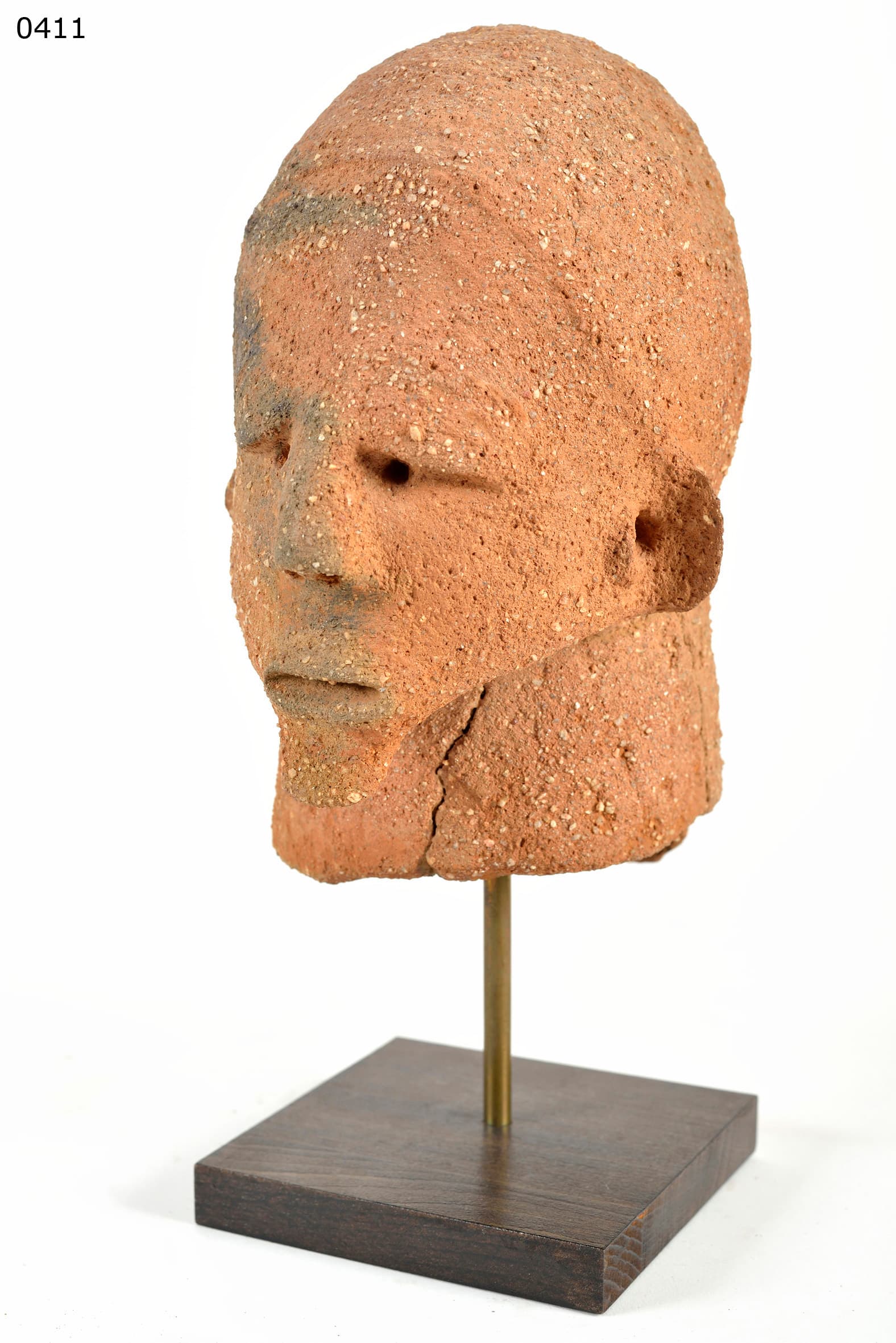
This red terracotta figure depicts a seated, stylized human with stubby, rudimentary limbs and a broad face featuring deeply incised, horizontal slit eyes and a protruding nose. The clay has a dry, matte surface with extensive archaeological pitting and earthen deposits.
1. Aesthetic style and regional traits
This piece is stylistically consistent with the ancient terracotta civilizations of Northern Nigeria, specifically the Katsina or Sokoto cultures (which overlap with the famous Nok culture). The aesthetic is characterized by extreme geometric abstraction. The limbs are reduced to simple tubular forms, while the face is dominated by the severe, horizontal slitting of the eyes and mouth — a technique achieved by cutting directly into the wet clay, casting deep, dramatic shadows.
2. Ritual function and religious meaning
Unearthed from ancient burial mounds and forgotten shrines, the exact function of these figures remains a subject of archaeological debate. However, they are widely understood to be funerary or ancestral effigies. Placed on graves or within sacred enclosures, they served as eternal intercessors between the living community and the powerful spirits of the earth, tasked with ensuring the fertility of the soil and the successful transition of the dead into the ancestral realm.
3. Physical patina and age indicators
The physical condition of the terracotta is consistent with significant antiquity. The surface is completely devoid of modern finishes, instead exhibiting profound, granular degradation from centuries of burial. Root marks, calcified mineral blooms, and deeply embedded Laterite soils are fused into the porous matrix of the clay, supporting an archaeological age of roughly two millennia (approx. 500 BC – 500 AD).
Summary
Despite its absence from the provided spreadsheet, this Katsina/Sokoto terracotta is a notable archaeological artifact. Its striking, minimalist incisions and deeply weathered, ancient surface provide a tangible link to Nigeria's earliest complex societies.
Written with AI assistance from the collection appraisal, object photography and our own research; editorially reviewed. Mistakes are possible — corrections are welcome. How we work →