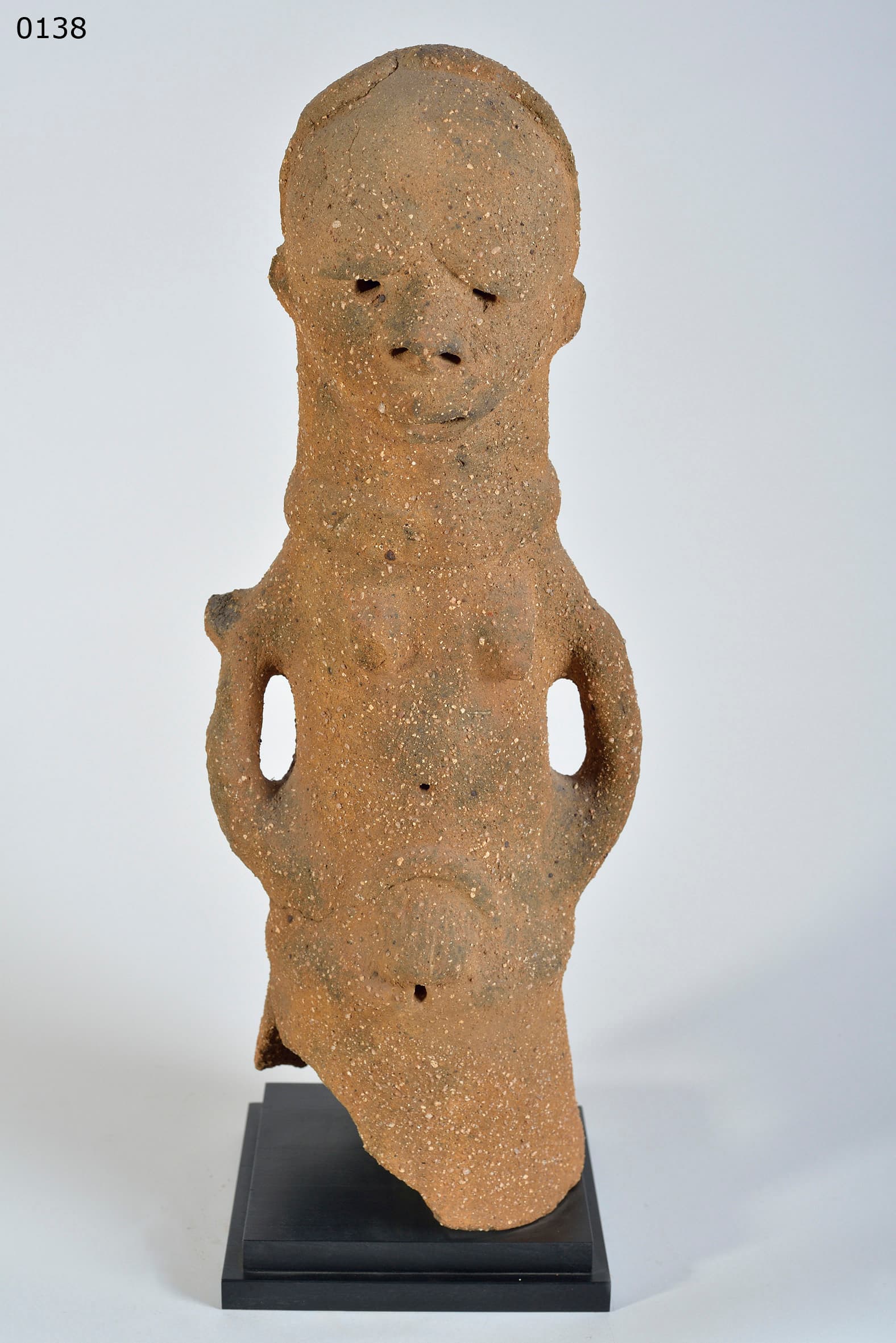
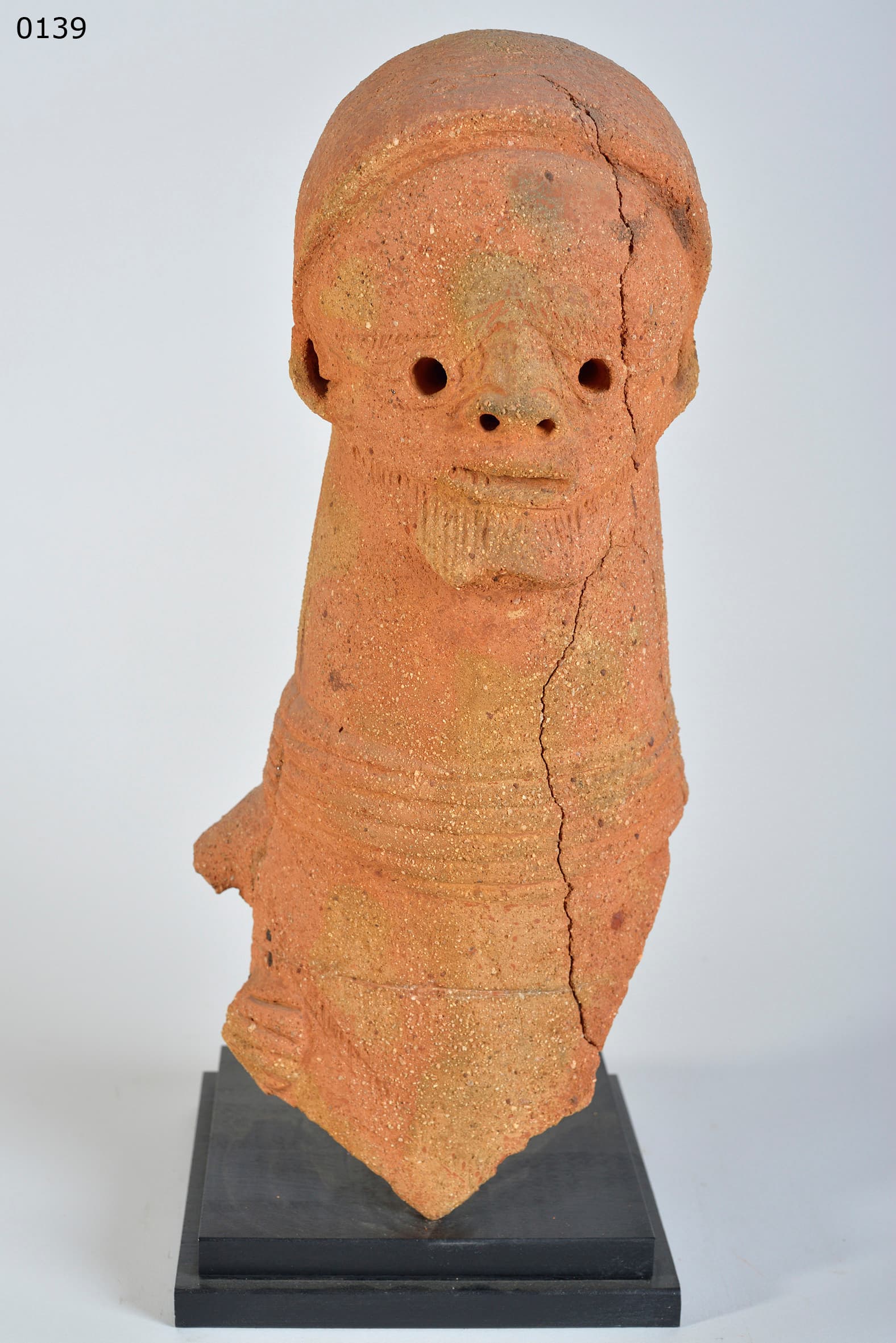
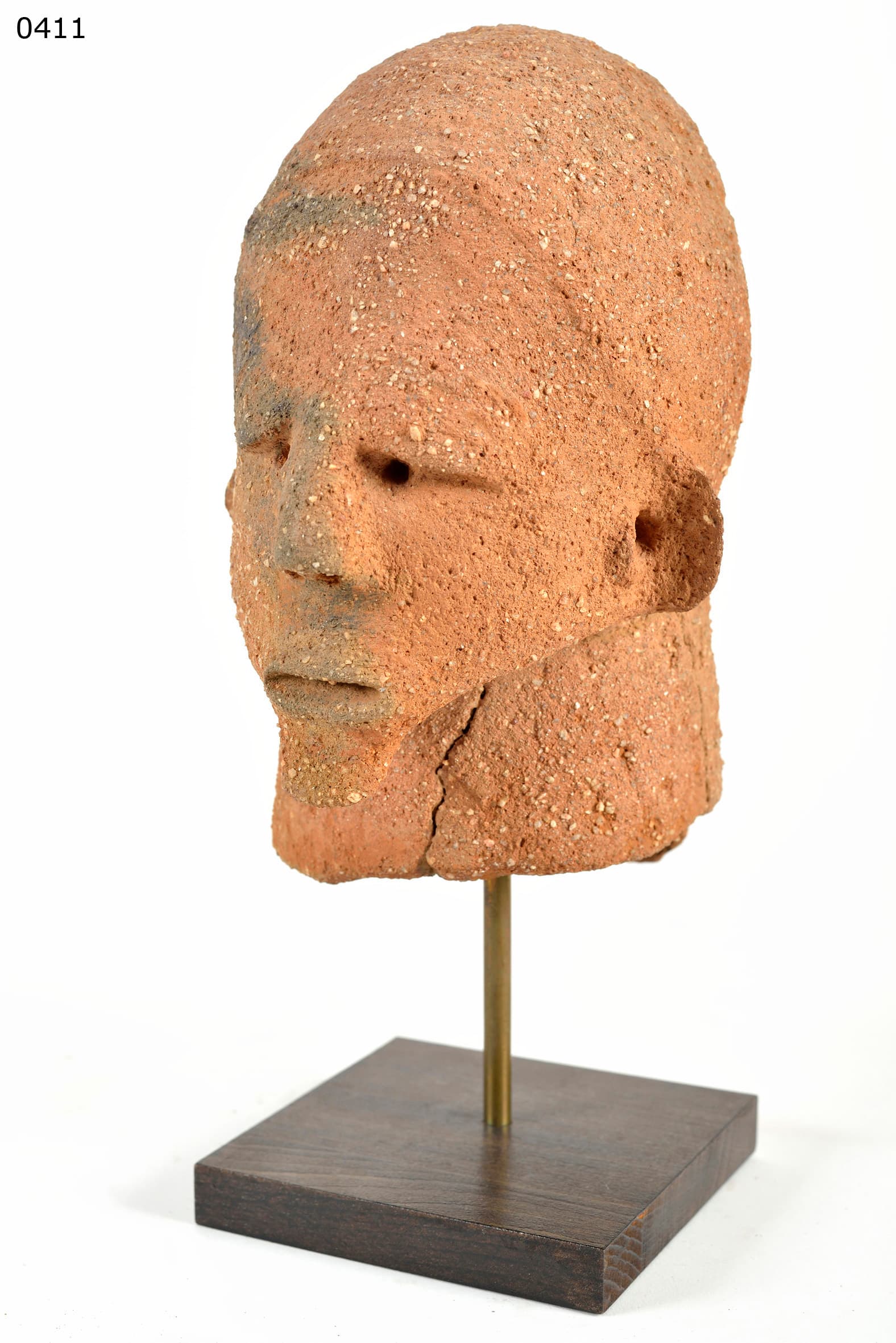
This fragmented terracotta bust depicts a highly abstracted human form with a prominent, jutting chin, a severe horizontal slit mouth, and a thick, columnar neck. The heavily quartz-tempered clay is completely encrusted with an ancient, calcified layer of Sahelian earth.
1. Aesthetic style and regional traits
This piece is a raw, evocative example of Sokoto brutalist geometry. While the Nok culture focused on elaborate hair and precise bodily adornments, Sokoto artisans stripped the human form down to its most imposing, fundamental shapes. The face is reduced to a stark, shield-like plane, with the mouth rendered simply as a deep, horizontal gash in the wet clay. The heavy inclusion of quartz grit within the clay body gives the figure a rugged, unyielding texture that mirrors the harsh environment of ancient Northern Nigeria.
2. Ritual function and religious meaning
Excavated from ancient shrines and burial contexts, these memorial figures served as eternal vessels for the spirits of the deceased. In early West African agrarian societies, the ancestors were believed to hold absolute control over the rain, the fertility of the soil, and the health of the community. Placing these imposing, heavy-set figures in necropolises created a physical bridge between the earthly realm and the divine, anchoring the protective power of the ancestors to the land.
3. Physical patina and age indicators
The physical state of this figure suggests significant archaeological antiquity. The terracotta shows wear consistent with an estimated 2,000 years of burial, resulting in the chemical breakdown of the outer clay matrix. What remains is a deeply pitted, vitrified core bonded with thick, calcified layers of Laterite soil. The breakage at the torso appears ancient, with the fractured edges worn smooth by subsurface pressure and water flow.
Summary
A powerful, enduring remnant of Nigeria's ancient terracotta civilizations, this Sokoto memorial figure is an example of prehistoric minimalism. Its stark, unyielding features and profound archaeological weathering, consistent with an age of approximately 2,000 years, make it a significant relic of early African spirituality.
Written with AI assistance from the collection appraisal, object photography and our own research; editorially reviewed. Mistakes are possible — corrections are welcome. How we work →