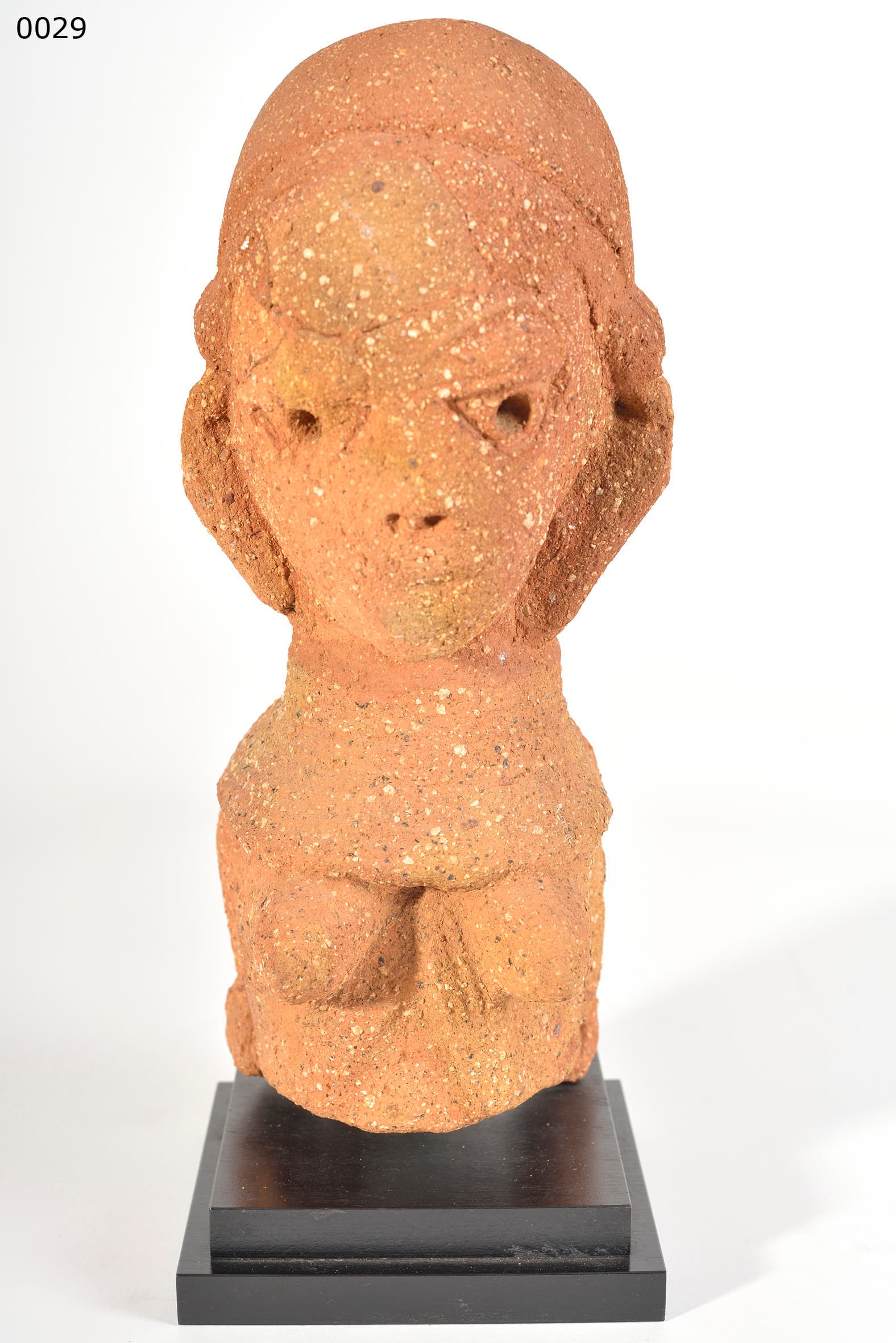
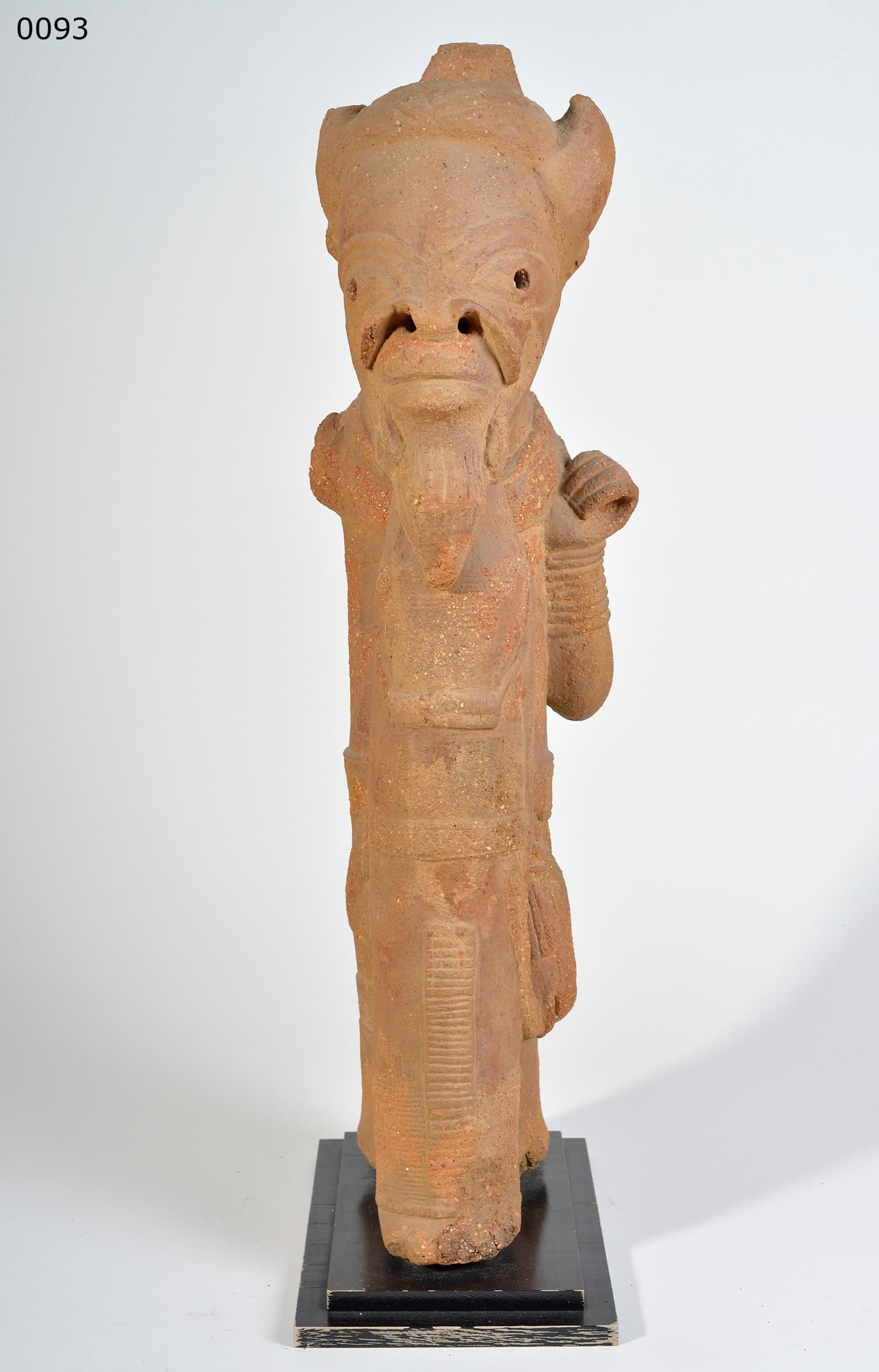
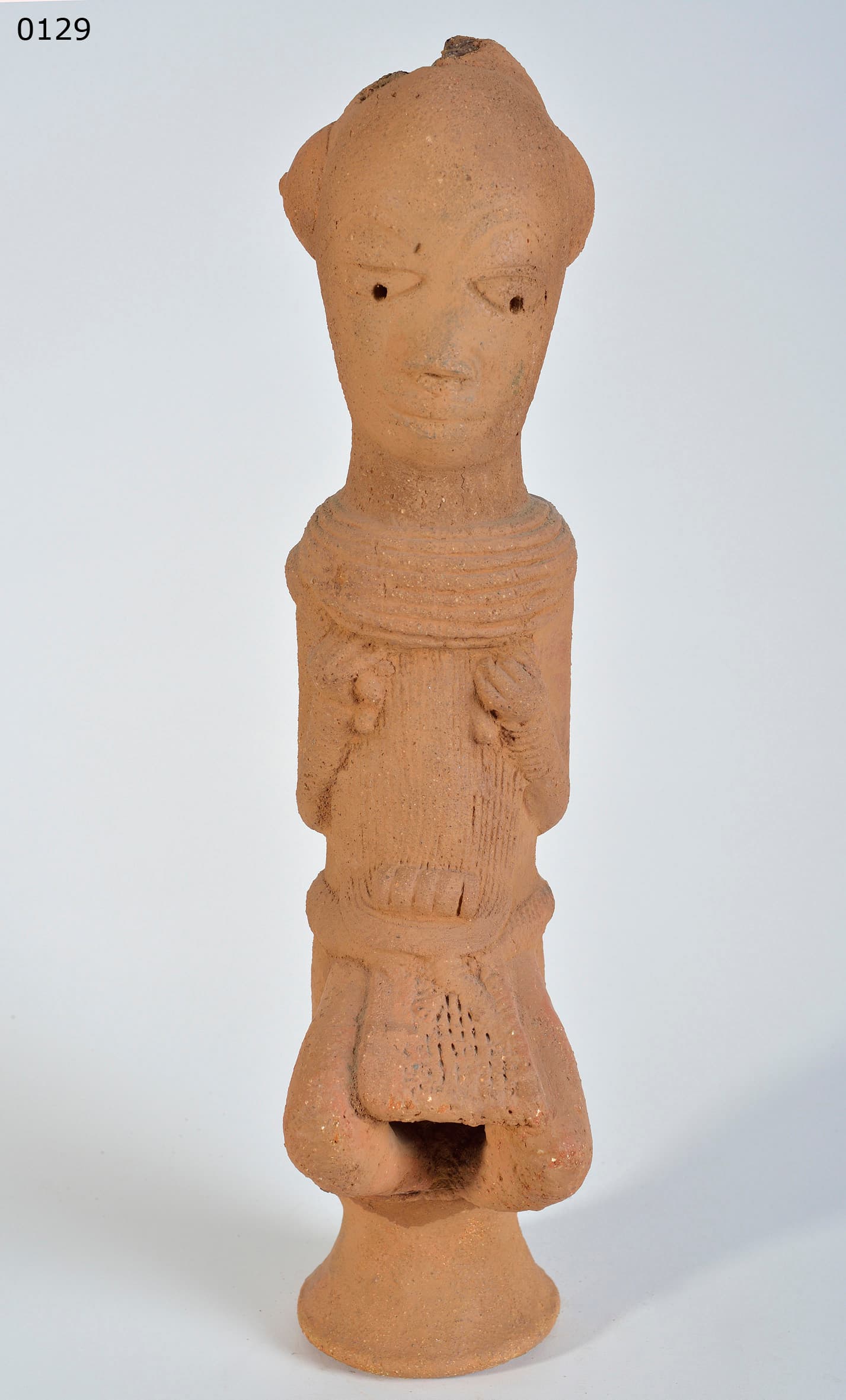
This ancient terracotta bust depicts a human figure with highly stylized, triangular pierced eyes, flared nostrils, and an intricate, multi-lobed coiffure. The red, heavily quartz-tempered clay is deeply pitted and coated in a permanent layer of hardened, calcified earth.
1. Aesthetic style and regional traits
The Nok culture is the oldest known figurative sculptural tradition in Sub-Saharan Africa. This piece captures their iconic aesthetic: the triangular or semi-circular eyes with deeply pierced pupils (which practically helped prevent the clay from cracking during firing), and an intense focus on elaborate hairstyles and bodily adornments. The level of detail achieved in the wet clay indicates high social status and points to a highly stratified, complex ancient society capable of supporting skilled artisans.
2. Ritual function and religious meaning
Unearthed from ancient riverbeds and iron-smelting sites, Nok terracottas are believed to have been associated with ancestral veneration, agricultural fertility, or judicial rites. The elaborate detailing suggests this figure represented an elite leader or a deified ancestor. Kept in shrines or buried with the dead, the effigy served as a mediator between the Iron Age community and the powerful, unpredictable forces of the earth and the rains.
3. Physical patina and age indicators
An estimated age of approximately 2,000 years is consistent with the severe degradation of the fired clay. The surface is heavily eroded, exposing the coarse quartz grit added by the ancient potters to stabilize the thick clay walls. The recesses of the eyes, ears, and hair are packed with calcified Laterite soil that has chemically bonded to the ceramic matrix over millennia, a slow process consistent with natural aging.
Summary
A notable example of prehistoric African artistry, this Nok bust reflects the continent's earliest iron-age civilization. Its striking triangular eyes and characteristic archaeological decay align it with significant artifacts of global antiquity.
Written with AI assistance from the collection appraisal, object photography and our own research; editorially reviewed. Mistakes are possible — corrections are welcome. How we work →