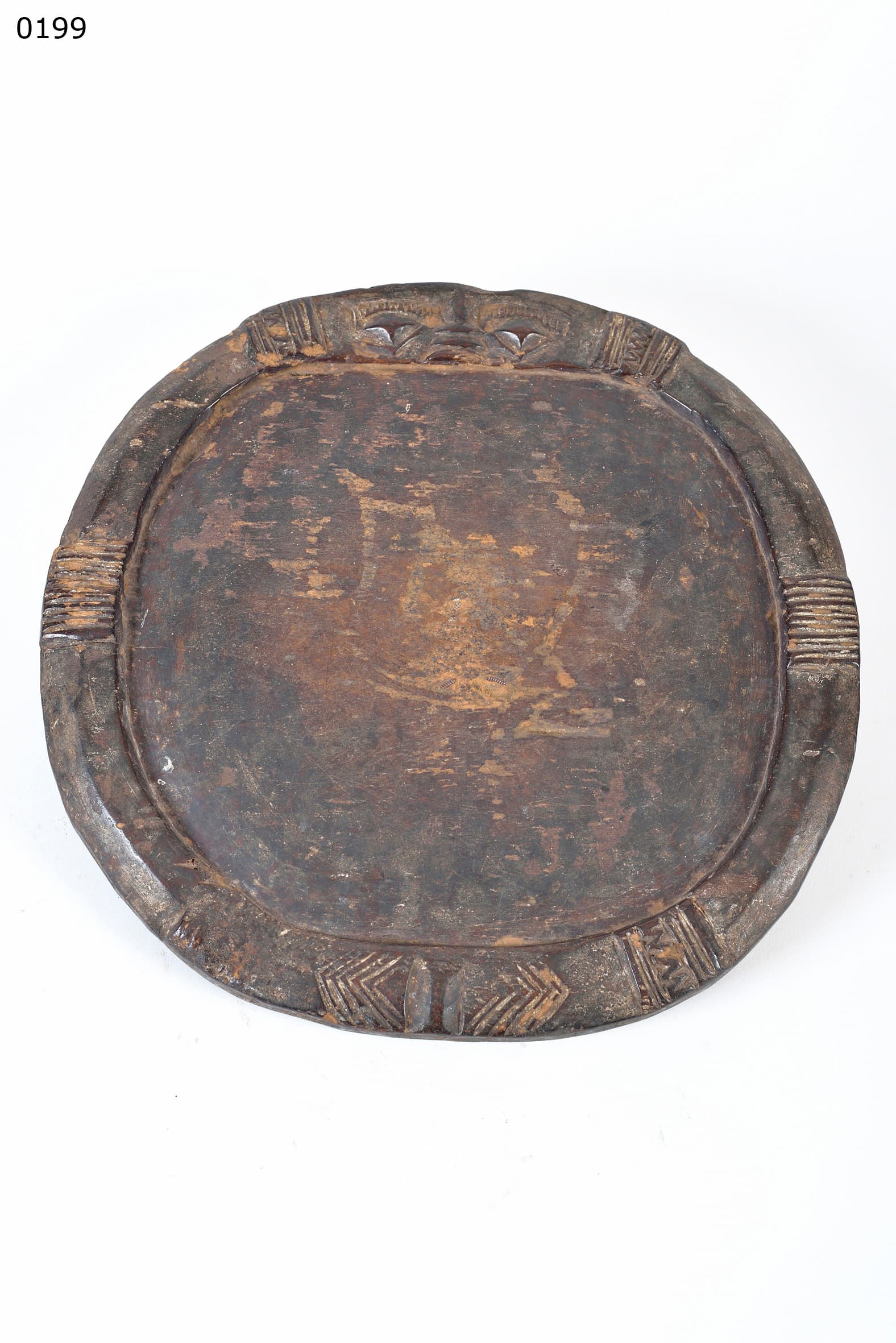
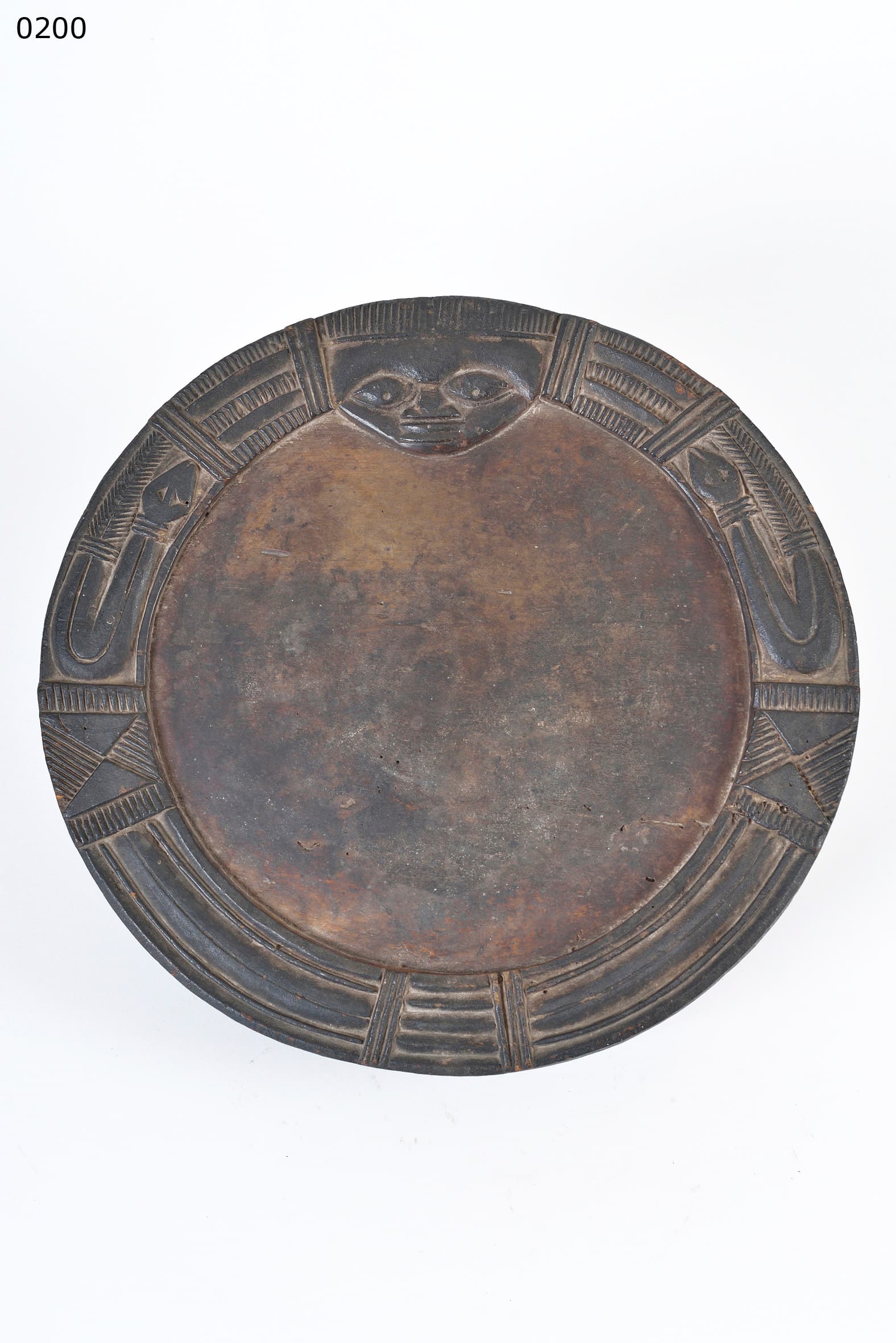
This matched pair of wooden dance wands (Ogo Elegba) depicts a male and female figure, both featuring massive, elongated, phallic-like coiffures that sweep sharply backward. The figures are joined by a faded, aged cloth strap. The dark wood is exceptionally smooth, exhibiting a deep, rich friction patina.
1. Aesthetic style and regional traits
These dance wands are the quintessential iconographic representations of Eshu (or Elegba), the Yoruba trickster god, messenger, and guardian of the crossroads. The defining aesthetic feature is the massive, sweeping curve of the hair projecting from the back of the head. This sweeping appendage visually represents Eshu's restless, kinetic energy, his phallic, generative power, and his ability to subvert the rigid, vertical order of the cosmos. The classical, bulging almond eyes balance the extreme, asymmetrical projection of the hair.
2. Ritual function and secret society context
These Ogo Elegba are active, highly intimate ritual implements used by the devotees of Eshu. Joined by the strap, they are hung over the shoulders of the priest or priestess during vigorous, ecstatic public dances. The wands are swung, hooked, and manipulated to honor the deity. Because Eshu is the divine enforcer who carries sacrifices to the other gods (Orishas), his followers must constantly appease him; these wands serve as physical lightning rods to attract his favor and deflect his notorious mischief.
3. Physical patina and signs of age
The rich surface of these wands is consistent with ceremonial use. The entirety of both figures — particularly the sweeping hair, the faces, and the torsos — has been polished to a glassy, buttery sheen. This friction patina is consistent with the wands rubbing against the dancer's body, being gripped during use, and receiving frequent ritual anointings with indigo and palm oil. The joining strap is frayed, deeply stained, and shows wear consistent with age.
Summary
This pair of Yoruba Eshu dance wands captures the kinetic, subversive energy of the trickster god. Their iconic sweeping coiffures and rich, handled friction patinas are consistent with active artifacts of Nigerian Orisha worship.
Written with AI assistance from the collection appraisal, object photography and our own research; editorially reviewed. Mistakes are possible — corrections are welcome. How we work →