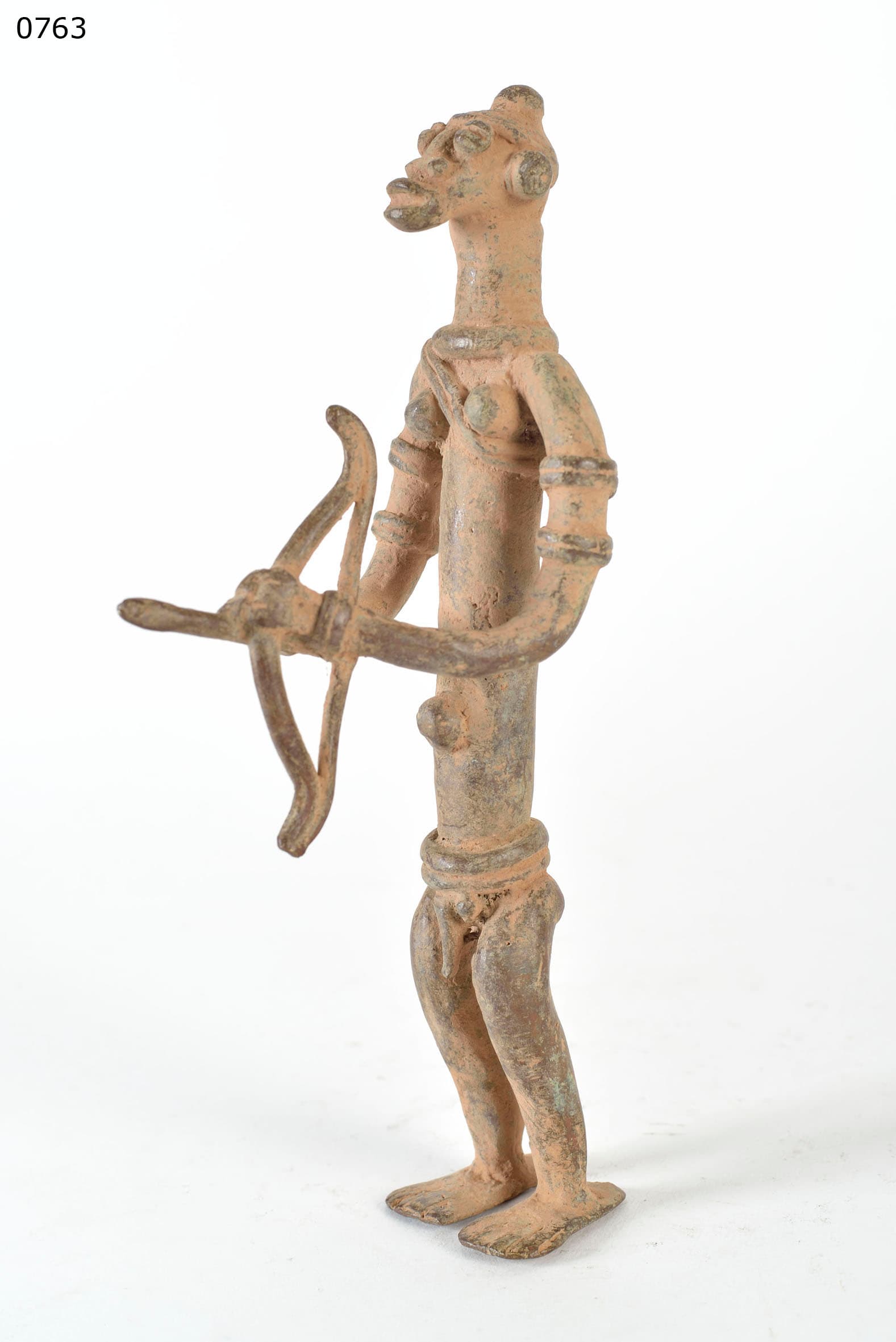
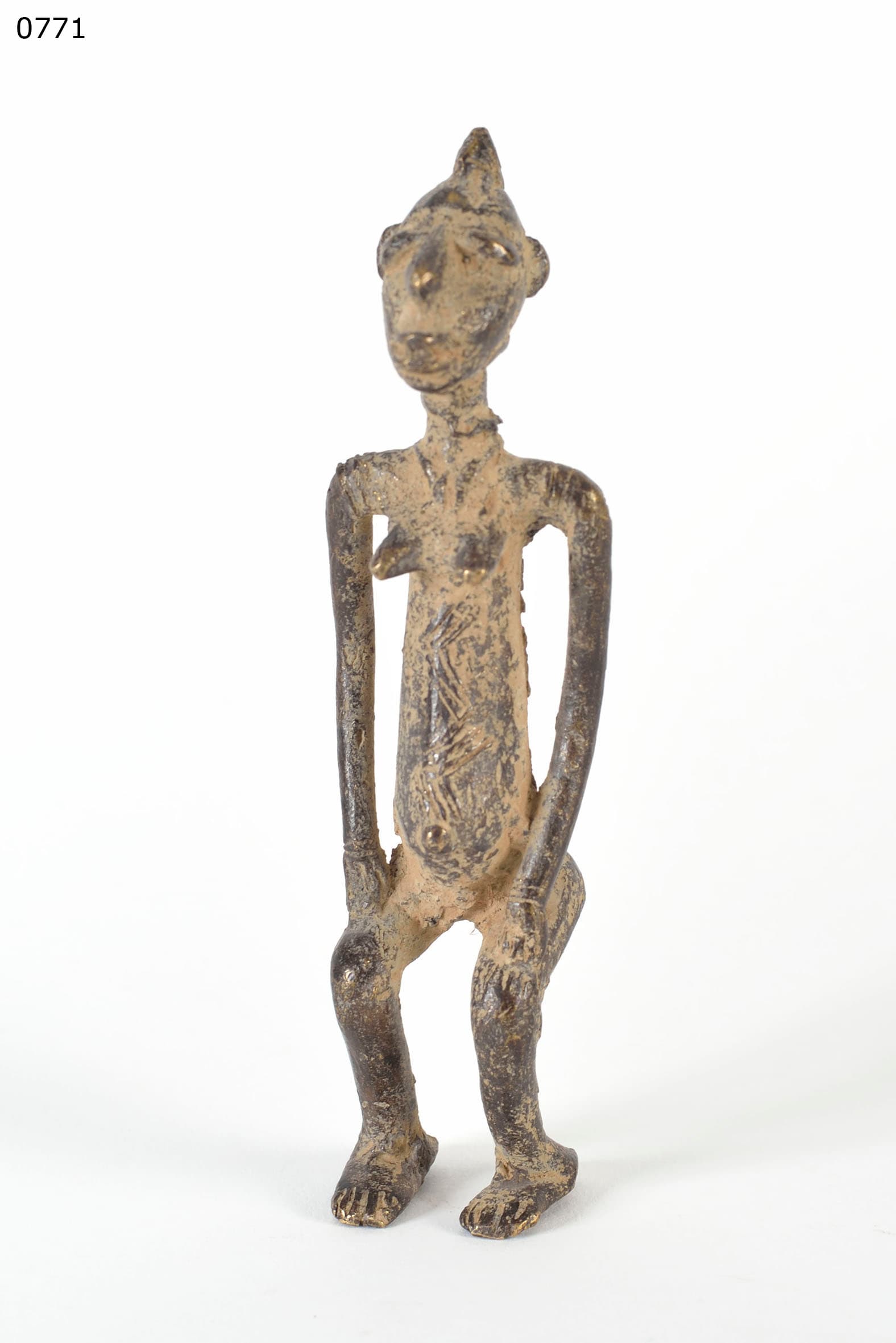
An elongated, highly stylized bronze female figure standing upright, distinguished by the presence of a miniature figure (a child) clinging horizontally across her waist. The bronze has an intensely degraded, heavily oxidized, and crusty archaeological patina.
1. Aesthetic style and regional traits
The Gan people are celebrated for pushing human proportions to surreal, wire-like extremes. This maternity figure exemplifies that aesthetic, utilizing a long, tubular torso and highly simplified, protruding facial features. The inclusion of the child, clinging horizontally, breaks the stark verticality of the mother, creating a powerful visual tension that emphasizes the vital, life-sustaining role of women within the lineage. The horizontal child-orientation is itself a Gan compositional signature, distinct from the vertical clinging-child format of neighboring Akan or Mossi maternity figures.
2. Ritual function and royal veneration
Given the technical difficulty of lost-wax casting in ancient Burkina Faso, this bronze was likely a high-status object. It was probably commissioned for a royal or major community shrine to represent a founding matriarch. Veneration of this figure was traditionally intended to ensure the continued fertility of the women in the community, the safe passage of children into adulthood, and the overall stability of the Gan society. Bronze maternity figures are generally understood to signal institutional rather than household veneration, whereas wood is more commonly associated with the household scale.
3. Physical patina and age indicators
The surface condition of this piece is consistent with significant age. The bronze has undergone significant chemical breakdown, resulting in a thick, crusty layer of malachite and calcified earth that obscures finer casting details. This heavy weathering is consistent with a 16th–19th century dating, suggesting long-term burial or exposure in an earthen shrine.
Summary
A notable example of Gan metallurgical abstraction, utilizing extreme elongation to convey the spiritual importance of the maternal figure. Its profound weathering and unique composition are consistent with a rare and historically significant antiquity.
Written with AI assistance from the collection appraisal, object photography and our own research; editorially reviewed. Mistakes are possible — corrections are welcome. How we work →