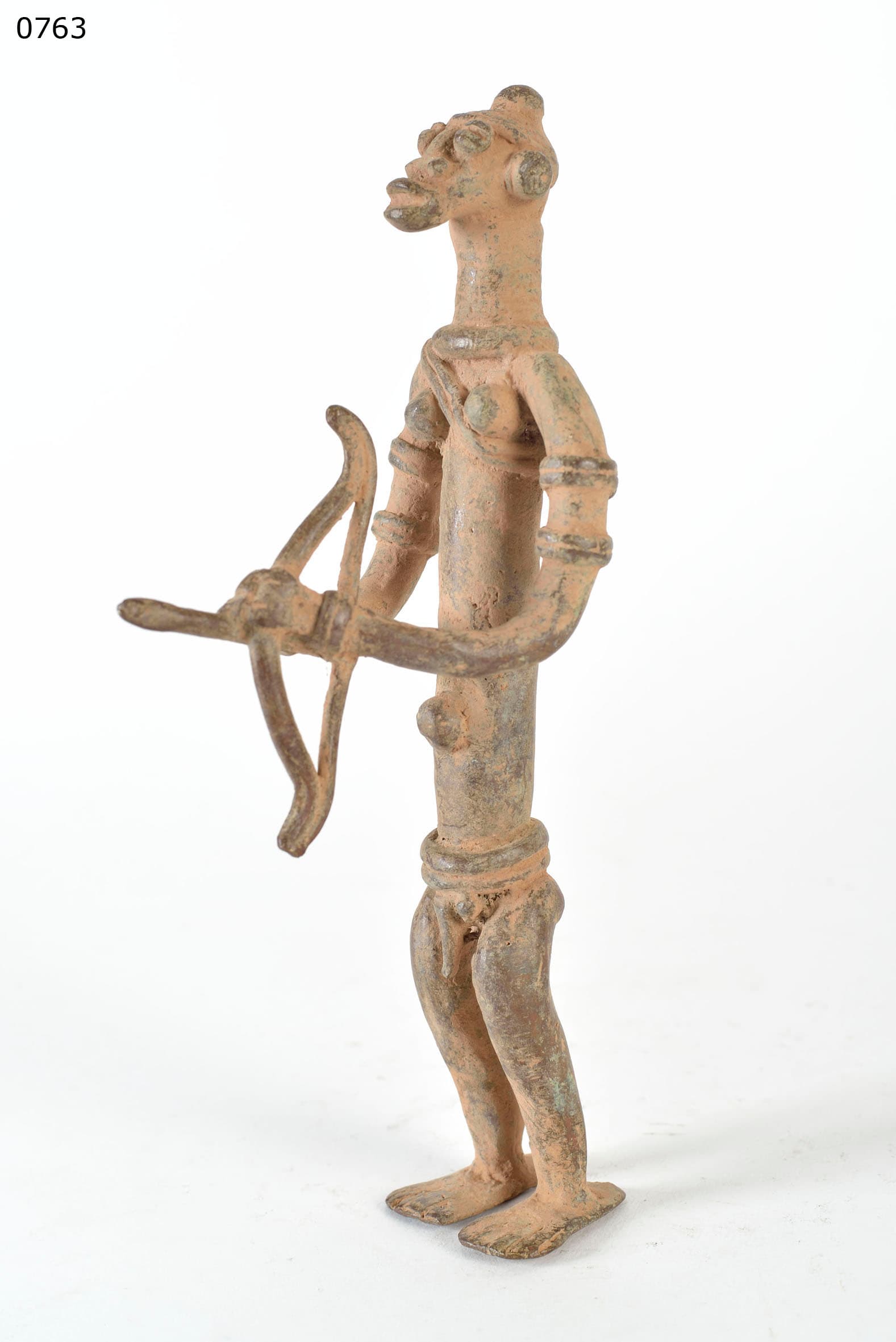
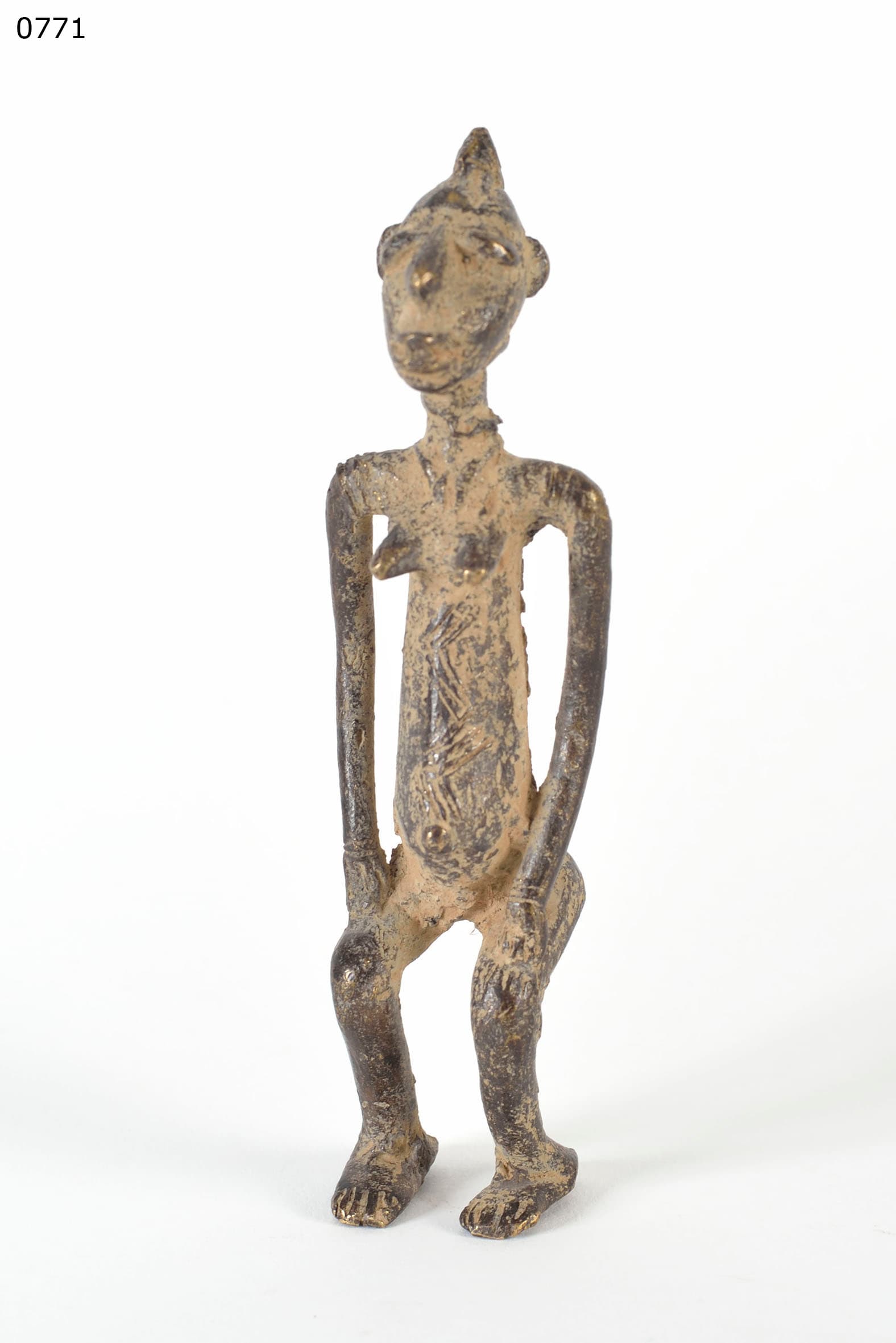
A highly stylized, elongated ancient bronze depicting a standing female figure with arms resting on her hips, featuring the characteristic Gan protruding, duck-like mouth and large, disc-like ears. The metal bears a profound, crusty, verdigris-heavy burial patina.
1. Aesthetic style and regional traits
This figure is a characteristic example of the surreal abstraction that marks ancient Gan bronze casting. The human form is highly attenuated, while the facial features are exaggerated to the point of becoming zoomorphic — specifically the wide, protruding, beak-like mouth. This intentional distortion moves the figure away from human portraiture and into the realm of the mythological, representing a powerful, otherworldly ancestor or spirit. The beak-mouth is a recurring feature associated with Gan art, supporting its attribution within the established corpus.
2. Ritual function and spiritual vigilance
The posture of the figure, with hands firmly planted on the hips, is a universal West African signifier of alertness, readiness, and defensive capability. Kept in a localized earthen shrine, this figure stood as a permanent, vigilant guardian. Its primary function was to intercept malevolent magic, protect the household or royal compound, and serve as an active conduit for prayers directed to the spirit world. The hands-on-hips posture combined with the alert beak-face produces a doubled signal of active watchfulness.
3. Physical patina and surface characteristics
The deep, granular patina covering the figure is consistent with long-term burial or severe environmental exposure. The thick accumulation of oxidized copper (malachite) and hardened earth has blurred the fine casting details, suggesting a history compatible with its attributed 16th–19th century archaeological origins.
Summary
A striking ancient Gan bronze that utilizes extreme, almost zoomorphic abstraction to create a formidable spiritual guardian. Its confident posture and profound archaeological patina mark it as a highly significant survivor of Burkina Faso's early metallurgy.
Written with AI assistance from the collection appraisal, object photography and our own research; editorially reviewed. Mistakes are possible — corrections are welcome. How we work →