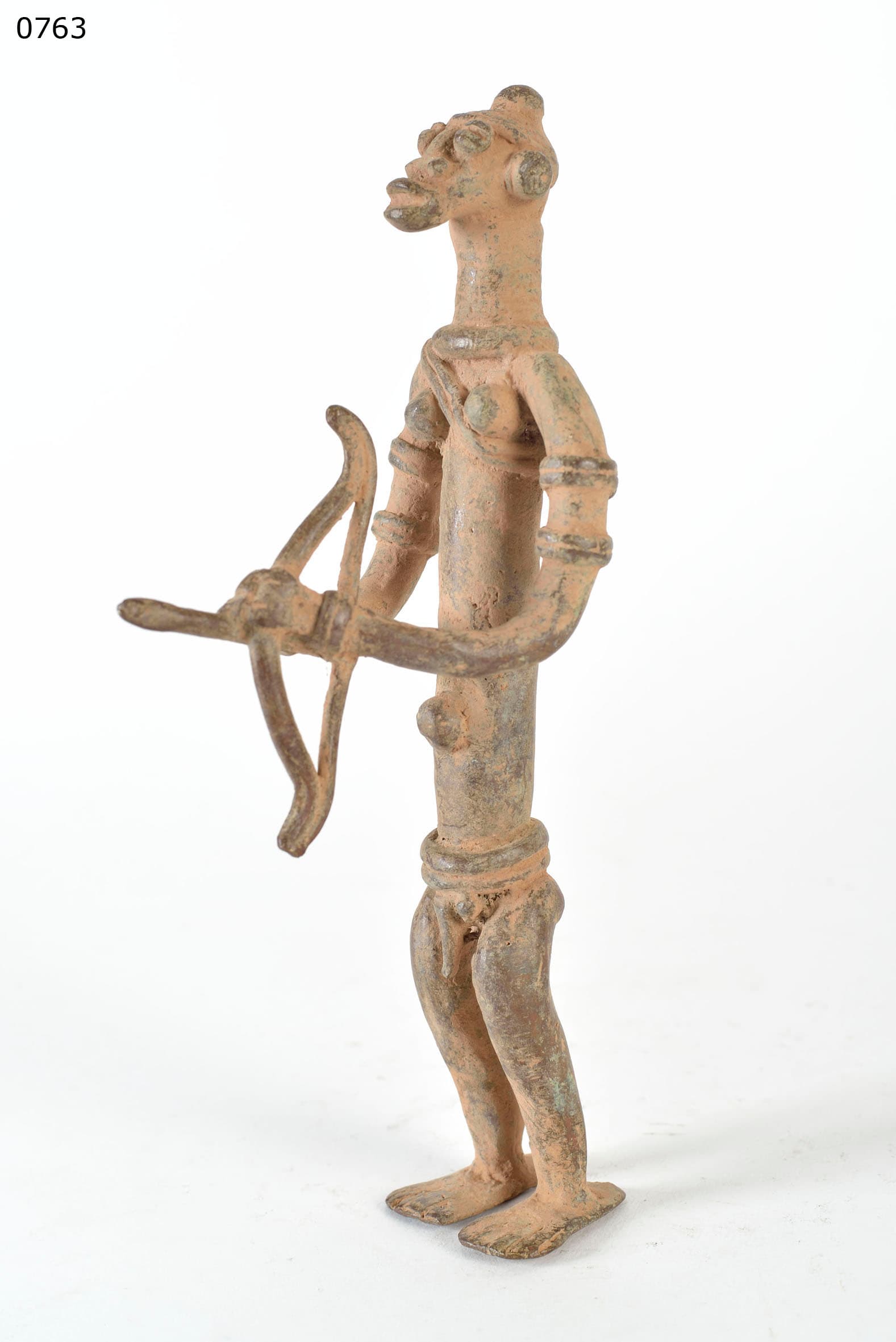
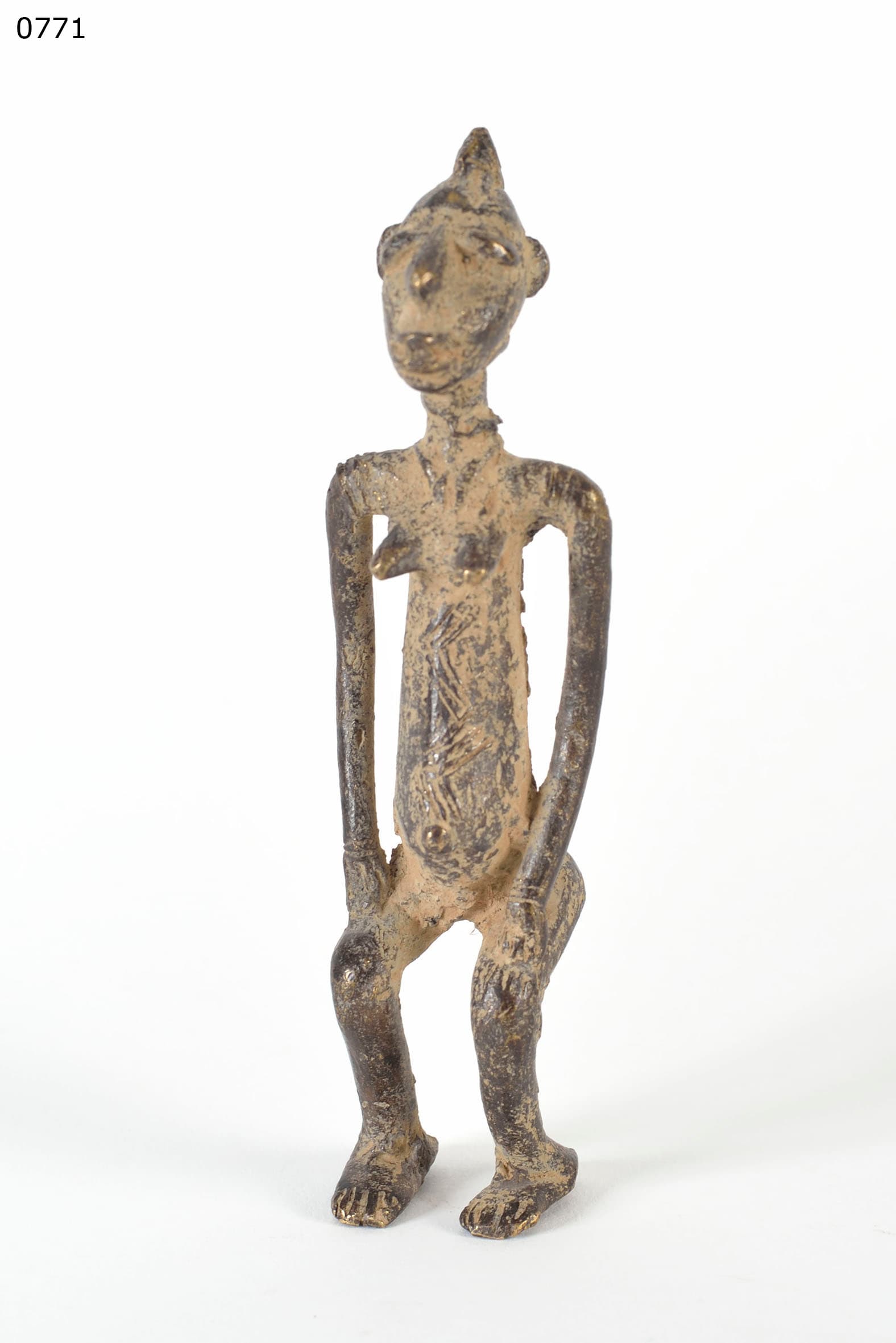
One of three Gan bronze zoomorphic castings depicting stylized, elongated animal forms. This piece features two animal figures — a snake and a lizard with a flattened, triangular head. The bronze exhibits a thick, crusty, green-brown archaeological patina.
1. Aesthetic style and regional traits
The Gan people utilized a specific vocabulary of zoomorphic symbols in their metalwork. Snakes are traditionally associated with immortality, the ancestors, and the bridging of the earth and the underworld. The lizard or chameleon represents wisdom and transformation. The surface texturing on these figures, mimicking scales or skin, highlights the technical proficiency of the Gan blacksmiths and identifies these forms within the established Gan zoomorphic corpus.
2. Ritual function and royal emblems
These complex bronze animals are understood to have functioned as components of royal or high-status community shrines. The snake motifs, in particular, were often associated with Gan royalty, serving as protective emblems that warned enemies of the lineage's potent, hidden power. Deposited on altars, they acted as permanent, localized intercessors to appease the demands of the nature spirits.
3. Physical patina and age
The survival of these complex castings is notable. Their surfaces are covered by a thick, uncleaned layer of malachite (green) and cuprite (reddish-brown) oxidation, mixed with calcified earthen deposits. This chemical breakdown and burial crust are consistent with a 16th–19th century origin.
Summary
This Gan zoomorphic bronze offers a fascinating glimpse into the complex mythological and metallurgical traditions of Burkina Faso. Its heavily textured casting and archaeological patination make it a notable historical artifact.
Written with AI assistance from the collection appraisal, object photography and our own research; editorially reviewed. Mistakes are possible — corrections are welcome. How we work →