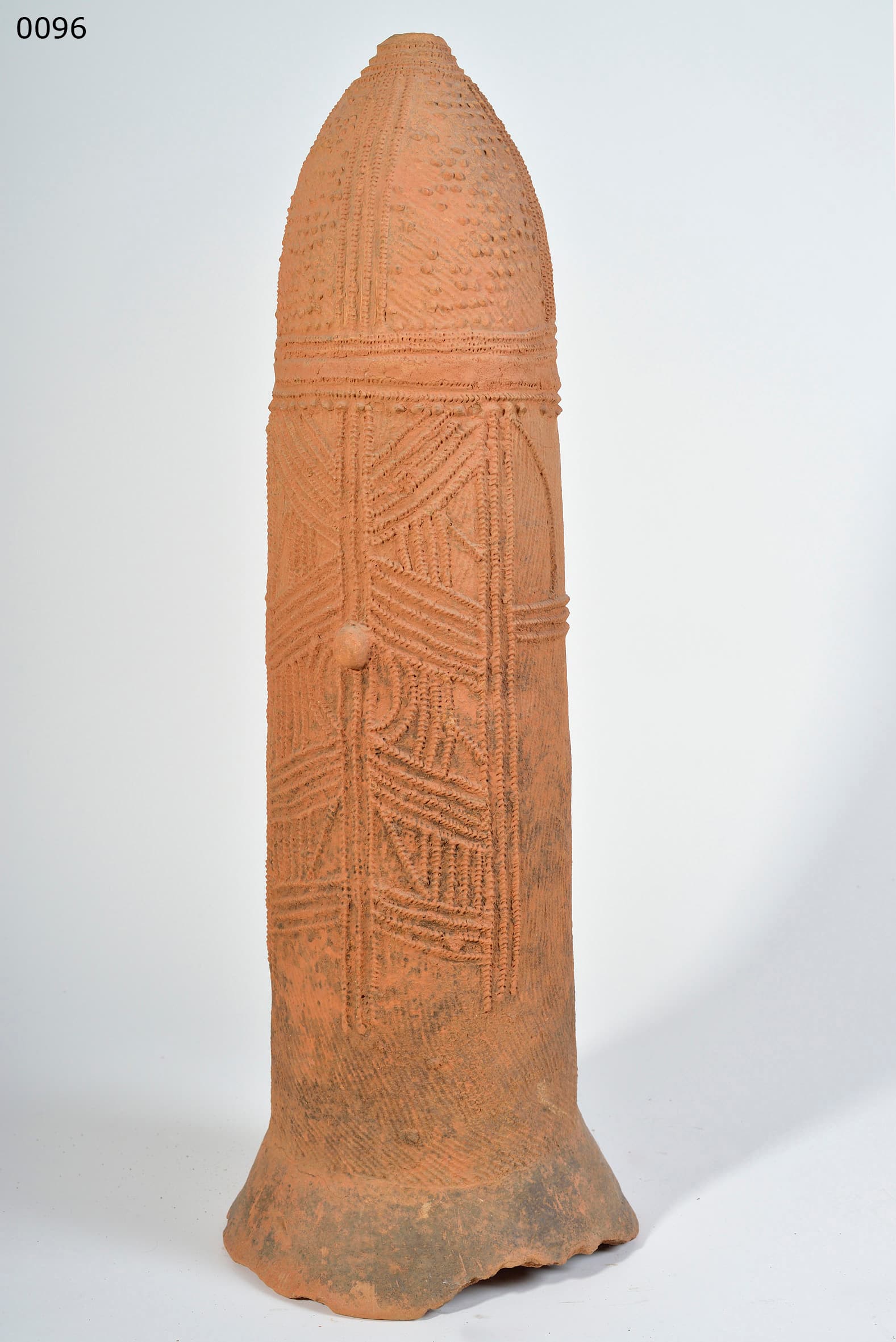
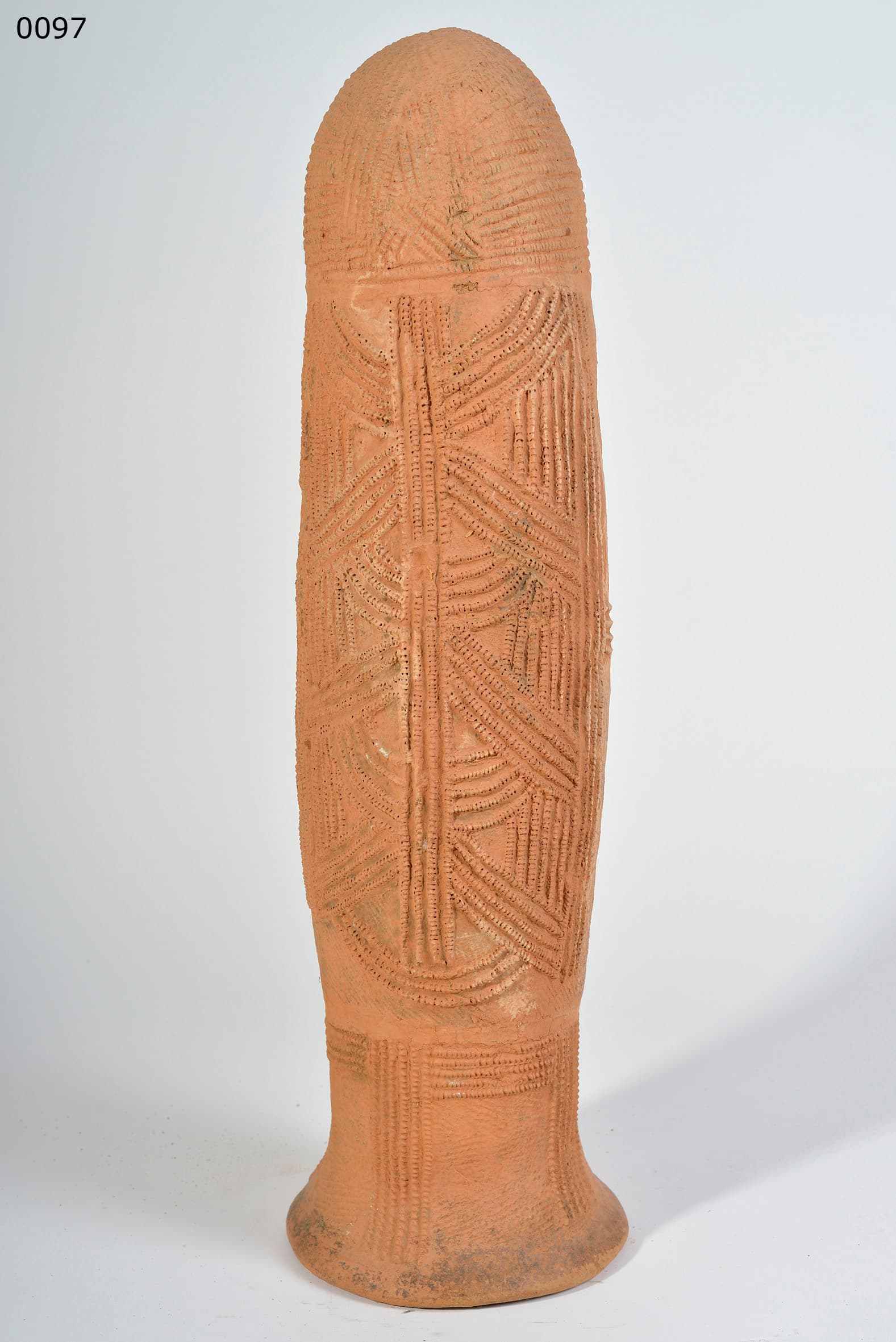
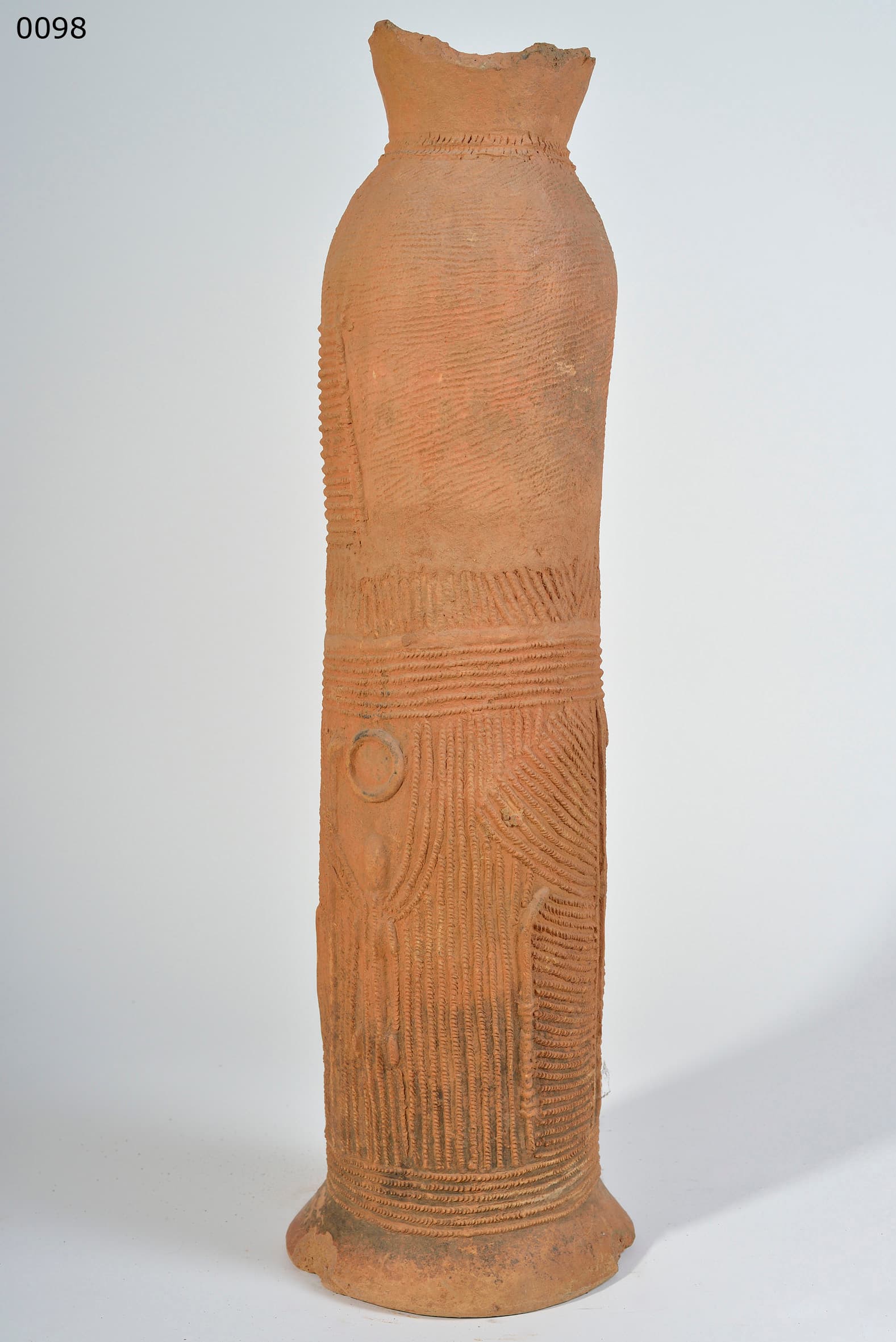
Eine massive, kugelförmige Terrakotta-Urne (3.-11. Jh., 98 cm) aus der Bura-Asinda-Sikka-Kultur an der Grenze zwischen Niger und Burkina Faso - dicht bedeckt mit geometrischen Rautenmustern und konzentrischen Bögen.
1. Die antike Nekropole
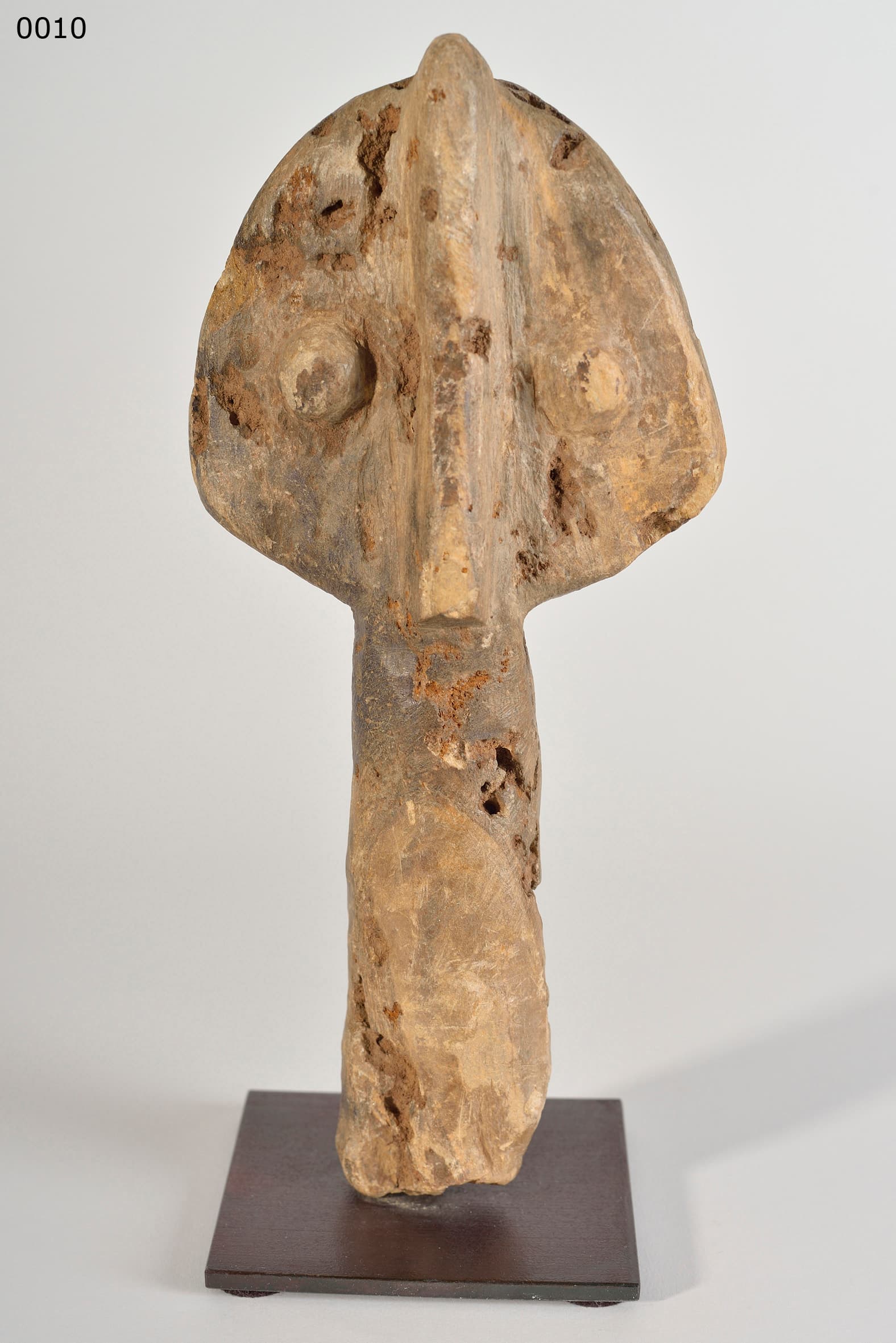
Die Bura produzierten einige der eindrucksvollsten antiken Keramiken in Westafrika. Im Gegensatz zu dem früheren Bura-Terrakottakopf in der Sammlung (Nr. 10) handelt es sich hier um die eigentliche Graburne.
- Sekundärbestattung: Die Bura praktizierten die Sekundärbestattung. Nach der Verwesung des Fleisches wurden die Knochen und der Schädel des Verstorbenen in diese massiven, hohlen Terrakottaröhren gelegt, die dann aufrecht in riesigen, stadtgroßen Nekropolen bestattet wurden.
2. Phallische Symbolik und Wiedergeburt
- Die Form des Lebens: Die offenkundige phallische Form ist beabsichtigt. In der Bura-Kosmologie war der Tod nicht das Ende, sondern ein Übergang. Die phallische Urne symbolisiert ultimative Fruchtbarkeit, Regeneration und das Einpflanzen des "Samens" der Vorfahren in die Erde, um die lebende Gemeinschaft zu segnen.
- Oberflächentexturen: Die komplizierten geometrischen Rillen und Linien (die durch das Rollen von geflochtenen Schnüren über nassen Ton entstehen) ahmen alte Textilien und Ritzungen nach und kennzeichnen die Urne mit der spezifischen Identität des Clans.
Zusammenfassung
Mit einer Höhe von fast einem Meter ist diese antike Bura-Urne ein spektakuläres archäologisches Monument - eine ewige Gebärmutter und ein Grabmal, das die Konzepte des Todes und der männlichen Fruchtbarkeit in einer einzigen, reich verzierten Terrakotta-Säule vereint.
KI-unterstützt erstellt aus Sammlungsgutachten, Objektfotografie und eigener Recherche, redaktionell geprüft. Fehler sind möglich — Hinweise darauf sind uns willkommen. Zum Verfahren →