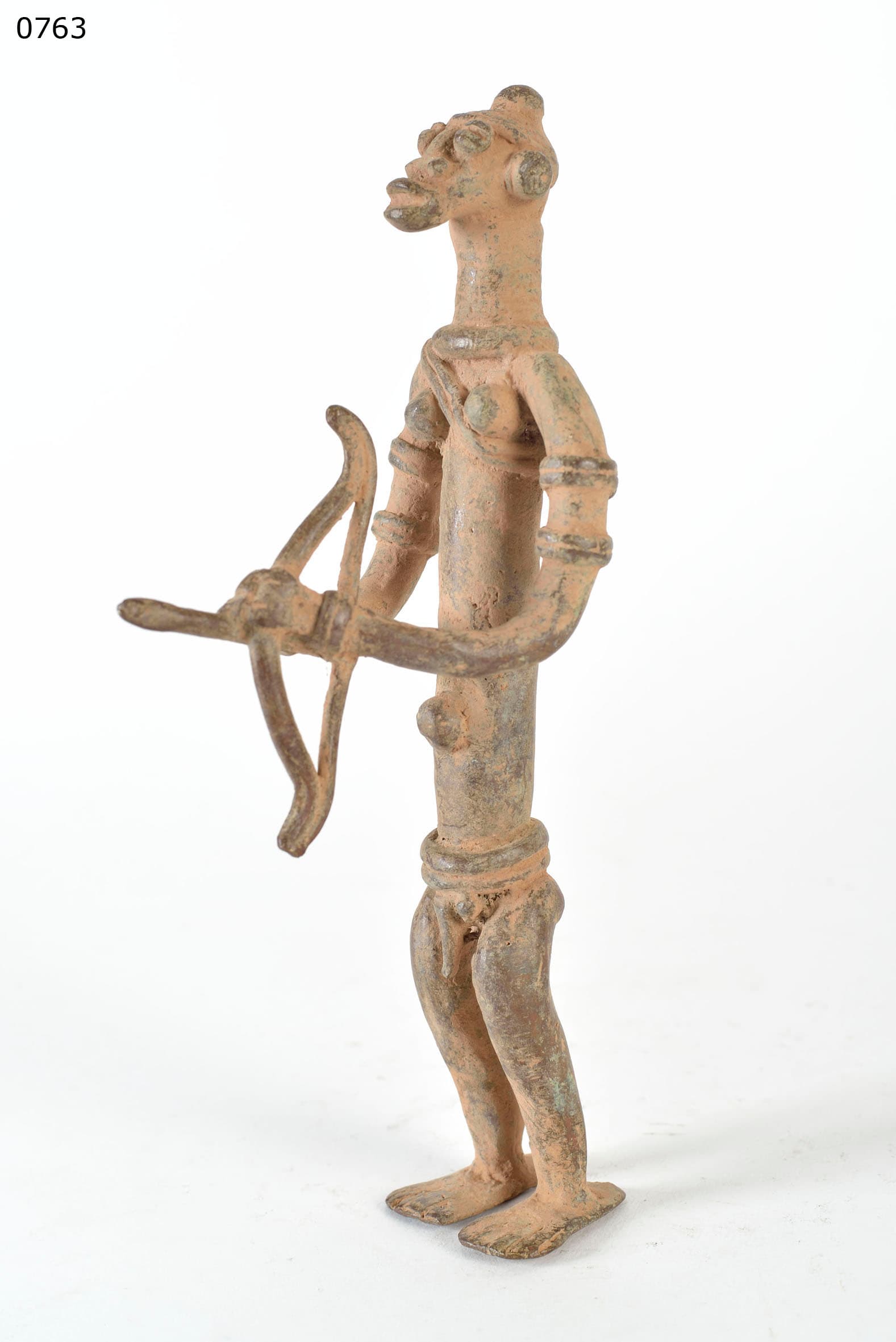
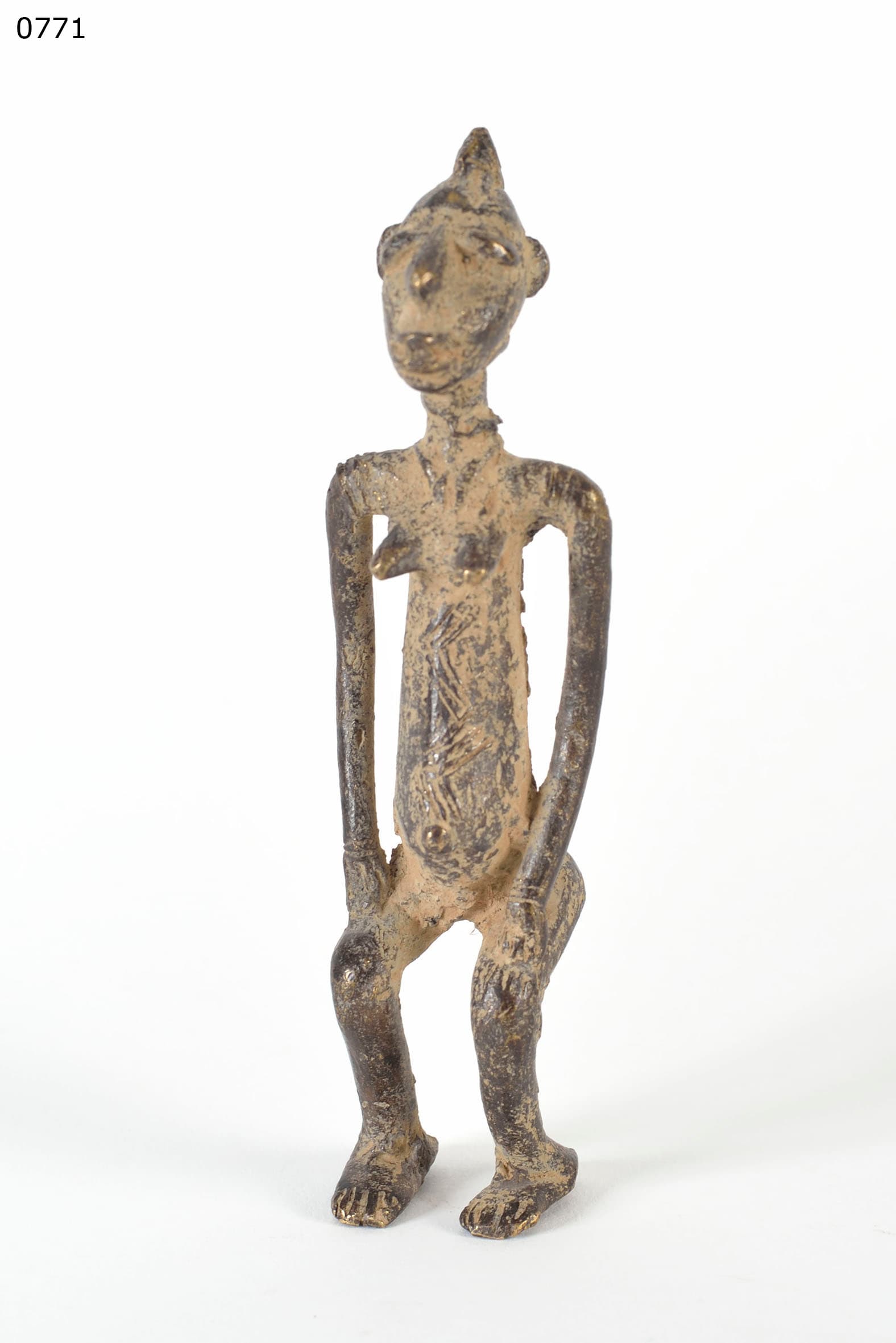
One of two small, traditional Gan bronze pendants. This piece is a flat, triangular or shield-shaped pendant with openwork loops at the top and a stylized face. The bronze bears a dry, crusty, verdigris patina.
1. Aesthetic style and regional traits
This pendant highlights the Gan mastery of combining geometric form with subtle, stylized representation. The triangular pendant likely utilizes the shield motif as a symbol of spiritual and physical defense. Geometric shield-form pendants in the Gan corpus consistently encode protective rather than decorative function — the form itself is the operational claim.
2. Ritual function and personal protection
Cast on an intimate scale, this object was a highly personal amulet. It was worn by individuals of significant social or spiritual standing — such as diviners or successful warriors — to ensure constant, mobile protection from witchcraft and misfortune. The strong suspension loops suggest its function as a wearable, active magical agent rather than a stationary shrine piece.
3. Physical patina and age indicators
The age of this small bronze is suggested by its surface condition. The metal has completely lost its original sheen, replaced by a thick, crusty layer of oxidized copper (malachite) and hardened earth. This deep, uncleaned weathering is consistent with long-term burial or environmental exposure, supporting an attribution to the 16th–19th century.
Summary
An intimate example of traditional Gan bronze casting, utilizing geometric form for personal talismanic protection. Its archaeological patina is consistent with its attribution as a significant Burkinabe antiquity. (Item identified stylistically; missing from the original Excel registry.)
Written with AI assistance from the collection appraisal, object photography and our own research; editorially reviewed. Mistakes are possible — corrections are welcome. How we work →