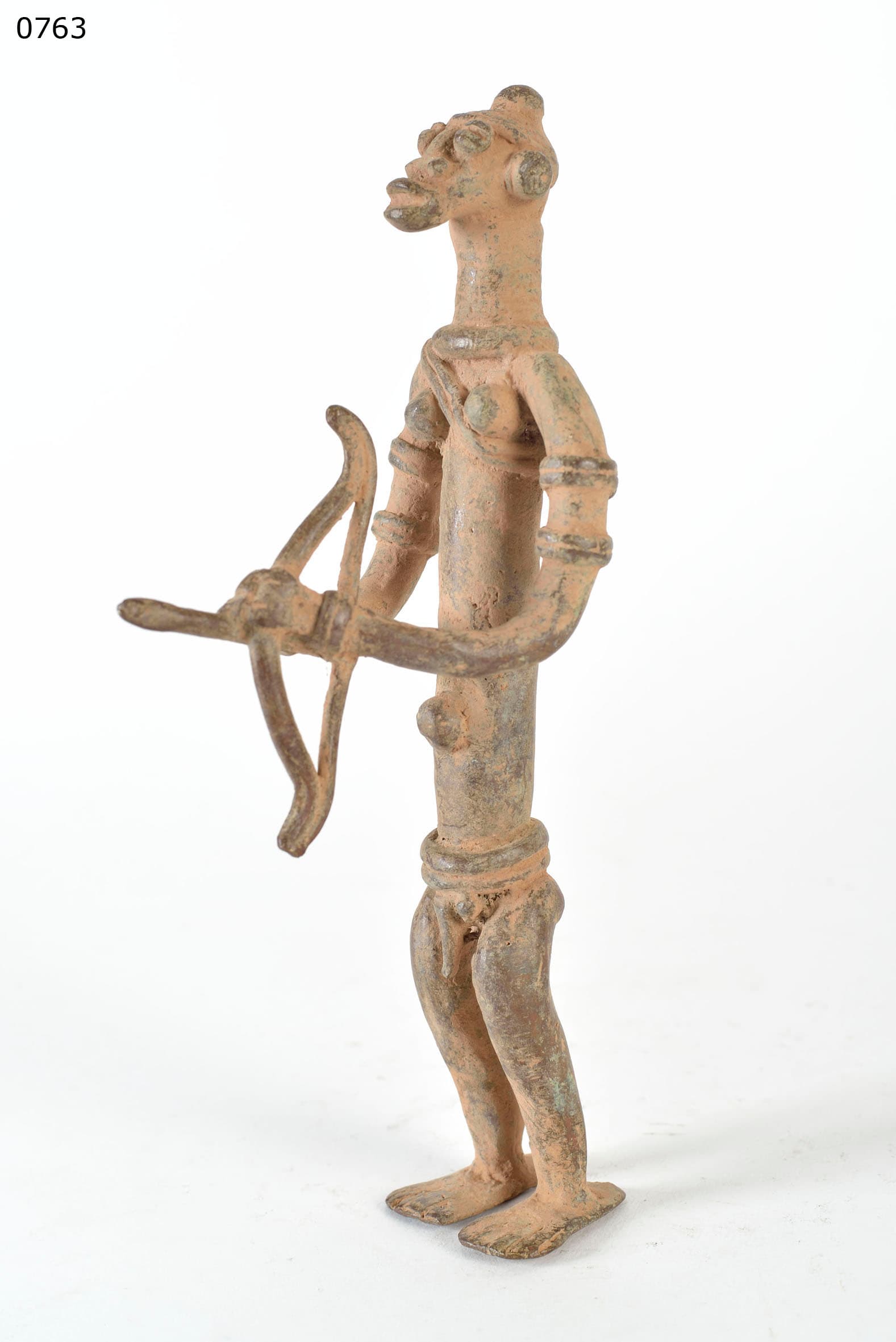
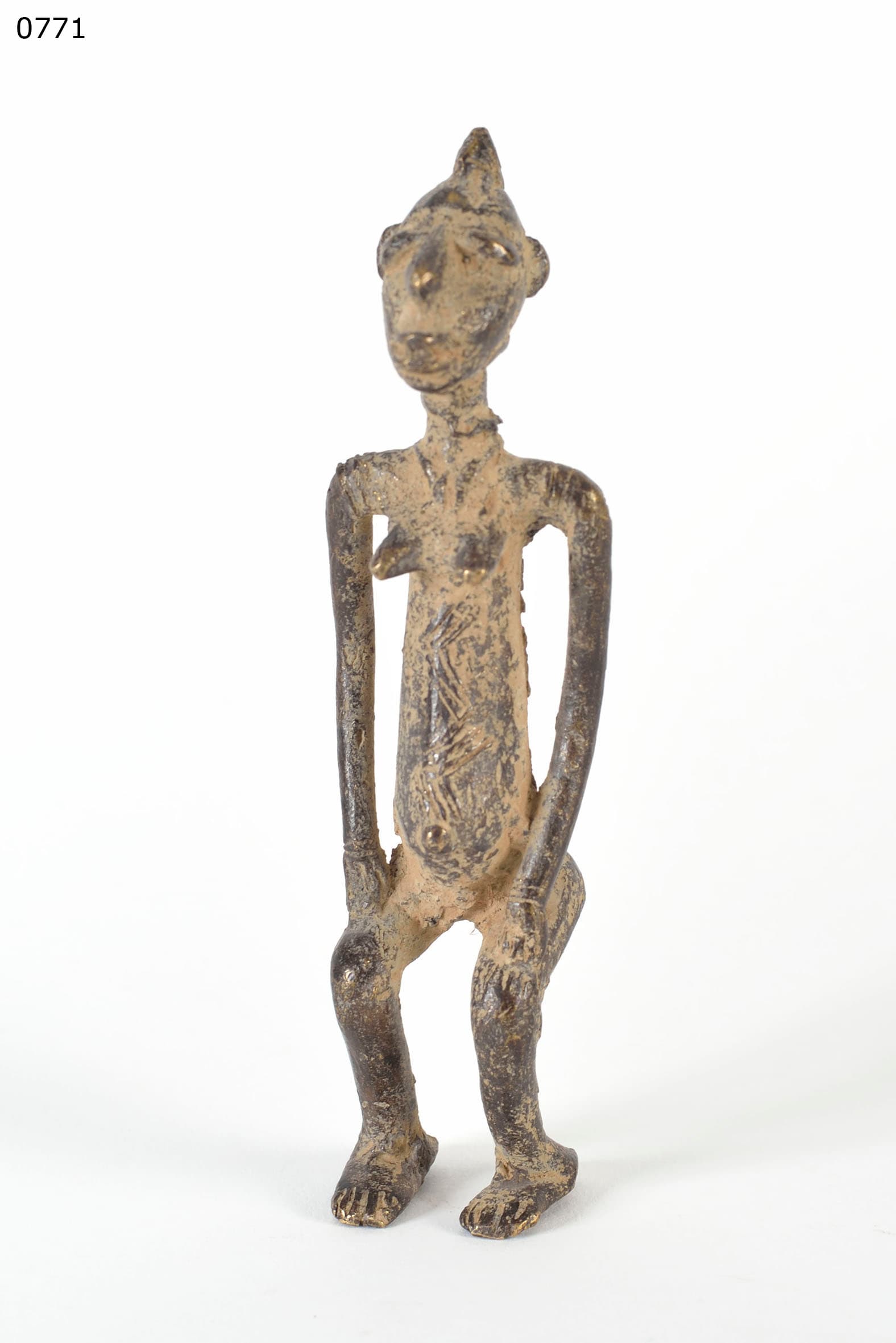
One of two small, ancient Gan bronze pendants. This piece is a crescent or crescent-shaped bar adorned with heavy, coiled ring motifs and a suspension loop. The bronze bears a dry, crusty, verdigris patina.
1. Aesthetic style and regional traits
The crescent shape often references lunar cycles, agricultural timing, or specific deities within the Burkina Faso region. The heavy coiled rings add physical weight and symbolic texture to the object. The Gan crescent-and-coil pendant format integrates lunar/temporal iconography with the binding/coiling motifs that recur across the Gan ceremonial corpus.
2. Ritual function and personal protection
Cast on an intimate scale, this object was a highly personal amulet. It was worn by individuals of significant social or spiritual standing — such as diviners or successful warriors — to ensure constant, mobile protection from witchcraft and misfortune. The strong suspension loop suggests its function as a wearable, active magical agent rather than a stationary shrine piece.
3. Physical patina and age indicators
The surface condition of this small bronze shows wear consistent with significant age. The metal has lost its original sheen, replaced by a thick, crusty layer of oxidized copper (malachite) and hardened earth. This deep, uncleaned weathering is consistent with prolonged burial or environmental exposure, supporting an attribution to the 16th–19th century.
Summary
An intimate example of Gan bronze casting, utilizing crescent and coiled forms for personal talismanic protection. Its profound patina supports its attribution as a significant Burkinabe antiquity.
Written with AI assistance from the collection appraisal, object photography and our own research; editorially reviewed. Mistakes are possible — corrections are welcome. How we work →