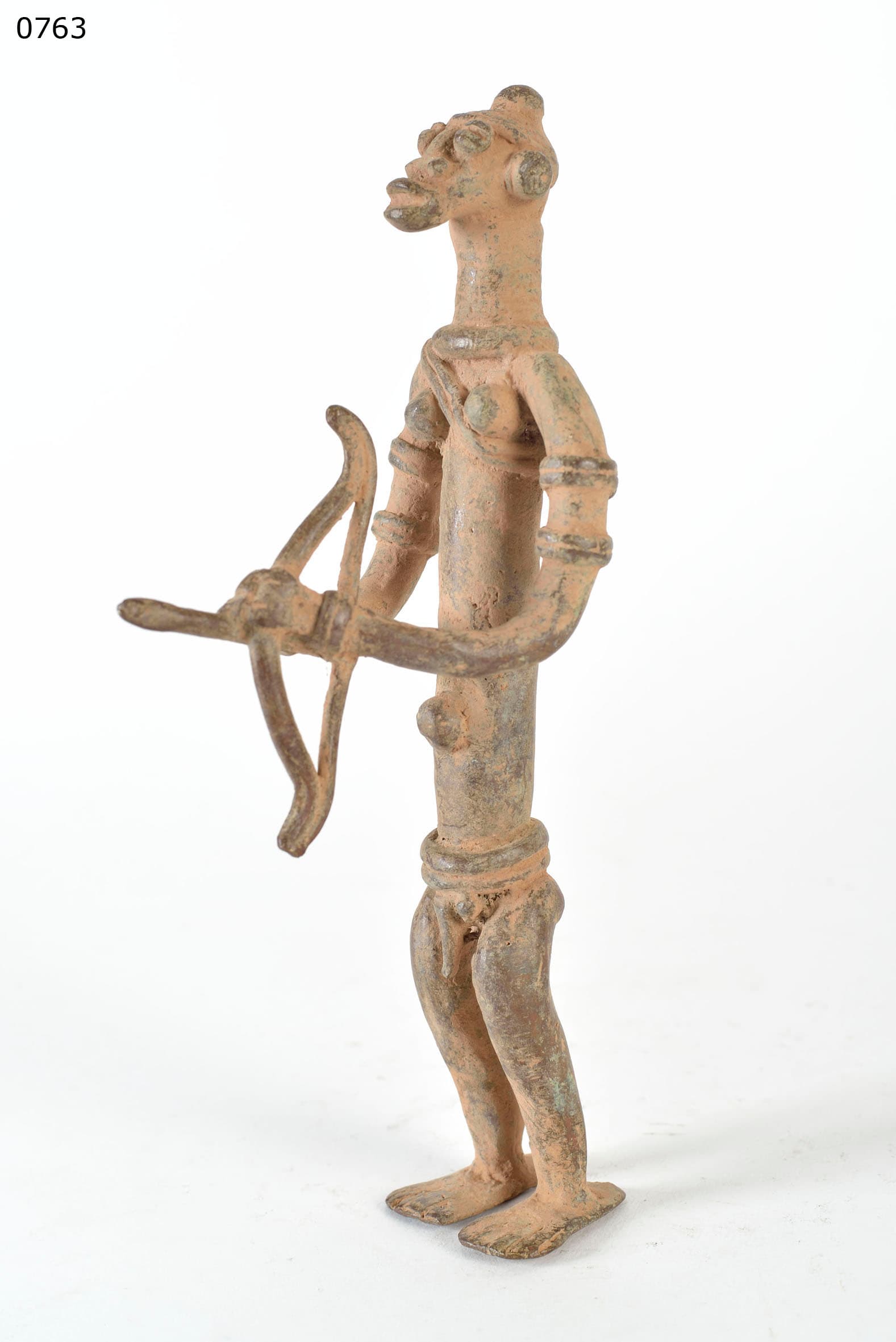
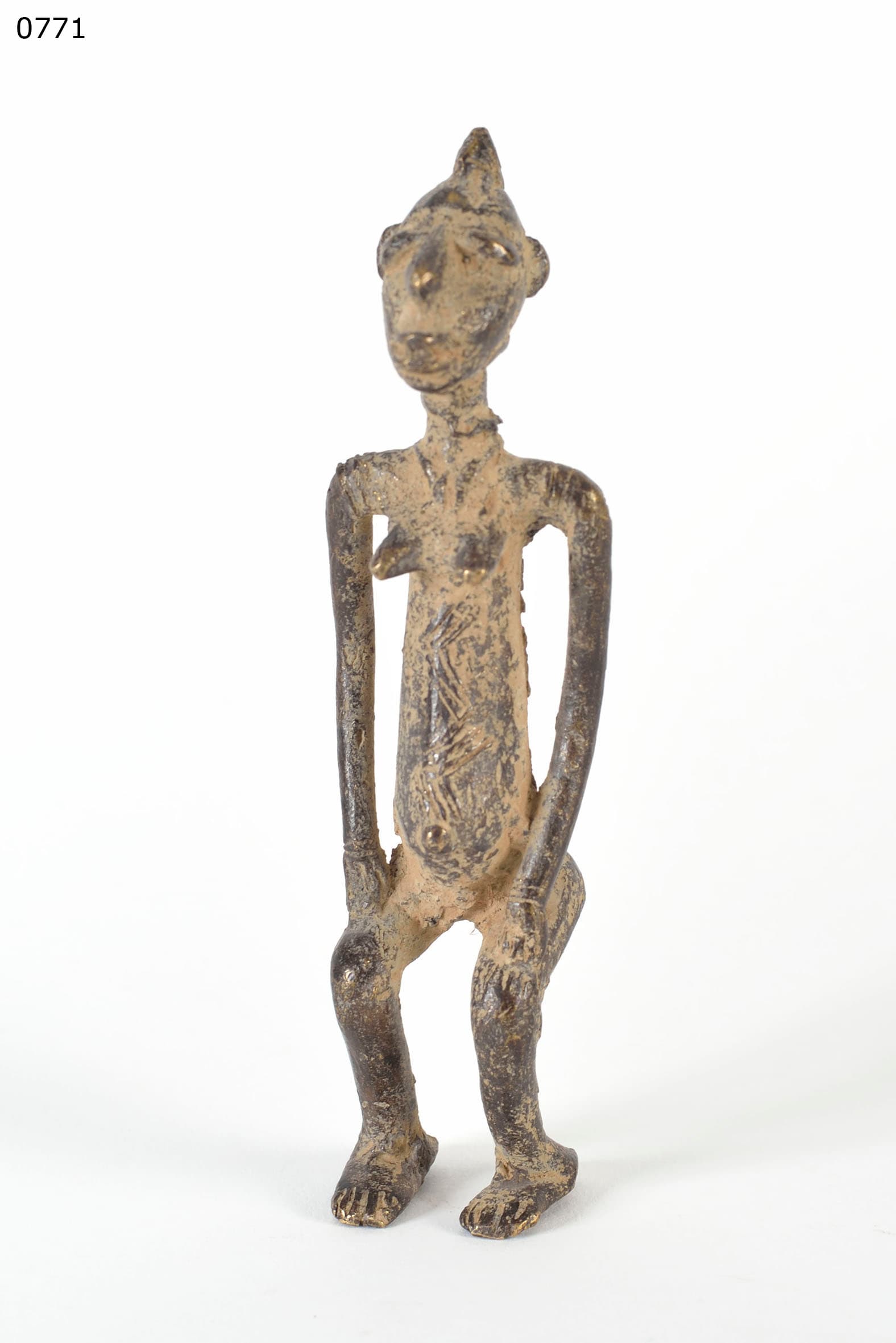
One of two highly complex, ancient openwork Gan bronzes. This piece features a central axis with two large, angular, zig-zag arms terminating in flat, triangular heads. The bronze is heavily oxidized.
1. Aesthetic style and regional traits
This object represents a highly developed expression of the Gan bronze casting tradition. The technical difficulty of executing this large, symmetrical, openwork design with multiple intersecting zig-zags using the lost-wax process is considerable, resulting in a complex, abstract visual map of Gan cosmology and spiritual architecture. The lightning-like zig-zag motifs likely encode storm or atmospheric power within the figure's symbolic vocabulary.
2. Ritual function as altar installation
Objects of this magnitude, weight, and complexity are traditionally associated with the highest echelons of Gan society. This was likely a central installation on a major royal or communal altar. The angular, lightning-like motifs serve as a permanent reservoir of spiritual power, designed to anchor the prayers of the entire community and violently repel any catastrophic spiritual threats.
3. Physical patina and age indicators
The visual impact of this bronze is magnified by its extreme degradation. The surface is thick with a crusty, highly textured layer of malachite, cuprite, and calcified earth. This profound chemical breakdown, obscuring the finer details of the original wax threads, suggests that this object spent a significant period either buried in the earth or exposed on outdoor shrines, supporting a dating to the 16th–19th century.
Summary
This Gan altar bronze is a highly complex example of abstract metallurgy. Its intricate lost-wax construction and profound, uncleaned patina are consistent with an early origin in Burkina Faso. (Item identified stylistically; missing from the original Excel registry.)
Written with AI assistance from the collection appraisal, object photography and our own research; editorially reviewed. Mistakes are possible — corrections are welcome. How we work →