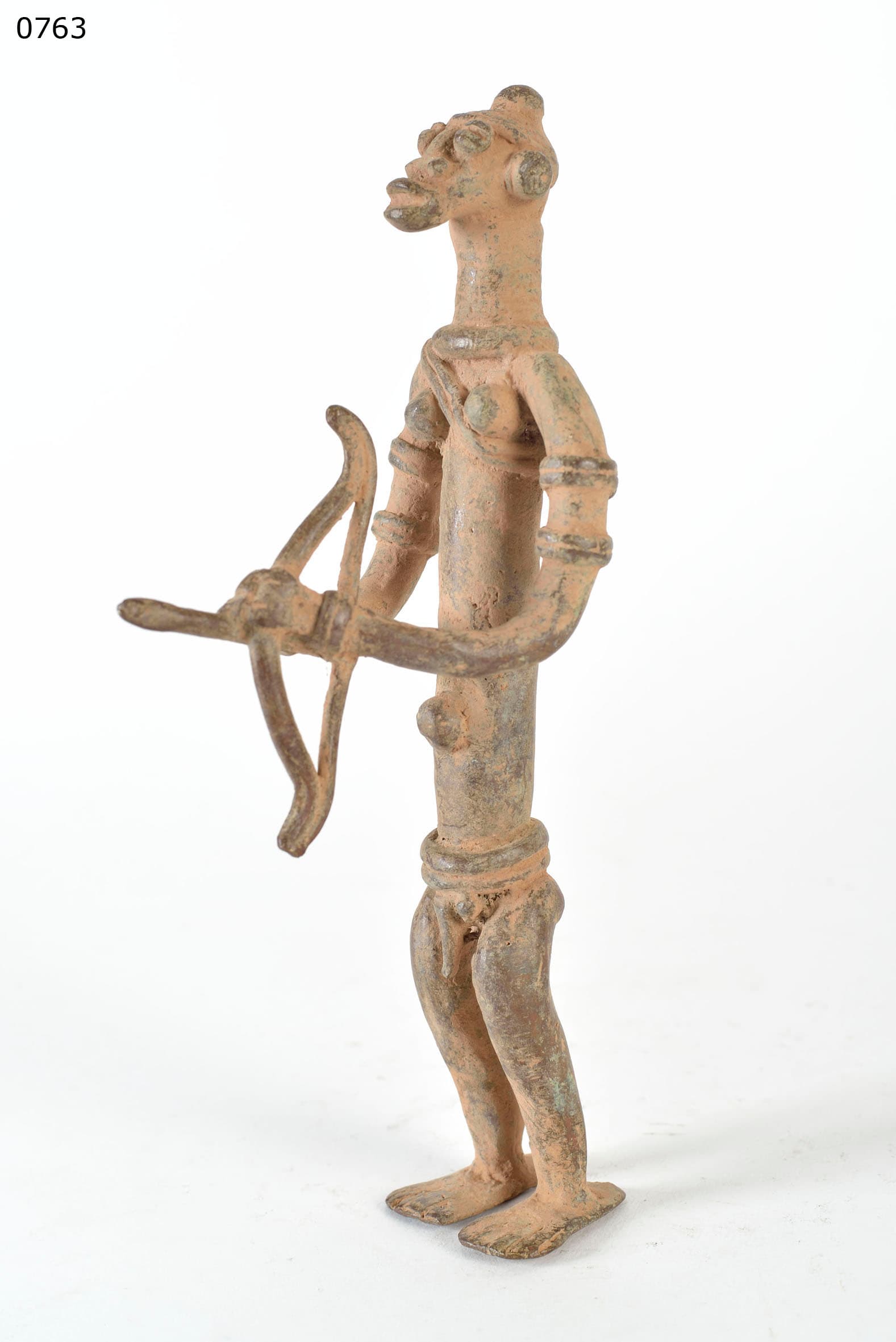
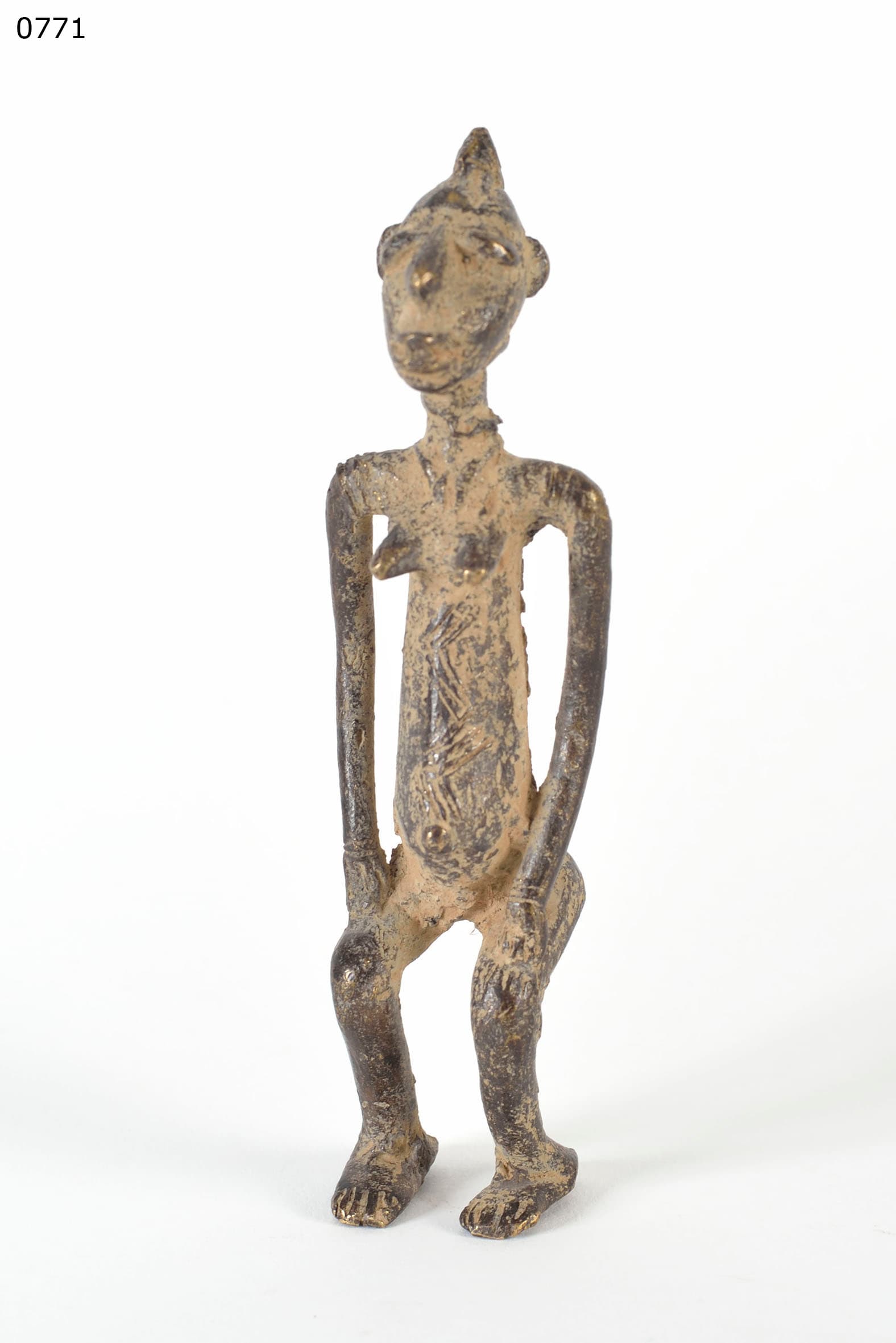
A large, heavy bronze pendant cast in the form of a stylized, elongated chameleon. It features a sweeping, curved back, a curled tail, and intricate geometric patterns across its flanks, covered in a deep, matte, and highly oxidized archaeological crust.
1. Aesthetic style and regional traits
In the ancient Gan metallurgical tradition, the chameleon is a creature of supreme mythological importance. Because of its slow, deliberate movements, its ability to look in multiple directions, and its ancient lineage, it is viewed as a messenger of the gods, a symbol of primal wisdom, and an entity that bridges the gap between the living and the ancestors. This specific casting captures the characteristic curled tail and the sweeping, arched back of the reptile. Chameleon iconography is regionally consistent across West African traditions but pushed to its formal extreme by the Gan.
2. Ritual function and elite protection
A pendant of this massive size (17 cm) and complex casting was not a common object. It was likely a high-status pectoral, associated with a Gan king or a highly ranked diviner. The intricate, textured patterns on the chameleon's flanks enhance its aesthetic prestige and likely act as encoded spiritual armor. By wearing the chameleon, the priest assumes its clairvoyance, ensuring they can "see" and deflect malevolent witchcraft before it strikes. The chameleon's multidirectional gaze is operationally important — it provides comprehensive surveillance rather than narrow watchfulness.
3. Physical patina and age indicators
The surface condition of this large bronze is highly developed. The metal has undergone profound chemical alteration, completely covered in a thick, dry, and un-restored layer of oxidized copper and calcified soil. This severe archaeological weathering obscures some of the casting details but is consistent with the object having been buried in the Burkinabe earth for a significant period, supporting its attribution to the 16th–19th century.
Summary
An ancient Gan pendant that represents the mythological chameleon as a wearable shield of clairvoyance and protection. Its sweeping, textured casting and deep archaeological patina are characteristic of this significant metalworking tradition.
Written with AI assistance from the collection appraisal, object photography and our own research; editorially reviewed. Mistakes are possible — corrections are welcome. How we work →