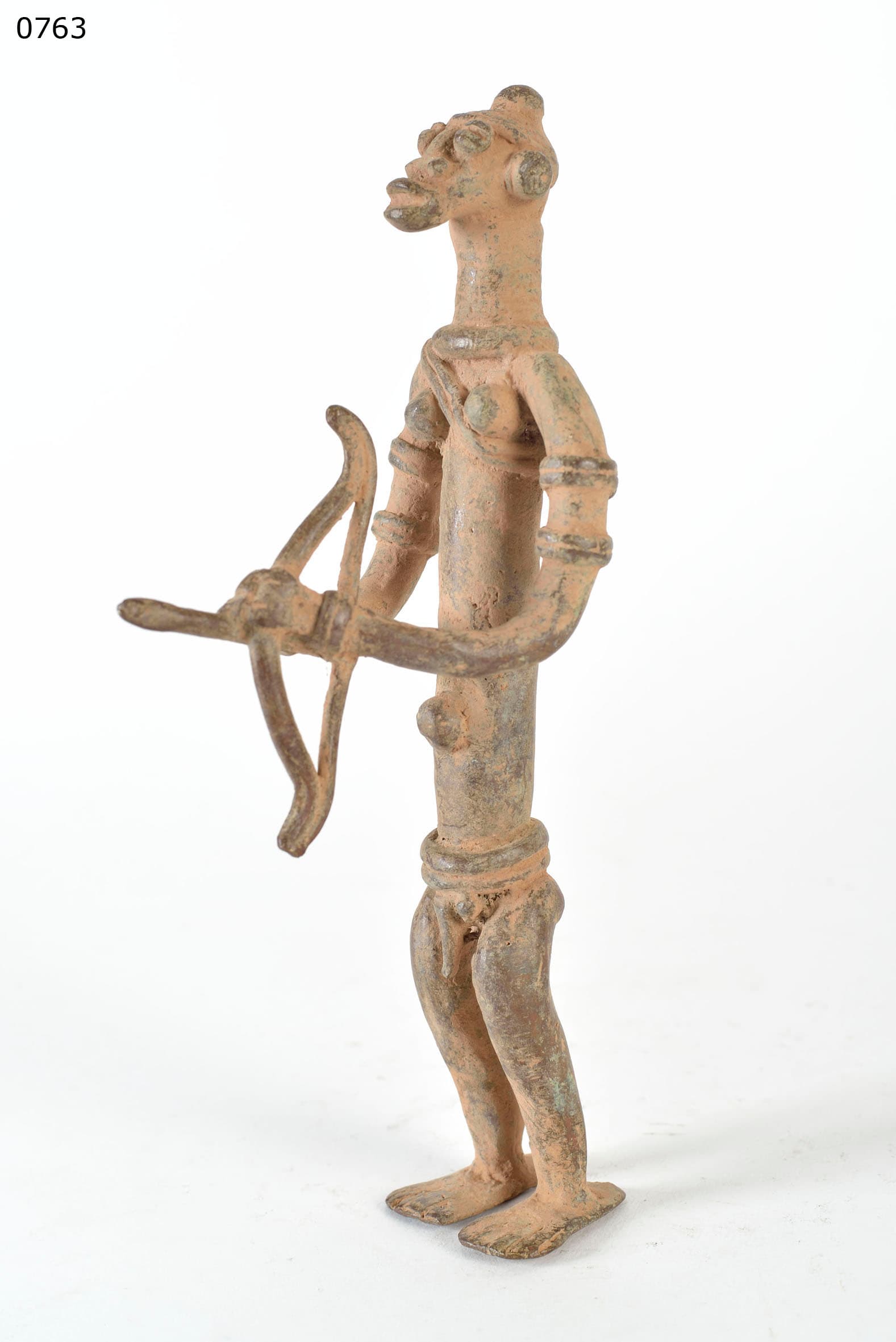
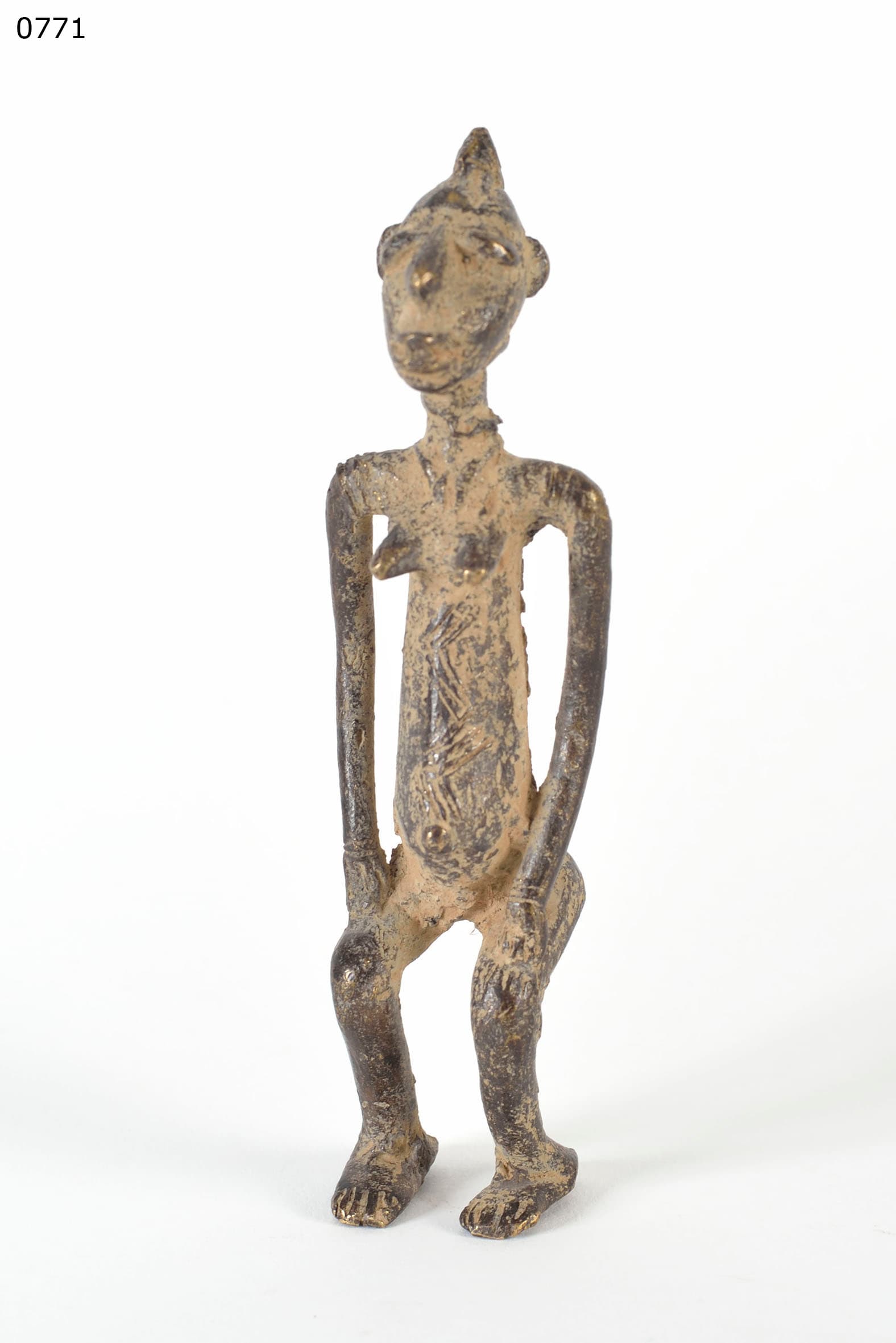
One of three heavy bronze ornaments. This piece features a thick circular band adorned with two emerging figures accompanied by suspended bells. It possesses a thick, heavily encrusted archaeological patina with vibrant green and brown oxidation.
1. Aesthetic style and regional traits
The Gan people are highly esteemed for their ancient, intricate lost-wax (cire perdue) bronze castings. The integration of two figures with cast bells onto a wearable band represents a particularly elaborate variant of the Gan ornament tradition, where the casting expands beyond the structural circumference of the band into projecting sculptural and acoustic elements. The bell inclusion gives the ornament an audible identity in addition to its visual one.
2. Ritual function and acoustic authority
In Gan society, massive bronze anklets and armlets were exclusively reserved for royalty, high-ranking initiates, and powerful priestesses. The bells acted as potent apotropaic charms; their jingling announced the presence of elite individuals while simultaneously warding off malevolent spirits. Combined with the dual figures invoking the protection of royal ancestors, this ornament operated as both a wealth display and an active protective device. The acoustic announcement was inseparable from the visual display — both functioned together within the elite's public presence.
3. Physical patina and age indicators
The surface shows characteristics consistent with metallurgical aging — covered in a thick, stable layer of cuprite and malachite (green/brown crust), suggesting it may have been either interred in a burial context or kept within the damp earth of a shrine. This mineralization is consistent with a slow, natural aging process and supports an attribution to the stated 16th–19th century period.
Summary
This Gan bronze ornament showcases the lost-wax casting capabilities and combined visual-acoustic prestige associated with Burkina Faso's traditional leadership. Its encrusted patina and integrated bells make it a rare ornament of significant historical interest.
Written with AI assistance from the collection appraisal, object photography and our own research; editorially reviewed. Mistakes are possible — corrections are welcome. How we work →