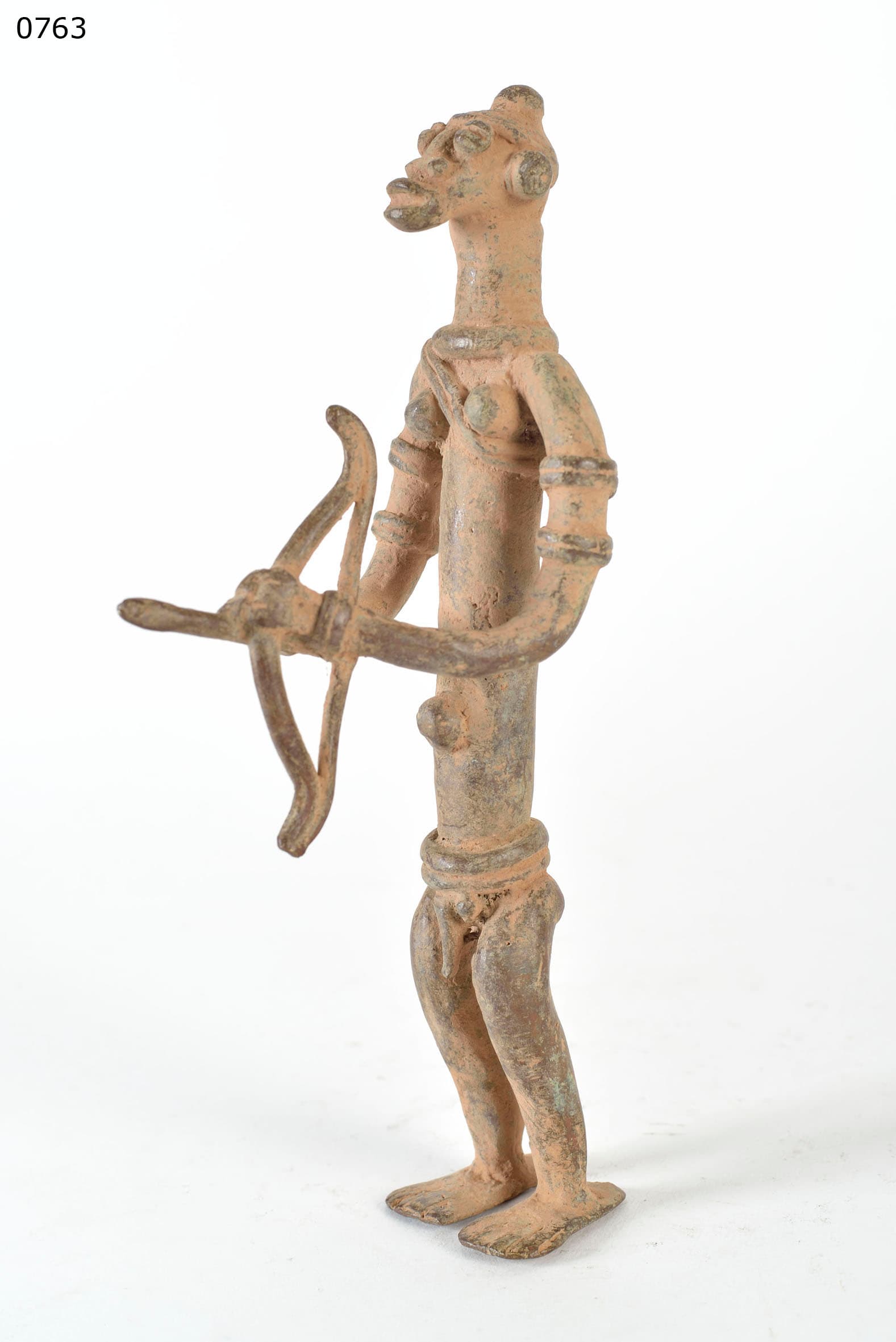
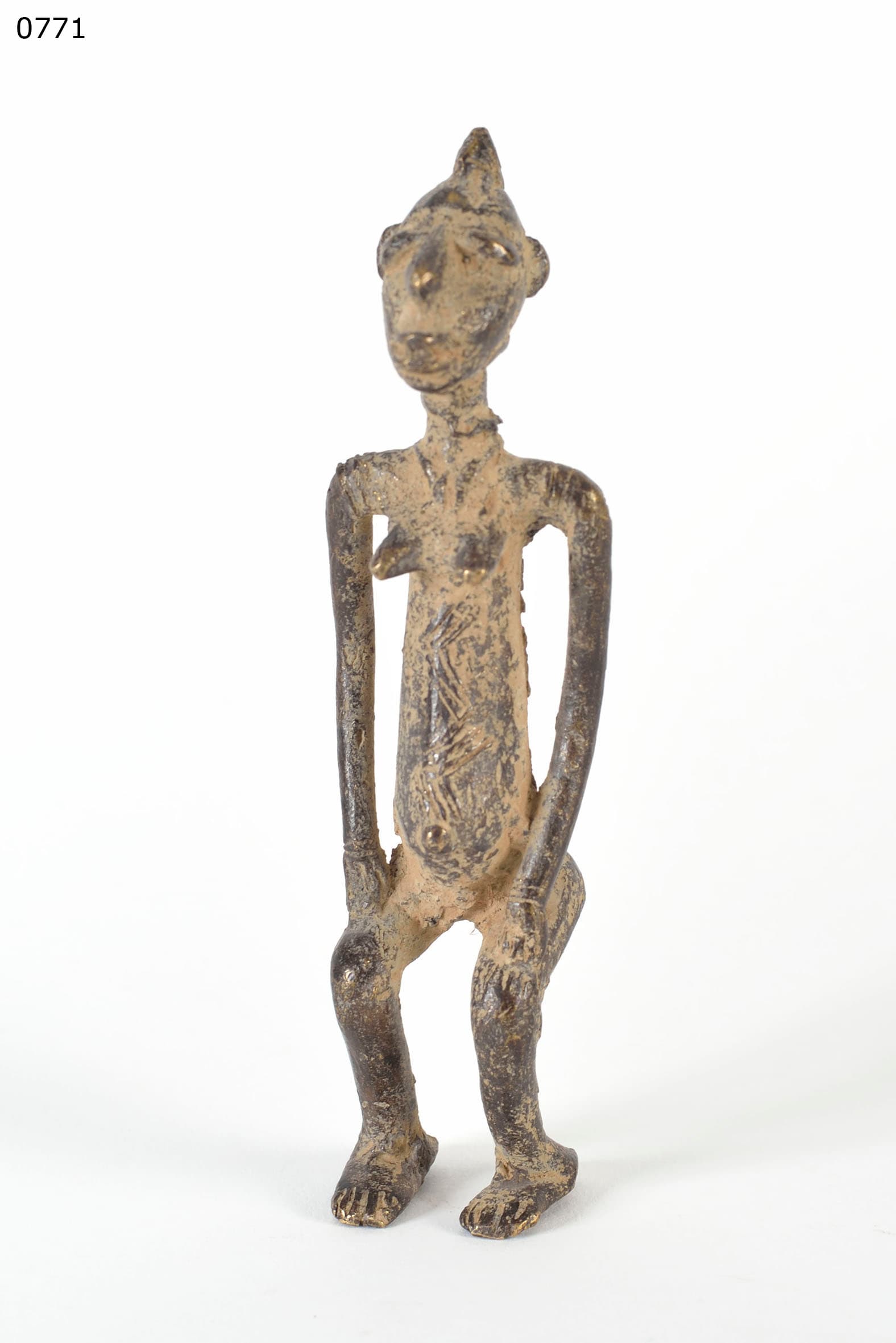
One of three heavy bronze ornaments. This piece features a thick circular band adorned with a stylized chameleon or lizard as its sculptural finial. It possesses a thick, heavily encrusted archaeological patina with vibrant green and brown oxidation.
1. Aesthetic style and regional traits
The Gan people are highly esteemed for their ancient, intricate lost-wax (cire perdue) bronze castings. The inclusion of the chameleon — a creature deeply associated with transformation, primal wisdom, and the origins of the world in Voltaic myth — elevates this from mere jewelry to a wearable cosmological emblem. The chameleon's slow, multidirectional gaze is iconographically loaded across the entire Voltaic region, where it symbolizes patient, comprehensive ancestral surveillance.
2. Ritual function and cosmological iconography
In Gan society, massive bronze anklets and armlets were exclusively reserved for royalty, high-ranking initiates, and powerful priestesses. The chameleon iconography invokes the wearer's connection to primordial wisdom and the transformative power that bridges human and ancestral realms. The ornament thus marked its wearer as a participant in the deepest iconographic registers of Gan religious thought, beyond mere wealth display.
3. Physical patina and age indicators
The surface shows characteristics consistent with significant metallurgical aging — covered in a thick, stable layer of cuprite and malachite (green/brown crust), suggesting it may have been interred in a burial context or kept within the damp earth of a royal shrine. This mineralization is compatible with a prolonged period of aging, supporting an attribution to the 16th–19th century.
Summary
This Gan bronze ornament showcases the lost-wax casting capabilities and complex cosmological iconography associated with Burkina Faso's historical elites. Its chameleon finial and encrusted patina make it a highly distinctive wearable emblem of significant historical interest.
Written with AI assistance from the collection appraisal, object photography and our own research; editorially reviewed. Mistakes are possible — corrections are welcome. How we work →