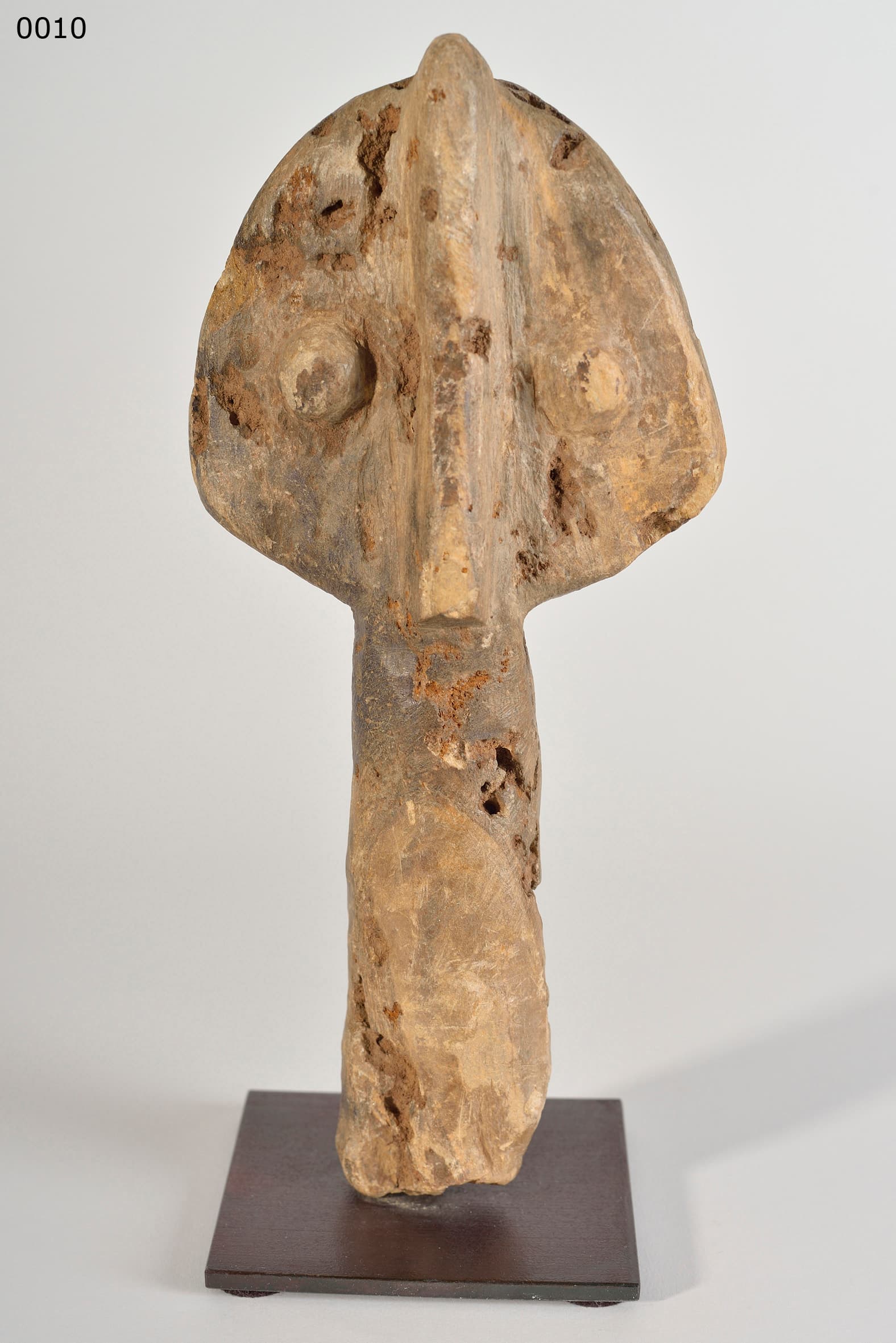
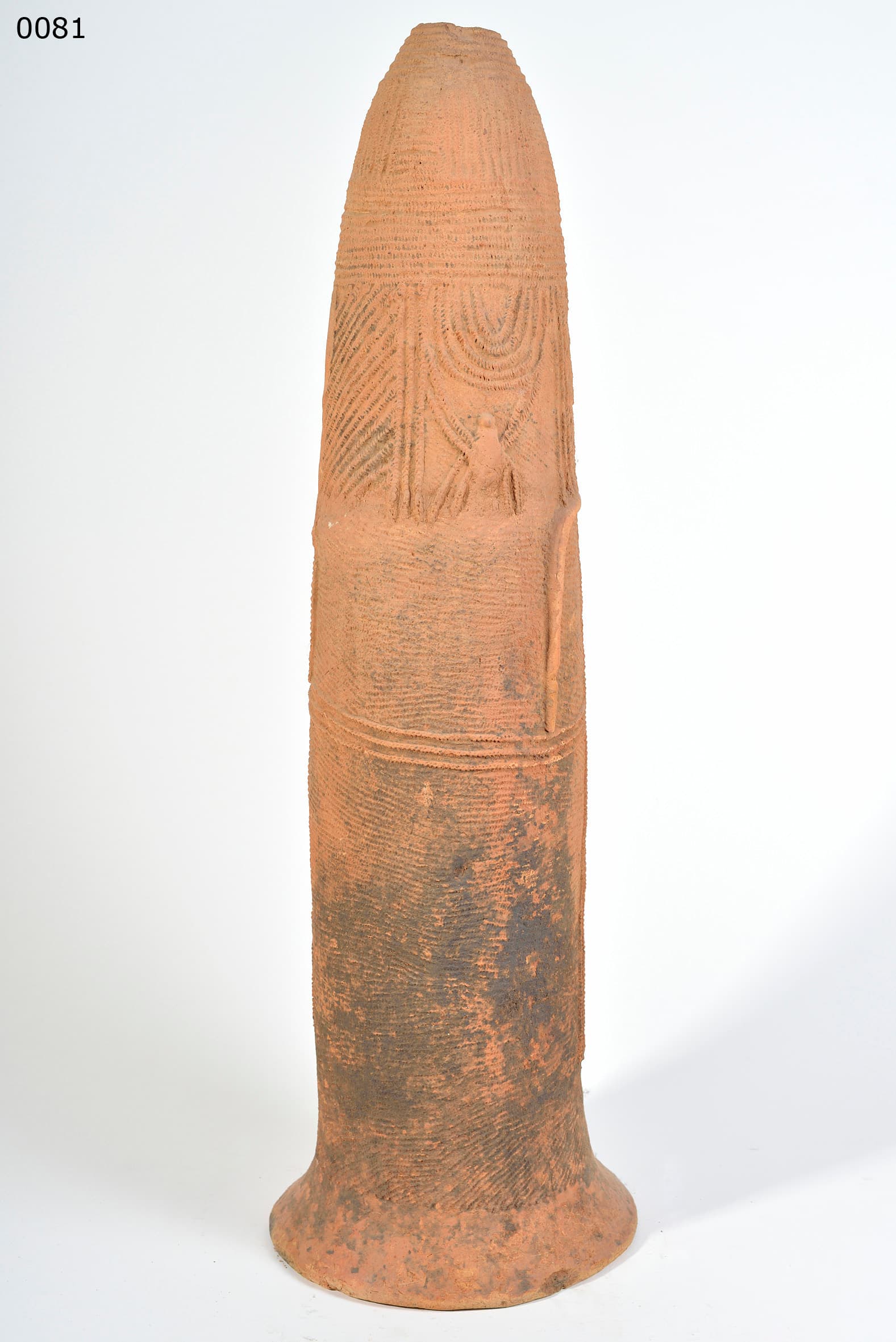
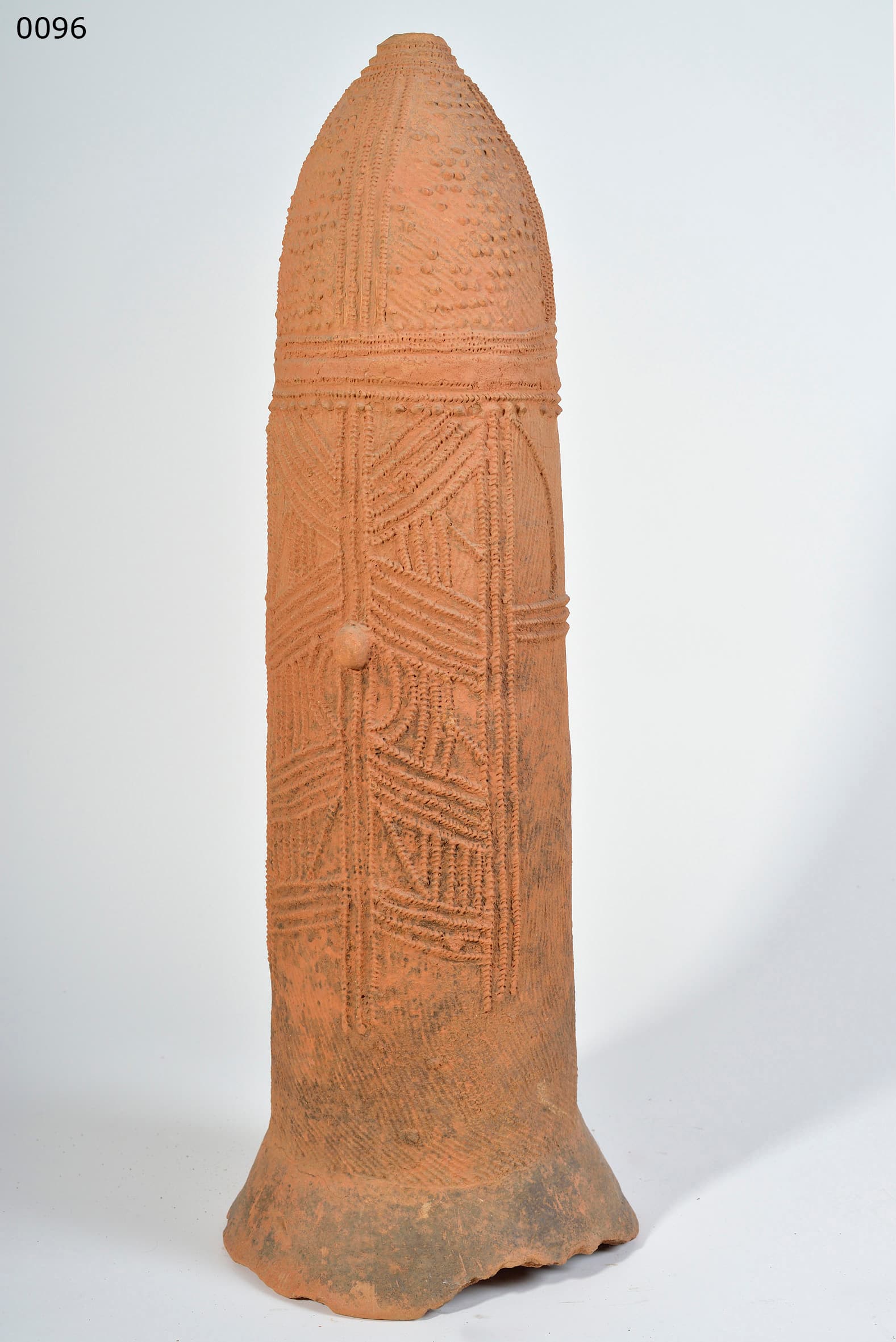
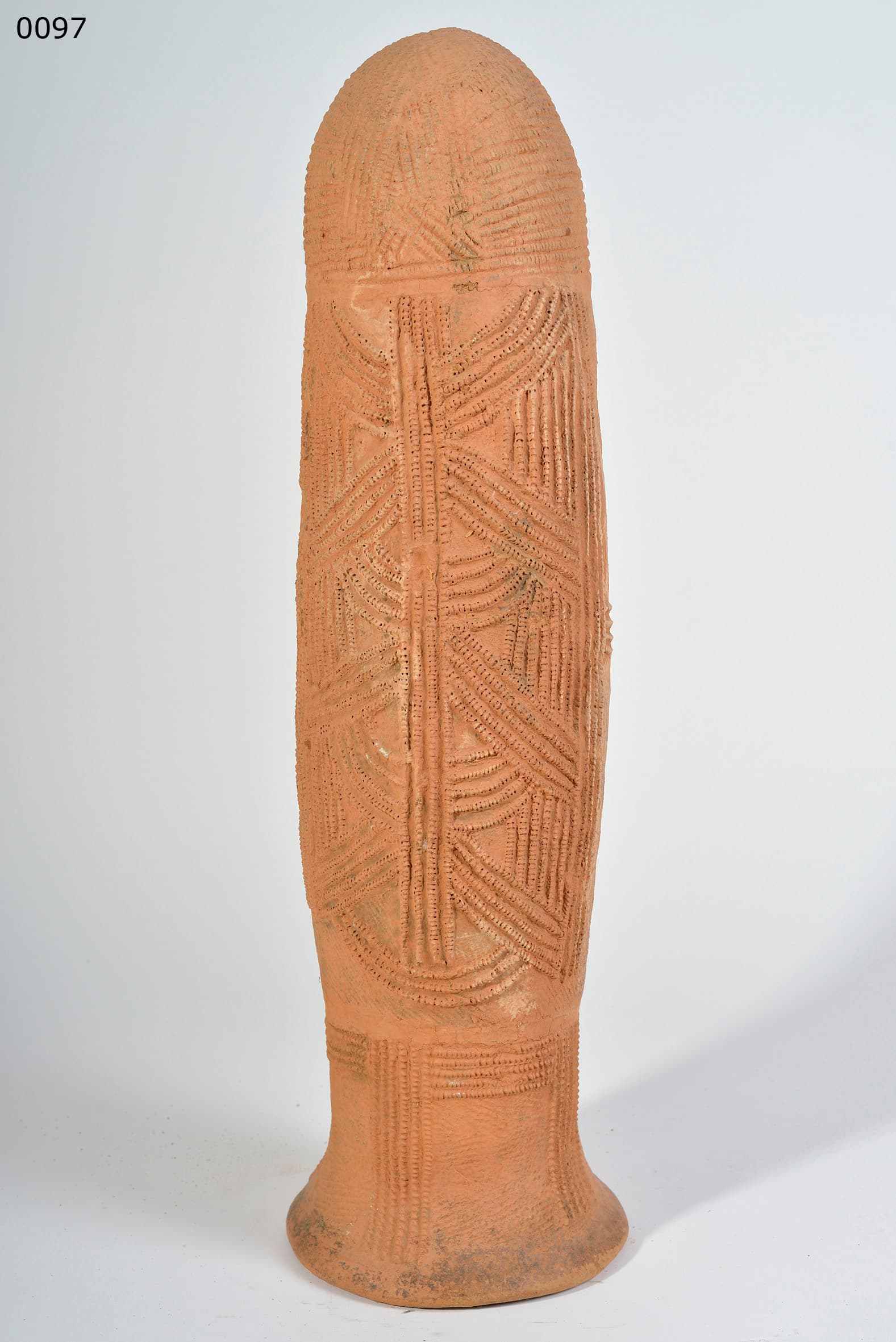
Ein kugelförmiges Terrakotta-Grabgefäß (3.-11. Jh., 51 cm) aus Bura (Niger/Burkina Faso) - ein runder Körper, auf dem ein kleiner, stilisierter menschlicher Kopf mit heiteren Gesichtszügen sitzt.
1. Die Weltkugel und der Kopf
Diese Urne stellt einen besonderen morphologischen Typus innerhalb des Korpus der Nekropole von Bura dar.
- Der Körper als Kugel: Die Kugelform ist die effizienteste Form für ein Sekundärbestattungsgefäß - maximales Volumen für zerlegte Überreste bei minimalem Ton.
- Kopf als Signatur: Der kleine modellierte Kopf sitzt wie ein Deckel auf der Kugel und verwandelt ein anonymes Gefäß in das Porträtgrab eines bestimmten Vorfahren.
2. Gelassenheit in Ton
Gegenstand 117 zeichnet sich durch seine ruhige, in sich gekehrte Haltung aus.
- Ein friedlicher Durchgang: Wo andere Bura-Urnen die Arme zum verzweifelten Gebet erheben, trägt diese Figur einen ruhigen, fast meditativen Ausdruck.
- Status durch Ruhe: In der Bura-Bestattungslogik signalisiert die Ruhe auf dem Gefäß, dass der Vorfahr erfolgreich übergegangen ist - die Lebenden brauchen sich keine Sorgen um ihn zu machen.
3. Die Mathematik des Feuerns
Mit 51 cm ist diese Urne zwar kompakt, aber dennoch technisch anspruchsvoll.
- Kugelförmige Schrumpfung: Eine Kugel gilt als anspruchsvolle Form beim Brand in offener Grube – ungleichmäßige Hitzeverteilung kann leicht zu Rissen in runden Körpern führen.
- Zeugnis des Töpferhandwerks: Dass dieses Stück über einen langen Zeitraum hinweg weitgehend unversehrt erhalten blieb, spricht für das beachtliche Können innerhalb der Bura-Keramiktradition und stützt die Annahme des hohen Prestiges des geehrten Vorfahren.
Zusammenfassung
Diese kleine Bura-Urne ist ein ruhiges Gegenstück zu den dramatischeren Gefäßen der gleichen Kultur. Ihr ruhiger Kopf und ihr kugelförmiger Körper liefern ein gelassenes Porträt eines erfolgreichen Übergangs - ein friedliches Grabzeichen aus der Sahelzone des 1.
KI-unterstützt erstellt aus Sammlungsgutachten, Objektfotografie und eigener Recherche, redaktionell geprüft. Fehler sind möglich — Hinweise darauf sind uns willkommen. Zum Verfahren →