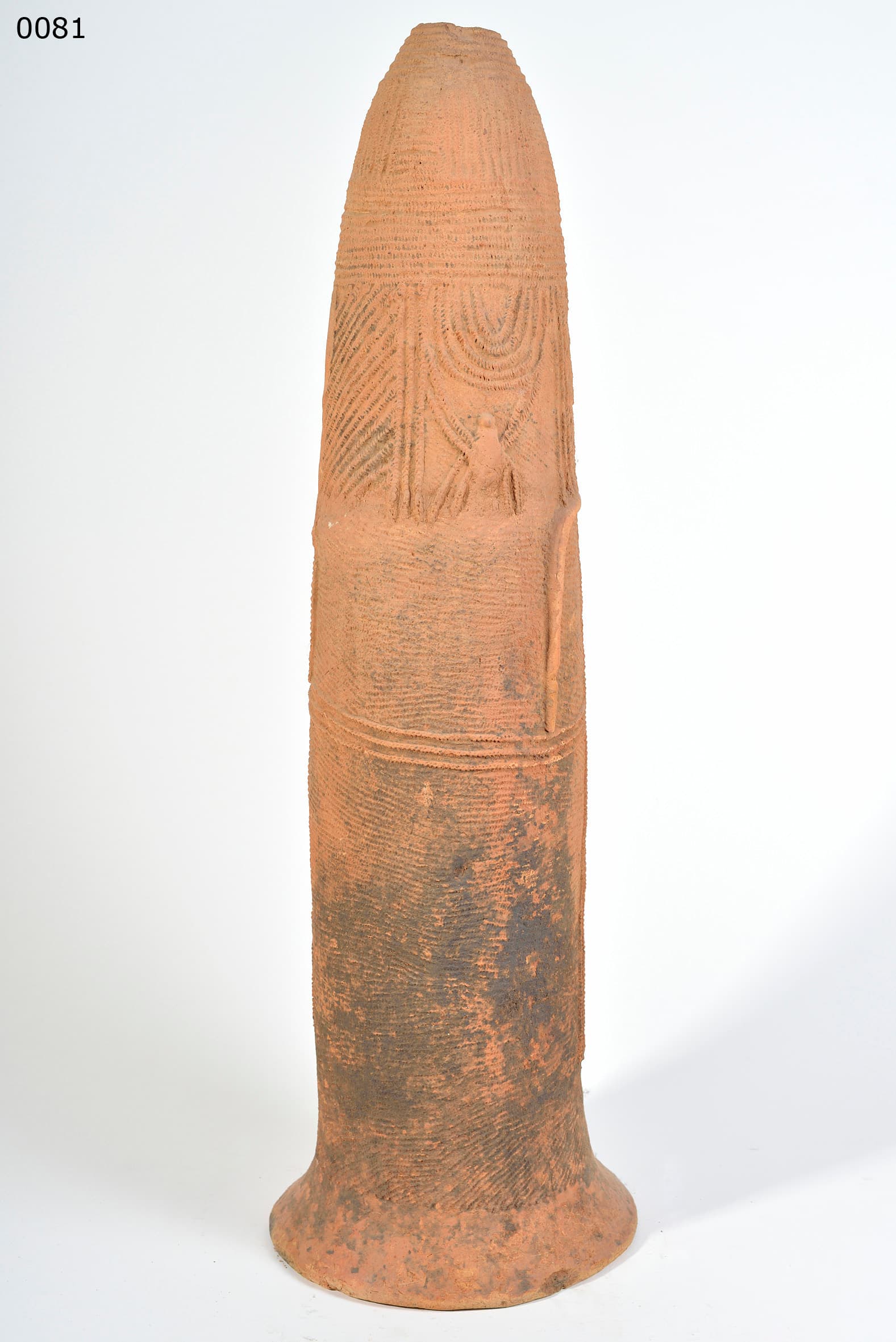
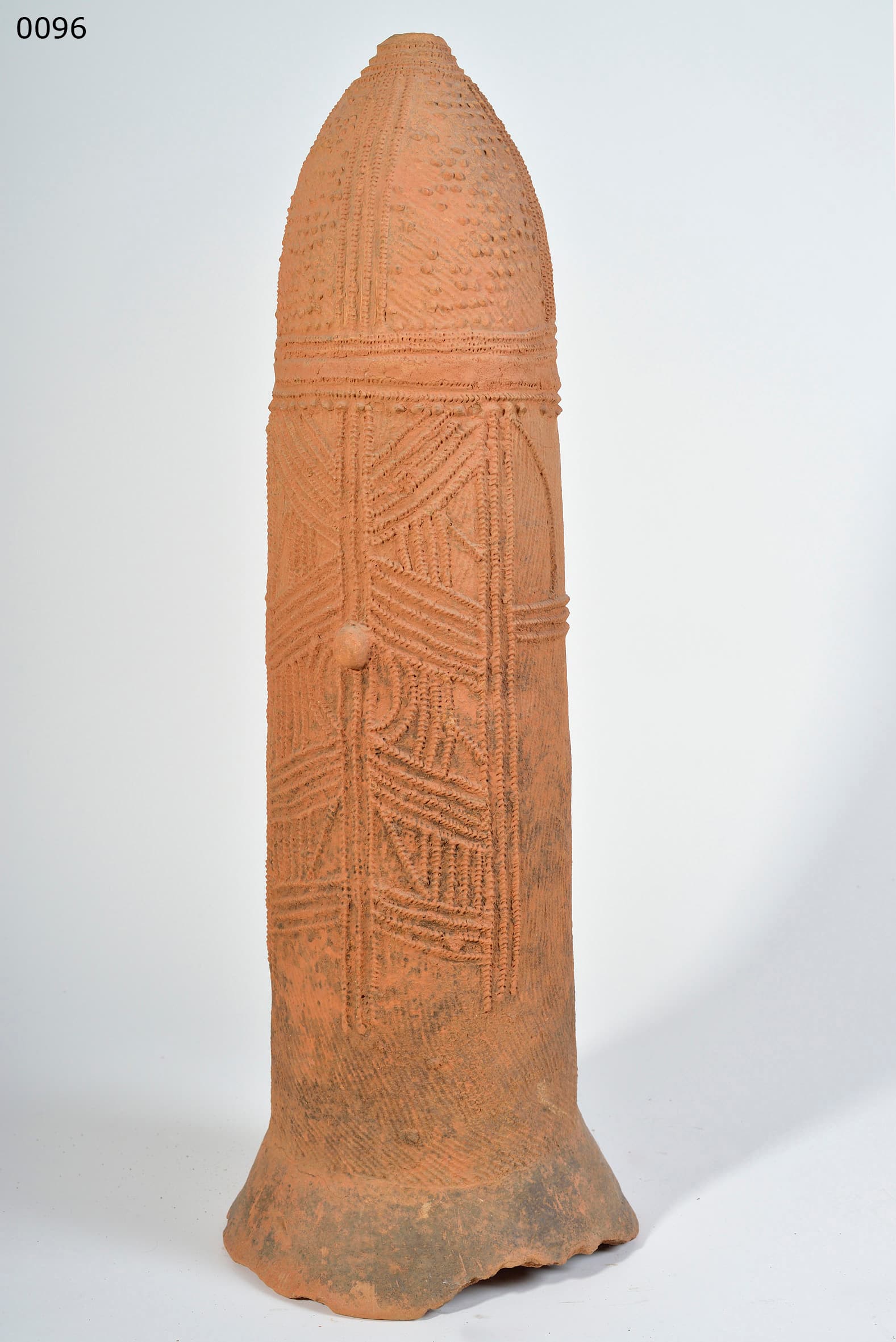
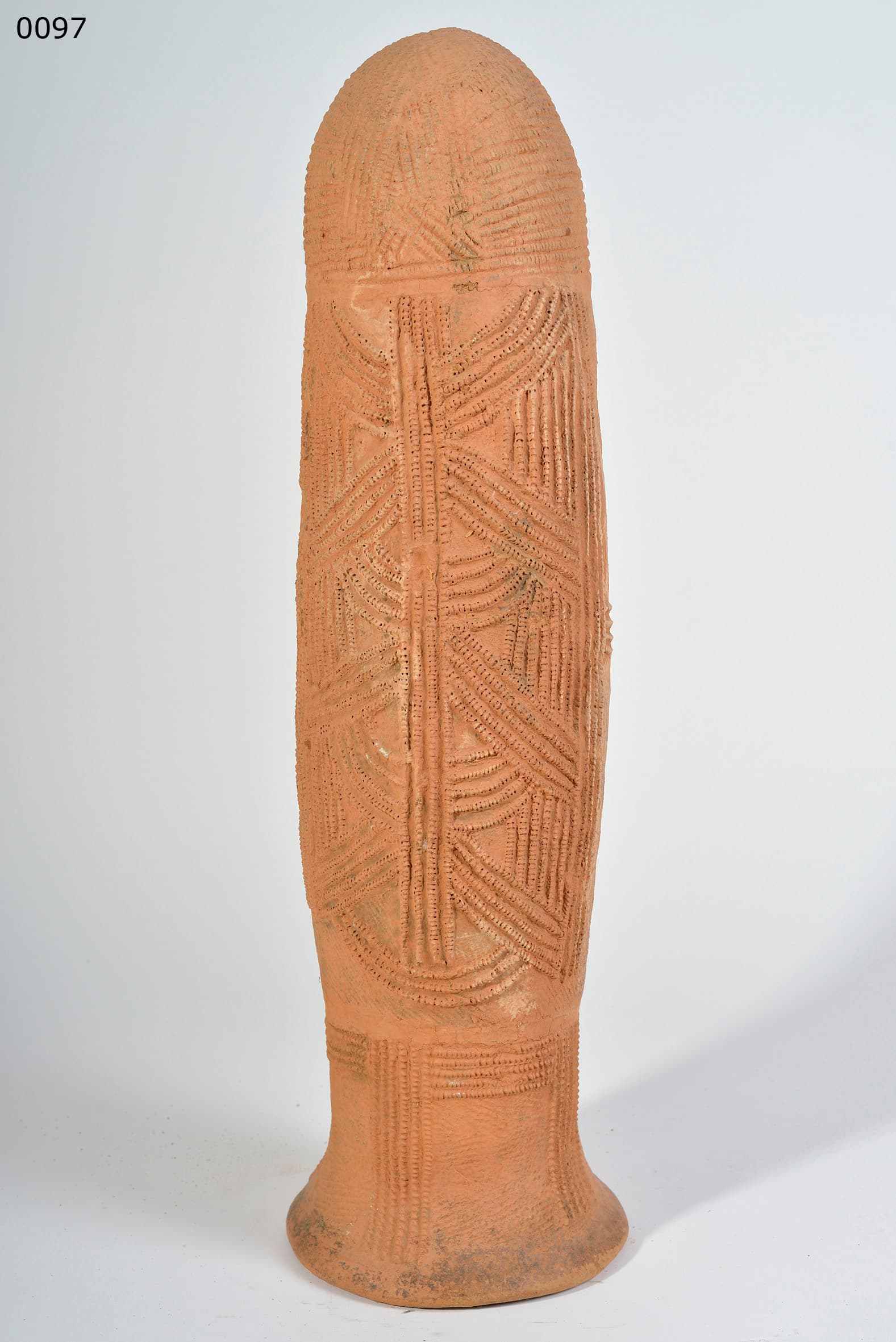
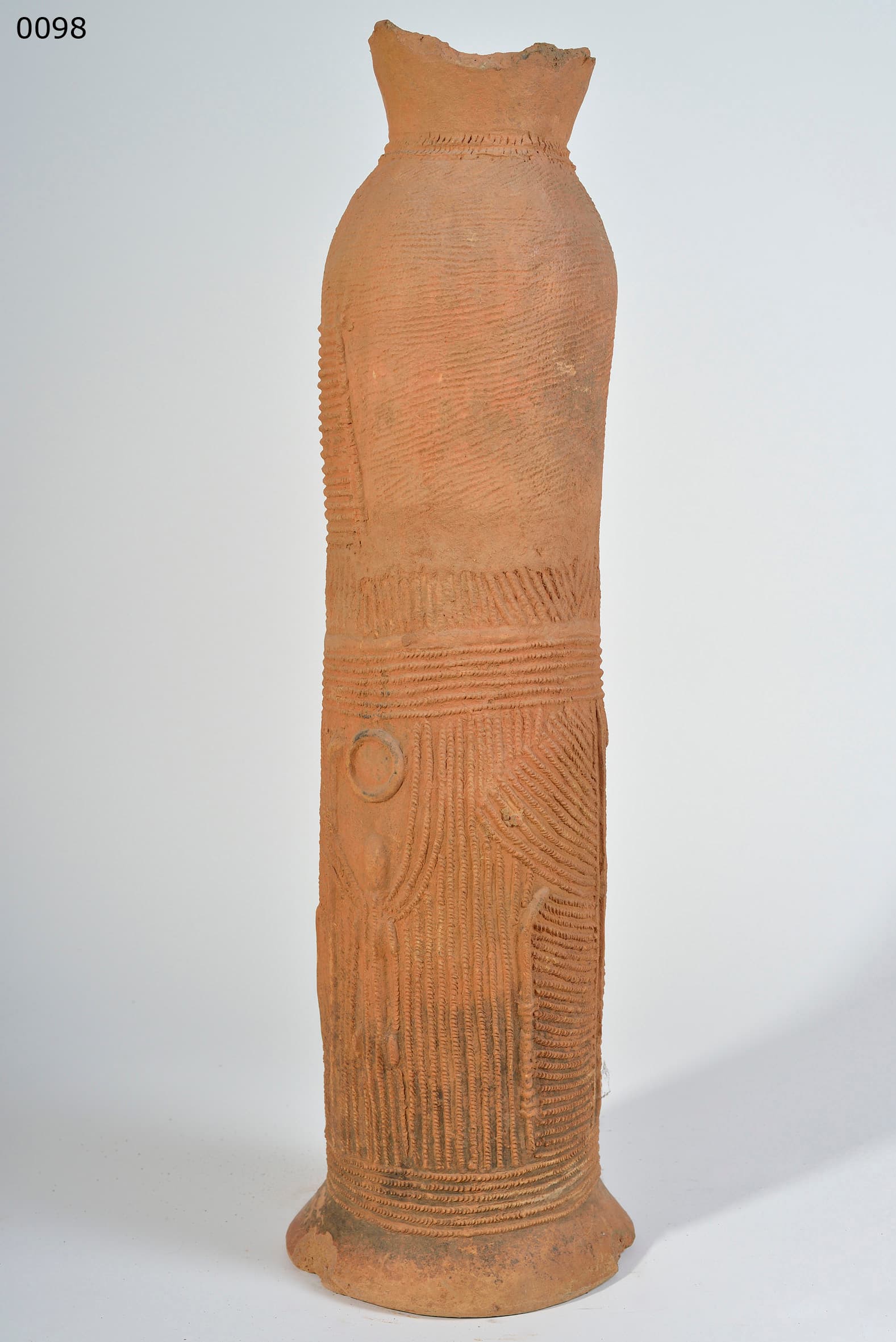
Dies ist ein sehr bedeutendes archäologisches Objekt aus der Bura-Kultur (oder Bura-Asinda-Sikka), die im unteren Niger-Tal des heutigen Niger und Burkina Faso zwischen dem 3. und 11. Jahrhundert n. Chr. blühte.
Jahrhundert n. Chr. blühte. Während die früheren Steinfiguren (Nyonyosi) aus Laterit gefertigt waren, gehört dieses Objekt zu einer eigenständigen eisenzeitlichen Zivilisation, die erst 1975 entdeckt wurde.
1. Radikale Abstraktion: Die Bura-Ästhetik
Das Volk der Bura schuf einige der "modernsten" antiken Kunstwerke Afrikas. Diese Figur ist ein Paradebeispiel für ihren reduktivistischen Stil:
- Geometrische Form: Der Kopf ist auf eine flache, spatenförmige oder ovale Platte reduziert. Der zentrale vertikale Grat dient als kombinierte Nase und Stirn, während die beiden kleinen kreisförmigen Vorsprünge Augen darstellen.
- Die säulenförmige Basis: Die Figur sitzt auf einem dicken, zylindrischen Hals oder "Schaft" Dieser war funktional: Burafiguren waren oft dazu bestimmt, direkt in die Erde gesteckt zu werden oder als "Stöpsel" oder "Aufsatz" für eine große keramische Graburne zu dienen.
- Materialität: Diese Objekte wurden in der Regel aus niedrig gebrannter Terrakotta (Ton) hergestellt, es gibt aber auch Versionen aus Stein. Die raue, verkrustete Oberfläche - oft mit noch vorhandenen Flecken der ursprünglichen Erde - ist charakteristisch für Objekte, die in den sandigen Nekropolen der Sahelzone ausgegraben wurden.
2. Bestattungskontext: Die Nekropole
Es handelt sich nicht um eine dekorative Statue, sondern um ein Grabdenkmal.
- Bestattungspraxis: Die Bura praktizierten "Sekundärbestattungen" Sie beerdigten zuerst den Körper und holten dann später die Knochen (oft nur den Schädel) heraus und legten sie in große Keramikgefäße.
- Der wachende Geist: Diese Gefäße wurden dann auf dem Kopf stehend in großen Friedhöfen beigesetzt. Eine Figur wie diese wurde auf dem Boden über dem Grab aufgestellt, um die Stelle zu markieren und als Wächter für den Verstorbenen zu fungieren.
- Die "phallische" Verbindung: Viele Bura-Grabfiguren haben eine deutlich phallische Silhouette. Gelehrte glauben, dass dies ein symbolischer Hinweis auf die Fruchtbarkeit und die "Regeneration" des Lebens war, was darauf hindeutet, dass der Tod eher als Übergang denn als Ende angesehen wurde.
3. Historische Bedeutung
- Entdeckung: Die Bura-Zivilisation blieb der Geschichte unbekannt, bis ein Dorfbewohner im Jahr 1975 zufällig einen Terrakottakopf ausgrub.
- Soziale Komplexität: Die Existenz dieser riesigen Nekropolen (einige enthalten über 600 Gefäße) deutet auf eine hoch organisierte, wohlhabende und komplexe Gesellschaft hin, die den Handel entlang des Niger-Flusses lange vor dem Aufstieg der großen mittelalterlichen westafrikanischen Reiche wie Mali oder Songhai kontrollierte.
Zusammenfassung
Diese Bura-Figur ist ein stummer Wächter einer "verlorenen" Zivilisation. Ihr minimalistisches Design - sie reduziert das menschliche Gesicht auf seine grundlegenden geometrischen Komponenten - diente als Brücke zwischen der lebenden Gemeinschaft und dem Reich der Ahnen. Sie ist ein eindrucksvolles Zeugnis für die künstlerische Innovation der frühen Eisenzeit in der westafrikanischen Sahelzone.
KI-unterstützt erstellt aus Sammlungsgutachten, Objektfotografie und eigener Recherche, redaktionell geprüft. Fehler sind möglich — Hinweise darauf sind uns willkommen. Zum Verfahren →