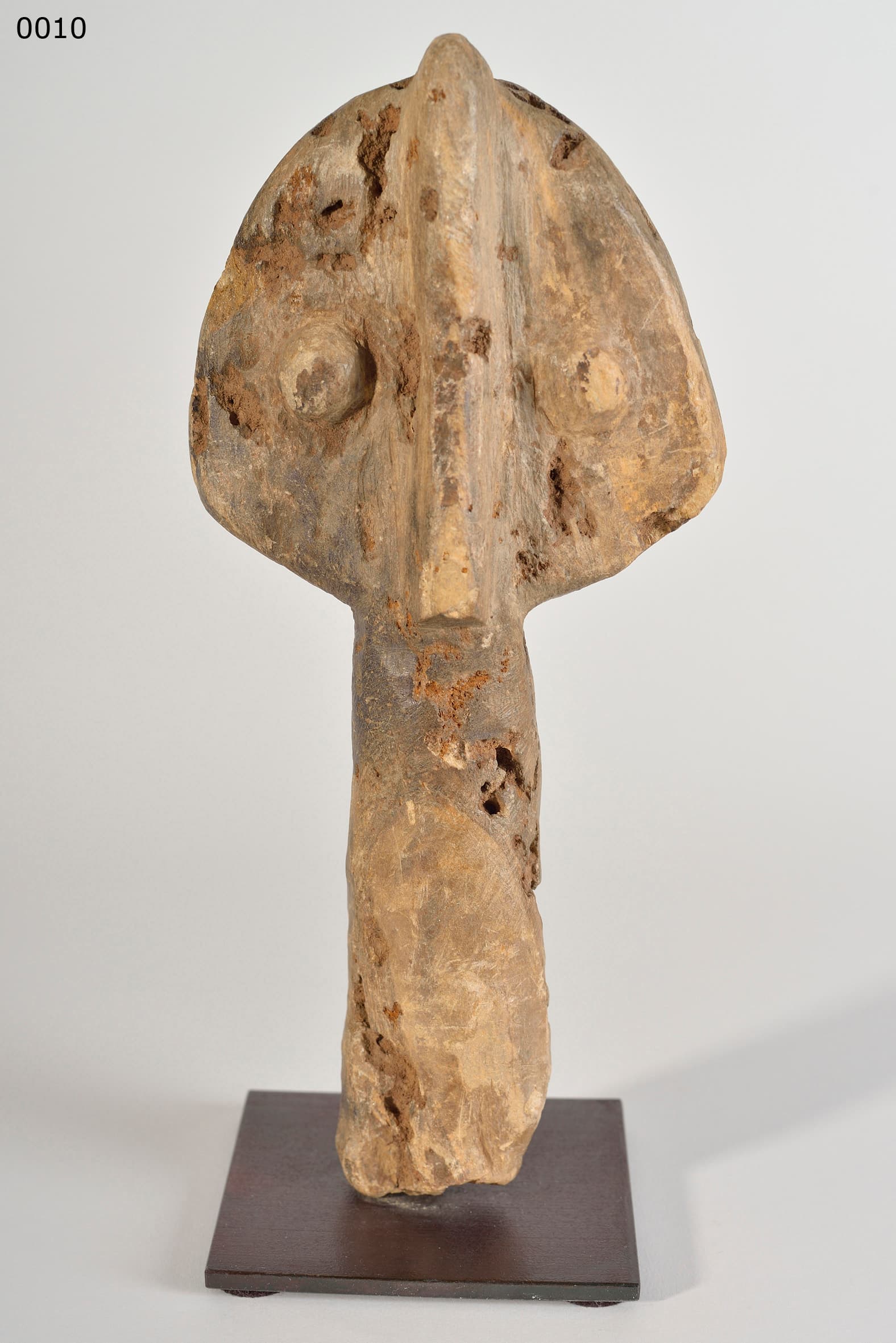
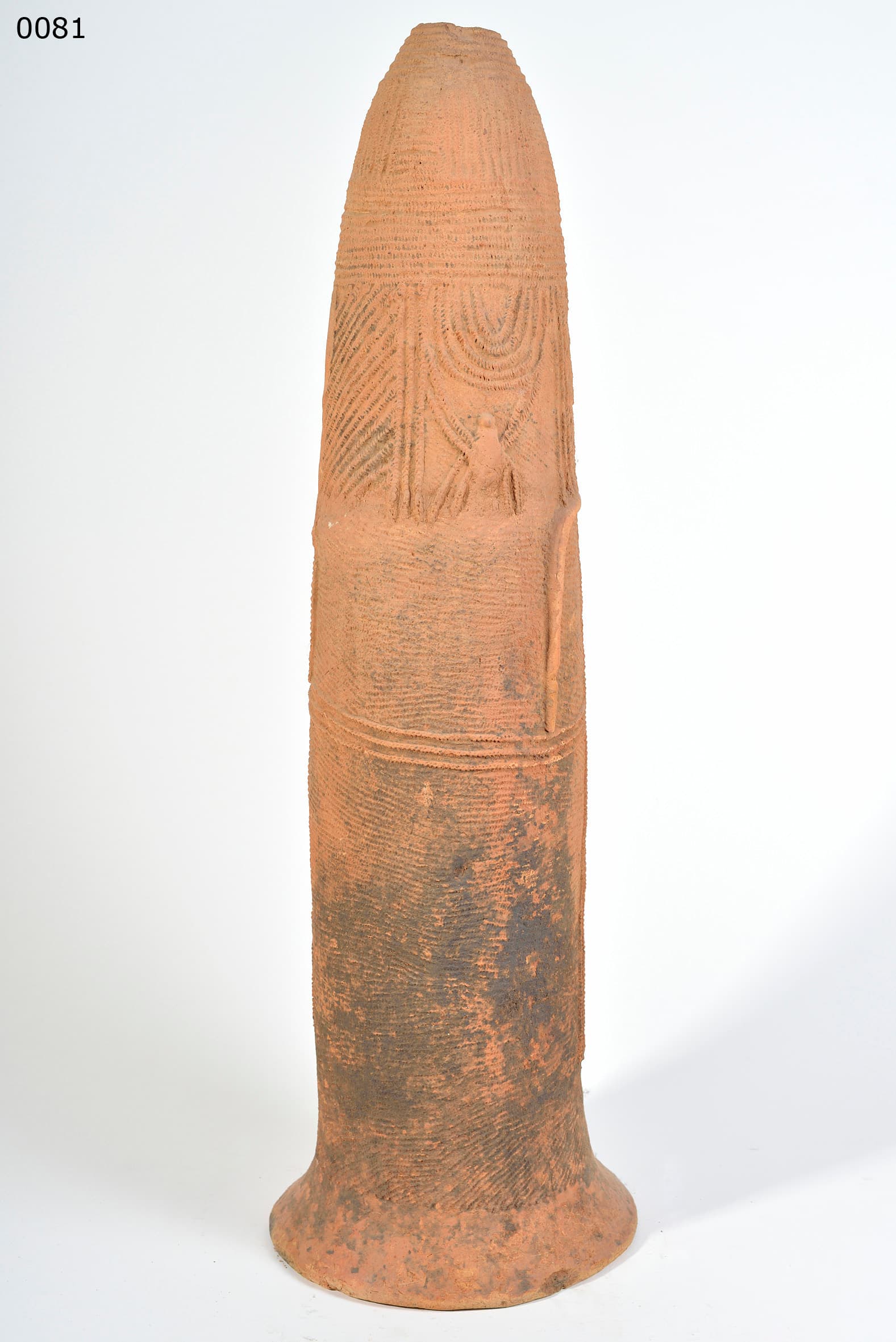
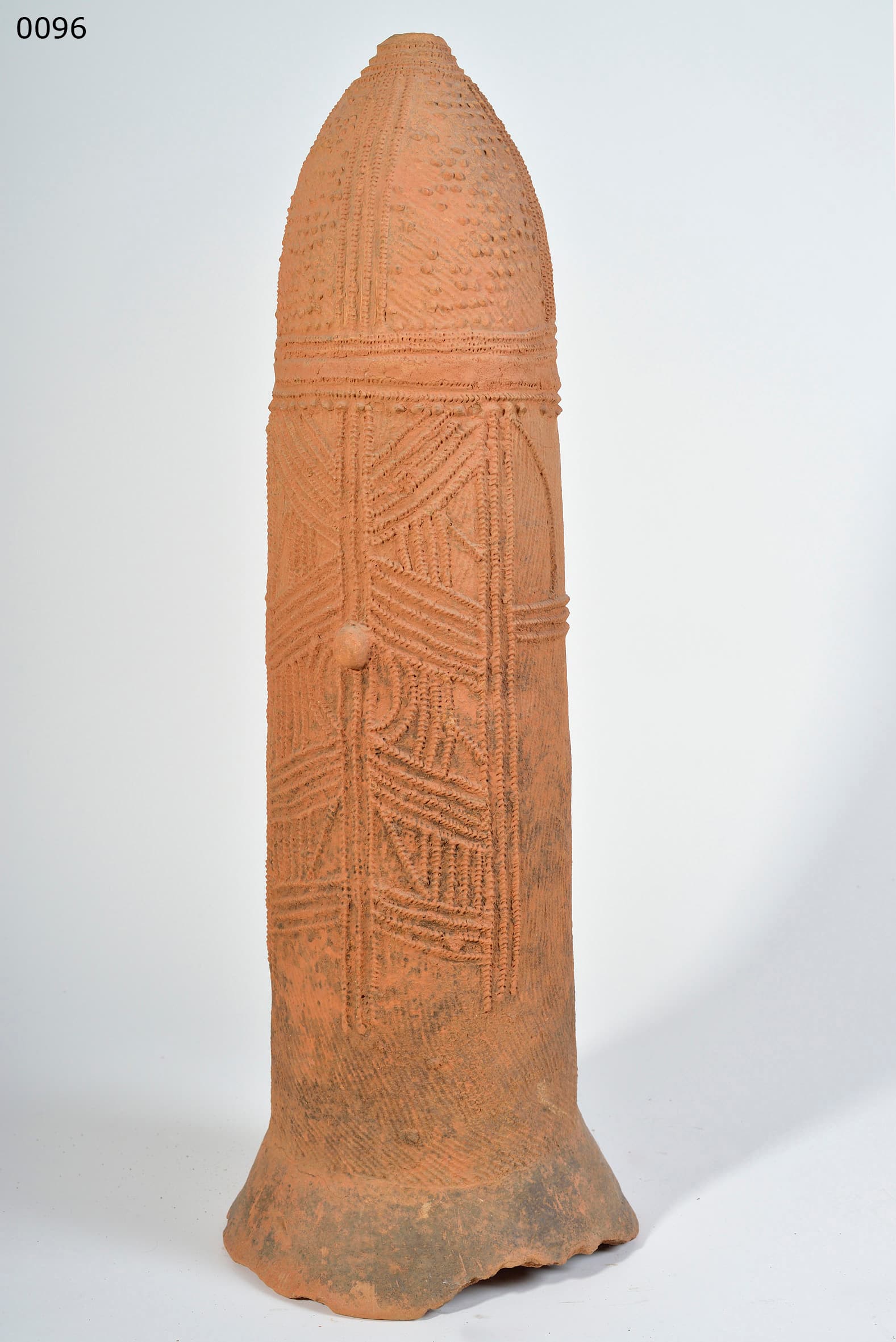
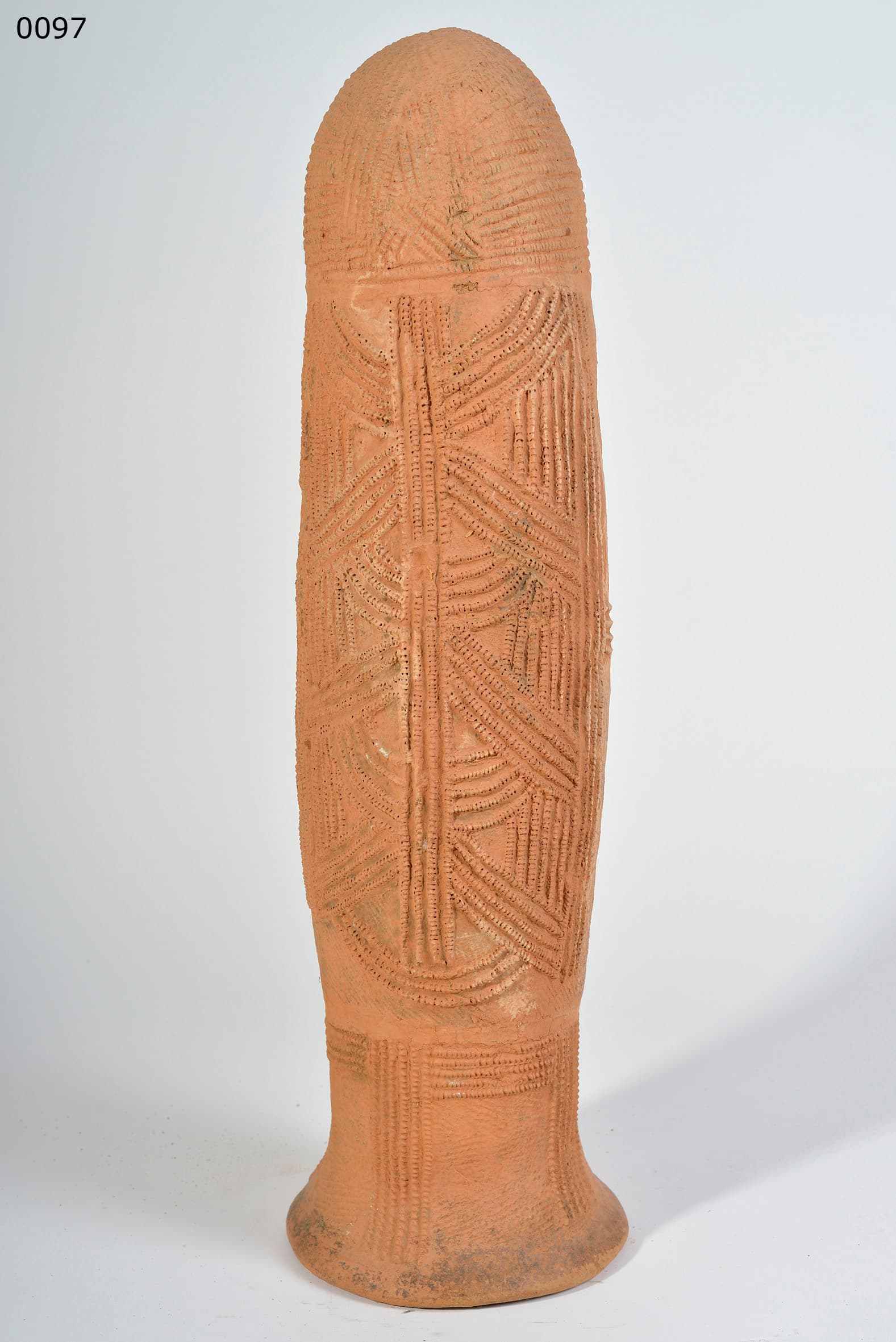
Eine hohe, flaschenartige Terrakotta-Urne (3.-11. Jh., 63 cm) aus Bura in Niger/Burkina Faso - gekrönt von einem heiteren, nach oben blickenden Kopf, dessen Hals von sorgfältig modellierten Schmuckbändern umgeben ist.
1. Der himmlische Blick
Diese Urne zeichnet sich durch die Ausrichtung ihrer Aufmerksamkeit aus.
- Kopf nach oben geneigt: Im Gegensatz zu Urnen mit ebenen oder nach unten gerichteten Gesichtern blickt diese Urne aktiv in den Himmel.
- Himmlischer Übergang: Als friedliche Anerkennung des himmlischen Bereichs gelesen, zeigt die Haltung den Vorfahren eher im Moment des erfolgreichen Übergangs als in der Petition.
2. Halsringe und Rang
Der Schmuck ist kein Ornament - er ist eine Identifikation.
- Sichtbares Prestige: Halsringe in der westafrikanischen Ikonographie signalisieren durchweg Elitestatus, Reichtum und die Initiation ins Erwachsenenalter.
- Porträt in Ton: Die Modellierung dieser speziellen Ringe auf der Urne verwandelt das Behältnis in ein gekleidetes Porträt des Verstorbenen, wobei die realen Verzierungen dauerhaft in Terrakotta kodiert sind.
3. Die Flaschenform
Die hohe, halsige Silhouette unterscheidet sich strukturell von den kugelförmigen und phallischen Urnen.
- Ingenieurtechnische Entscheidung: Ein schmaler Hals auf einem breiteren Sockel bot eine stabile Plattform für den modellierten Kopf und maximierte gleichzeitig das Innenvolumen für die Skelettreste.
- Architektonische Präsenz: Mit einer Höhe von 63 cm stand die flaschenartige Silhouette wie ein kleines Monument, das schon von weitem auf dem Nekropolenfeld zu sehen war.
Zusammenfassung
Diese hohe Bura-Flaschenurne ist ein komponiertes, nach oben gerichtetes Porträt eines erfolgreichen Übergangs. Der beringte Hals und die himmlische Aufmerksamkeit markieren einen würdigen Vorfahren aus Sahel, der in ständigem, ruhigem Dialog mit dem Himmel steht.
KI-unterstützt erstellt aus Sammlungsgutachten, Objektfotografie und eigener Recherche, redaktionell geprüft. Fehler sind möglich — Hinweise darauf sind uns willkommen. Zum Verfahren →