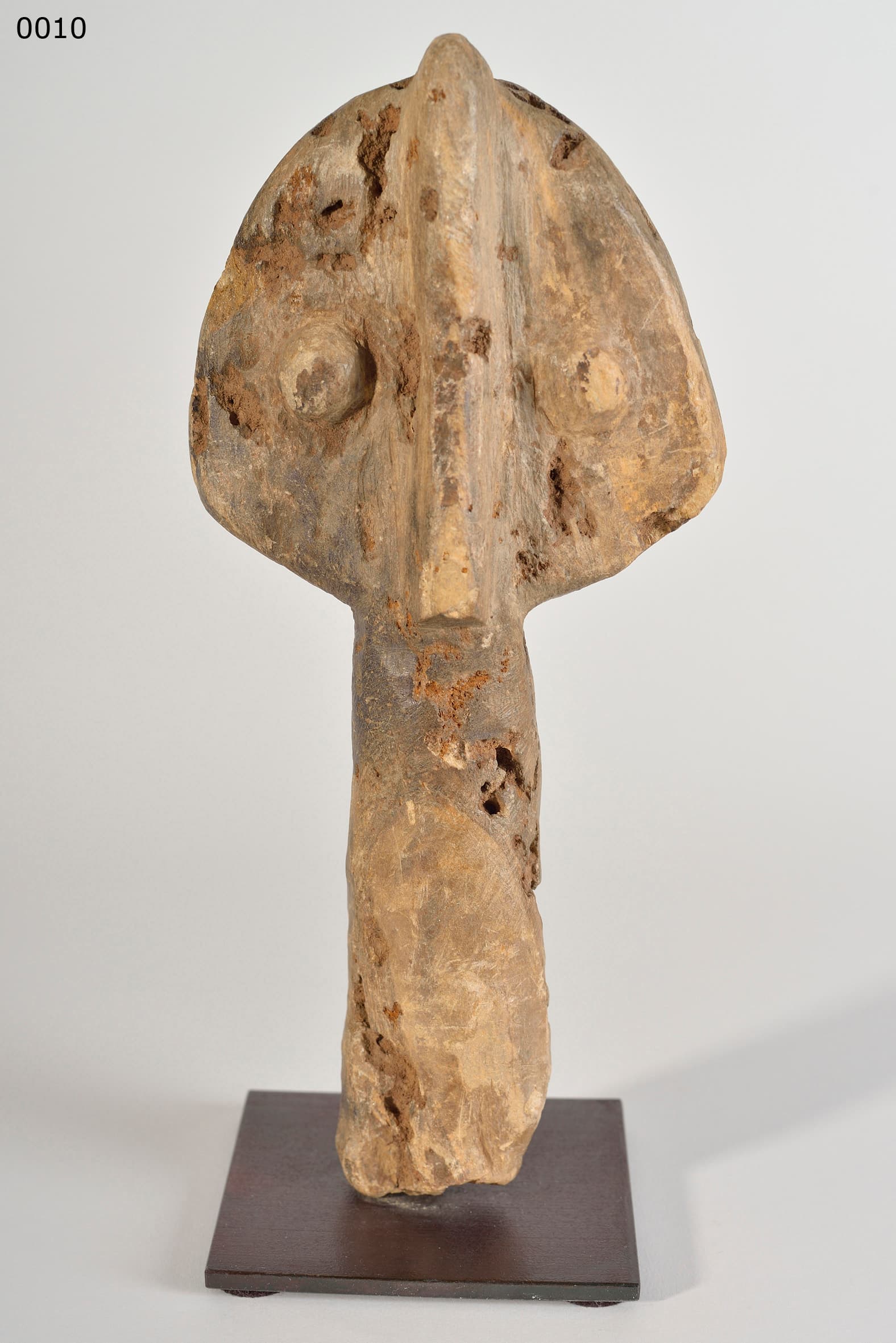
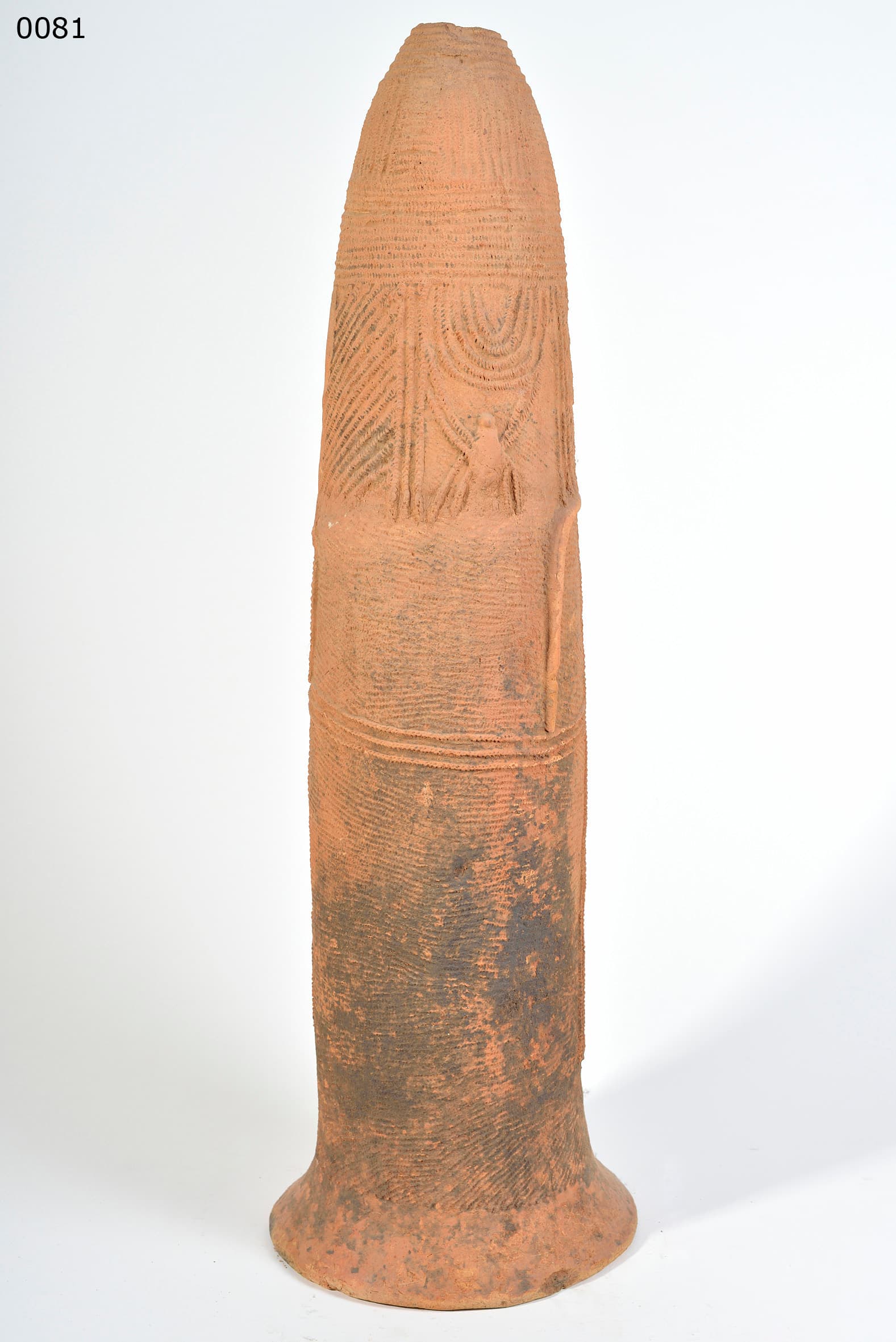
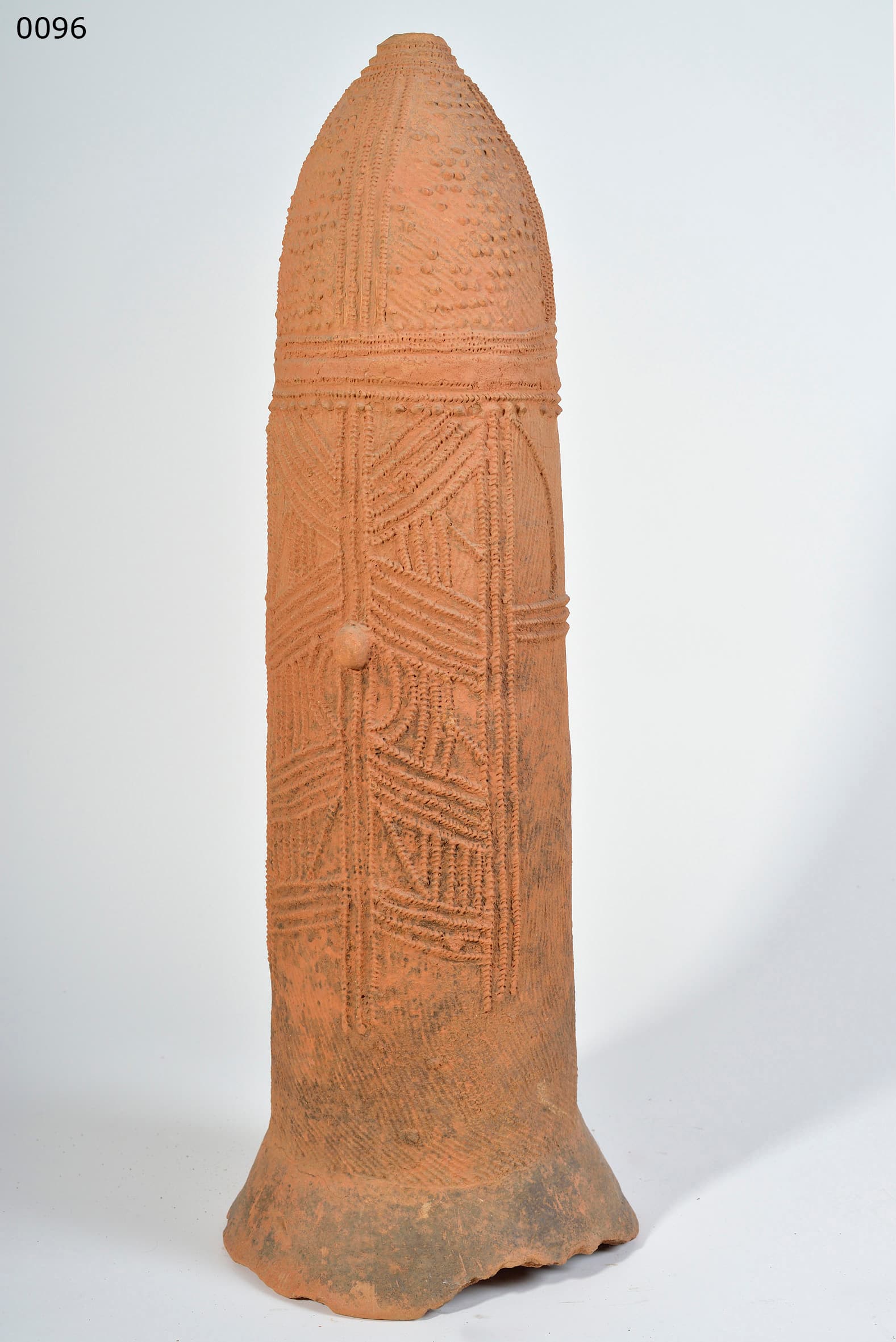
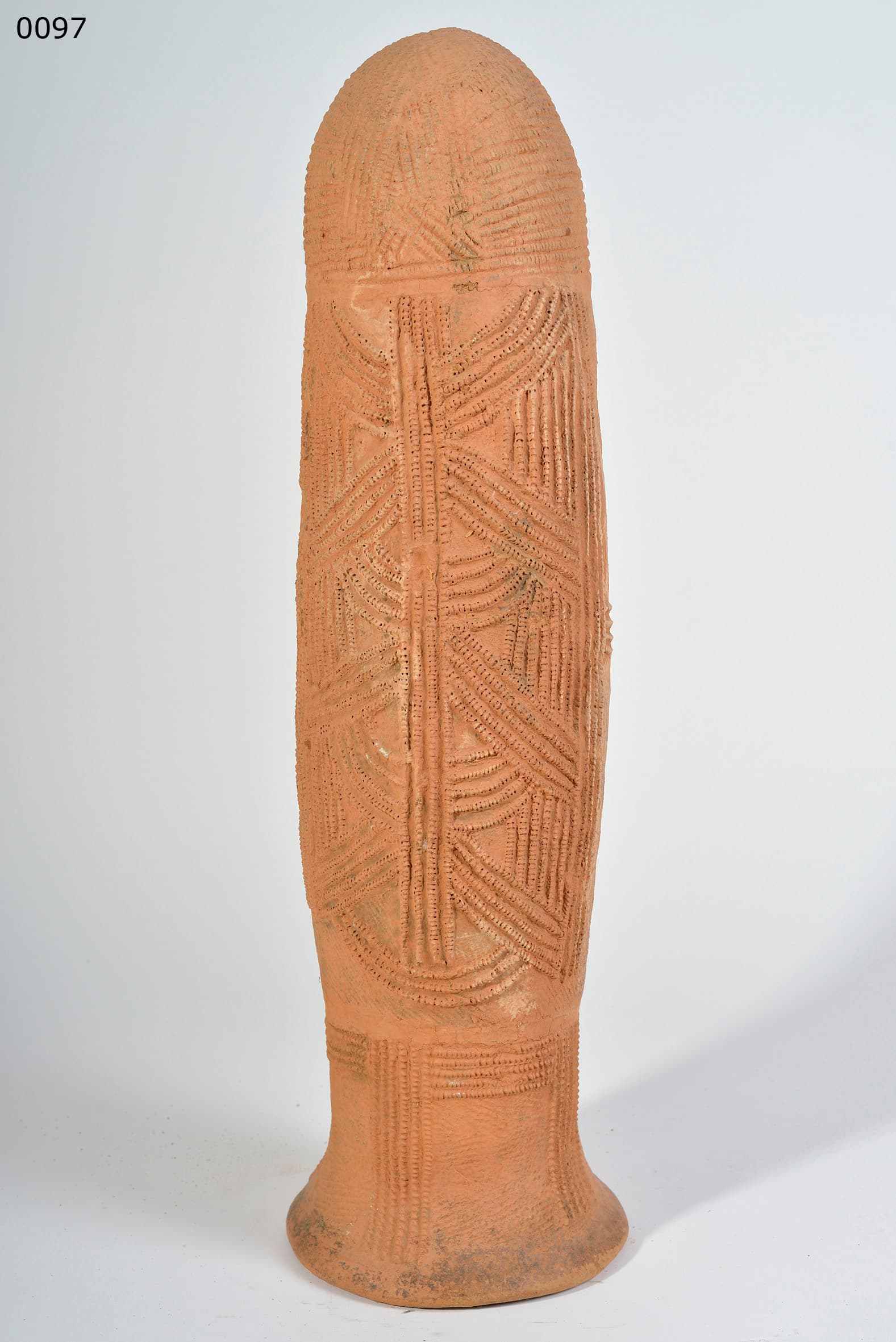
Eine hoch aufragende, kugelförmige Terrakotta-Urne (3.-11. Jh., 72 cm) aus Bura in Niger/Burkina Faso - dicht bedeckt mit roulettierten geometrischen Linien und erhabenen konzentrischen Bändern.
1. Sekundärbestattung in der antiken Sahelzone
Diese Urne wird der archäologischen Bura-Asinda-Sikka-Kultur (3.-11. Jahrhundert) zugeordnet.
- Alter Sarg: Nach der anfänglichen Verwesung des Leichnams wurden die verbliebenen Schädel und Knochen in den hohlen Schaft gelegt.
- Große Nekropolen: Die gefüllten Urnen wurden aufrecht in stadtgroßen Friedhöfen beigesetzt, die noch heute im Grenzgebiet zwischen Niger und Burkina zu finden sind.
2. Die phallische Metapher
Die ausgeprägte Silhouette wird in der Forschung oft als Ausdruck spiritueller Vorstellungen und nicht als bloßes Ornament gedeutet.
- Tod als Übergang: Es wird angenommen, dass die Bura den Tod nicht als Ende, sondern als eine Rückkehr zur Erde betrachteten, die neues Leben ermöglicht.
- Pflanzung des Ahnen: Die Beisetzung der sterblichen Überreste in phallischen Gefäßen wird oft als symbolisches Pflanzen des lebenswichtigen Samens des Verstorbenen in die Erde interpretiert, um die fortgesetzte Fruchtbarkeit der lebenden Nachkommen zu sichern.
3. Die grafische Identität
Die verschlungenen Muster auf der Oberfläche gelten als dauerhafte Aufzeichnung.
- Roulettierte Präzision: Hergestellt, indem geflochtene Fasern und geschnitzte Holzwerkzeuge vor dem Brennen über den nassen Ton gerollt wurden.
- Clan-Register: Die spezifischen Zickzacklinien und Bänder weisen vermutlich auf die Abstammung, den Reichtum und den sozialen Status des begrabenen Vorfahren hin – Informationen, die im gebrannten Ton bewahrt bleiben.
Zusammenfassung
Diese Bura-Urne verbindet auf eindrucksvolle Weise die Konzepte von Tod und männlicher Fruchtbarkeit. Sie gilt als ein reich verzierter, symbolischer Terrakotta-Samen, der als archäologisches Zeugnis für eine im Sand der Sahelzone verbliebene Zivilisation dient.
KI-unterstützt erstellt aus Sammlungsgutachten, Objektfotografie und eigener Recherche, redaktionell geprüft. Fehler sind möglich — Hinweise darauf sind uns willkommen. Zum Verfahren →