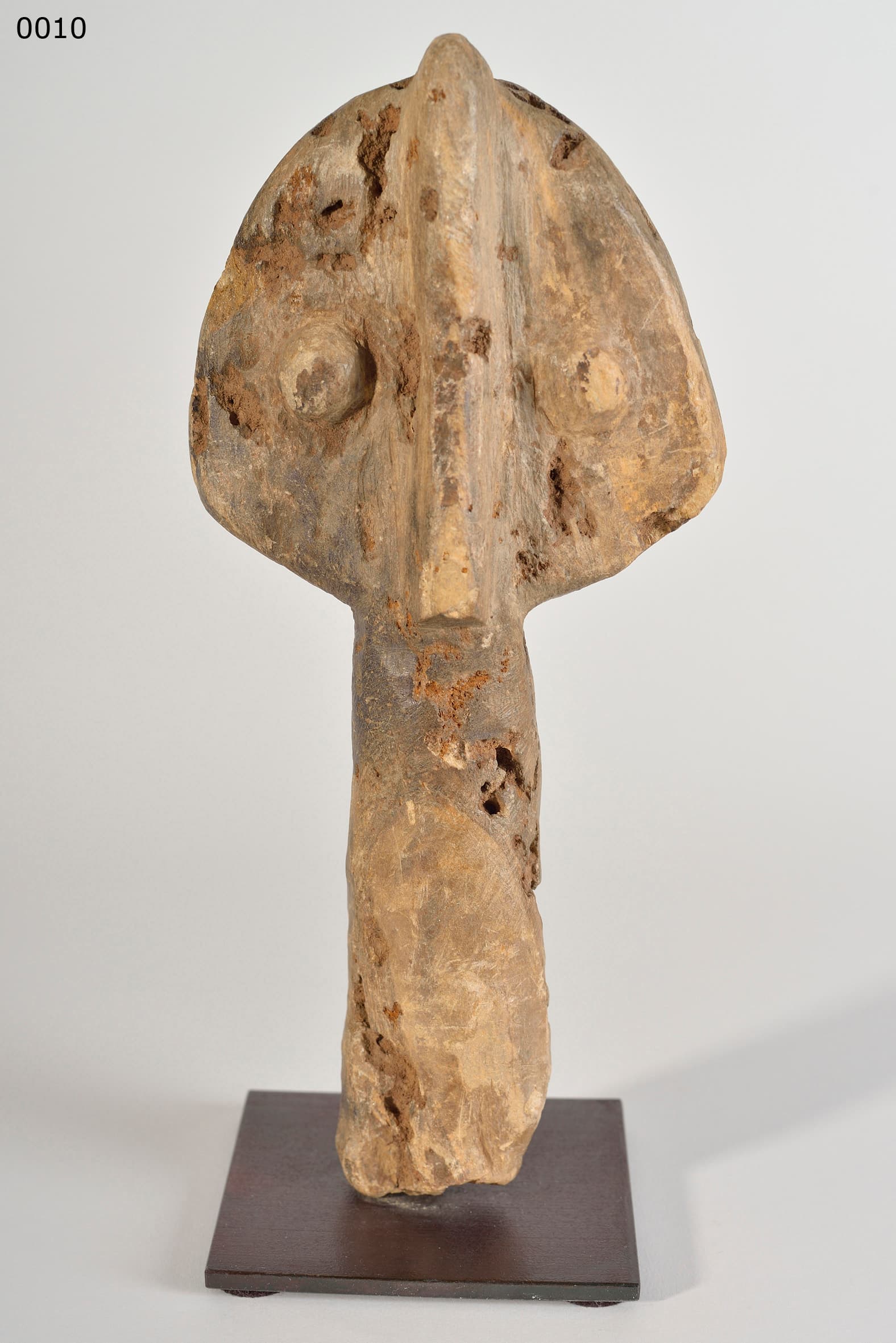
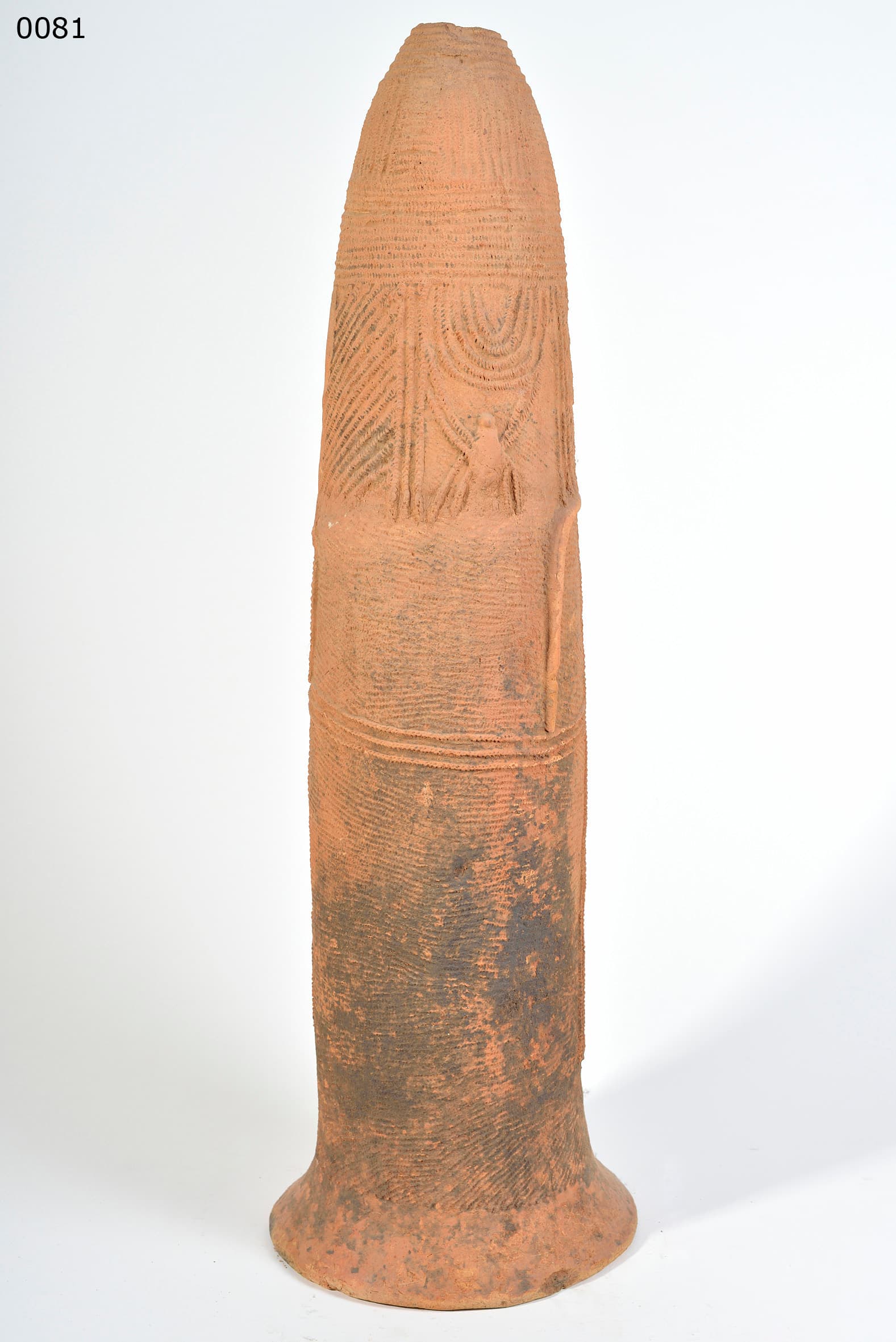
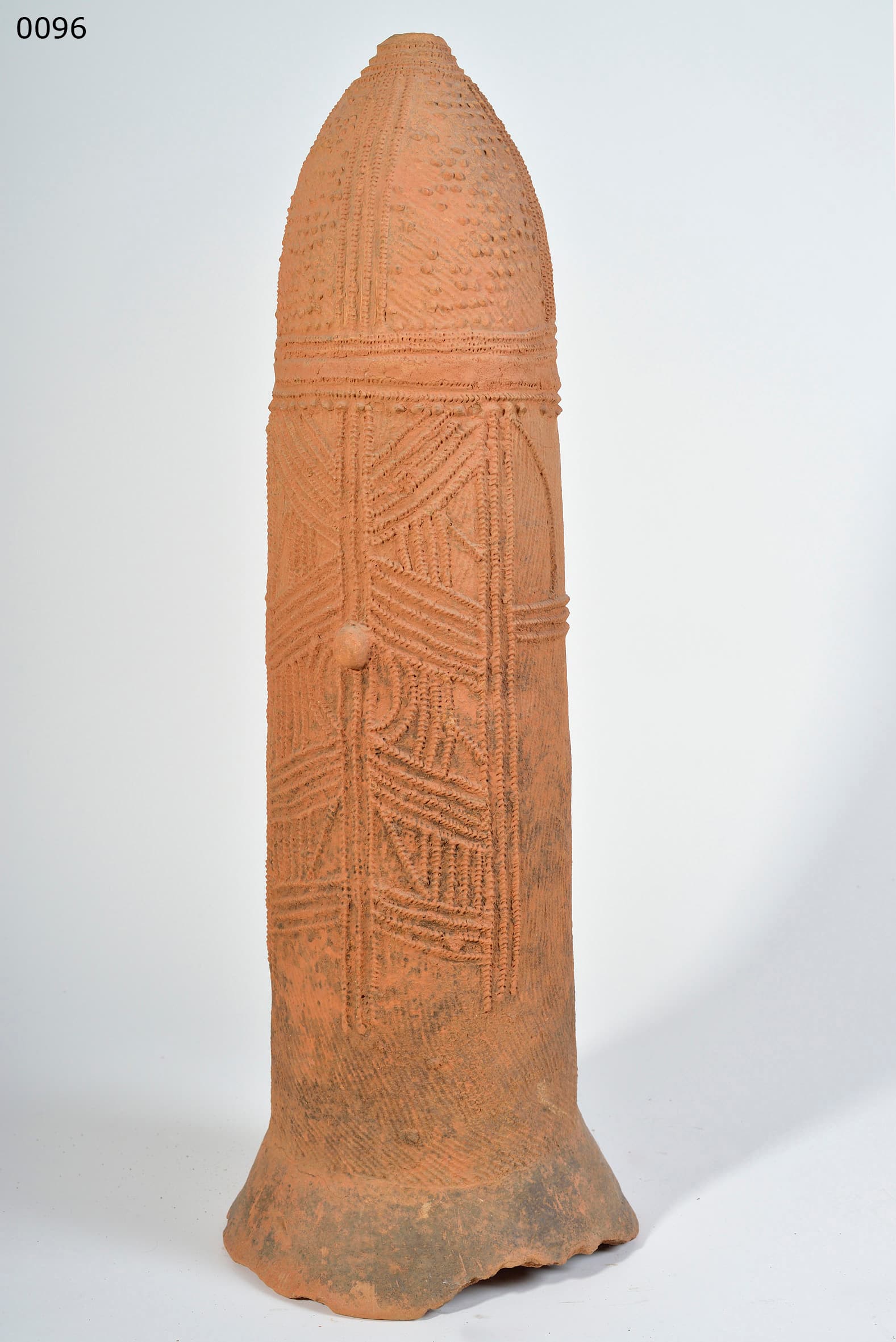
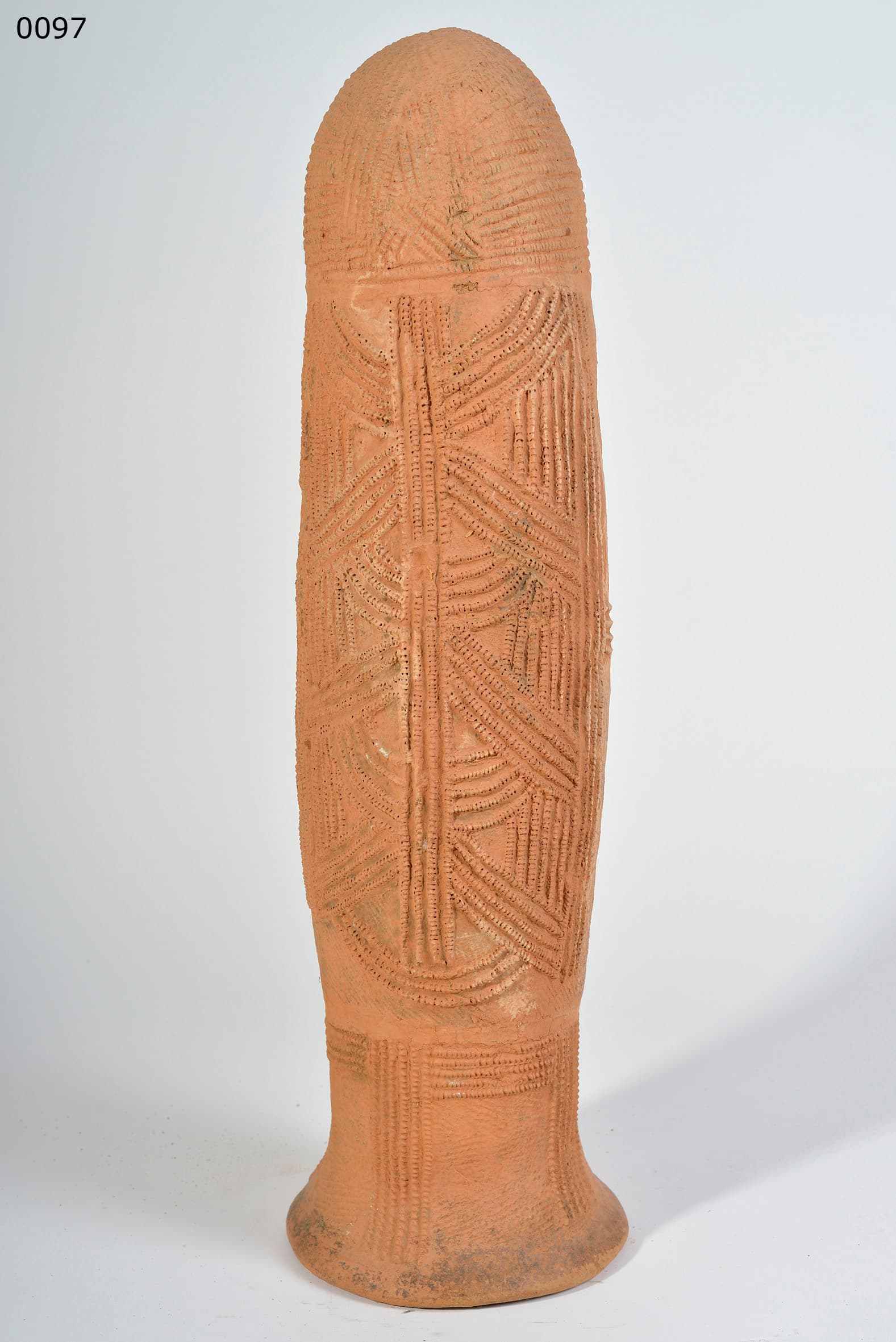
Eine kugelförmige Terrakotta-Urne (3.-11. Jh., 54 cm) aus der Bura von Niger/Burkina Faso - strukturiert mit feinen Rautenlinien und konzentrischen geometrischen Bändern.
1. Die Schatulle der einfachen Elite
Mit 54 cm ist dies ein mittelgroßes Gefäß innerhalb des Bura-Korpus.
- Maßstabshierarchie: Kleiner als die hoch aufragenden Urnen der Stammesgründer, aber immer noch beachtlich - wahrscheinlich eher das Grab eines angesehenen Erwachsenen als eines Gründungspatriarchen.
- Gleiche Funktion: Das Innere enthielt die ausgegrabenen Knochen und den Schädel einer bestimmten Person nach einer zweiten Bestattung.
2. Komprimierte Symbolik
Die Theologie gilt in jedem Maßstab.
- Still a Seed: Die phallische Silhouette erfüllt unabhängig von der Größe die gleiche kosmologische Funktion - sie pflanzt den Ahnen in die Erde, um die Fruchtbarkeit der Lebenden zu nähren.
- Dichte Dekoration: Konzentriert auf ein kürzeres Gefäß, lesen sich die Rautendekorationen noch dichter und verleihen der Urne eine dichte, tätowierte Oberfläche.
3. Brennen des Rohrs
Auch bei mittlerem Maßstab bleibt die Physik anspruchsvoll.
- Wandstärkenkontrolle: Ein Hohlzylinder muss gleichmäßig dicke Wände haben, da er sonst durch ungleichmäßige Erwärmung Risse bekommt.
- Gildenproduktion: Die Beständigkeit der Urnen aus Bura über Hunderte von Gräbern hinweg bestätigt eine engagierte, geschickte Töpfergilde, die seit Jahrhunderten im Kernland von Bura tätig ist.
Zusammenfassung
Diese mittelgroße Bura-Urne ist ein diszipliniertes Beispiel für die Kernform der Tradition. Dicht verziert und präzise gebrannt, komprimiert sie tausend Jahre Begräbnistheologie in einem einzigen erhaltenen Keramikkorn.
KI-unterstützt erstellt aus Sammlungsgutachten, Objektfotografie und eigener Recherche, redaktionell geprüft. Fehler sind möglich — Hinweise darauf sind uns willkommen. Zum Verfahren →