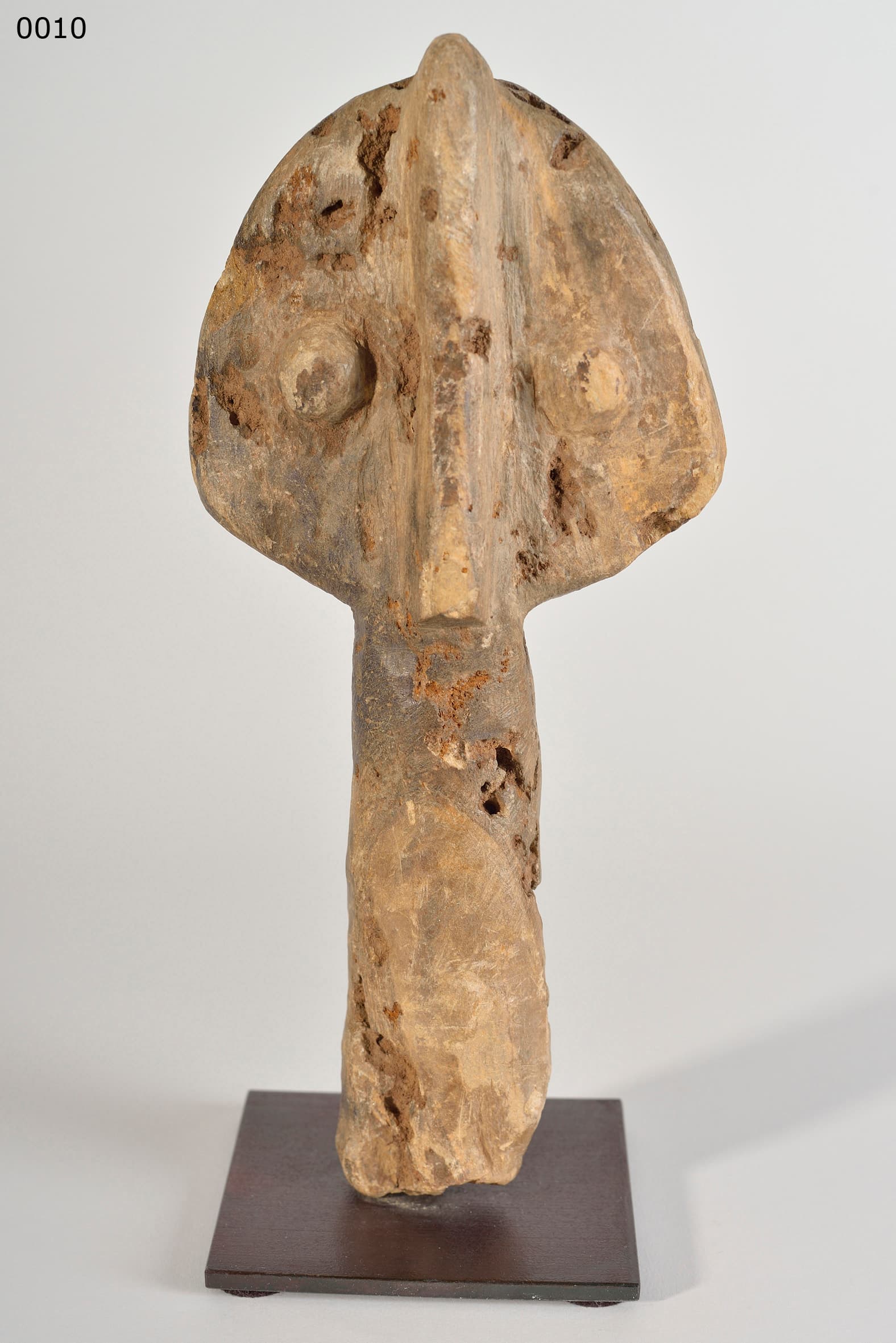
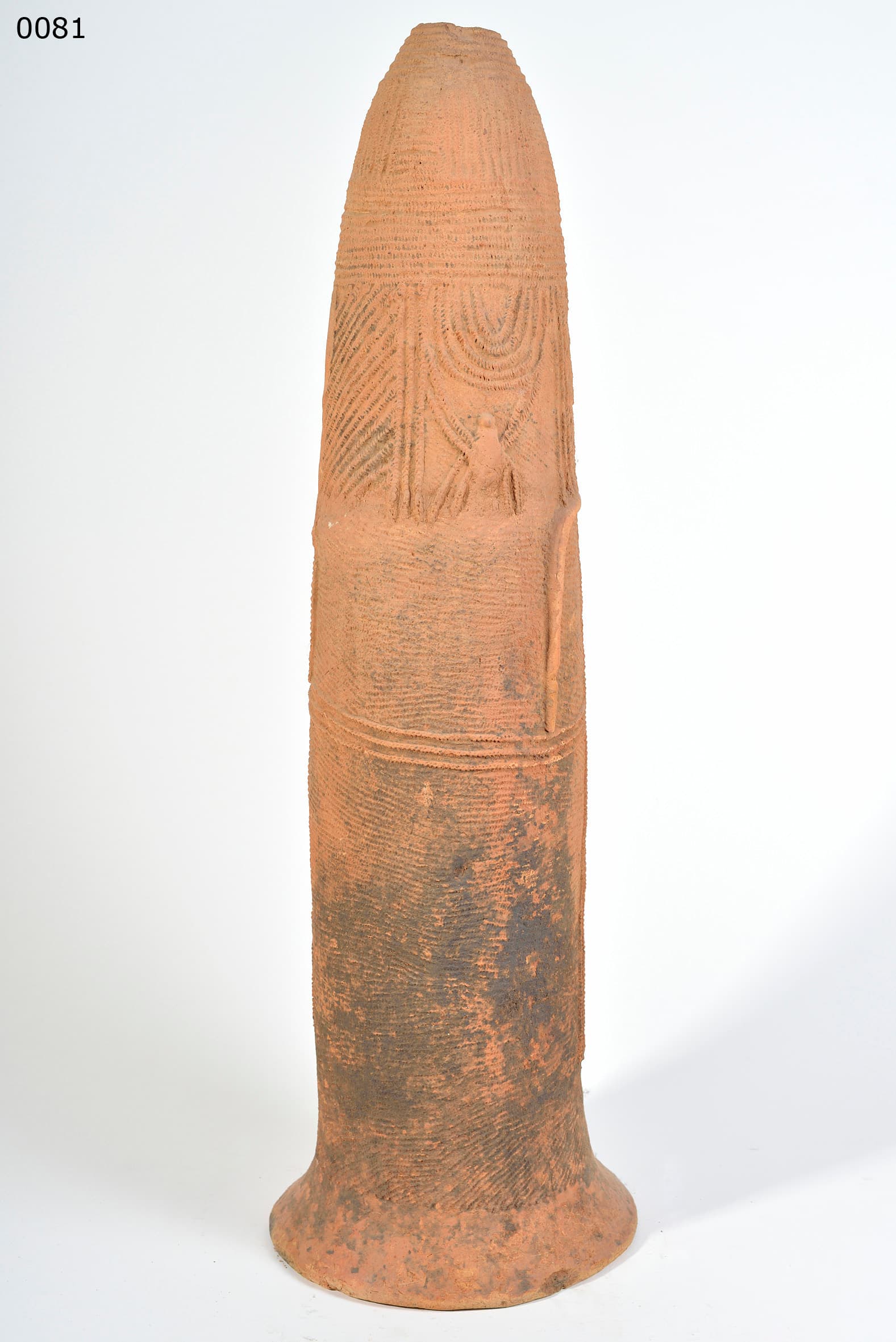
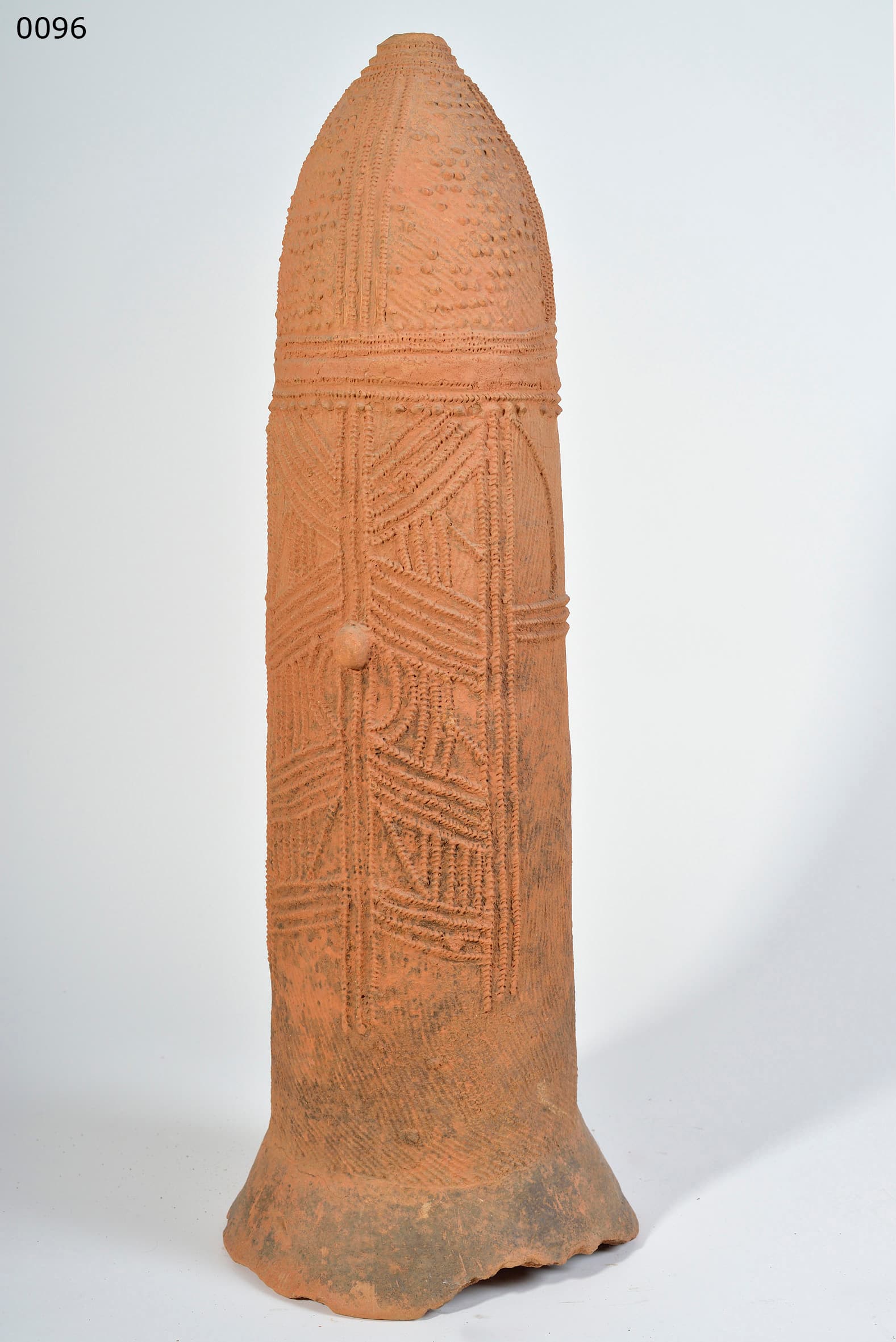
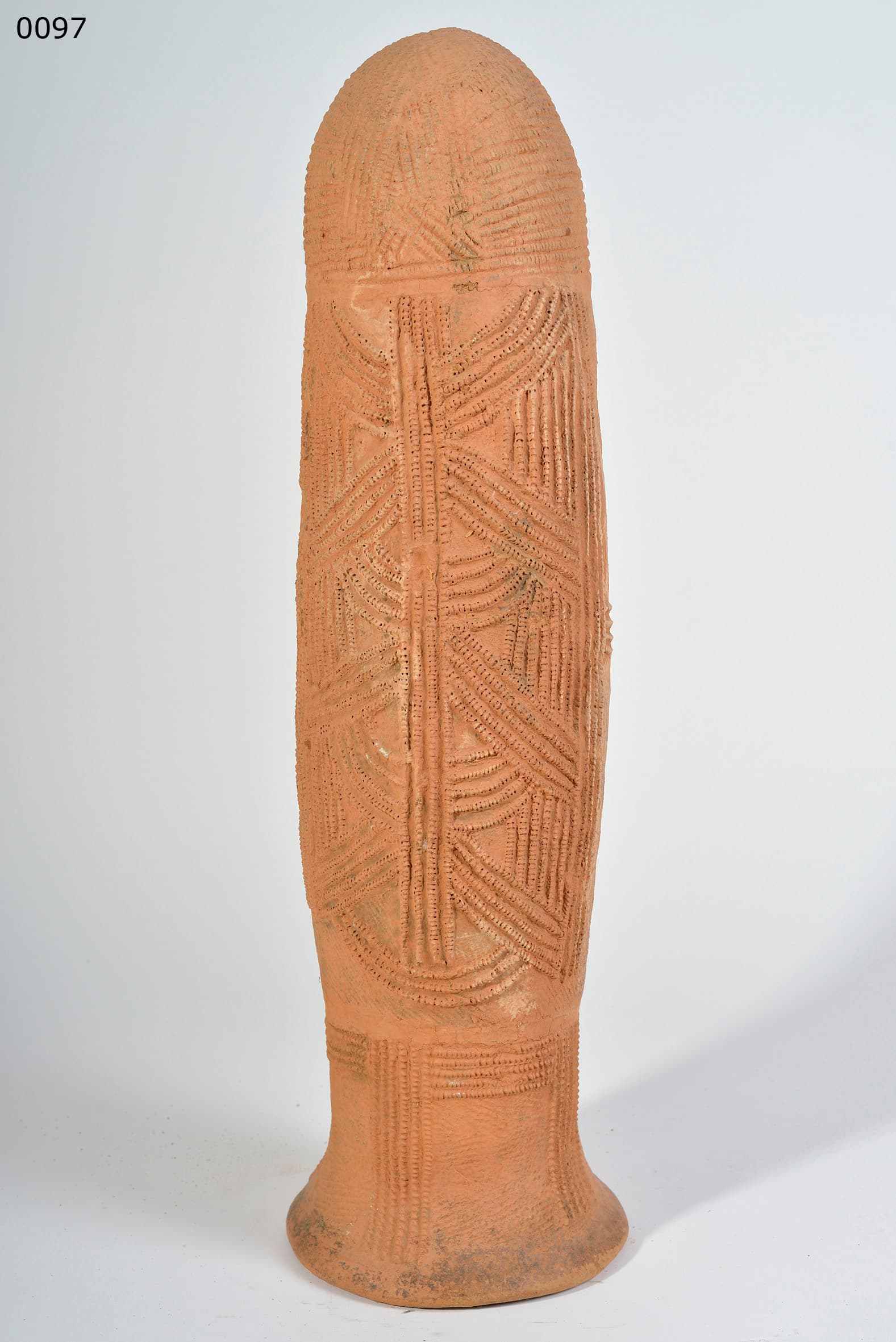
Eine phallisch geformte Terrakotta-Urne (3.-11. Jh., 45 cm) aus Bura in Niger/Burkina Faso, die sich durch ein vollständig modelliertes dreidimensionales menschliches Gesicht auszeichnet, das aus dem oberen Schaft herausragt, mit durchbohrten Augen, einer hervorstehenden Nase und einem definierten Mund über den traditionellen geometrischen Roulette-Mustern.
1. Das fehlende Glied der Bura-Keramik
Dies ist ein außergewöhnlich seltenes archäologisches Objekt.
- Hybridform: Es dient als physisches "missing link" zwischen den rein abstrakten phallischen Urnen und den vollständig anthropomorphen Grabgefäßen derselben Kultur.
- Das Beste von beidem: Die Basis behält die grundlegende phallische Silhouette bei, die erforderlich ist, um den Samen des Vorfahren zu "pflanzen", während der obere Schaft beginnt, buchstäblich menschliche Züge zu zeigen.
2. Individualisierung des Geistes
Das modellierte Gesicht verwandelt die Funktion der Urne.
- Vom Allgemeinen zum Besonderen: Das anonyme Fruchtbarkeitssymbol wird zu einem spezifischen, wachsamen Ahnenwächter.
- Aktiver Blick: Die durchbrochenen runden Augen verleihen der Urne einen Blick nach außen, der es dem Verstorbenen ermöglicht, aus der Unterwelt zu schauen", um die Lebenden zu schützen.
3. Eisenzeitliches Altertum
Die aus dem 3. bis 11. Jahrhundert stammenden Überreste zeigen eine bemerkenswerte Erhaltung der feinen Merkmale.
- Fragile Geometrie: Die vorspringende Nase und die durchbohrten Augenhöhlen sind strukturell anfällig für Brennfehler und Verwitterung nach der Bestattung.
- Jahrtausendwache: Aufrecht in einer massiven Nekropole beigesetzt, diente diese Urne als hochgradig personalisierte ewige Grabstätte, die vor ihrer Ausgrabung tausend Jahre lang über den Sand der Sahelzone wachte.
Zusammenfassung
Diese Bura-Urne ist eine seltene Mischung aus Abstraktion und Porträt. Sie verbindet meisterhaft die antike phallische Symbolik der Wiedergeburt mit einem wachenden menschlichen Gesicht und bietet den Seelen des 1. Jahrtausends ein höchst individuelles Terrakotta-Heim.
KI-unterstützt erstellt aus Sammlungsgutachten, Objektfotografie und eigener Recherche, redaktionell geprüft. Fehler sind möglich — Hinweise darauf sind uns willkommen. Zum Verfahren →