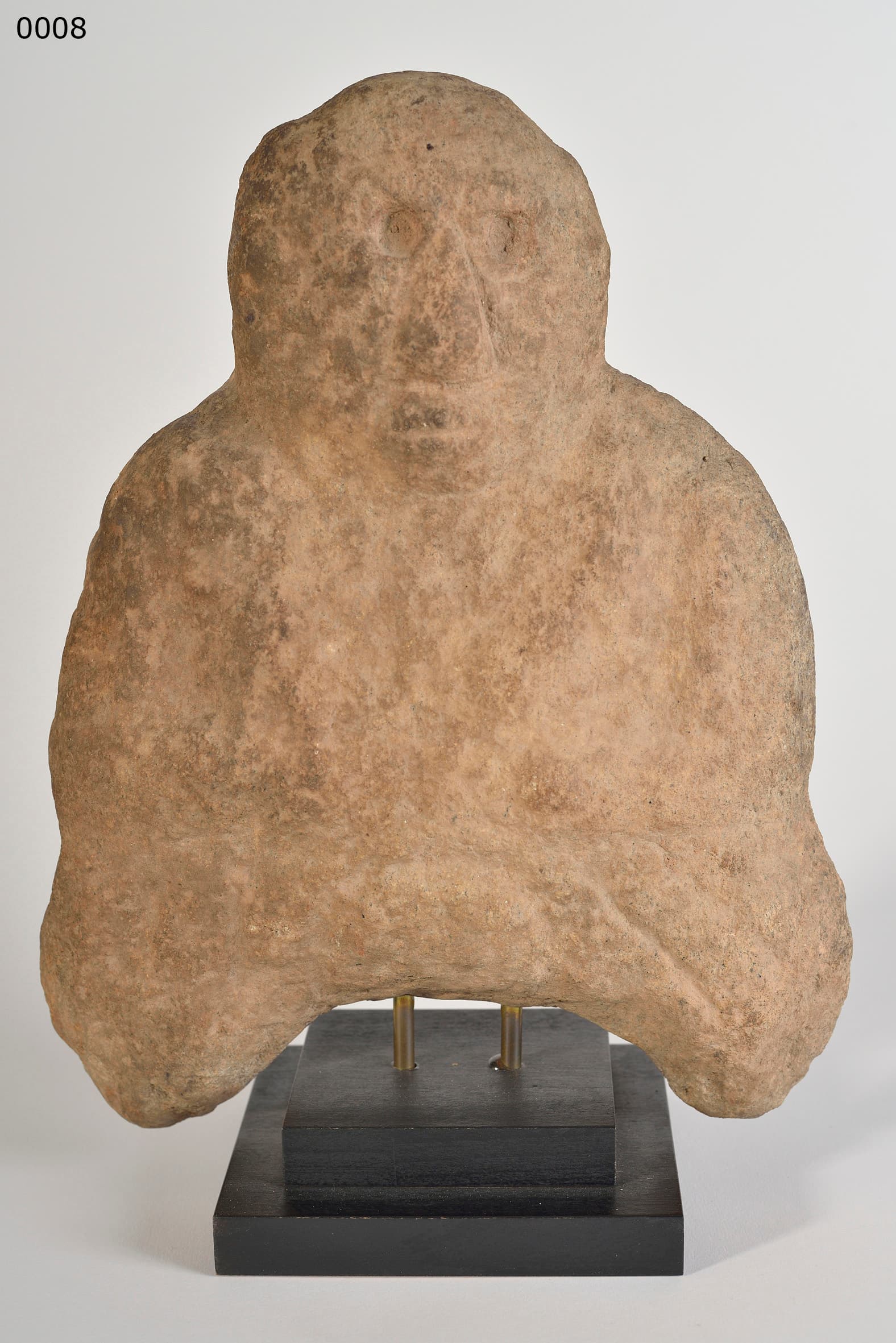
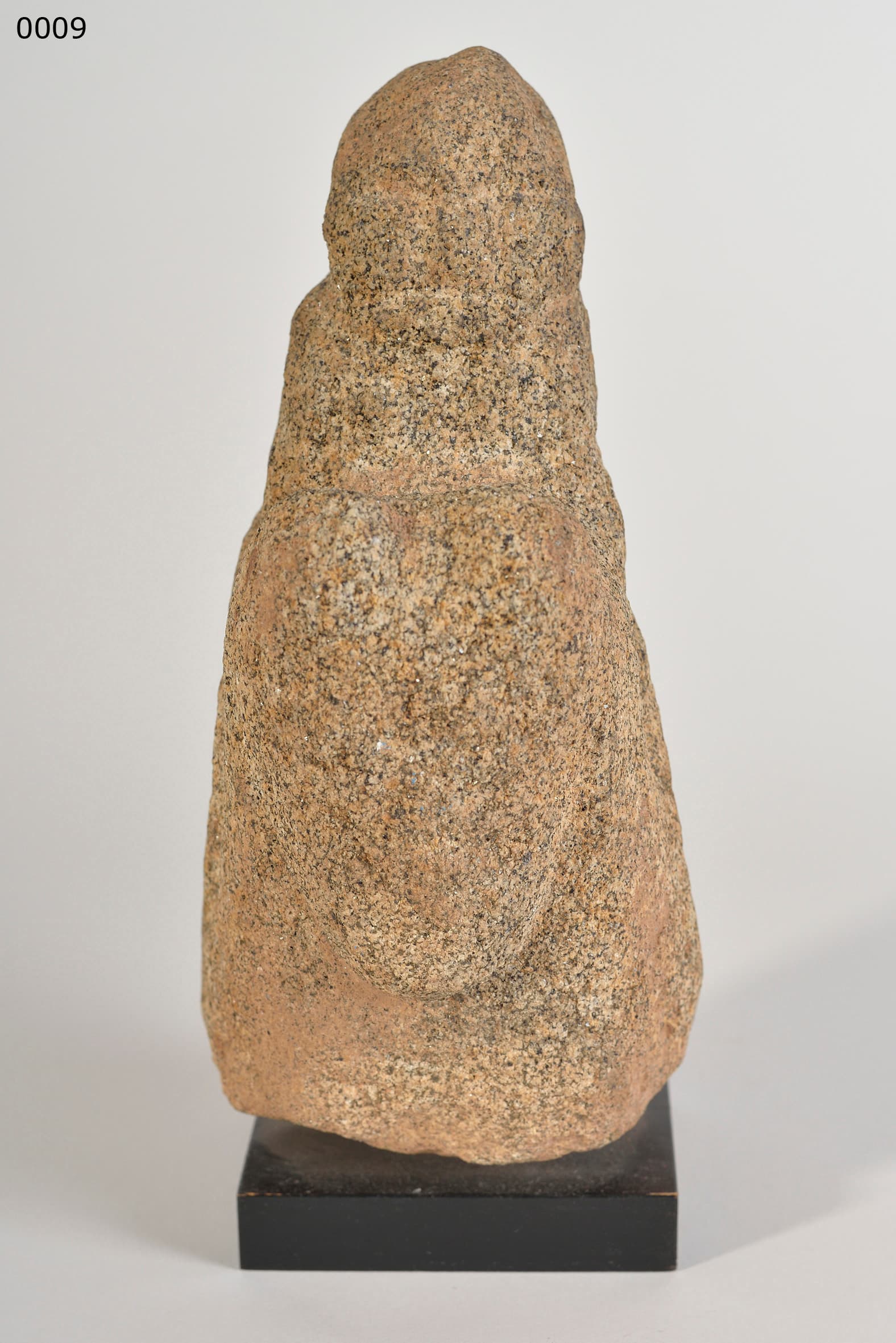
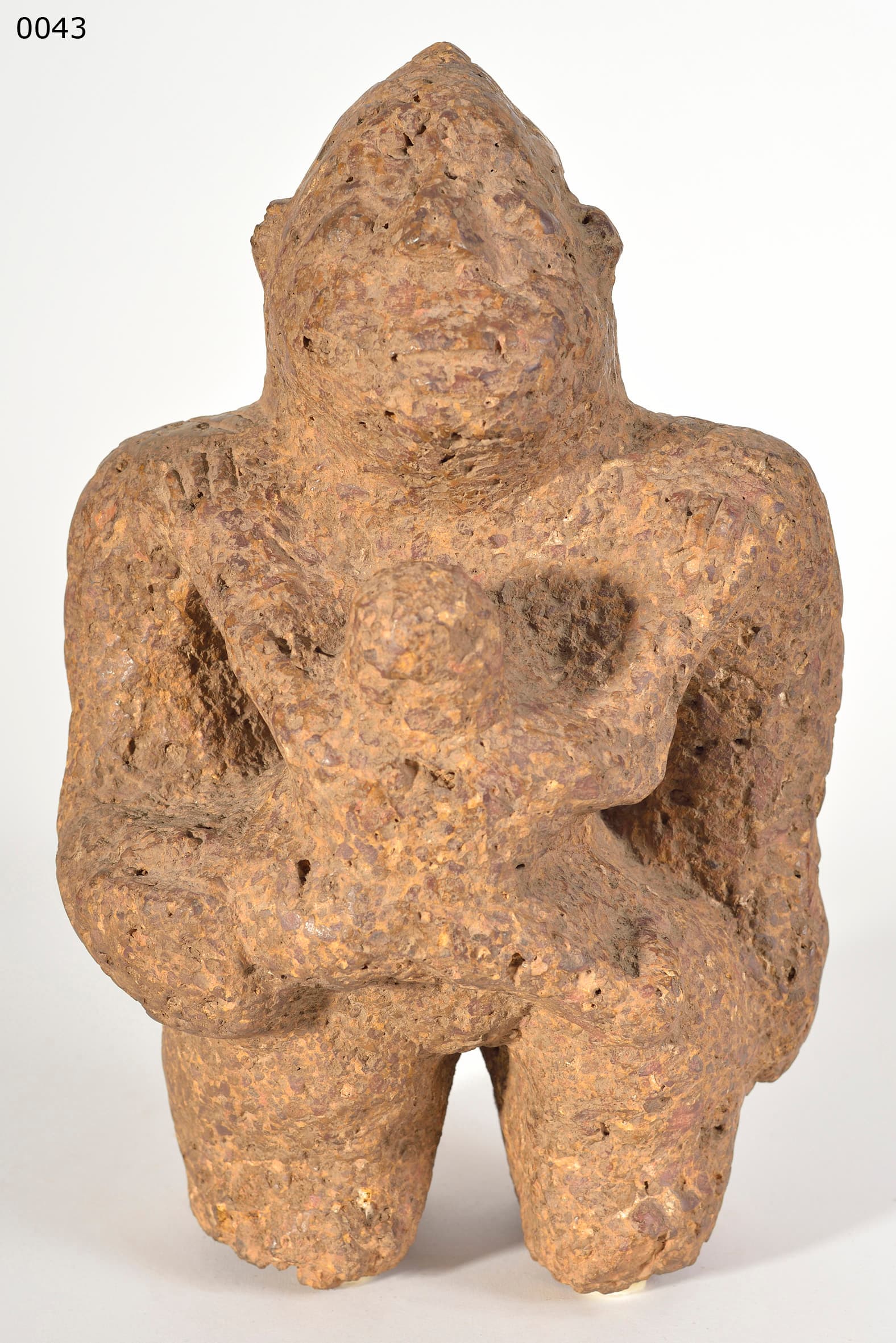
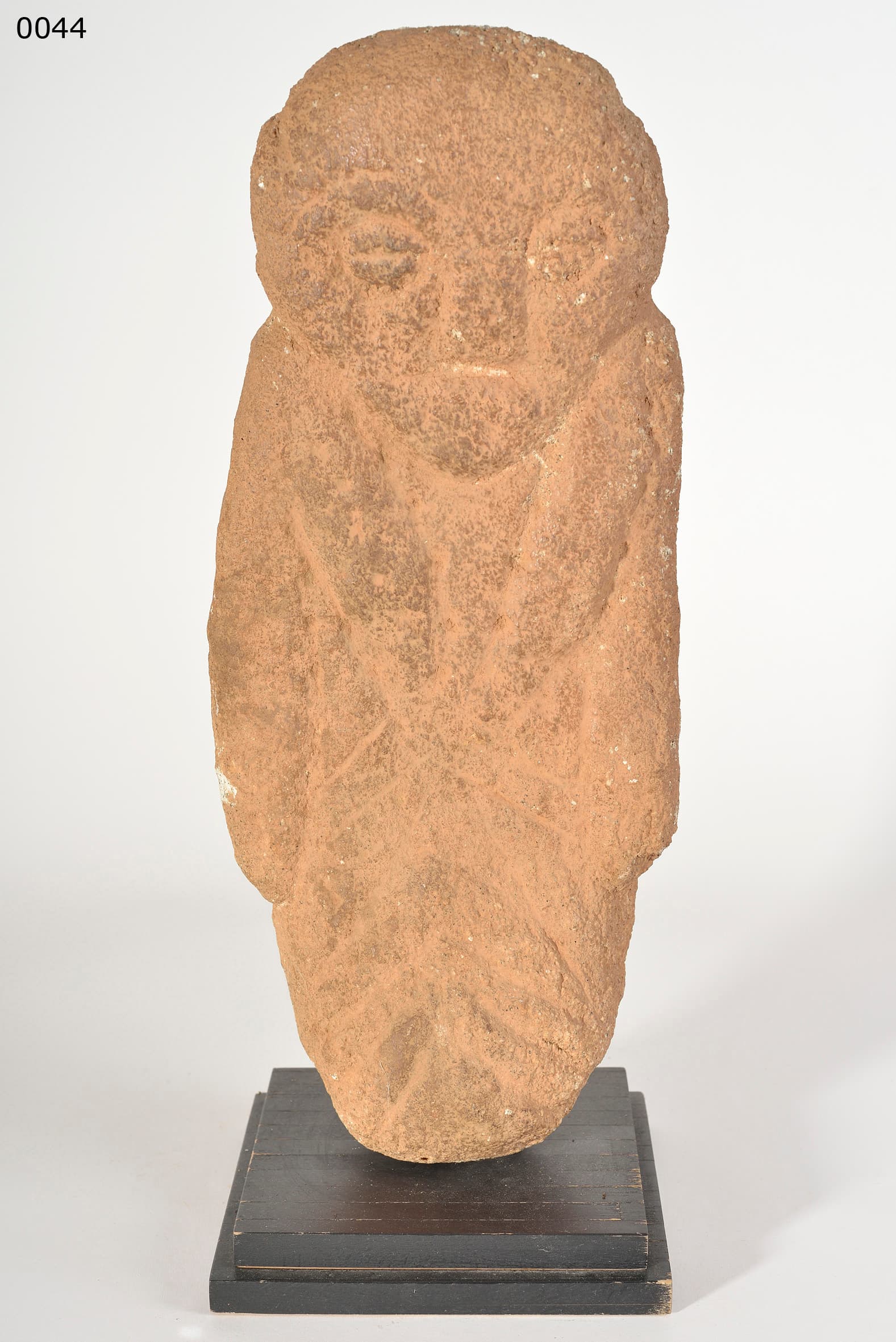
Eine verwitterte, säulenförmige Steinsäule (12.-16. Jh., 61 cm) aus Nyonyosi in Burkina Faso - phallisch in der Silhouette, aus dichtem Laterit gemeißelt, mit aufgeweichten Ritzspuren, die durch die jahrhundertelange Exposition entstanden sind.
1. Der gepflanzte Vorfahre
Die phallische Säule ist die zentrale männliche Form der Nyonyosi.
- Samen der Abstammung: Die aufrechte Silhouette symbolisiert die Einpflanzung der Lebenskraft des männlichen Vorfahren in den Boden.
- Vertikaler Anspruch: Mit einer Höhe von 61 cm war die Säule ein Miniaturmonument, das vom gesamten Gräberfeld aus sichtbar war und ein Elite-Männergrab unter den Steinen der Nyonyosi-Nekropole markierte.
2. Stein als Dauerhaftigkeit
Die Wahl von Laterit gegenüber Holz ist eine Aussage über die Zeit.
- Unzerbrechliche Aufzeichnungen: Wo geschnitztes Holz innerhalb einer Generation verrottet, widersteht Stein Jahrhunderten von Klima und Termiten.
- Vor-Mossi-Autorität: Diese Steine überlebten die politische Vorherrschaft der Nyonyosi selbst - als die Mossi ankamen, waren die Steine bereits uralt und untermauerten den Anspruch der Nyonyosi als die wahren "Meister der Erde"
3. Jahrhunderte des Wetters
Das Erosionsmuster macht das Stück authentisch.
- Gerundete Kanten: Windgetriebener Sand und jahreszeitliche Regenfälle haben die ursprünglichen Meißelspuren zu weichen, entsteinten Kurven verwischt.
- Oberfläche als Kalender: Jede Grube und Vertiefung zeichnet eine bestimmte Episode der sahelischen Verwitterung auf - der Stein ist zu einem buchstäblichen Archiv von 500+ Jahren Klima geworden.
Zusammenfassung
Diese Nyonyosi-Säule ist ein lithischer Samen für einen gründenden männlichen Ahnherrn. Seine aufrechte phallische Silhouette und die verwitterte Lateritoberfläche verkörpern die Kerntheologie der Tradition: die dauerhafte Einpflanzung der Toten in die Erde.
KI-unterstützt erstellt aus Sammlungsgutachten, Objektfotografie und eigener Recherche, redaktionell geprüft. Fehler sind möglich — Hinweise darauf sind uns willkommen. Zum Verfahren →