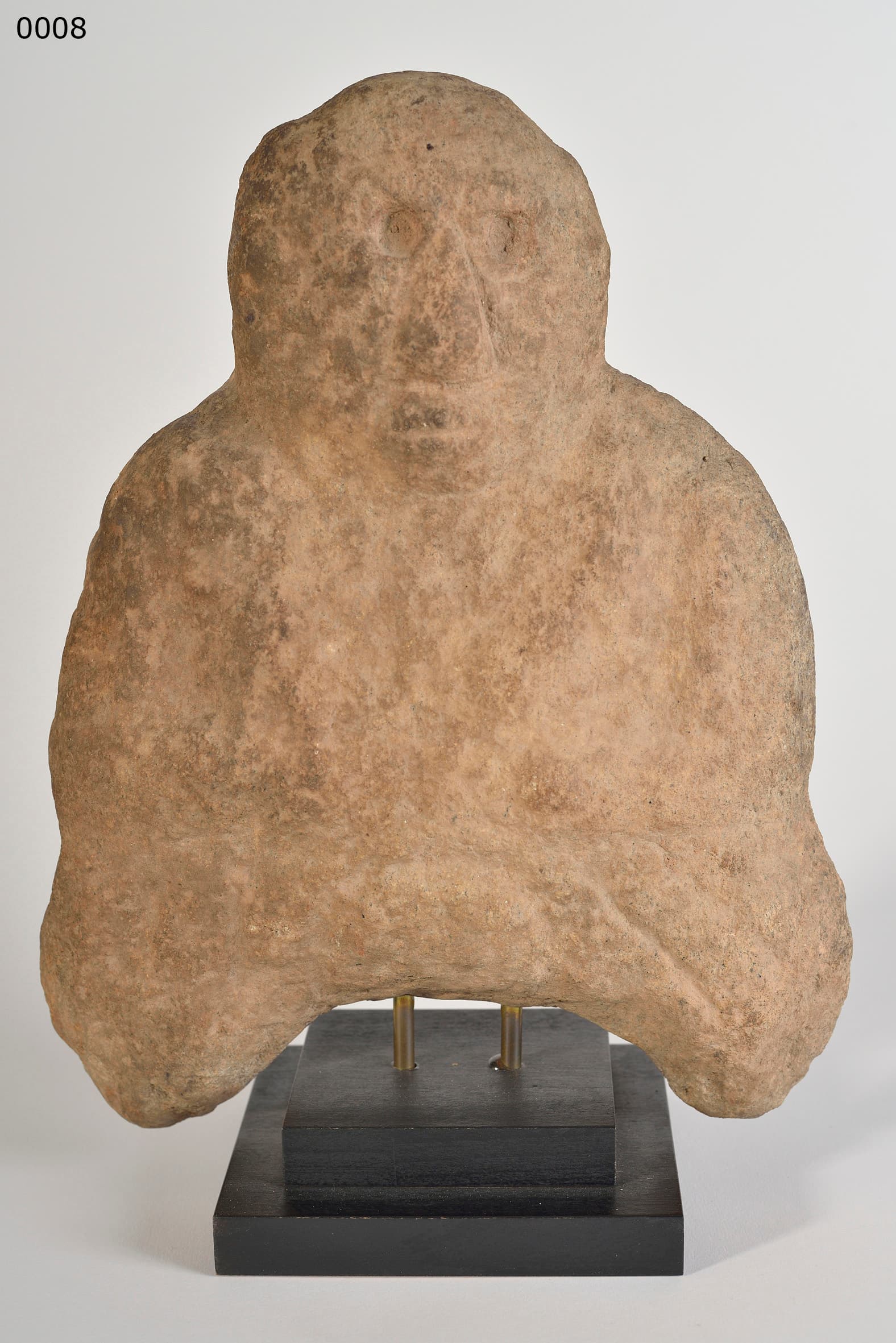
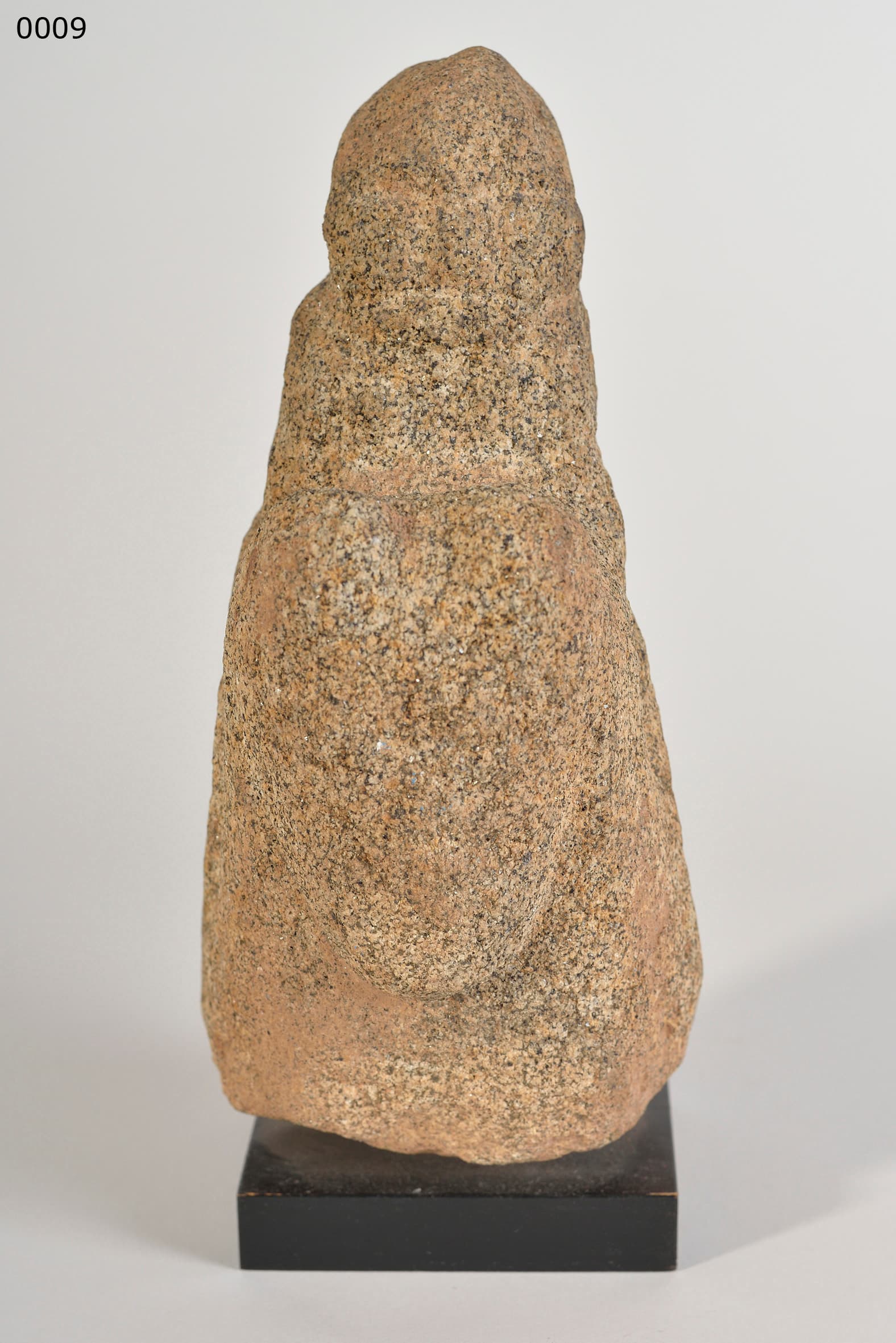
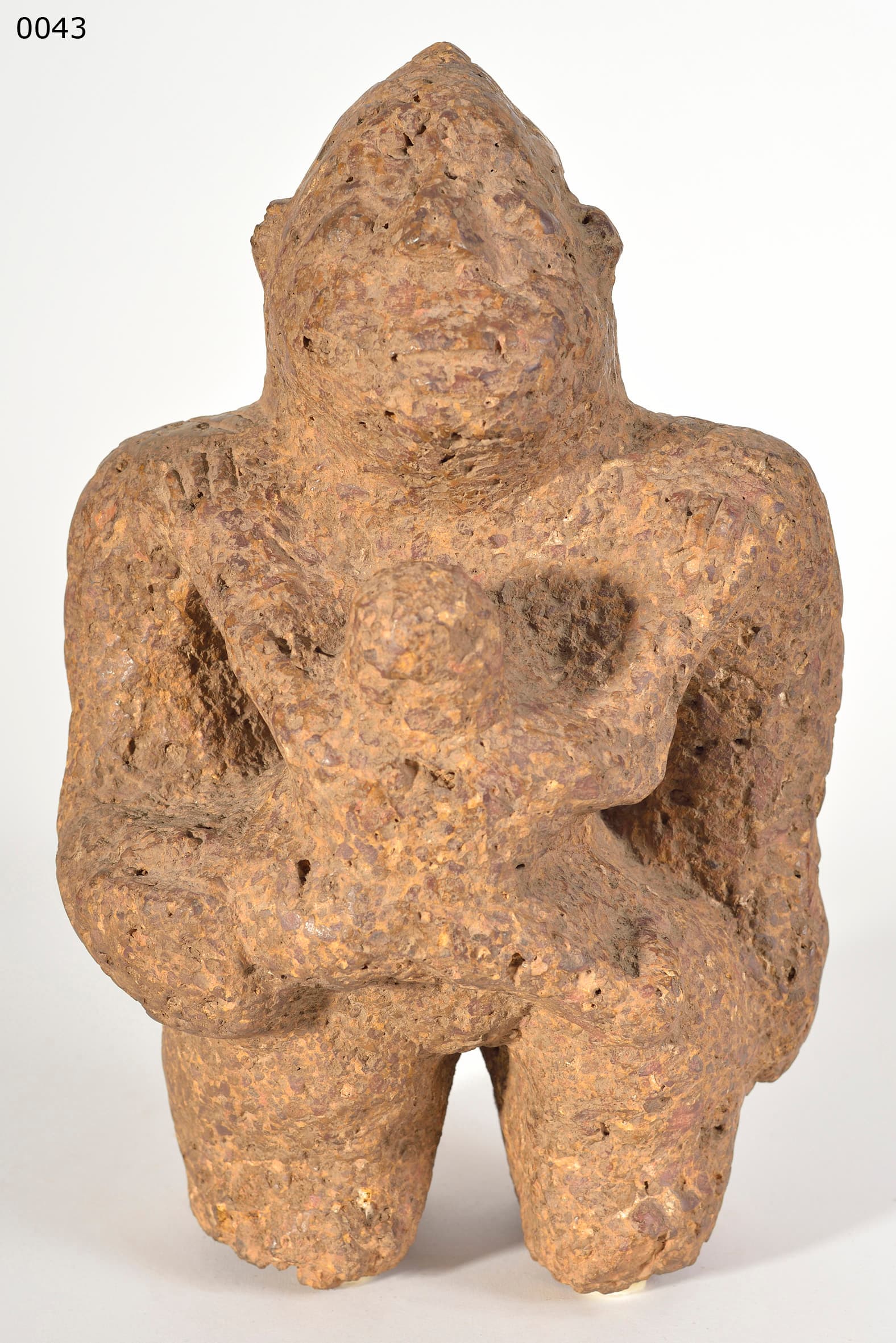
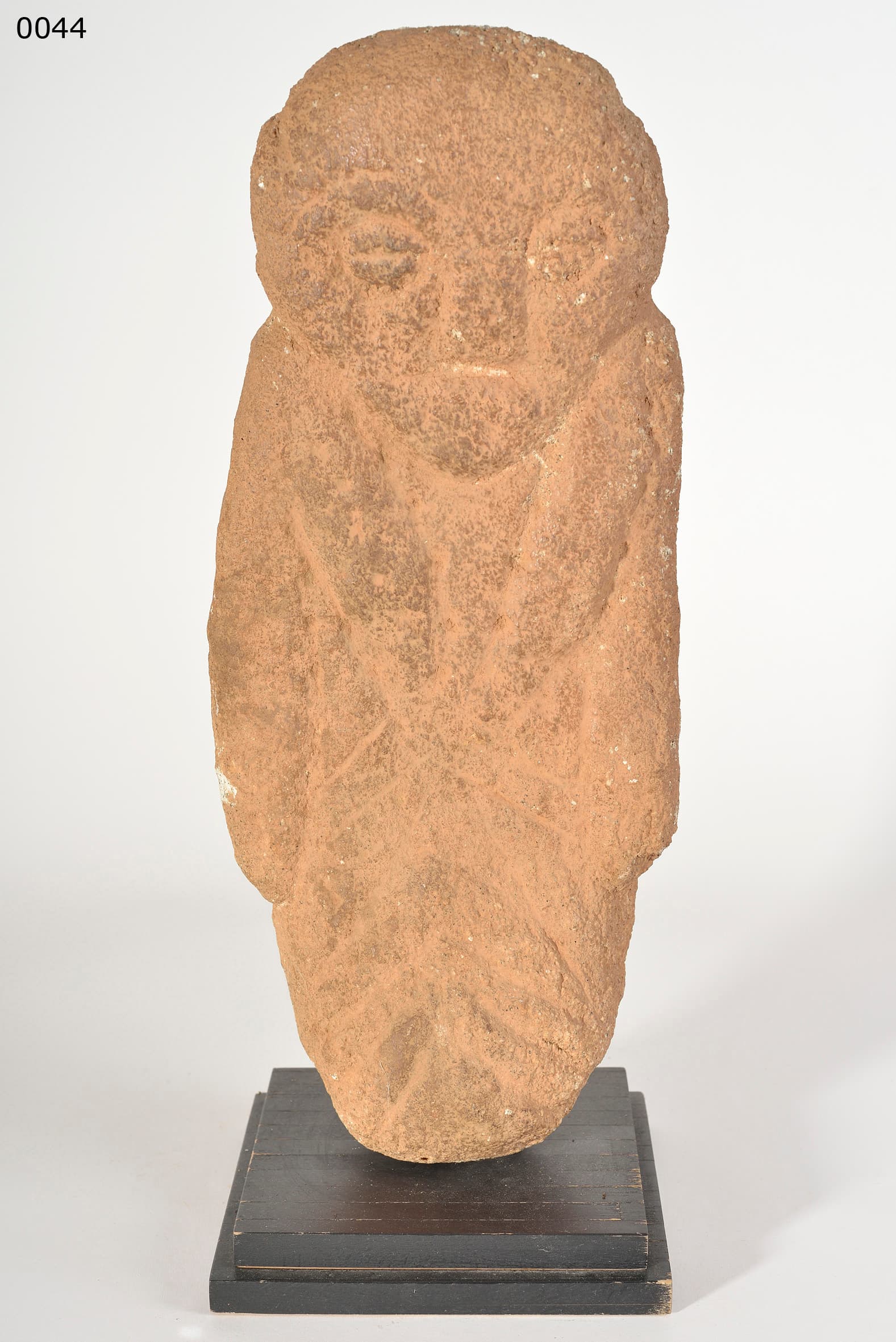
Eine kräftige Steinsäule (12.-16. Jh., 43 cm) aus Nyonyosi in Burkina Faso - phallische Silhouette aus dichtem Laterit, die Oberfläche ist stark erodiert und hat eine weiche, löchrige Geologie.
1. Die komprimierte Form
Mit 43 cm ist dies die kleinste der Nyonyosi-Säulen in der Gruppe.
- Kompakter Marker: Der kleinere Maßstab weist wahrscheinlich auf einen jüngeren Ältesten oder ein Nebengrab innerhalb eines größeren Gräberfeldes hin.
- Gleiche Theologie: Trotz ihrer geringeren Größe erfüllt die Säule die gleiche Aufgabe wie ihre größeren Kollegen - sie pflanzt die Lebenskraft des Vorfahren in den Boden.
2. Stein als geteilte Sprache
Die enge morphologische Verwandtschaft der Nyonyosi-Steine verrät eine disziplinierte Tradition.
- Gemeinsames Vokabular: Säulenförmig, phallisch, Stele, figurativ - vier stabile Formen, die in einer Nekropole verwendet werden, um Rang und Identität zu kodieren.
- Bildhauer als Priester: Die Arbeit im dichten Laterit war eine spezialisierte Tätigkeit; die Bildhauer waren vertrauenswürdige Personen, deren Handwerk mit spiritueller Autorität verbunden war.
3. Verwitterung und Authentifizierung
Die stark verwitterte Oberfläche ist die Biografie des Steins.
- Jahrhundertelange Bewitterung: Die Aufweichung der ursprünglichen Werkzeugspuren deutet auf mindestens 500 Jahre Verwitterung unter freiem Himmel hin.
- Geologie holt sich die Schnitzerei zurück: Die Ränder der Säule sind mit der natürlichen Struktur des Laterits verschmolzen - Kunst und Fels verschmelzen wieder zu einer Substanz.
Zusammenfassung
Diese kleine Nyonyosi-Säule ist ein kompakter lithischer Samen. Sie wurde über einem Sekundärgrab errichtet und ist über ein halbes Jahrtausend verwittert. Sie verrichtet in aller Stille die gleiche Ahnentheologie wie ihre größeren Nachbarn im Nekropolenfeld.
KI-unterstützt erstellt aus Sammlungsgutachten, Objektfotografie und eigener Recherche, redaktionell geprüft. Fehler sind möglich — Hinweise darauf sind uns willkommen. Zum Verfahren →