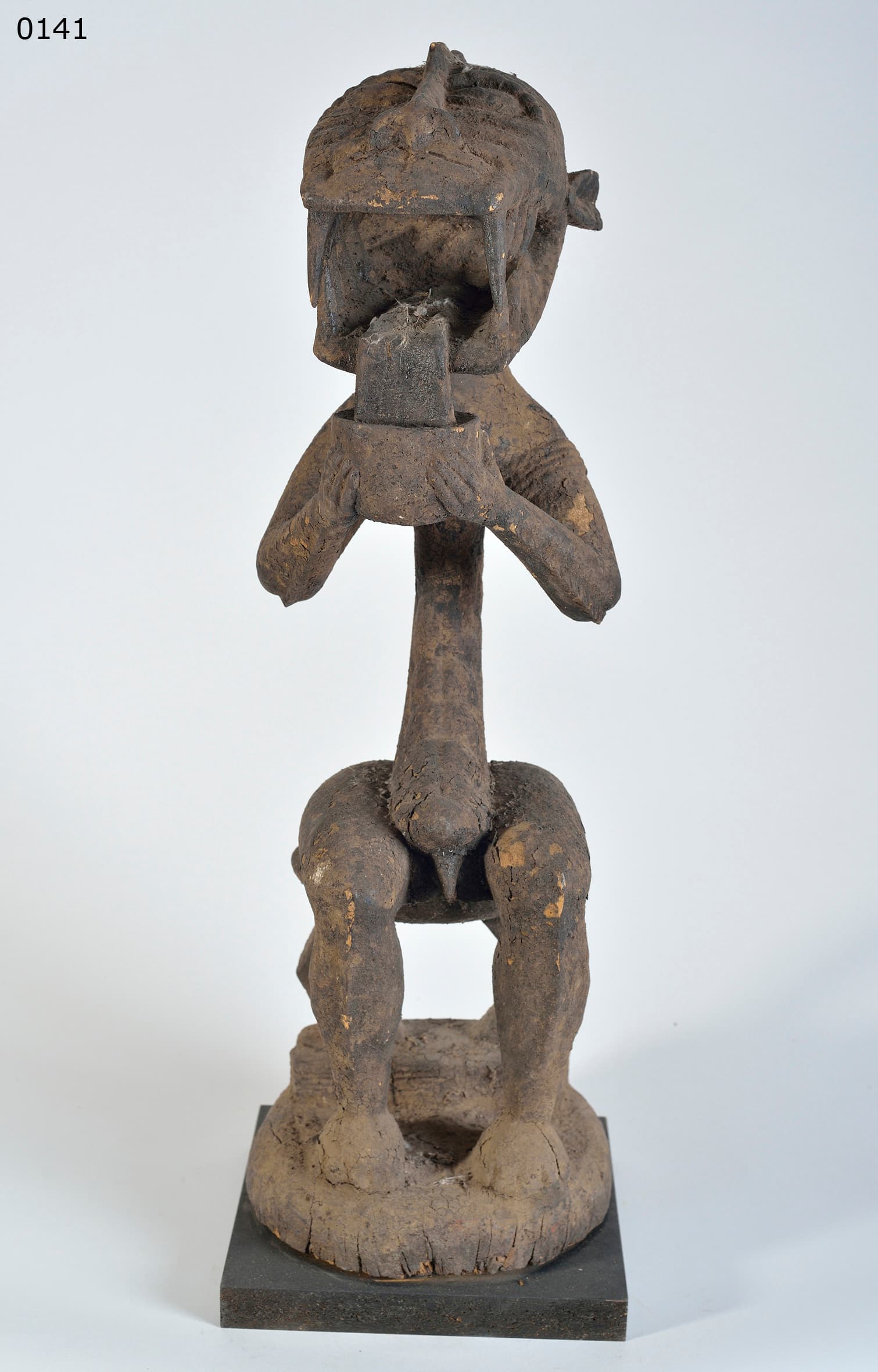
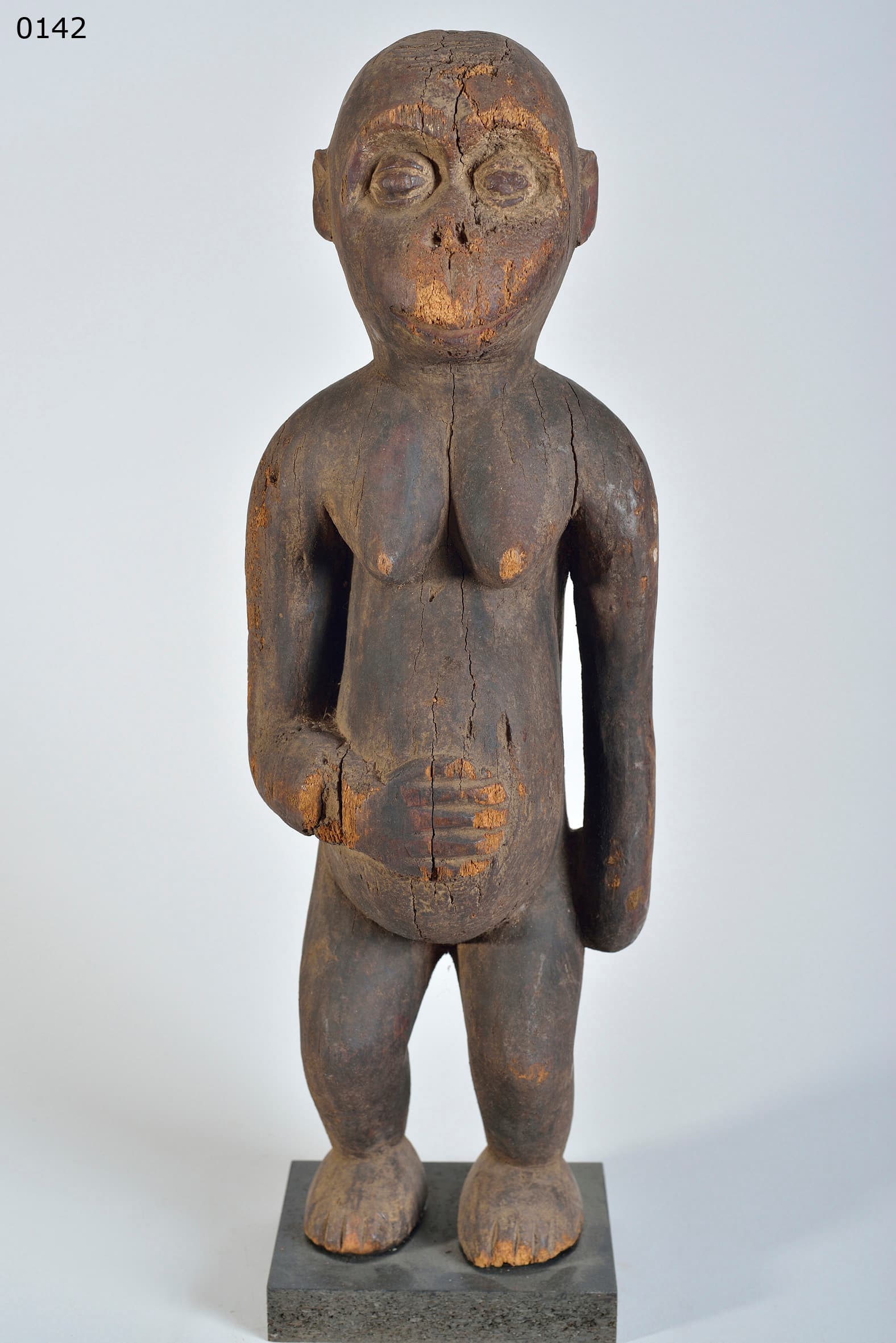
Eine hockende hölzerne Affenfigur (1. Hälfte 20. Jh., 33 cm) aus dem Baule der Elfenbeinküste - eine kleine schalenartige Schale in den Händen haltend, gefletschte Zähne, dicke verkrustete Opferpatina.
1. Das "wilde" Alter Ego der Baule
Während die Baule für ihre zarten, geschliffenen, heiteren menschlichen Figuren bekannt sind, steht der Mbotumbo (oder Gbekre) am entgegengesetzten Ende des spirituellen Spektrums.
- Buschgeister (Amuin): Diese Figuren verkörpern Kräfte aus der Wildnis im Trance-Zustand - unberechenbar, aggressiv und gefährlich.
- Gegengewicht zu Grace: Sie existieren absichtlich, um die menschenzentrierte Eleganz des bekannteren Baule-Kanons auszugleichen und das Spektrum dieser Kunstform zu vervollständigen.
2. Das Gefäß des Opfers
Der Affe hält einen kleinen geschnitzten Becher direkt vor seiner Brust.
- Gestaltet für Opfergaben: Die Schale diente in der rituellen Praxis traditionell der Aufnahme von Opfergaben wie rohen Eiern, gekauten Kolanüssen und Tierblut.
- Ausgeprägte Opferspuren: Die dicke Kruste, die die gesamte Figur bedeckt, spricht für wiederholte Trankopfer – eine Ansammlung, die auf eine langjährige rituelle Nutzung hindeutet.
3. Aggressiver Schutz
Diese Figuren sind im Besitz von Trance-Wahrsagern (komien).
- Bewaffnete Haltung: Das Zähnefletschen lenkt die Aggression nach außen und wird eingesetzt, um Zauberer anzugreifen, schwere Krankheiten zu heilen und landwirtschaftlichen Erfolg zu sichern.
- Vor Frauen und Kindern verborgen: Wegen ihrer intensiven wilden Energie wurden Mbotumbo in den Schreinen der Wahrsager verborgen gehalten und nicht in Gemeinschaftsräumen zur Schau gestellt.
Zusammenfassung
Dieser Baule Mbotumbo gilt als ein konzentriertes Gefäß ritueller Kräfte. Er steht im Kontrast zur raffinierten Eleganz der üblichen Baule-Kunst und veranschaulicht jene Objekte, die von Wahrsagern im Umgang mit übernatürlichen Kräften eingesetzt wurden.
KI-unterstützt erstellt aus Sammlungsgutachten, Objektfotografie und eigener Recherche, redaktionell geprüft. Fehler sind möglich — Hinweise darauf sind uns willkommen. Zum Verfahren →