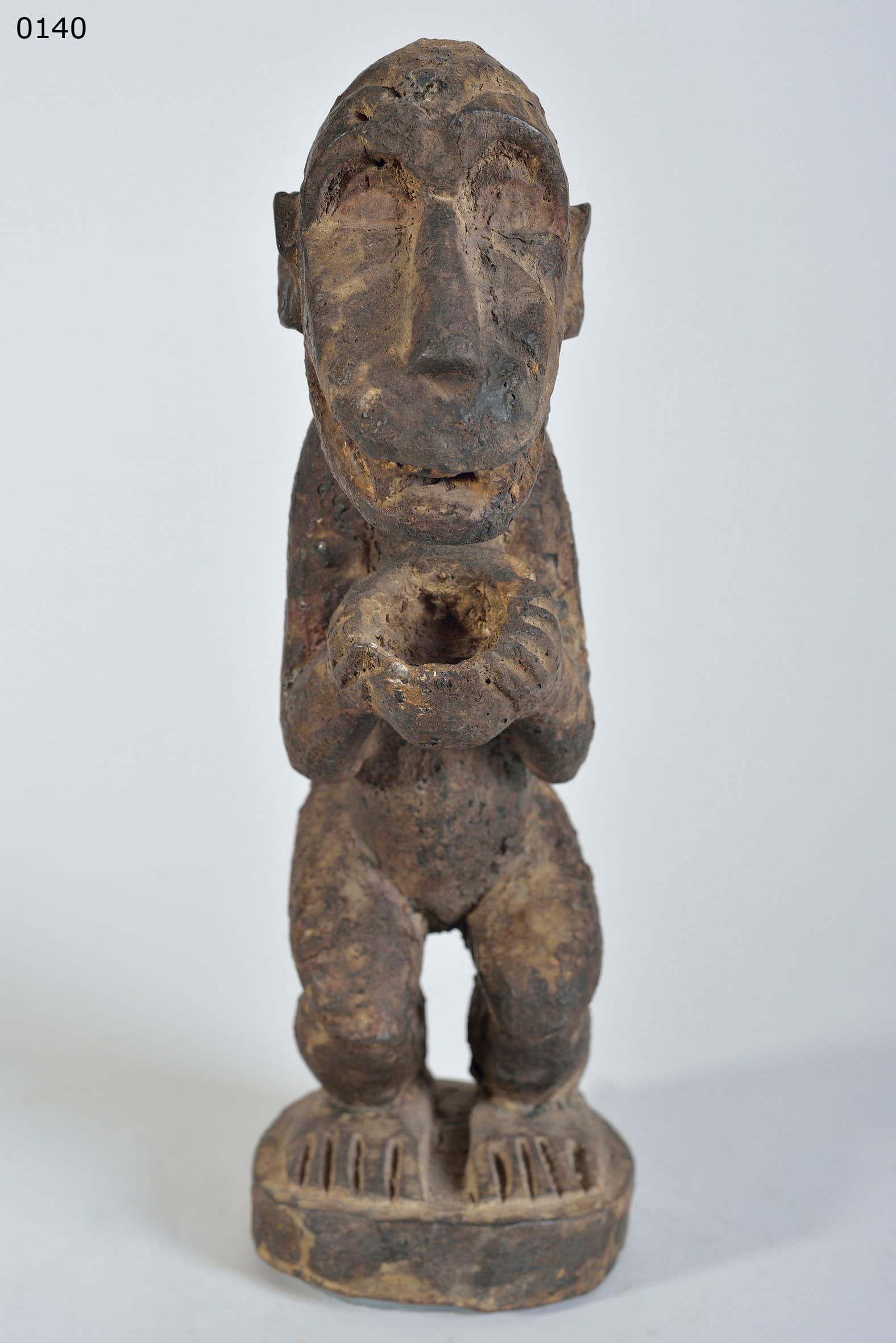
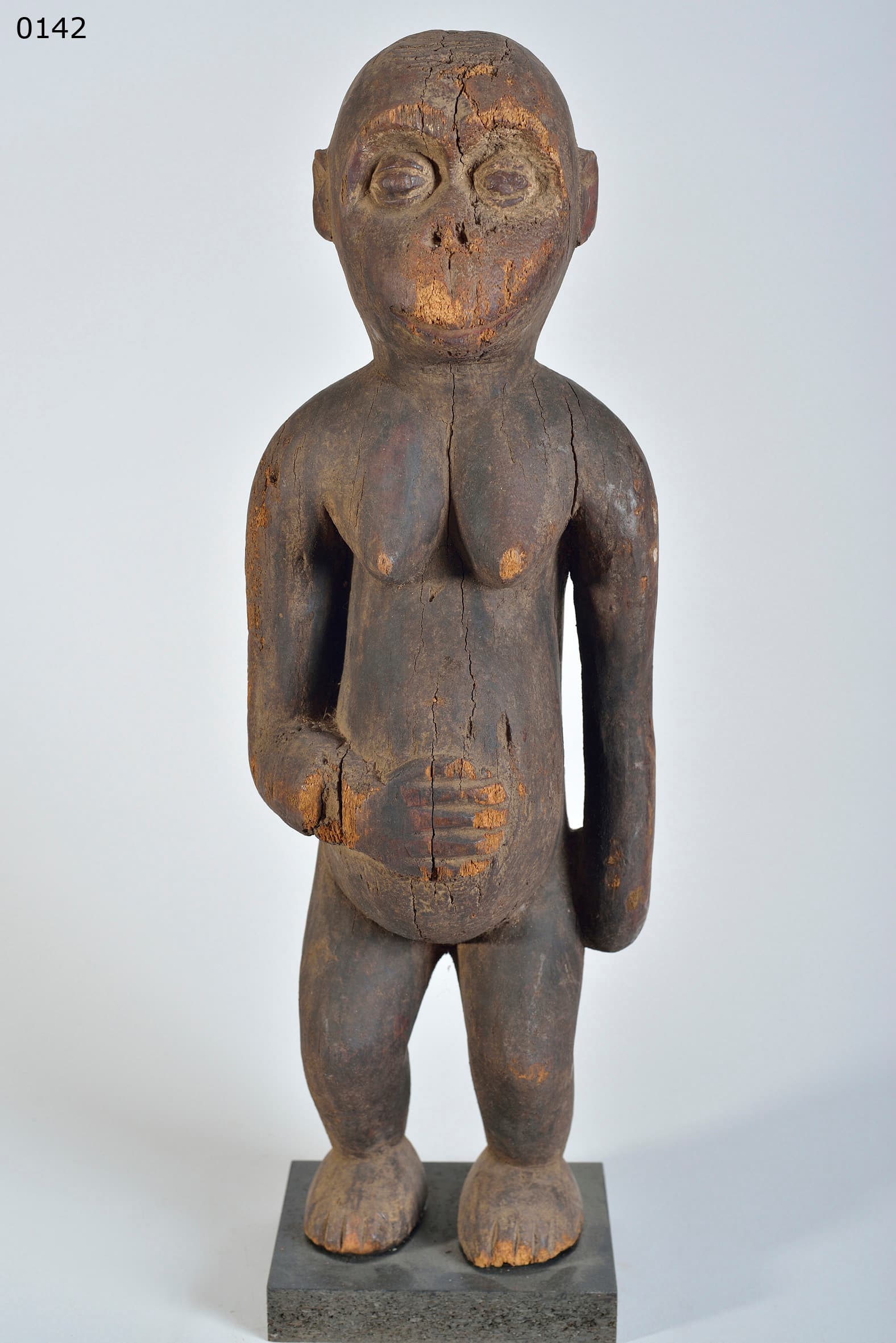
Ein tief patinierter hölzerner Affe (68 cm), dem 19. Jahrhundert zugeschrieben, von den Baule der Elfenbeinküste - hockend, die Zähne fletschend, geschnitzt, die traditionelle Opferschale vor der Brust haltend.
1. Der Amuin-Buschgeist
Diese Figur ist mit 68 cm die größte der drei Baule-Affen in der Sammlung.
- Älterer des Trios: Die Größe legt eine Seniorität innerhalb eines Wahrsager-Altars nahe - der größte Mbotumbo verankert normalerweise den Schrein.
- Antithese der Anmut: Wie alle Mbotumbo steht er bewusst im Gegensatz zum polierten, heiteren Kanon der menschlichen Figuren, für den die Baule bekannt sind. Er verkörpert Chaos, Aggression und unvorhersehbare Buschkraft.
2. Die Opferschale
Die geschnitzte Schale vor der Brust ist die Arbeitsfläche der Figur.
- Direkte Trankopfer: Rohe Eier, gekaute Kolanüsse und Tierblut wurden traditionell bei Aktivierungsritualen direkt in die Schale gegossen.
- Charakteristische Patina: Die dicke, abblätternde, geschwärzte Kruste auf dem gesamten Körper spricht für eine jahrzehntelange Nutzung durch solche Opfergaben - gleichsam der Lebenslauf eines Schreins aus geschichtetem Fett und Protein.
3. antike im 19. Jahrhundert
Ein Überleben seit dem 19. Jahrhundert in den termitenreichen Wäldern der Elfenbeinküste gilt als bemerkenswert.
- Geschützte Innenräume: Diese Figur dürfte in einem privaten Schrein eines Komien (Trance-Wahrsagers) aufbewahrt worden sein, geschützt vor Wetter und Schädlingen.
- Museale Qualität: Das vermutete vorkoloniale Überleben macht das Stück zu einem seltenen Zeugnis seiner Art.
Zusammenfassung
Dieser große Baule Mbotumbo gilt als das älteste Mitglied seines Affen-Trios. Seine verkrustete Patina und die Zuschreibung in das 19. Jahrhundert machen ihn zu einem eindrucksvollen Beispiel ivorischer Ritualkunst - ein ausdrucksstarkes Objekt im Kontext von Trance und Divination.
KI-unterstützt erstellt aus Sammlungsgutachten, Objektfotografie und eigener Recherche, redaktionell geprüft. Fehler sind möglich — Hinweise darauf sind uns willkommen. Zum Verfahren →