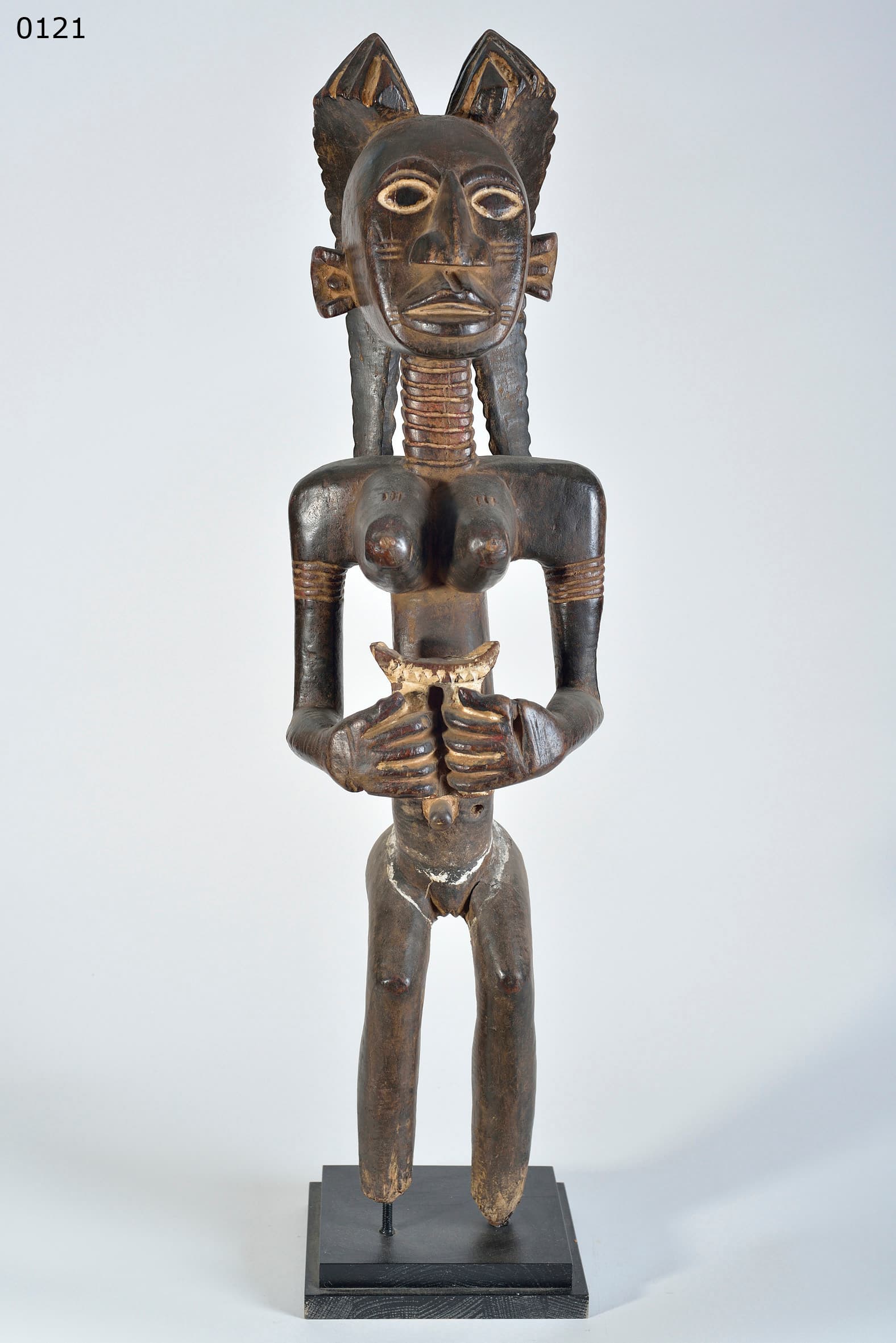
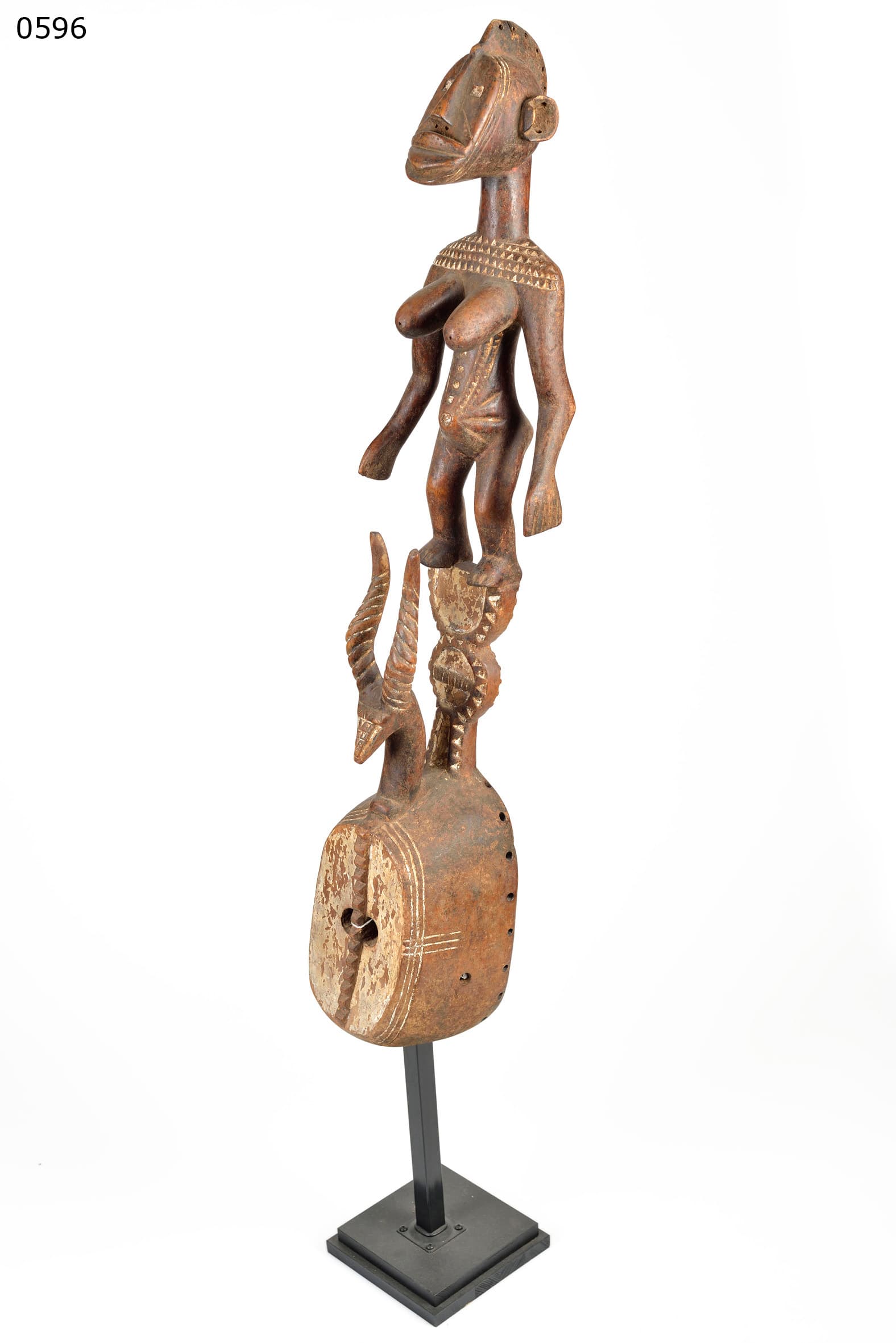
Eine Holzstatuette (1. Hälfte 20. Jh., 54 cm) von den Mossi aus Burkina Faso - ein weiblicher Körper, der von einem Kopf überragt wird, der in der exakten Form einer traditionellen ovalen Karan-wemba-Maske geschnitzt und mit feinen geometrischen Schnitten verziert ist.
1. Die Hybridisierung von Kunstformen
Dies ist ein brillantes und ungewöhnliches Konzept - eine Statue, die eine Maske in sich selbst integriert.
- Maske als Kopf: Der Schnitzer ersetzte einen Standard-Frauenkopf durch eine originalgetreue Nachbildung der Mossi Karan-wemba-Maske.
- Die Rolle der Karan-wemba: Die Karan-wemba stellt eine Frau nach der Menopause dar, die aufgrund ihres Alters und ihrer Weisheit den Männern gleichgestellt ist, was ihr die Autorität verleiht, bei den Geistern Fürsprache einzulegen.
- Tanzender Geist in statischer Form: Durch die Verschmelzung des Maskengesichts mit einem statuarischen Körper entsteht eine permanente, lokalisierte Schreinversion eines Geistes, der normalerweise nur in Bewegung lebt.
2. Die Nyonyosi-Merkmale
Der Kopf trägt die stilistischen Fingerabdrücke der Schnitzer der Bauernkaste.
- Oval und schräg: Das ovale Gesicht wird durch einen markanten vertikalen Nasenrücken halbiert und folgt der klassischen Karan-Wemba-Silhouette.
- Kreuzschraffierte Geometrie: Feine eingeschnittene Kreuzschraffuren bedecken die Oberfläche - die Signatur der Nyonyosi-Maskenschnitzer, der alten Bauernklasse, die dem Mossi-Reich assimiliert wurde und das Recht behielt, Masken zu schaffen und zu tanzen.
3. Schrein-Verehrung
Während Masken beweglich und performativ sind, ist diese Figur statisch.
- Dauerhafte Leitung: Auf einem Altar platziert, diente sie als stets präsenter Kanal zu den Ahnenmüttern - das Dorf muss nicht auf ein Fest warten, um den Karan-wemba-Geist anzurufen.
- Fertiler Anker: Die starre, aufrechte Haltung und die hervorstehenden Brüste unterstreichen die Rolle der Figur als unnachgiebiges matriarchalisches Fundament des Mossi-Geschlechts.
Zusammenfassung
Diese Mossi-Figur ist ein faszinierender skulpturaler Hybrid. Sie fängt die flüchtige, kinetische Magie der Karan-Wemba-Maske dauerhaft ein und verankert sie in einer soliden, weiblichen Schreinfigur, die der matriarchalischen Weisheit gewidmet ist.
KI-unterstützt erstellt aus Sammlungsgutachten, Objektfotografie und eigener Recherche, redaktionell geprüft. Fehler sind möglich — Hinweise darauf sind uns willkommen. Zum Verfahren →