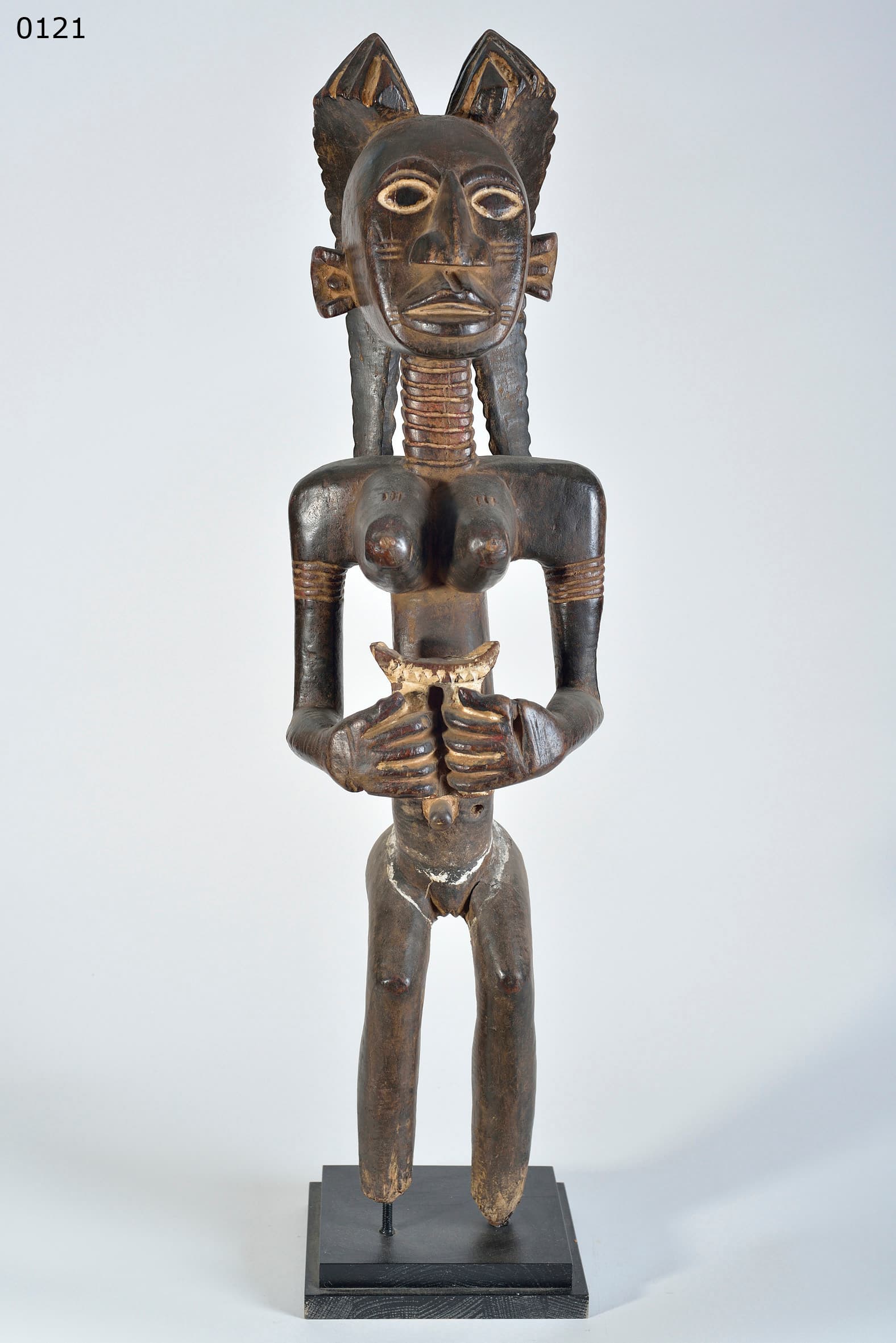
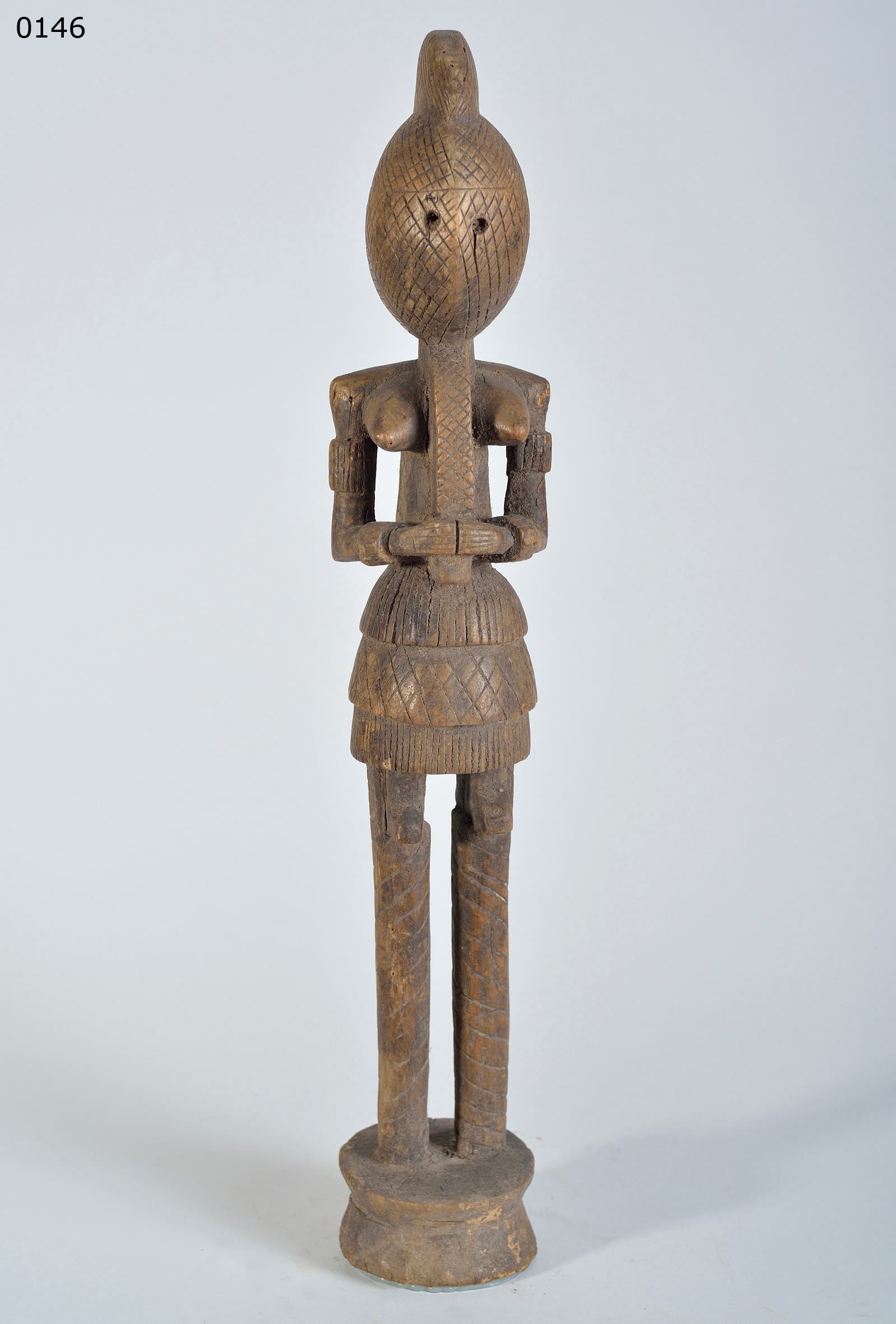
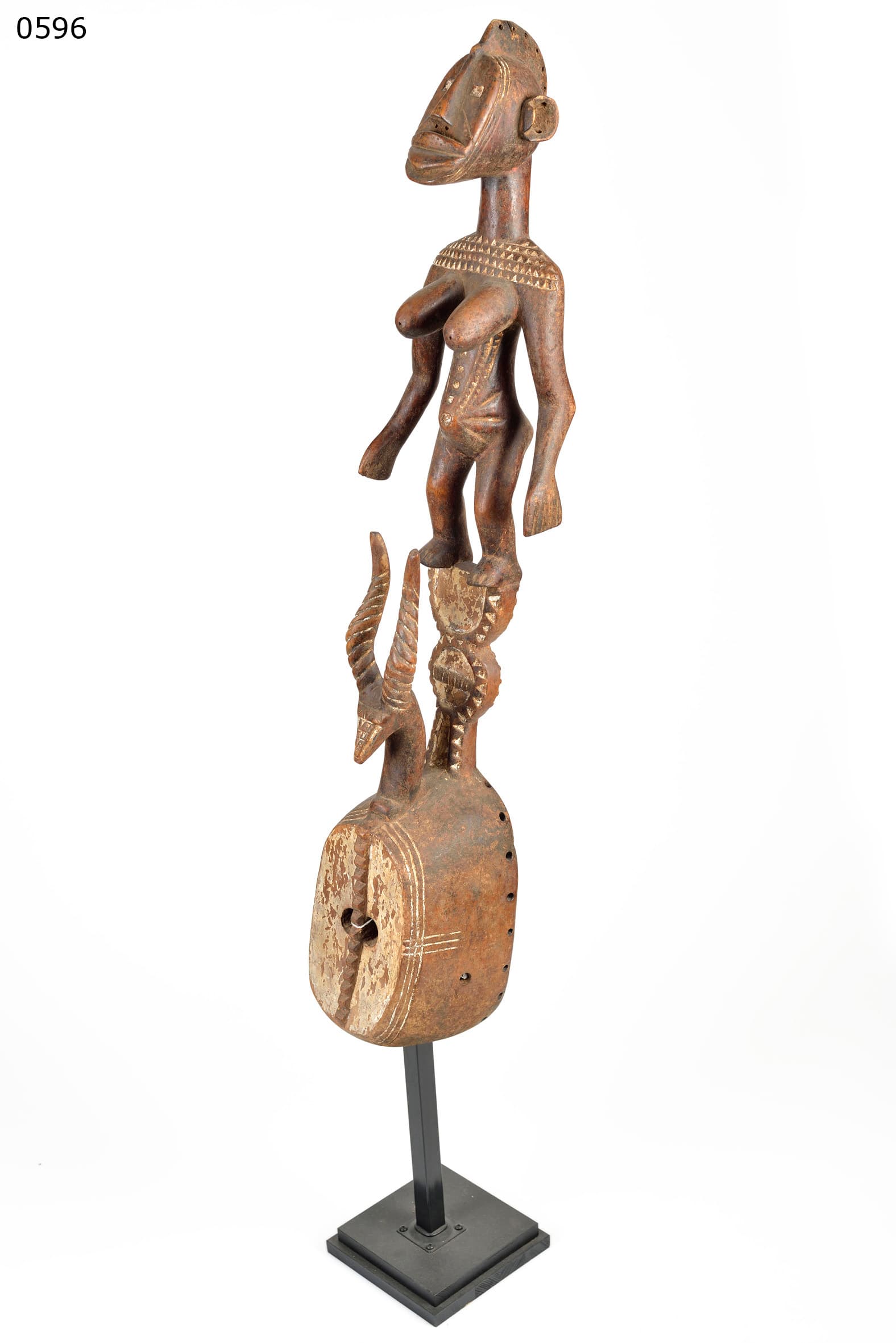
Stehende weibliche Holzfigur (1. Hälfte 20. Jh., 67 cm) von den Mossi aus Burkina Faso - starre Vertikalität, leichte Konkavität im Gesicht, sagittale Kammfrisur, geometrische Brustskarifikationen und eine trockene, erdig-braune Patina mit Termitenfraß an der Basis.
1. Der Junior des Königspaares
Mit 67 cm ist diese Figur das etwas kleinere Gegenstück zur 78 cm großen Matriarchin.
- Gemeinsame Funktion: In königlichen Nakomse-Schreinen werden oft mehrere Figuren gleichzeitig aufbewahrt, die aufeinanderfolgende Generationen von königlichen Ehefrauen oder die breitere Matriline darstellen.
- Gleiches stilistisches Vokabular: Der gemeinsame Sagittalkamm, das Raster der Brustskarifikation und die starre Frontalität bestätigen, dass beide Figuren aus derselben Werkstatt oder einem regionalen Atelier stammen und wahrscheinlich als zusammenhängendes Set geschnitzt wurden.
2. Die jährliche Tenga-Opferung
Die rituelle Rolle der Figur konzentrierte sich auf das dynastische Zeremoniell der Mossi.
- Altar-Darstellung: Bei den Tenga und anderen königlichen Opfern wurden die Figuren herausgeholt, um im Namen der Ahnen, die sie repräsentierten, Opfergaben entgegenzunehmen.
- Kollektive Autorität: Jede Figur fügte eine weitere Stimme zur Bestätigung des aktuellen Häuptlings hinzu - je mehr Figuren auf dem Altar standen, desto tiefer reichte die Legitimation durch die Zeit zurück.
3. Erosion der Basis und Lagerung des Heiligtums
Die Abnutzung dieses Stücks steht im Einklang mit einem authentischen Schreinaufenthalt.
- Termitenbefall an den Füßen: Natürlicher Insektenbefall an den unteren Extremitäten zeugt von jahrzehntelanger Lagerung in einem Schrein aus Lehmziegeln, wo Termiten die Bodenkontaktzone erreichen konnten.
- Erhaltung des Oberkörpers: Der Rest der Figur hat seine Form unter den gleichen Bedingungen bewahrt - was bestätigt, dass die Abnutzung selektiv, historisch und nicht das Produkt einer künstlichen Beeinträchtigung ist.
Zusammenfassung
Diese Junior-Mossi-Figur vervollständigt das Königspaar mit passender Formensprache und authentischer Schreinbekleidung. Zusammen mit ihrem größeren Gegenstück erweitert sie die dynastische Erzählung um eine weitere Generation von Nakomse-Königinnen.
KI-unterstützt erstellt aus Sammlungsgutachten, Objektfotografie und eigener Recherche, redaktionell geprüft. Fehler sind möglich — Hinweise darauf sind uns willkommen. Zum Verfahren →