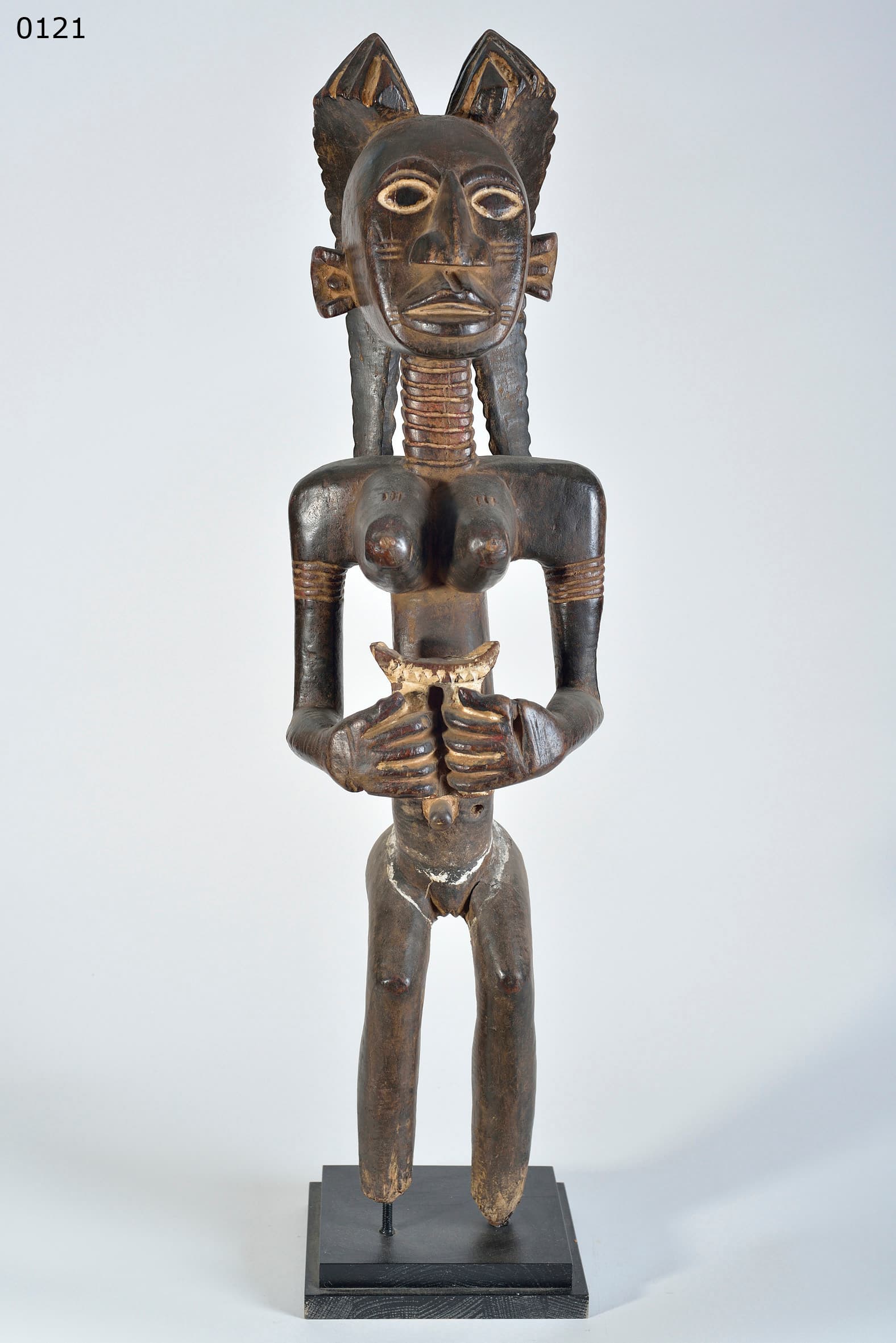
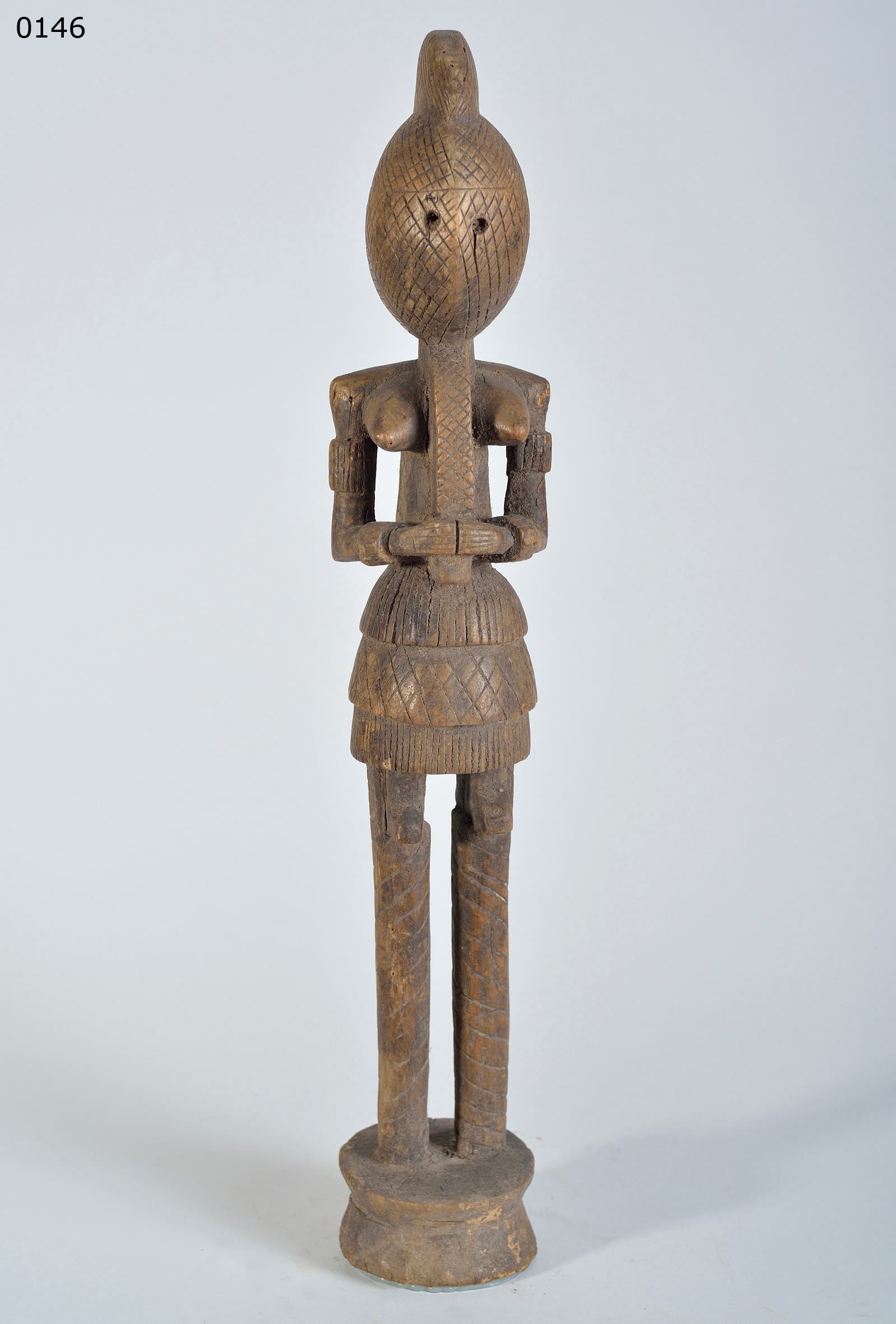
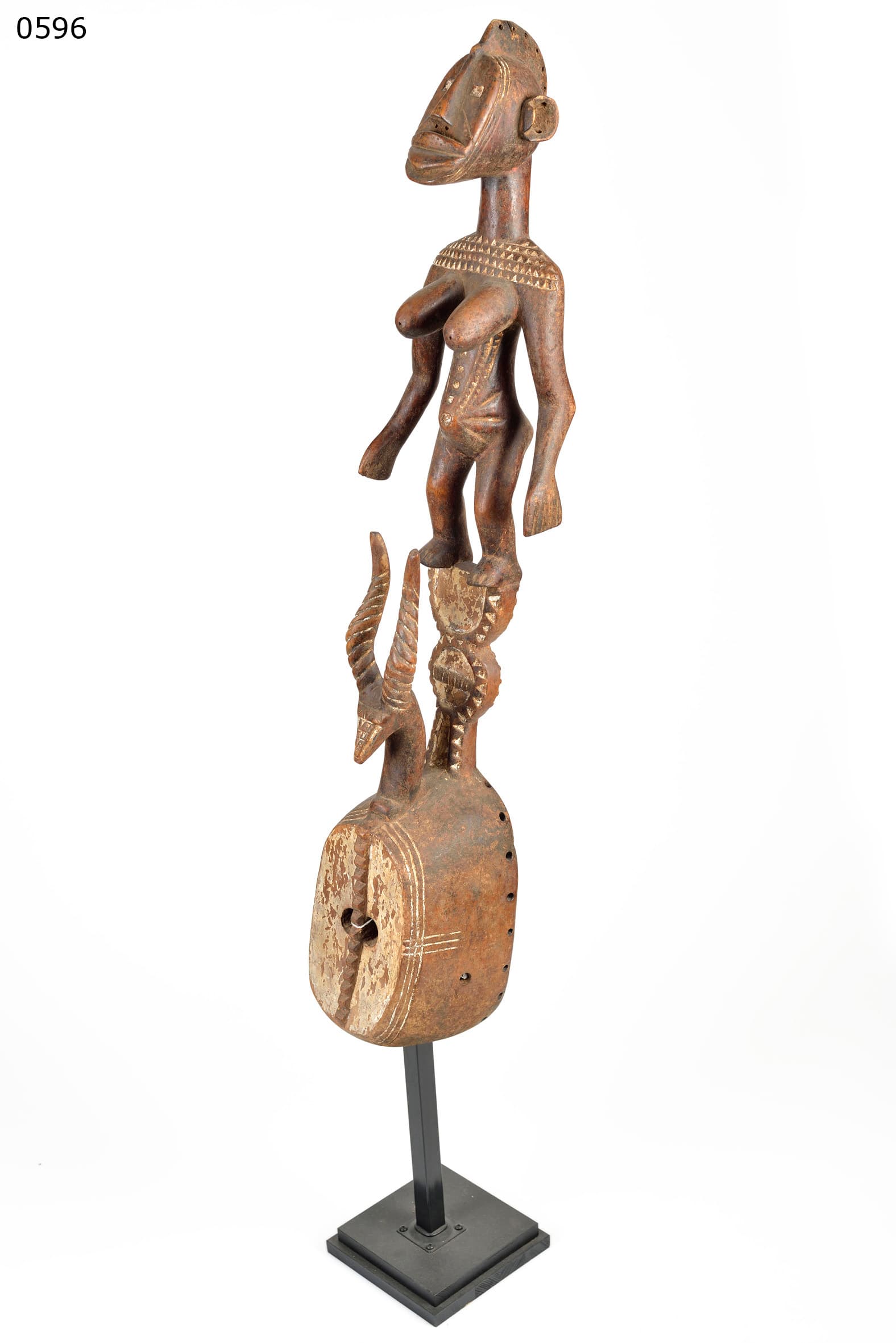
Eine majestätische stehende weibliche Holzfigur (1. Hälfte 20. Jh., 78 cm) von den Mossi aus Burkina Faso - strenge Vertikalität, leichte Konkavität im Gesicht, ausgeprägte sagittale Kammfrisur und präzise geometrische Skarifikationen auf der Brust, mit trockener, erdig-brauner Patina und geringem Termitenbefall an der Basis.
1. Nakomse Königliche Porträtmalerei
Die Mossi-Skulptur ist stark geschichtet - freistehende Figuren wie diese werden fast ausschließlich mit den Nakomse, der herrschenden Reiterklasse, in Verbindung gebracht.
- Marken des Königtums: Die steife aufrechte Haltung und die spezifische regionale Skarifikation weisen die Figur als das Porträt eines verstorbenen Häuptlings oder königlichen Ehepartners aus.
- Kamm als Krone: Der markante sagittale Kamm erinnert an die aufwändigen Frisuren, die die königlichen Frauen der Mossi früher trugen, und überträgt den politischen Rang direkt in die skulpturale Form.
2. Politische Legitimität am Häuptlingsaltar
Dem Altarzusammenhang wird eine wichtige politische Funktion zugeschrieben.
- Dynastische Repräsentation: Die Figur wurde traditionell im Ahnenschrein des Häuptlings aufbewahrt und soll bei den jährlichen Tenga-Opfern als sichtbares Zeichen für die königliche Kontinuität aufgestellt worden sein.
- Legitimation des lebenden Herrschers: Indem die Figur Opfergaben entgegennahm, sollte sie die Autorität des aktuellen Herrschers stützen und seine Herrschaft visuell mit einer Kette königlicher Vorfahren verbinden, die der Tradition nach aus dem Jenseits über das Königreich wachten.
3. Termitenerosion und Altersindikatoren
Der physische Zustand spricht für ein hohes Alter und eine traditionelle Nutzung.
- Historische Abnutzung durch Insekten: Der Sockel und die unteren Extremitäten zeigen natürlichen Termitenbefall - ein übliches Merkmal für Stücke, die in traditionellen Lehmziegelschreinen in Burkina Faso aufbewahrt werden.
- Oxidierte Oberkörper: Die trockene oxidierte braune Patina des Oberkörpers, kombiniert mit dem Verschleiß der Basis, legt eine ethnographische Nutzung in der ersten Hälfte des 20. Jahrhunderts nahe.
Zusammenfassung
Diese größere weibliche Mossi-Figur ist ein großartiges historisches Dokument der königlichen Nakomse-Linie von Burkina Faso und spiegelt die strenge Würde der höfischen Kunst wider. Ihr charakteristischer Insektenbefall und ihre ausgeprägte geometrische Präsenz machen sie zu einer bereichernden Ergänzung für eine anspruchsvolle Sammlung.
KI-unterstützt erstellt aus Sammlungsgutachten, Objektfotografie und eigener Recherche, redaktionell geprüft. Fehler sind möglich — Hinweise darauf sind uns willkommen. Zum Verfahren →