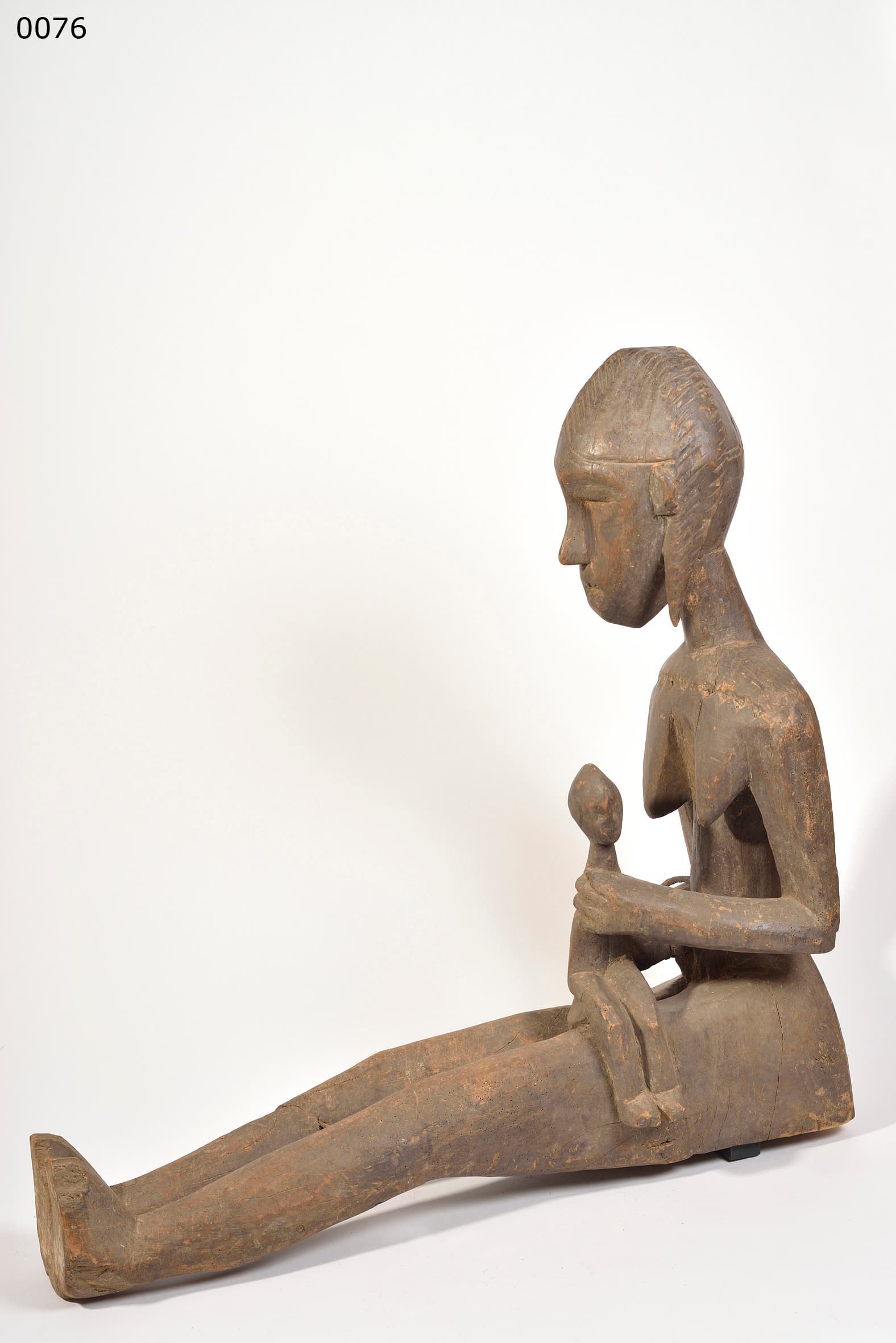
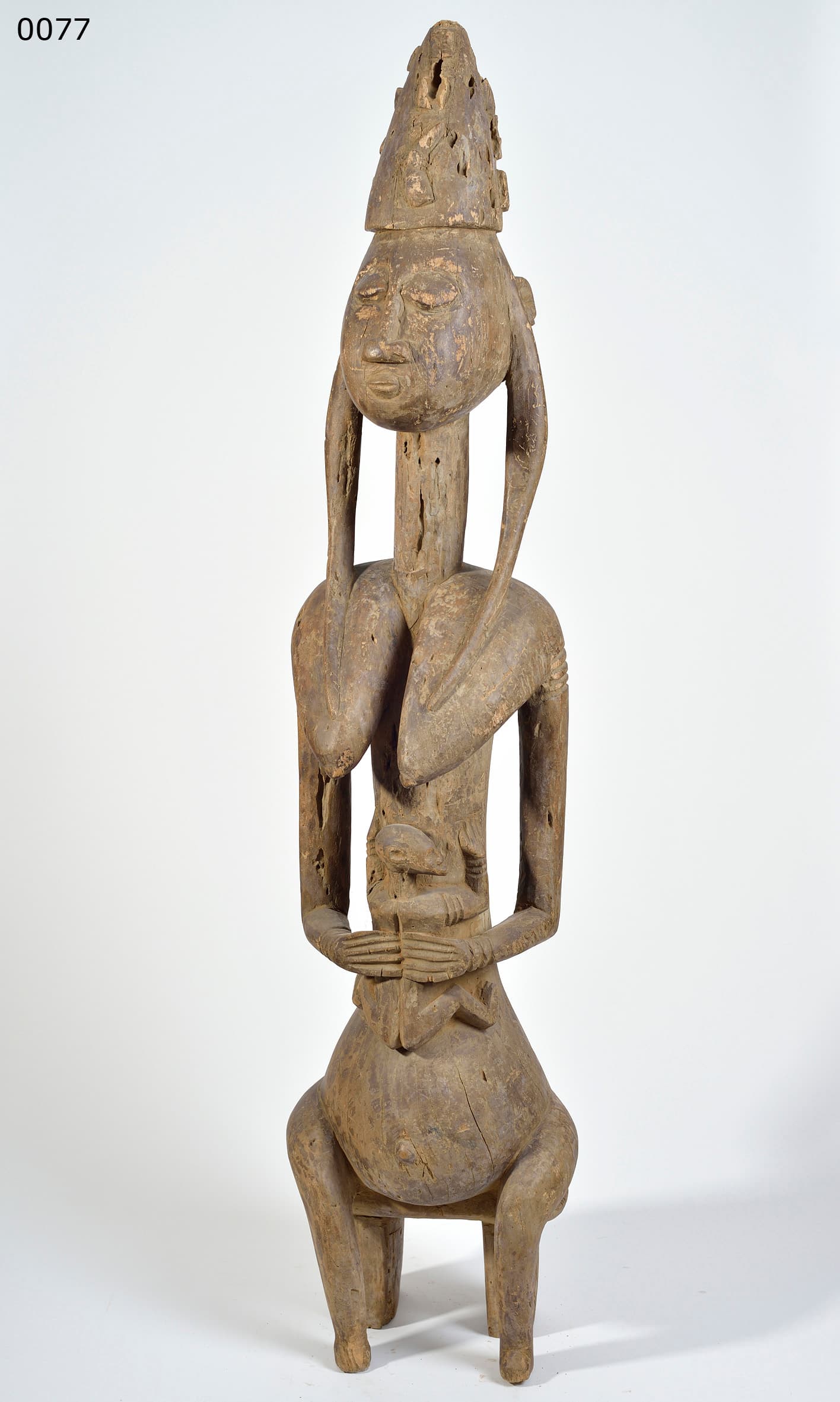
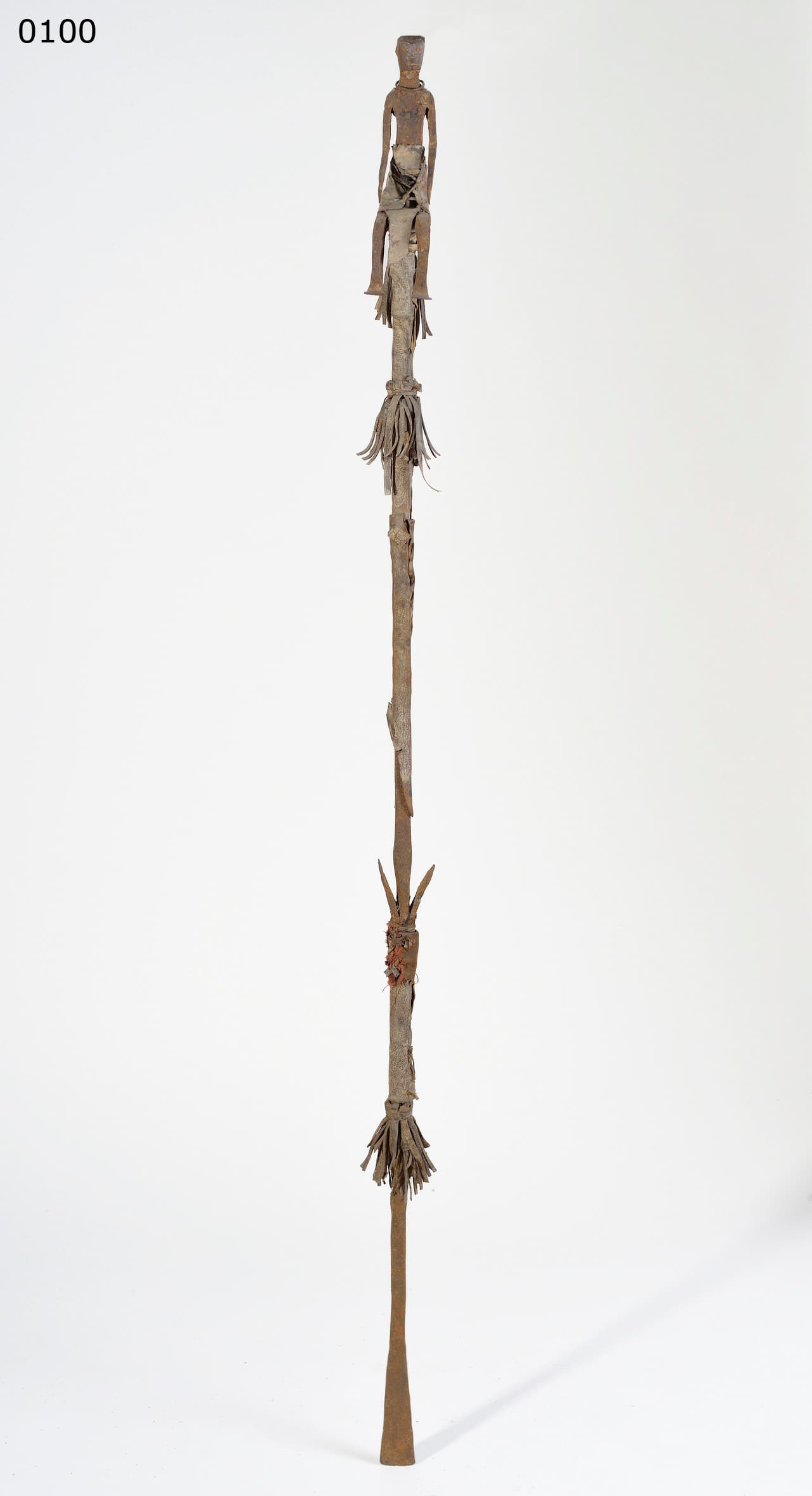
Eine auffällige sitzende weibliche Holzfigur (19. bis frühes 20. Jh., 91 cm) der Bamana aus Mali, die den Jo- oder Gwan-Initiationsgesellschaften zuzuordnen ist – geschmückt mit originalen geflochtenen Fasern und Metallringen in der markanten Sagittalkamm-Frisur, tief eingeschnittenen rautenförmigen Körperskarifikationen, sich am Unterleib treffenden Händen und einer außergewöhnlich trocken gealterten Oberfläche, die originale organische Anhaftungen beibehält.
1. Abstrakter Expressionismus der Bamana
Die Figur zeigt die tiefgreifende geometrische Reduktion der südlichen Bamana-Substile und entspricht dem klassischen Kanon der Gwandusu-Ahnenfiguren, die als Verkörperungen weiblicher Kraft und mütterlicher Autorität verehrt wurden (vgl. Kate Ezra).
- Zylinder ineinandergreifend: Der Schnitzer zerlegt die menschliche Form in Zylinder und scharfe Winkel, vor allem im Gesicht und am langgestreckten Rumpf mit seinen konischen Brüsten.
- Präsenz vor Realismus: Der Ansatz gibt der spirituellen Präsenz den Vorrang vor anatomischem Realismus. Die feinen Skarifizierungen verweisen auf den hohen rituellen Status der Entität und strahlen eine Aura zeitloser, unnachgiebiger Kraft der Vorfahren aus.
2. Nyama und organische Anhaftungen
Die ursprüngliche geflochtene Faser und die straffe Umwicklung der Arme und Beine mit Textilien sind von zentraler Bedeutung für die spirituelle Wirksamkeit.
- Mit Lebenskraft aufgeladen: Im Bamana-Glauben sind solche textilen Applikationen nicht dekorativ – die Priester nutzen sie, um das Nyama (Lebensenergie) des Objekts zu binden, es rituell zu „kleiden“ oder strukturelle Schwächen nach langem Gebrauch zu stabilisieren, um die Holzarmatur aufzuladen.
- Aktive Schnittstelle: Mit den Anhängseln interagiert die Figur aktiv mit der Geisterwelt, um die Gemeinschaft zu schützen, und stellt nicht nur einen Ahnen dar.
3. Unberührte Schreinoberfläche
Die ausgetrocknete, ungeschliffene Oberfläche mit ihrer dicken Patina deutet auf einen langen stationären Aufenthalt und wiederholte rituelle Waschungen hin.
- Trockene verkrustete Reste: In den tiefen Schnitzereien und über den Wicklungen sind verkrustete Reste von Trankopfern (etwa Sheabutter oder Hirsebrei) erhalten, wie sie Sarah C. Brett-Smith in ihren Studien zur Pflege von Bamana-Skulpturen detailliert beschrieben hat.
- Fragile organische Bestandteile erhalten: Die intakten oxidierten Faserbefestigungen und die ausgeprägte Opferpatina verankern das Stück eindeutig in der malischen Ritualpraxis des 19. bis frühen 20. Jahrhunderts.
Zusammenfassung
Als brillante Verschmelzung von geometrischer Abstraktion und magisch aufgeladenen organischen Materialien ist diese Bamana-Schreinfigur ein seltenes Überbleibsel authentischer animistischer Praxis der Jo- oder Gwan-Gesellschaften. Ihre trockene, ungeschliffene Oberfläche, die tiefe Patina und die ursprünglichen Faserelemente machen sie zu einem außergewöhnlichen historischen Dokument aus der Zeit des 19. bis 20. Jahrhunderts.
KI-unterstützt erstellt aus Sammlungsgutachten, Objektfotografie und eigener Recherche, redaktionell geprüft. Fehler sind möglich — Hinweise darauf sind uns willkommen. Zum Verfahren →