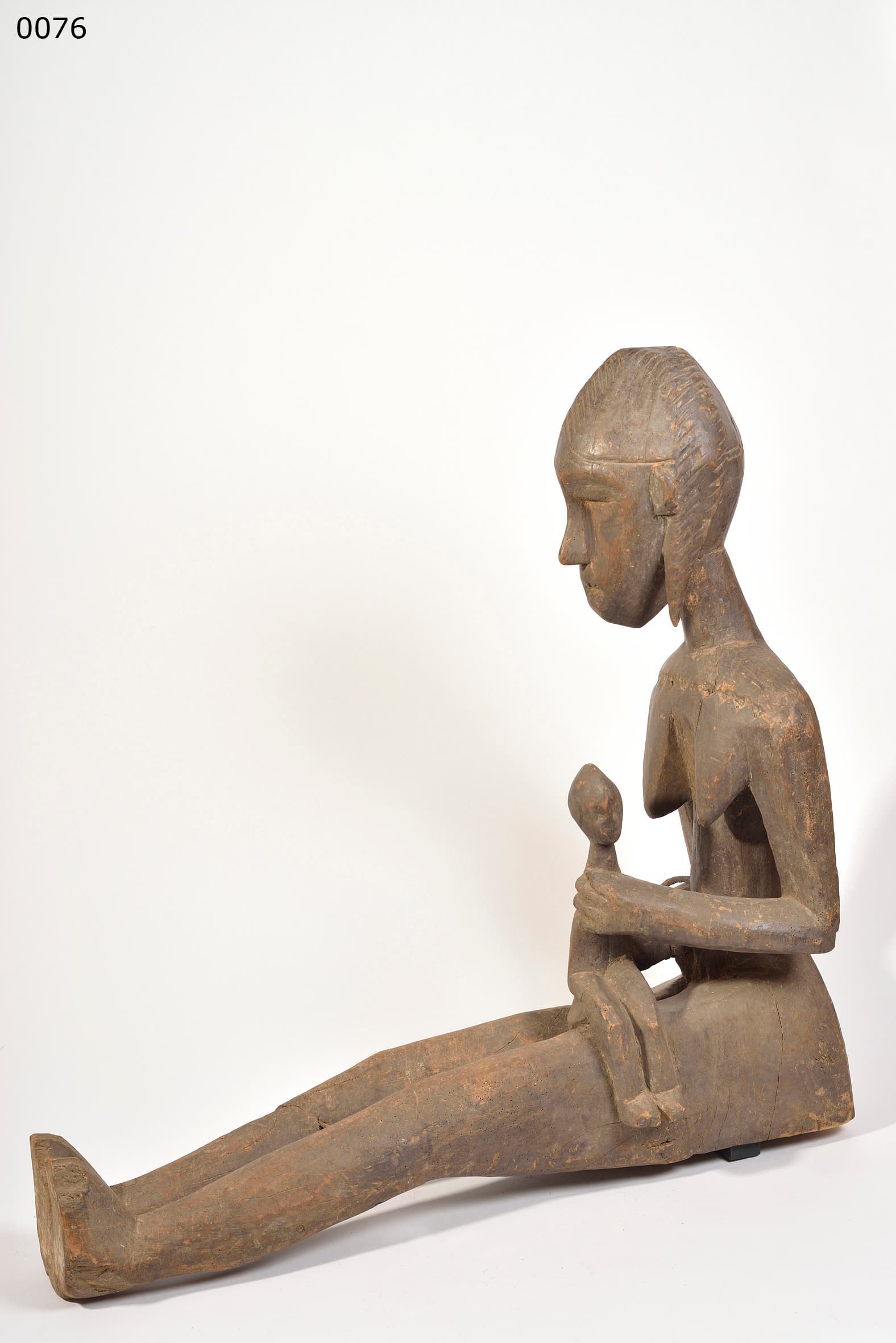
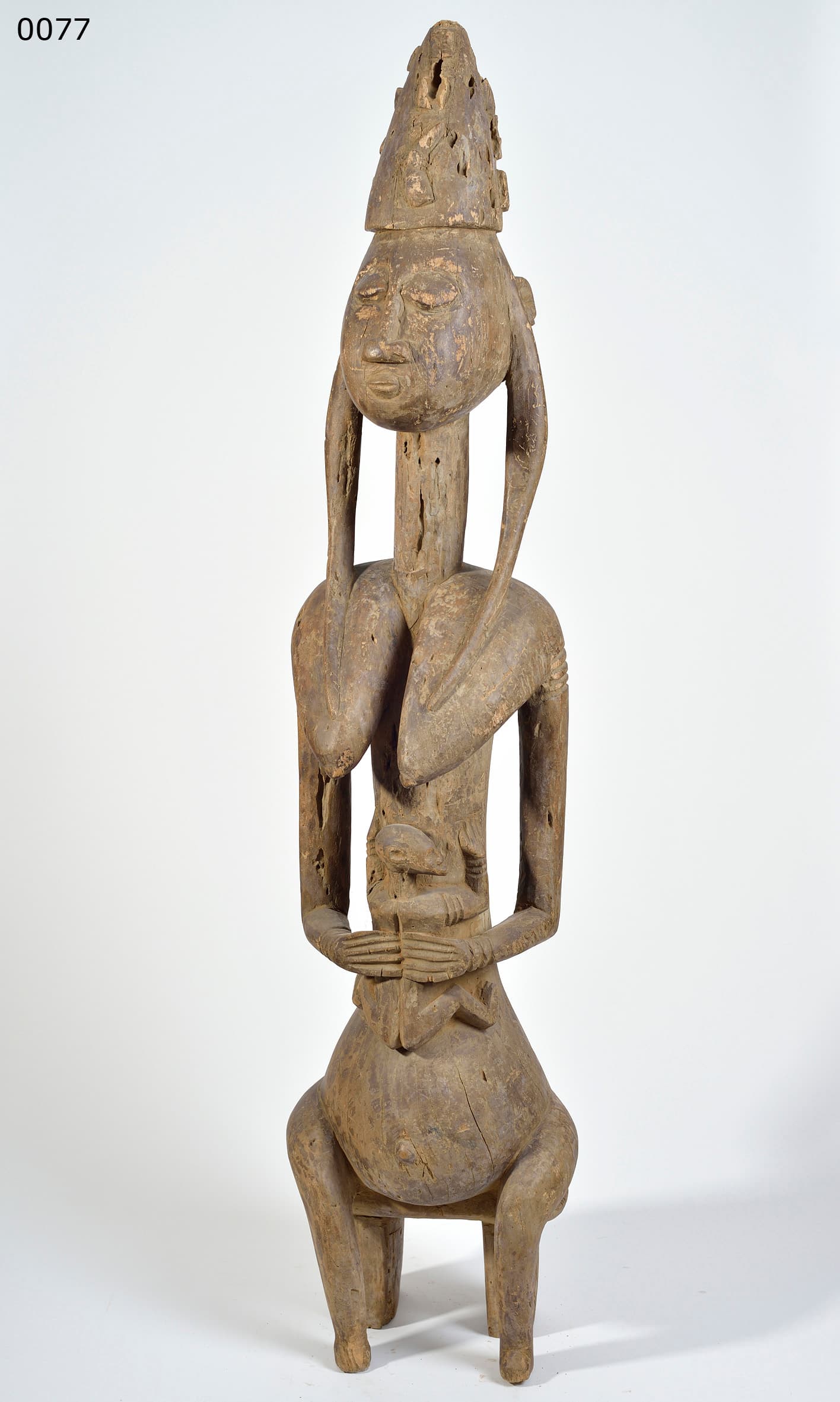
Eine stark erodierte weibliche Holzfigur (24 cm) aus den Bamana in Mali aus dem 18. Jahrhundert - reduziert auf eine säulenartige Kernsilhouette mit nur wenigen anatomischen Details. Die Oberfläche ist blass, stark oxidiert und durch jahrhundertelange Exposition ausgetrocknet.
1. Extreme Abstraktion durch Alter
Die Bamana-Skulptur ist bereits für ihre strenge geometrische Abstraktion bekannt, aber das hohe Alter dieser Figur hat sie noch weiter auf ihre reine archetypische Essenz reduziert.
- Taphonomische Abstraktion: Zeit, Witterung und ritueller Gebrauch haben alle oberflächlichen Schnitzereien geglättet und eine monumental vereinfachte, pfahlartige Form hinterlassen.
- Manifestation statt Repräsentation: Die Figur wirkt weniger wie ein geschnitztes Abbild als vielmehr wie eine natürliche Manifestation der alten Erde und des Holzes - spirituelles Gewicht, verstärkt durch Erosion.
2. Archaische animistische Funktion
Figuren dieses extremen Alters waren oft die grundlegenden Objekte in frühen animistischen Schreinen der Bamana.
- Vor-Jo und Vor-Guan: Die Figur könnte vor den kodifizierten ästhetischen Regeln der späteren Jo- oder Guan-Gesellschaften entstanden sein.
- Verankerter Altar: Er fungierte als primärer Altar, der in der Erde verankert war und als ständiger, unbeweglicher physischer Anker für das Dorf nyama diente - seine Macht beruhte eher auf Langlebigkeit als auf visueller Schönheit.
3. überleben im 18. Jahrhundert und Taphonomie
Westafrikanische Holzartefakte, die eindeutig auf das 18. Jahrhundert datiert werden können, sind äußerst selten.
- Klima und Insekten: Das raue Klima und die Termitenaktivität zerstören organisches Material normalerweise innerhalb von Jahrzehnten.
- Versteinertes Relikt: Totale Austrocknung, tiefe strukturelle Risse und eine blasse oxidierte Oberfläche weisen auf eine jahrhundertelange extreme Alterung hin, die nicht künstlich simuliert werden kann - das Stück hat als versteinertes Relikt der alten malischen Geschichte überlebt.
Zusammenfassung
Diese tief erodierte Bamana-Figur ist ein Überbleibsel vergangener Jahrhunderte und geht über die traditionelle Bildhauerei hinaus, indem sie zu einem Artefakt reiner antiker Essenz wird. Ihre Datierung aus dem 18. Jahrhundert und ihre extreme physische Degradierung machen sie zu einer musealen Rarität von immenser historischer Bedeutung.
KI-unterstützt erstellt aus Sammlungsgutachten, Objektfotografie und eigener Recherche, redaktionell geprüft. Fehler sind möglich — Hinweise darauf sind uns willkommen. Zum Verfahren →