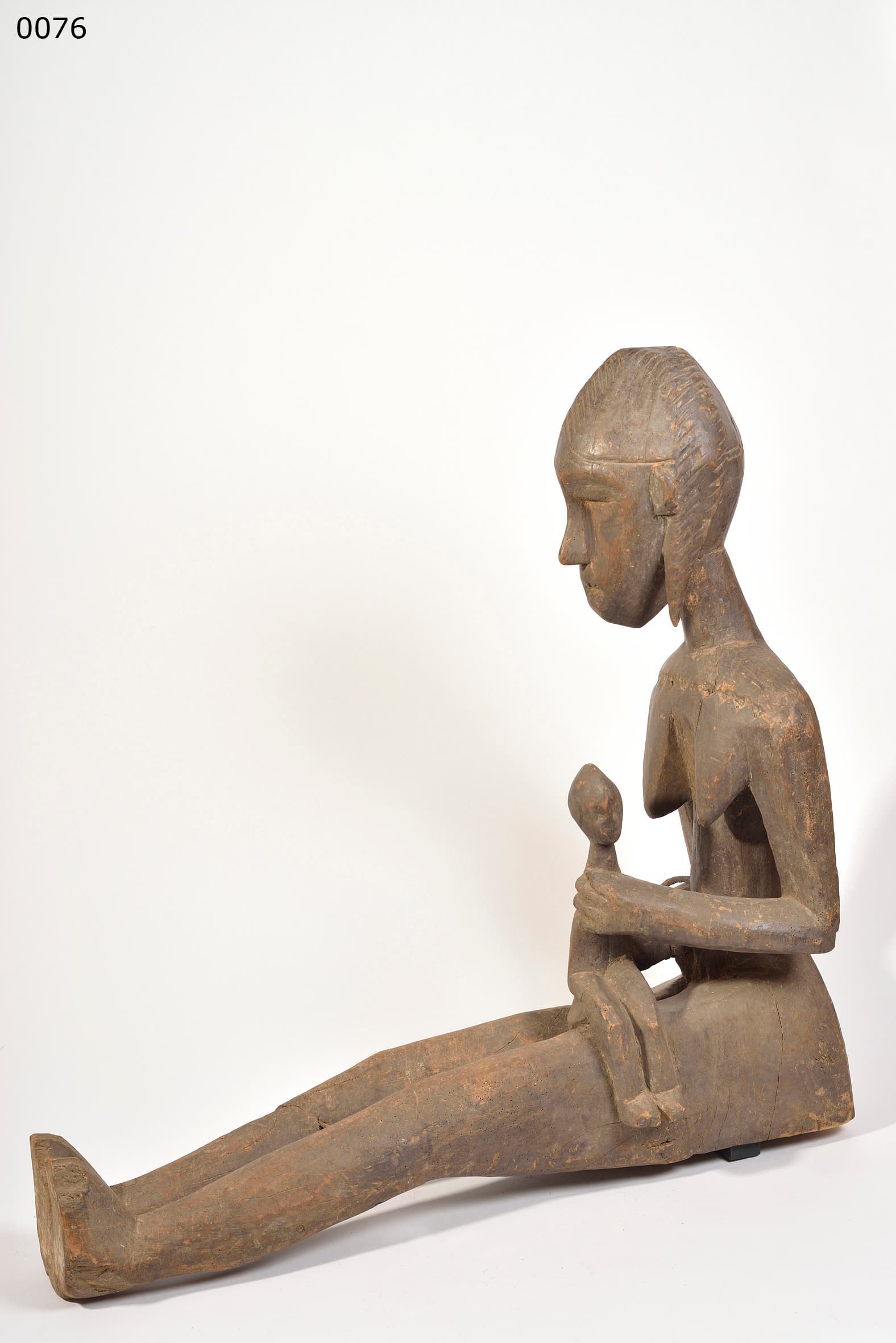
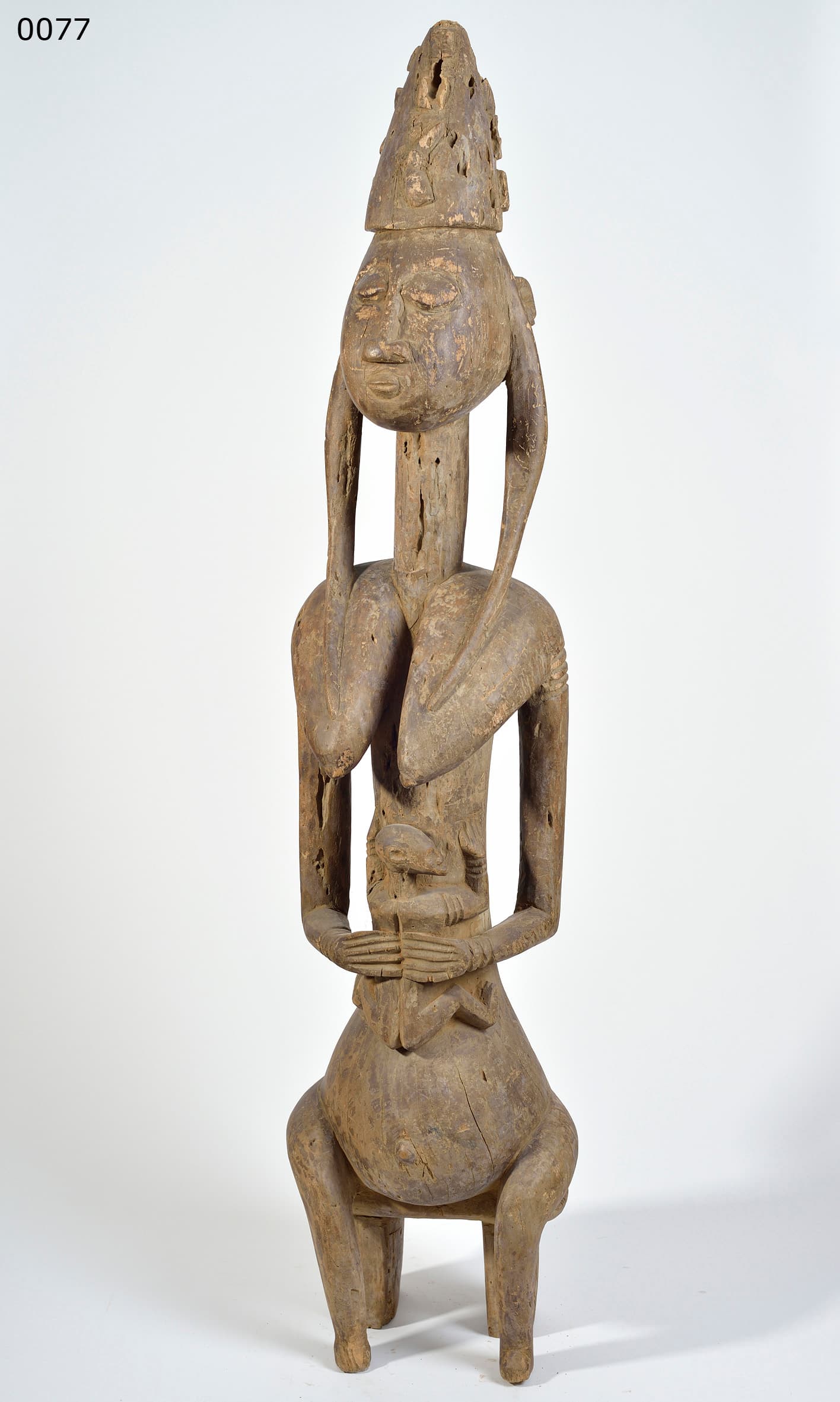
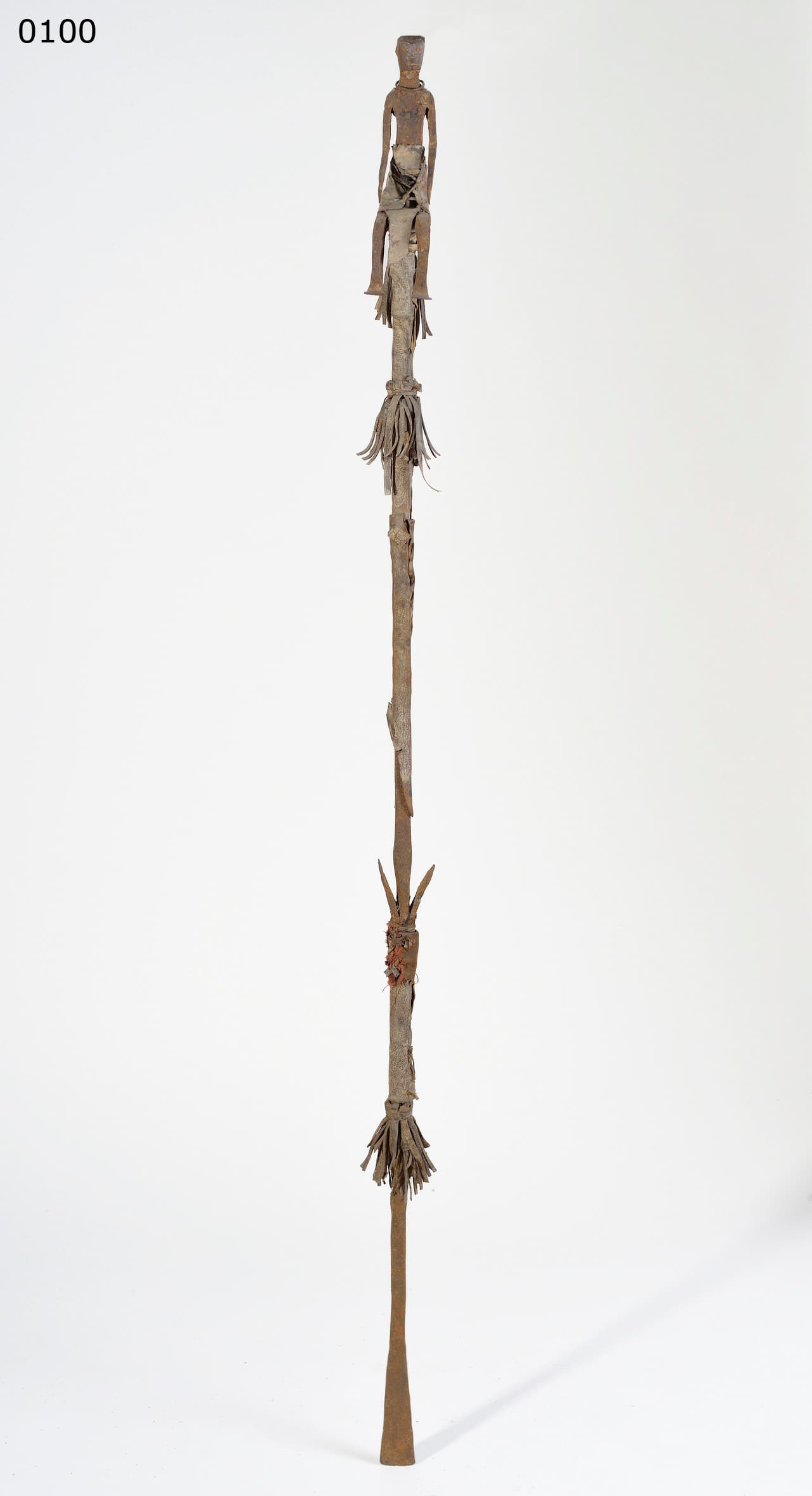
Ein zusammengehöriges horizontales Paar Ciwara-Köpfe (1. Hälfte 20. Jh., je 97 cm) von den Bamana aus Mali - lange, geschwungene Körper, die sich nach hinten strecken, zoomorphe Synthese von Antilope und Erdferkel, tief geschnitzte geometrische Motive, das gealterte Holz zeigt eine oxidierte Trockenpatina mit deutlichen Gebrauchsspuren entlang der verlängerten Schnauzen und Ohren.
1. Horizontale zoomorphe Synthese
Im Gegensatz zum vertikalen Segou-Stil fügen die horizontalen Ciwara aus den südwestlichen Bamana-Regionen mehrere Tiere zu einem einzigen glatten Kompositum zusammen.
- Antilope, Erdferkel, Schuppentier: Die langen, ausladenden Hörner erinnern an die Antilope; der niedrige, an den Boden geschmiegte Körper verweist auf das Erdferkel oder das Schuppentier - Tiere, die für ihre Fähigkeit bekannt sind, sich tief in die Erde zu graben.
- Die Silhouette des Landwirts: Das Design ahmt das Profil des über seine Hacke gebeugten Landwirts nach und verschmilzt menschliche Arbeit und mythisches Tier zu einer Form.
2. Der Mythos des Erdbohrers
Die horizontale Ausrichtung unterstreicht die direkte Beziehung zwischen dem mythischen Ciwara-Tier und dem Boden.
- Grabende Tiere werden geehrt: Die Einbeziehung der Eigenschaften von grabenden Kreaturen ehrt die mühsame Arbeit der Vorbereitung der Erde für die Bepflanzung.
- Aufführungsmechanik: Beim Tanzen beugen sich die Darsteller in der Taille und benutzen Stöcke als Vorderbeine - sie ahmen damit die Grabarbeit des Tieres nach und verschmelzen visuell menschliche Arbeit mit göttlicher Intervention.
3. Anfang des 20. Jahrhunderts Austrocknung und Behandlung
Der physische Zustand des Paares lässt auf ein hohes Alter schließen.
- Linear Checking: Tiefe Risse entlang der horizontalen Maserung sind ein Markenzeichen der authentischen malischen Trockenklima-Alterung.
- Abgenutzte Schnauzen und Basen: Aufgeweichte dunkel gefärbte Kanten der Schnauzen und Basen zeugen von jahrzehntelanger Handhabung, Lagerung und Tanz - sie legen eine rituelle Herkunft nahe und unterscheiden sich von reinen Exportschnitzereien.
Zusammenfassung
Dieses horizontale Paar Ciwara-Kämme, das die Merkmale der Antilope und des Erdferkels auf charakteristische Weise miteinander verbindet, ist eine ausdrucksstarke Hommage an die körperliche Arbeit der Bamana-Landwirtschaft. Ihre extreme Länge, die auf das frühe 20. Jahrhundert geschätzte Austrocknung und die präzise geometrische Schnitzerei machen sie zu bedeutenden Beispielen der afrikanischen Performance-Kunst.
KI-unterstützt erstellt aus Sammlungsgutachten, Objektfotografie und eigener Recherche, redaktionell geprüft. Fehler sind möglich — Hinweise darauf sind uns willkommen. Zum Verfahren →