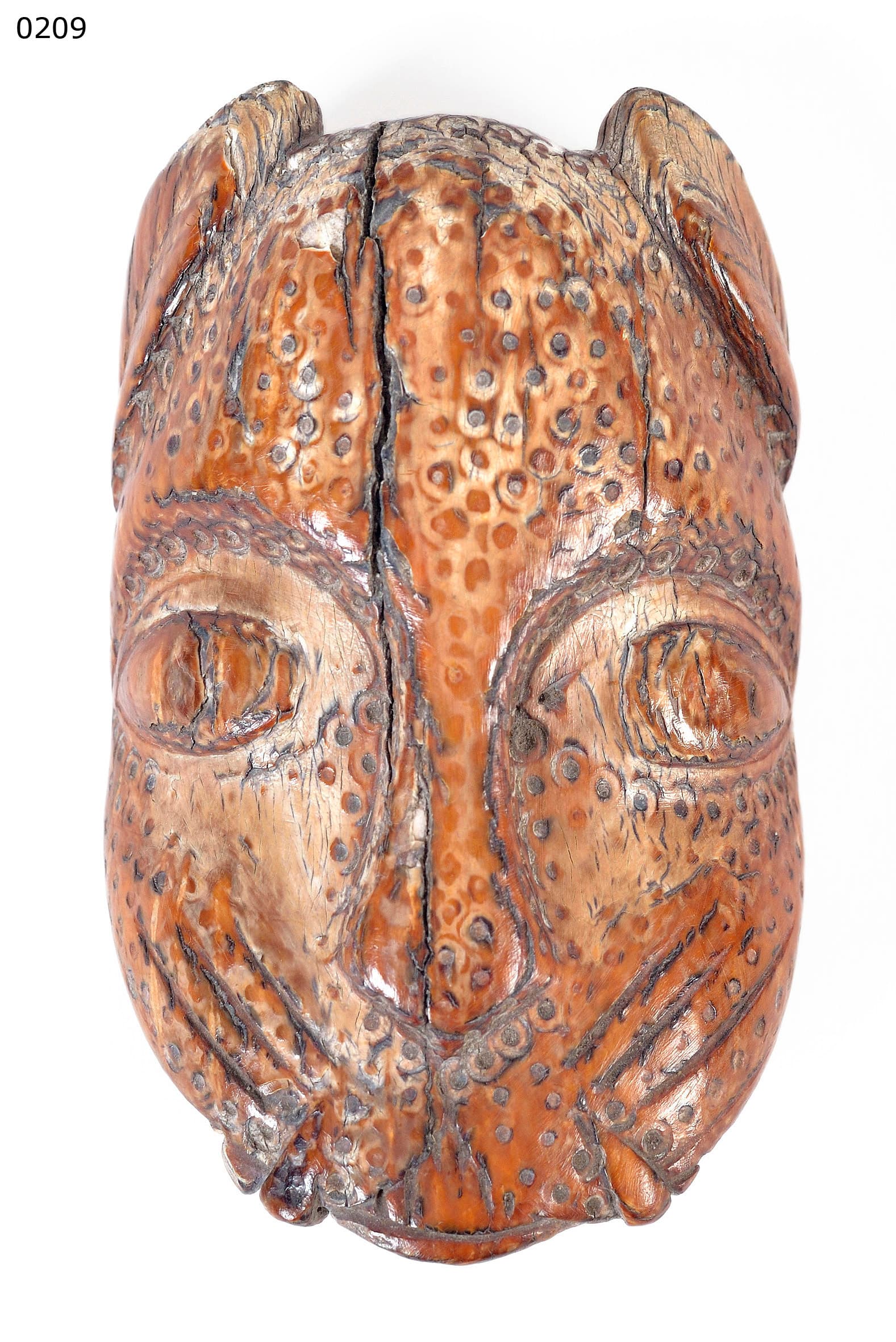
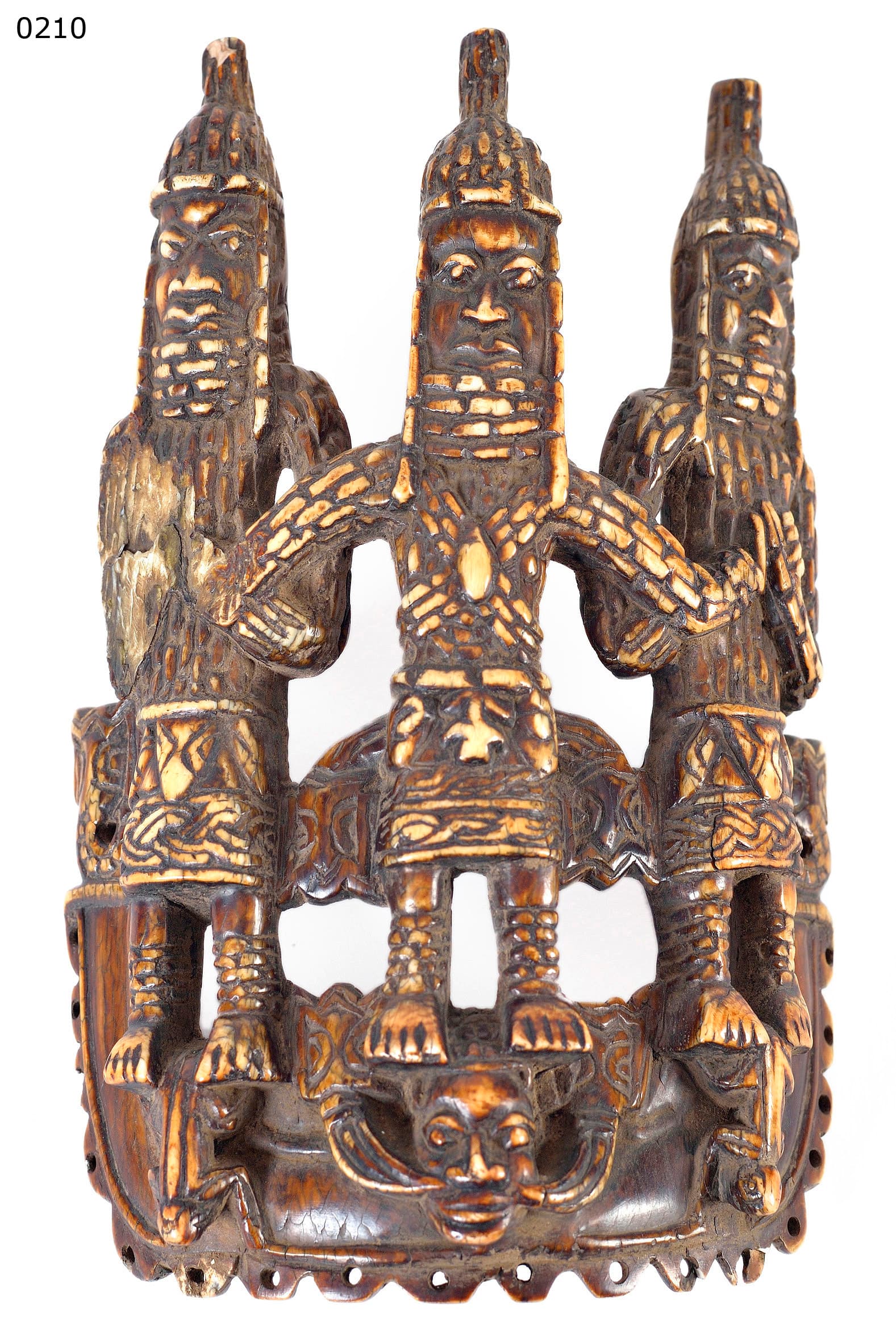
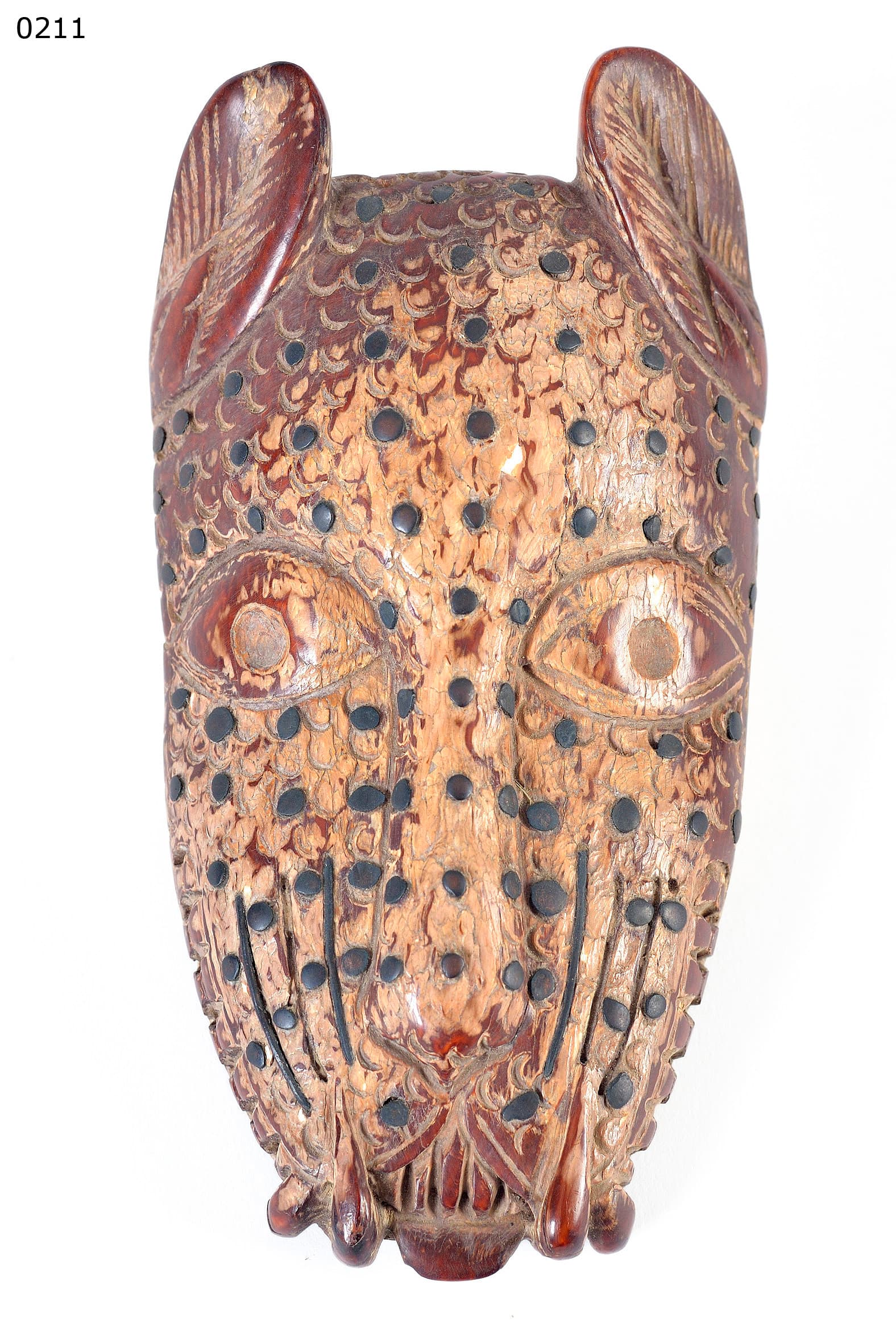
Eine meisterhafte Hüftmaske aus Elfenbein (spätes Benin, 16 cm) aus der Edo-Zeit in Nigeria - ein menschliches Gesicht, das einen netzartigen Kopfschmuck aus Korallenperlen trägt, mit schweren geschwollenen Augenlidern und komplizierten Skarifikationen. Das Elfenbein ist zu einem dunklen honigbraunen Farbton gealtert und hat einen tiefen natürlichen Altersriss, der das rechte Auge halbiert.
1. Die Schnitzergilde von Igbesanmwan
Am königlichen Hof von Benin wurde Elfenbein ausschließlich vom Oba (König) kontrolliert.
- Königliches Elfenbeinmonopol: Das Material durfte nur von der Igbesanmwan geschnitzt werden, der königlichen Gilde der Elfenbein- und Holzschnitzer, die unter direkter königlicher Lizenz arbeitete.
- Strenge Hofästhetik: Die sorgfältige Ausführung des Kopfschmucks aus Korallenperlen (ein traditionelles königliches Erkennungszeichen) und die heiteren, idealisierten Proportionen verweisen auf die ästhetischen Regeln des Hofes. Die Maske stellt einen elitären Würdenträger, einen Vorfahren oder möglicherweise die Iyoba (Königinmutter) dar.
2. Zeremonielle Hofkleidung
Diese Miniaturmasken wurden nicht über dem Gesicht getragen.
- Hüftamulett: Es wurde vom Oba oder hochrangigen Häuptlingen bei wichtigen Palastzeremonien wie dem Igue-Fest am Gürtel oder an der linken Hüfte getragen.
- Schutzkraft des Elefanten: Elfenbein, das mit der Langlebigkeit und Kraft des Elefanten assoziiert wurde, sollte böswillige spirituelle Angriffe auf den König abwehren - die Maske war sowohl Schmuck als auch funktionierendes Amulett.
3. Alterspatinierung und Austrocknung von Elfenbein
Der Zustand des Elfenbeins spricht für eine Datierung in die späte Benin-Zeit.
- Honigfarbene Patina: Im Gegensatz zu modernem, strahlend weißem Elfenbein hat dieses Stück durch jahrzehntelangen Hautkontakt, Salbung mit Palmöl und Oxidation an der Luft eine tief glänzende Honigfarbe entwickelt.
- Desiccation Fissure: Die dunkle vertikale Riss durch das Gesicht ist eine natürliche Schrumpfung Riss - eine solche Überprüfung tritt nur als Elfenbein vollständig austrocknet über ein Jahrhundert oder mehr der Alterung.
Zusammenfassung
Diese Hüftmaske aus Benin-Elfenbein ist eine charakteristische Ausführung der königlichen Edo-Handwerkskunst und ein bedeutendes Artefakt nigerianischer höfischer Macht. Die tief gealterte honigfarbene Patina und die natürliche Struktur des Elfenbeins machen sie zu einem bedeutenden Zeugnis dieser Kunsttradition.
KI-unterstützt erstellt aus Sammlungsgutachten, Objektfotografie und eigener Recherche, redaktionell geprüft. Fehler sind möglich — Hinweise darauf sind uns willkommen. Zum Verfahren →