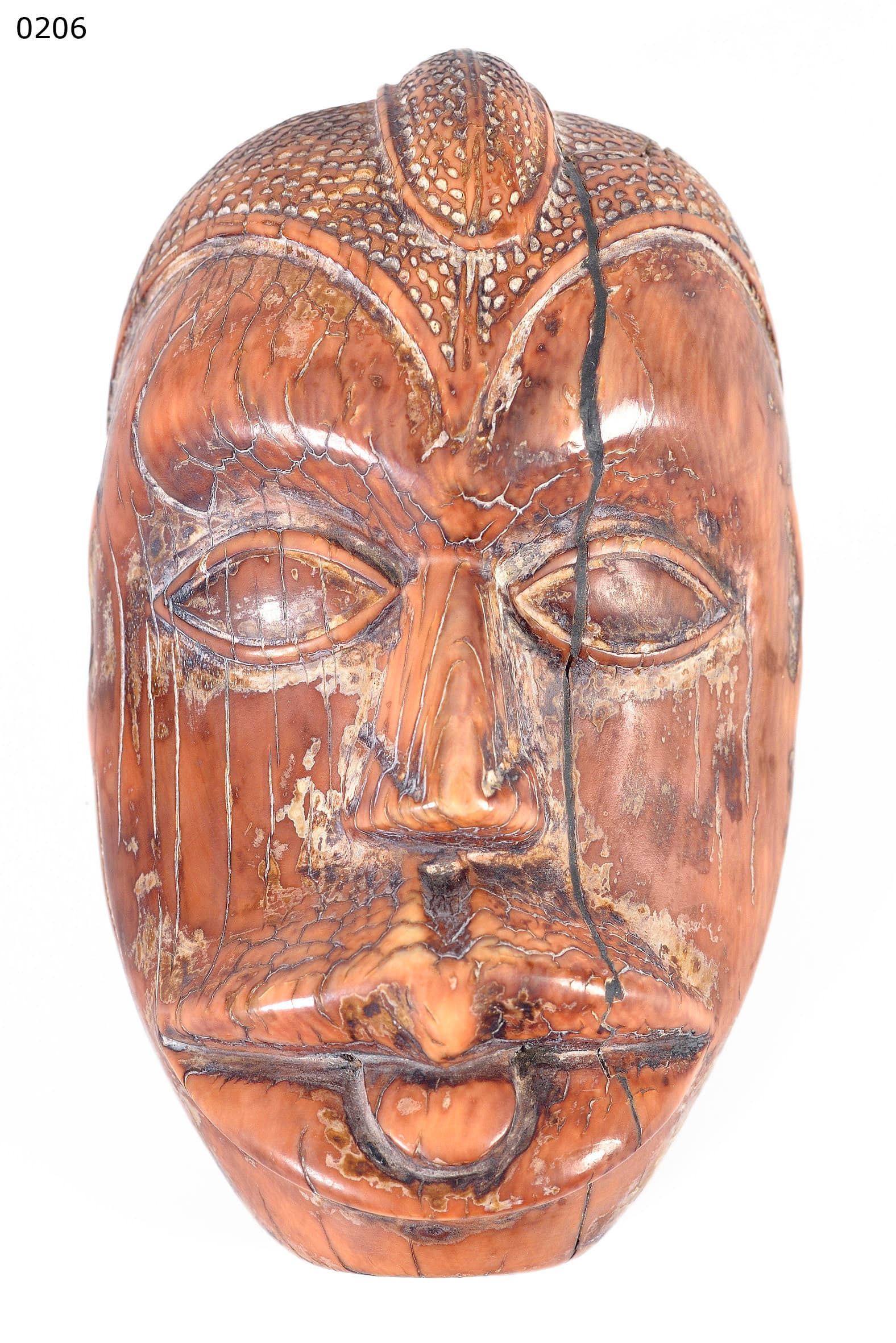
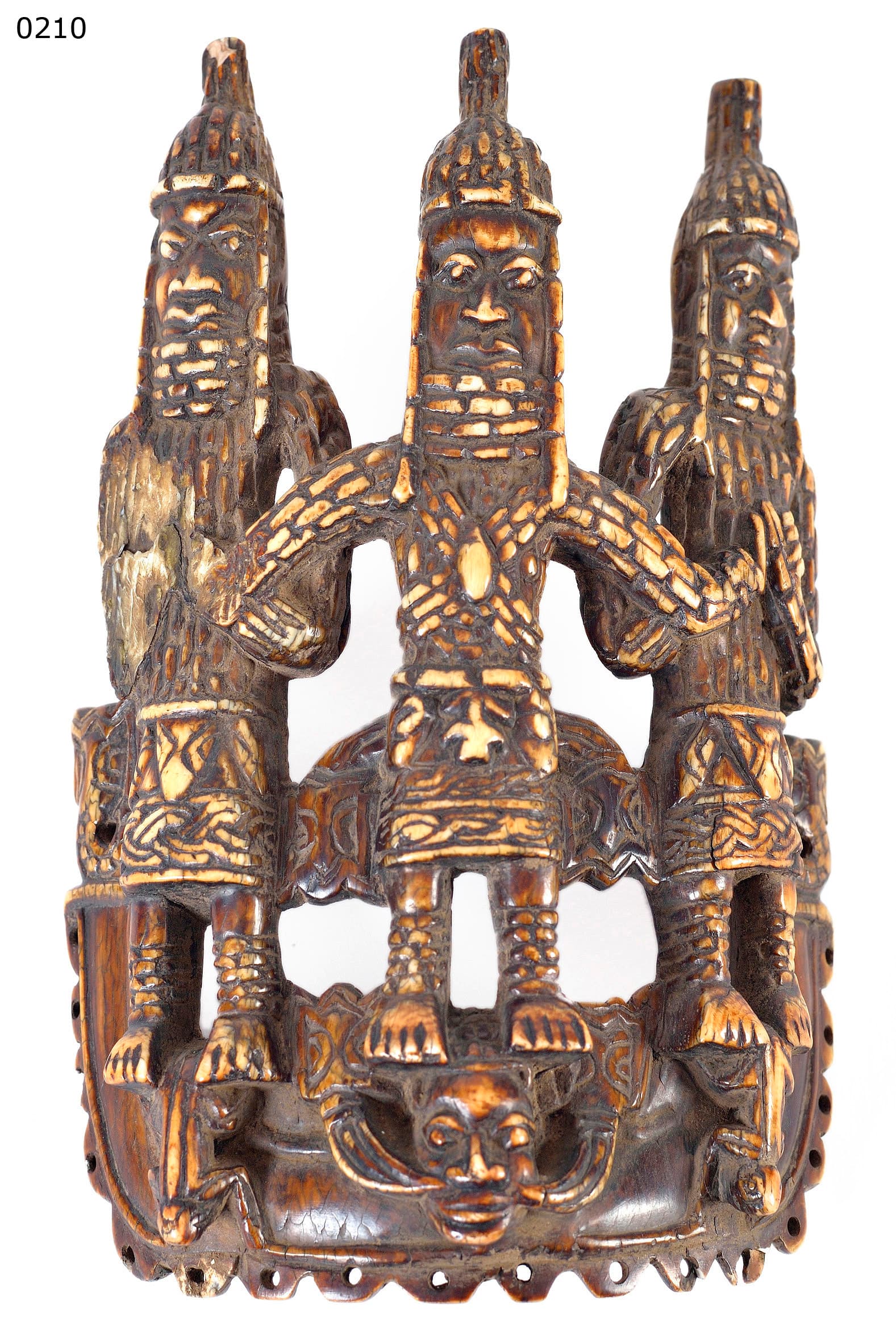
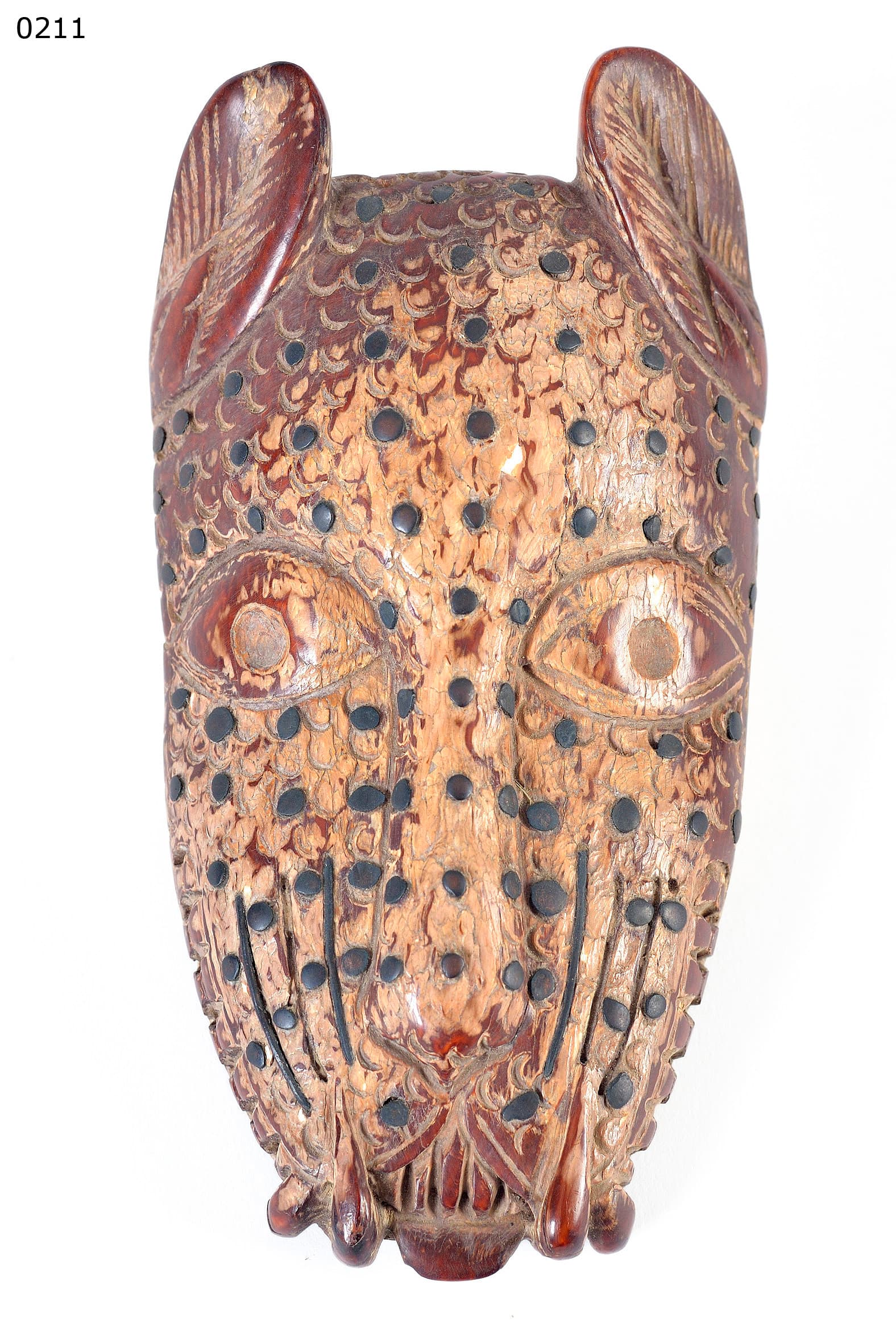
Eine aufwändige Miniatur-Hüftmaske aus Elfenbein (spätes Benin, 11 cm) aus der Edo-Zeit in Nigeria - geschnitzt in der stilisierten Form eines Leopardengesichts, das vollständig mit eingeritzten kreisförmigen Flecken und überlappenden Gesichtsfalten bedeckt ist. Das Elfenbein weist eine reichhaltige, glänzende, dunkelkaramellfarbene Patina mit einem bedeutenden vertikalen Riss in der Mitte auf.
1. Zoomorphe königliche Insignien
Im Gegensatz zu den Hüftmasken mit menschlichem Gesicht wird bei diesem zoomorphen Stück die Kraft des Leoparden direkt genutzt.
- Oba und Ezomo: Wird ausschließlich vom Oba oder hochrangigen militärischen Befehlshabern wie dem Ezomo getragen.
- Amulett der Schnelligkeit und Tödlichkeit: Wenn die Maske bei Festen oder in der Schlacht an der Hüfte getragen wurde, vermittelte sie dem Träger, dass er mit der tödlichen, schnellen und entschlossenen Kraft des Spitzenraubtiers ausgestattet war - und mit dem ausdrücklichen Segen des Oba handelte.
2. Die Beherrschung des Igbesanmwan
Die königlichen Elfenbeinschnitzer bewiesen großes Geschick bei der Anpassung des Leoparden an ein kompaktes, tragbares Format.
- Dichte Ornamente auf kleiner Fläche: Die sich überlappenden Schichten der Schnauze, der Schnurrhaare und der stilisierten übergroßen Augen erforderten eine mikroskopische Kontrolle des Schnitzwerkzeugs.
- Spätes Benin-Horror-Vacui: Die dichte Ornamentik ist charakteristisch für den späten Benin-Hofstil, der dicht gefüllte Oberflächen bevorzugte, um Reichtum und göttliche Autorität zu zeigen.
3. Karamellpatinierung und Elfenbeinabbau
Der Zustand des Elfenbeins spricht für ein hohes Alter.
- Karamell-Oxidation: Die dunkle Farbe ist kein Fleck, sondern das Ergebnis jahrzehntelanger Oxidation, der Aufnahme von Palmöl und des Kontakts mit menschlicher Haut und Messingpanzern.
- Desiccation Fissure: Der massive vertikale Riss ist ein natürlicher Austrocknungsriss - im Laufe eines Jahrhunderts verliert Elefantenelfenbein interne Feuchtigkeit und spaltet sich entlang der Maserung, ein Prozess, der für ein hohes Alter spricht.
Zusammenfassung
Diese Leoparden-Hüftmaske aus Benin gilt als ein herausragendes Zeugnis der nigerianischen Elfenbeinschnitzerei und als eine eindrucksvolle Verkörperung königlicher Macht. Ihre tiefe karamellfarbene Patina und die ausgeprägten Altersspuren sprechen für ein historisch bedeutsames Artefakt des Edo-Hofes.
KI-unterstützt erstellt aus Sammlungsgutachten, Objektfotografie und eigener Recherche, redaktionell geprüft. Fehler sind möglich — Hinweise darauf sind uns willkommen. Zum Verfahren →