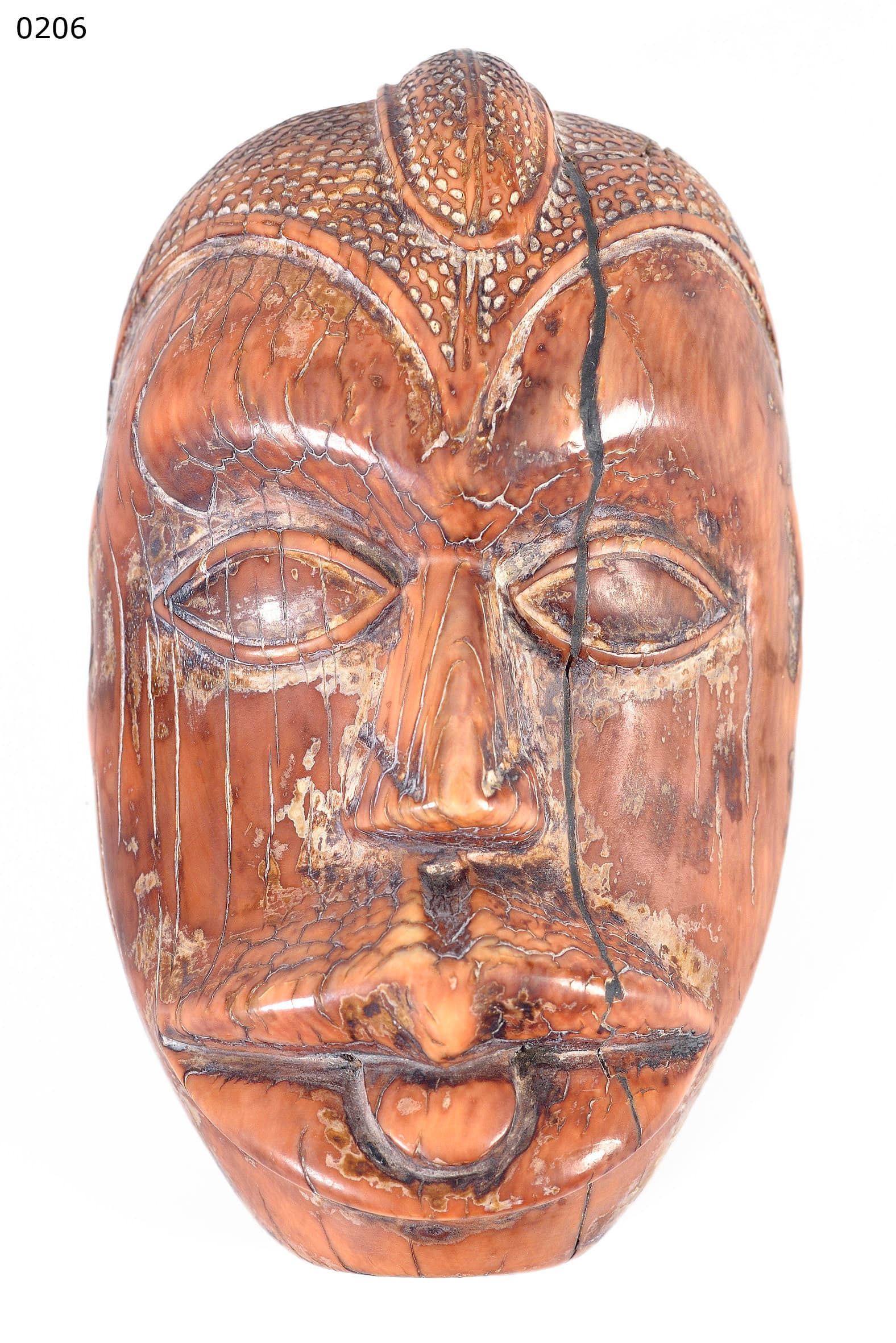
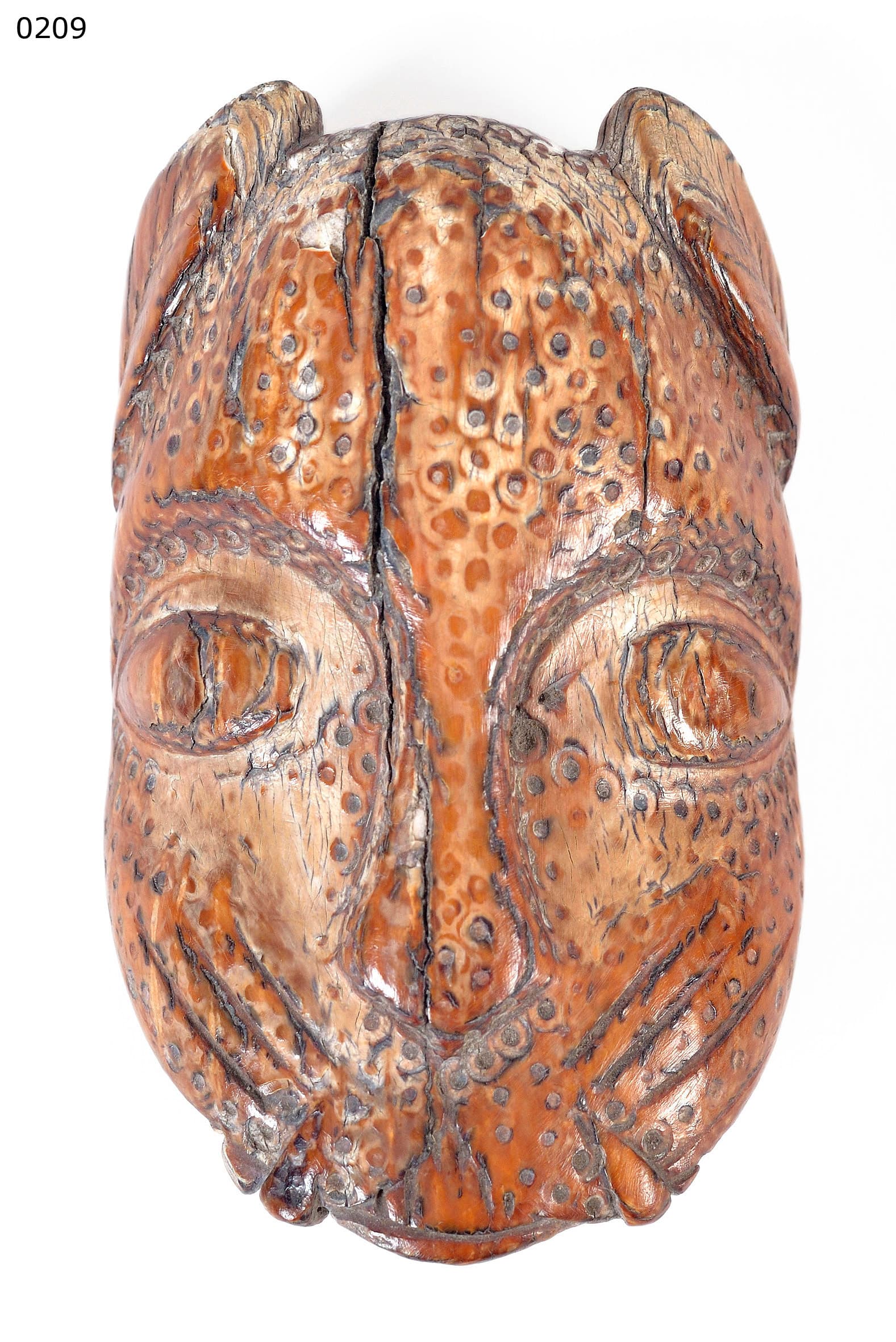
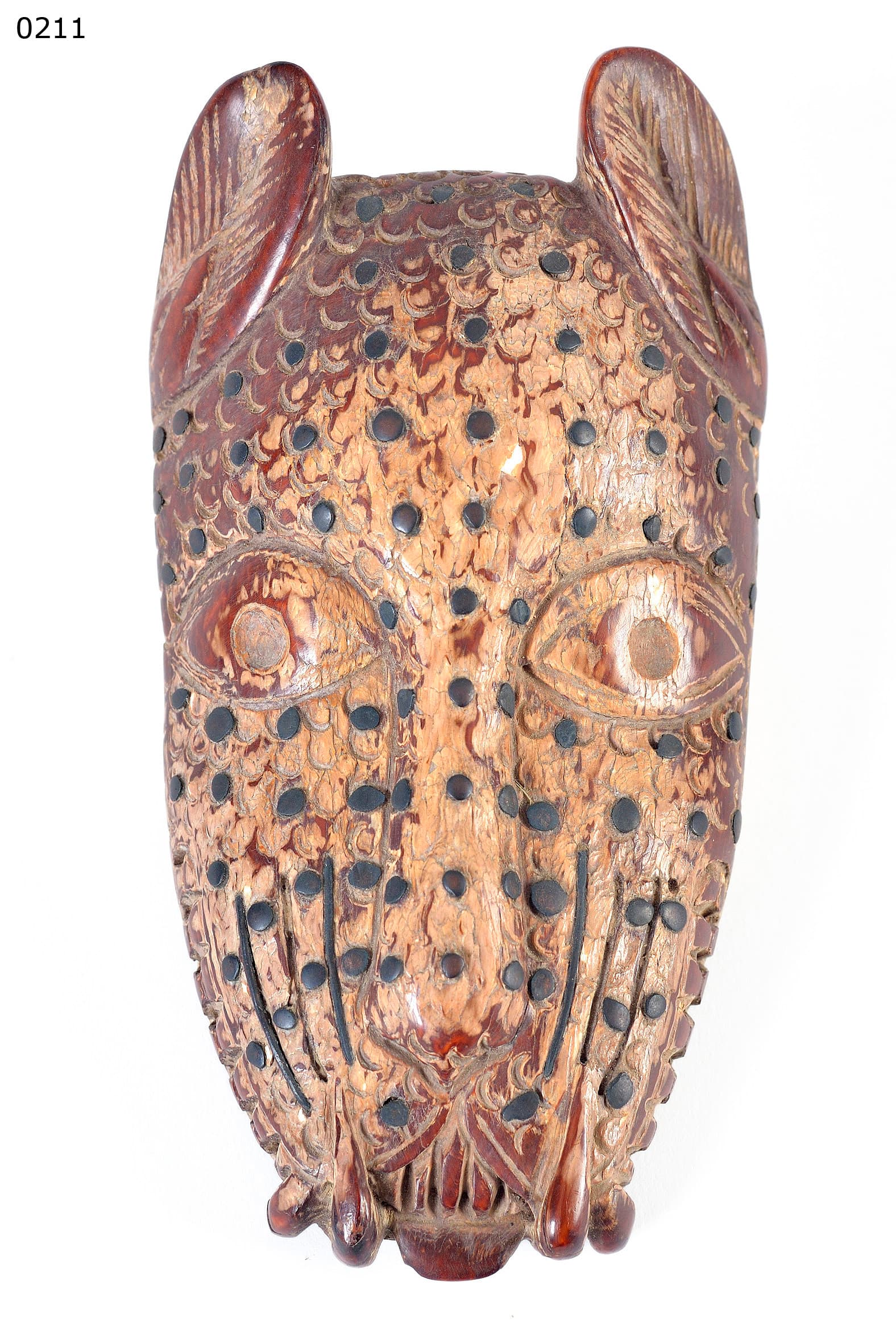
Ein tief geschnitzter Elfenbeinanhänger (spätes Benin, 17 cm) aus der Edo-Zeit in Nigeria - eine zentrale königliche Figur mit gekreuzten Korallenperlen-Baldricks, dicht flankiert von zwei kleineren Begleitfiguren in klassischer Triadenkomposition. Das Elfenbein ist intensiv gealtert und in den Vertiefungen mit mehrfarbiger Oxidation überzogen.
1. Hierarchische Proportion und göttliches Königtum
Dieser Anhänger veranschaulicht perfekt das künstlerische Prinzip der hierarchischen Proportionen der Edo-Zeit.
- Maßstab als Rang: Die zentrale Figur - der Oba oder ein Oberbefehlshaber - ist deutlich größer und in höherem Relief geschnitzt als die beiden unterstützenden Diener.
- Ideologie sichtbar gemacht: Die Konvention unterstreicht visuell die Grundlage des Benin-Königreichs: Der Oba ist das absolute göttliche Zentrum des Universums, das ausschließlich durch die Loyalität und den Dienst seiner Untertanen aufrechterhalten wird.
2. Die Ikonographie der Koralle
Die gekreuzten Baldrics stellen Stränge aus roten Korallenperlen (ikeke) dar, die streng vom Thron kontrolliert werden.
- Geschenk des Olokun: Man glaubte, dass die Koralle aus dem Palast des Olokun (Gott des Meeres) stammte und den Träger mit göttlichem Reichtum und spirituellem Schutz versorgte.
- Markierung der Schirmherrschaft: Häuptlinge trugen solche Anhänger an der Brust oder der Hüfte, um ihre königliche Schirmherrschaft und ihre Integration in die heilige Hierarchie des Hofes anzukündigen.
3. Oxidation und tiefe Schnitzerei
Die Ausführung der Reliefschnitzerei ermöglicht eine ausgeprägte multitonale Patinierung, die eine Herkunft aus dem späten Benin nahelegt.
- Warm getönte Höhen: Die Höhen der Figuren wurden durch jahrelange Handhabung glatt gerieben und zu einem warmen gelben Farbton poliert.
- Schokolade Vertiefungen: Die tiefen unterschnittenen Vertiefungen haben Jahrzehnte von Staub, Salbungsöle und natürliche Oxidation in eine dunkle schokoladenbraune gesammelt - eine scharfe Patina Kontrast, der Generationen benötigt, um natürlich zu entwickeln.
Zusammenfassung
Dieser Anhänger aus Benin-Elfenbein ist eine detailreiche Darstellung der hierarchischen Hof-Ikonographie und zeigt die Autorität der Edo-Monarchie. Die komplizierten Korallenperlendetails und die charakteristische, mehrfarbige Alterspatina unterstreichen seine historische Bedeutung.
KI-unterstützt erstellt aus Sammlungsgutachten, Objektfotografie und eigener Recherche, redaktionell geprüft. Fehler sind möglich — Hinweise darauf sind uns willkommen. Zum Verfahren →