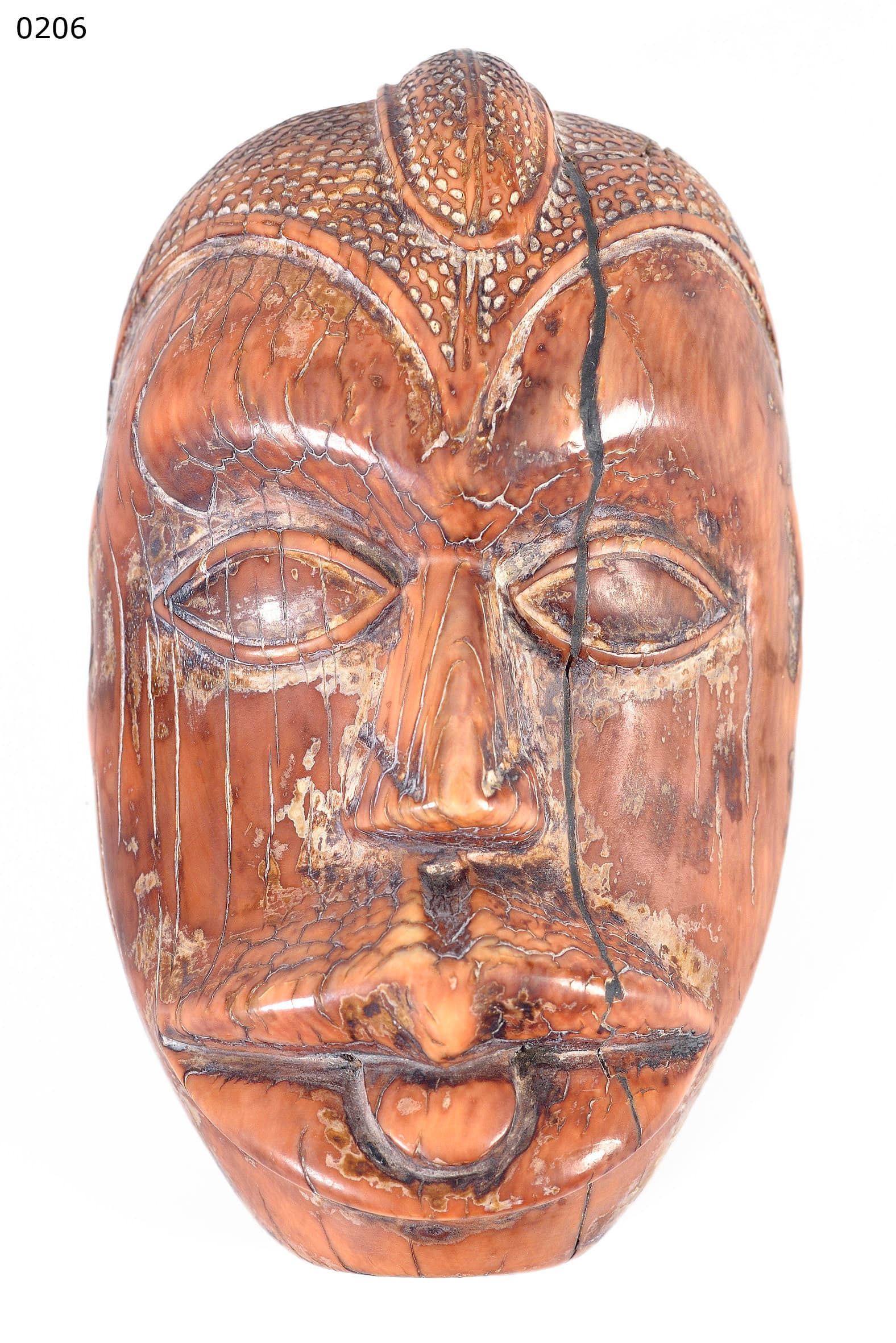
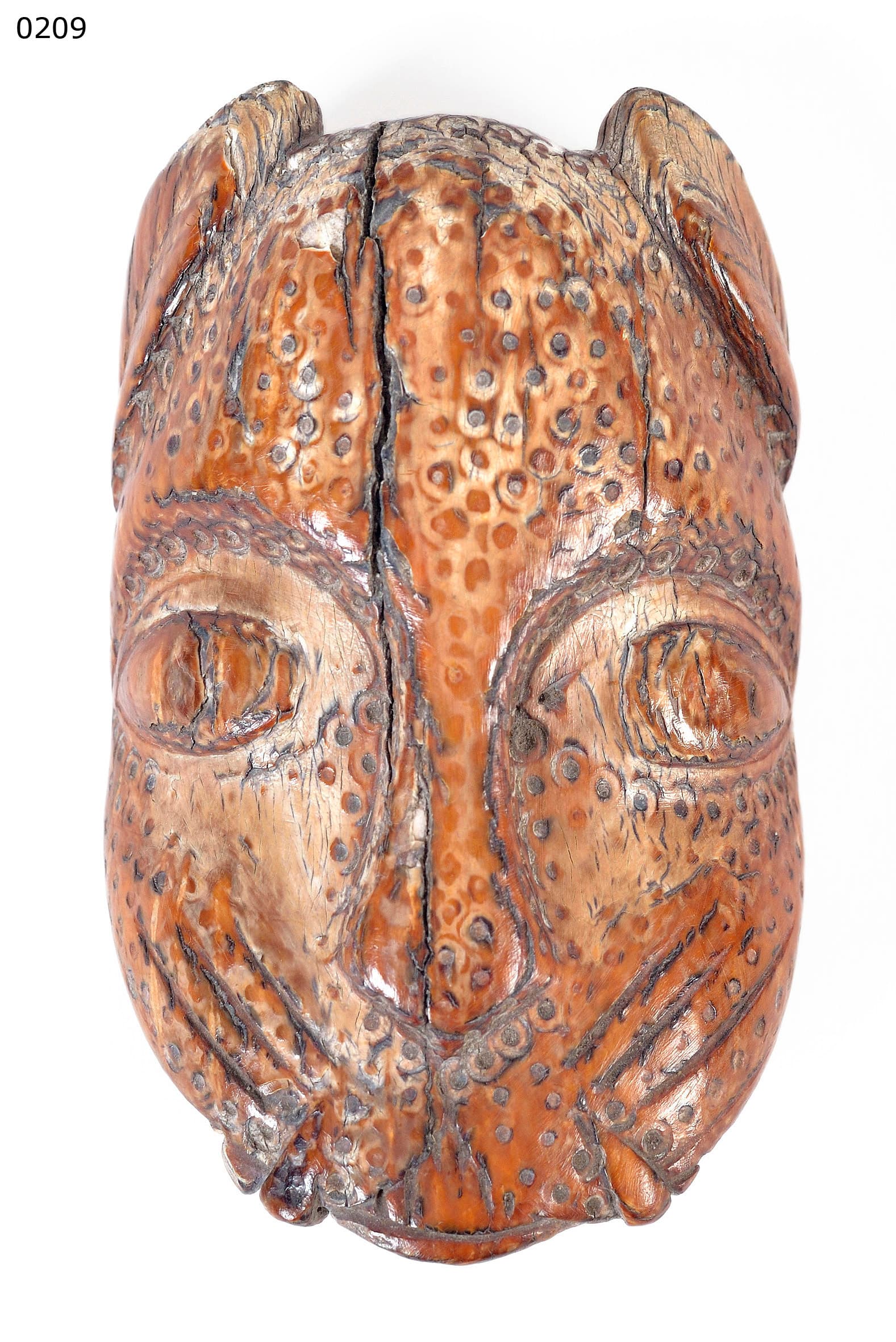
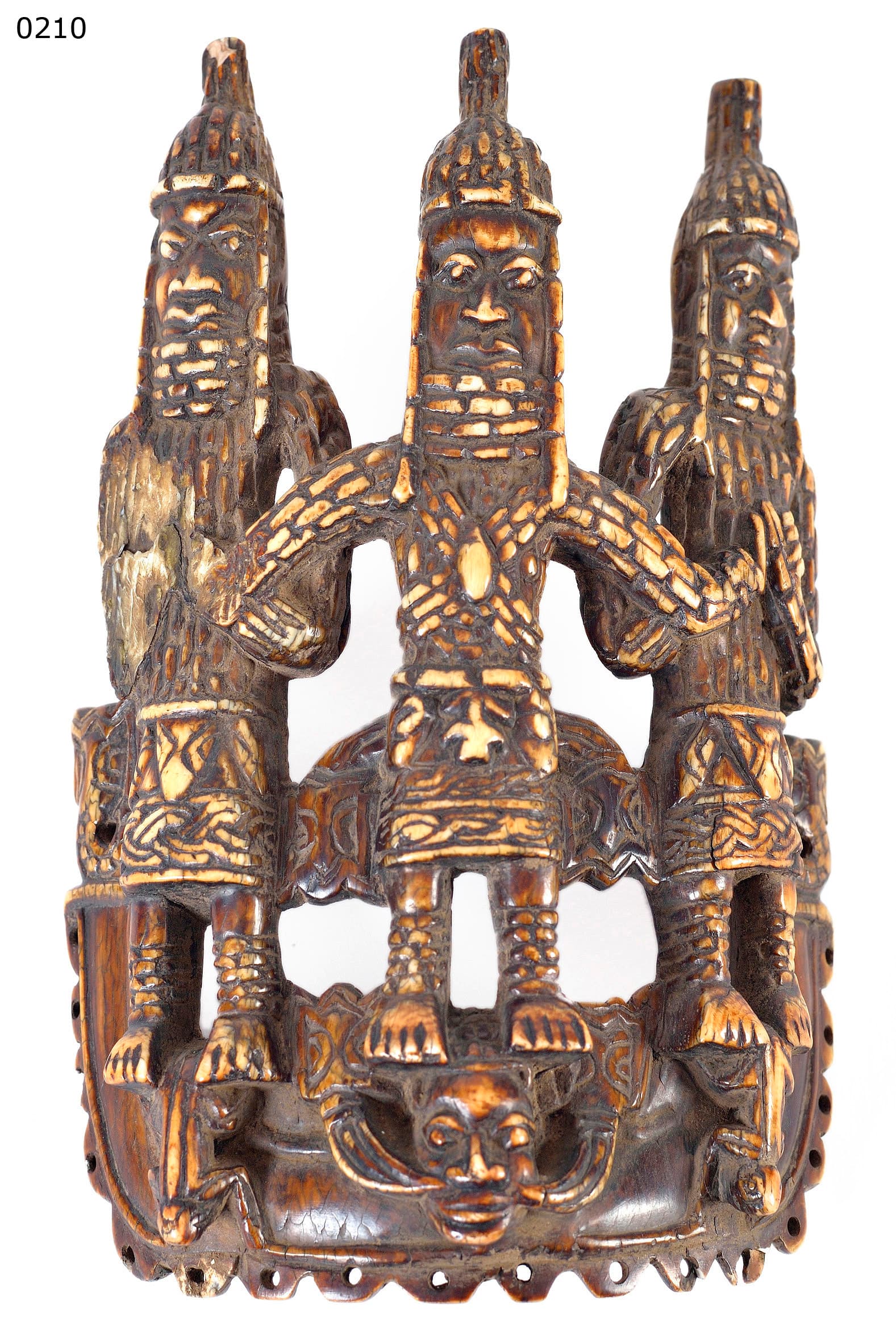
Eine Miniatur-Leopardenmaske aus Elfenbein (stilistisch spätes Benin, 15 cm) aus der Edo-Tradition in Nigeria. Das Leopardengesicht ist mit ausdrucksstarken Augen und entblößten Reißzähnen dargestellt, die Flecken sind als präzise eingelegte dunkle Stifte ausgeführt (wahrscheinlich aus Holz oder Kokosnussschalen), das Elfenbein ist tief oxidiert und hat einen honigbraunen Farbton.
1. Der Leopard als Avatar des Oba
In der vielschichtigen Bildsprache des Benin-Königreichs gilt der Leopard als ein zentrales Symbol des Oba (Königs).
- Parallele Souveränität: Dem Verständnis nach regiert der Leopard den ungezähmten Wald in Analogie zur Autorität, mit der der Oba das Edo-Reich regiert.
- Igbesanmwan-Meisterschaft: Dieses der königlichen Elfenbeinschnitzergilde zugeschriebene Stück adaptiert die Augen, die Reißzähne und das gefleckte Fell des Spitzenraubtiers zu einem verdichteten geometrischen Emblem des traditionellen Königtums.
2. Amulettischer Hofschmuck
Diese Miniaturmasken werden in der Forschung als wichtige Bestandteile der zeremoniellen Insignien des Hofes und nicht nur als Zierde angesehen.
- Aufhängung an der linken Hüfte: Sie wurden traditionell vom Oba und hochrangigen Befehlshabern wie dem Ezomo an der linken Hüfte oder am Gürtel getragen.
- Schützendes Kraftfeld: Man glaubte, dass die Kombination aus langlebigem Elefantenelfenbein und Leopardensymbolik ein schützendes Feld erzeugte, das Unheil ablenkte - und in der Schlacht oder beim jährlichen Igue-Fest Autorität ausstrahlte.
3. Einlegetechnik und Oxidation von Elfenbein
Die eingelegten Punkte zeugen von beachtlicher technischer Raffinesse.
- Fest sitzende Stifte: Präzise Einlegearbeiten aus dunklem Holz oder Kokosnussschalen gelten als eine anspruchsvolle Edo-Spezialität - jeder Stift passte genau in eine von Hand gebohrte Aussparung.
- Jahrhundert-Plus-Oxidation: Die tief glänzende honigbraune Farbe resultiert aus jahrzehntelanger Oxidation, rituellem Palmöl und direktem Hautkontakt - eine organische Patinierung, die auf einen langjährigen, natürlichen Alterungsprozess hindeutet.
Zusammenfassung
Diese Leopardenmaske aus Elfenbein mit Intarsien gilt als ein ausdrucksstarkes Beispiel für die Kunst der Edo und bringt die traditionelle Autorität des Benin-Hofes anschaulich zum Ausdruck. Ihre präzise Einlegetechnik und die tief honigbraune Oxidation sprechen für ein historisch bedeutendes Objekt.
KI-unterstützt erstellt aus Sammlungsgutachten, Objektfotografie und eigener Recherche, redaktionell geprüft. Fehler sind möglich — Hinweise darauf sind uns willkommen. Zum Verfahren →