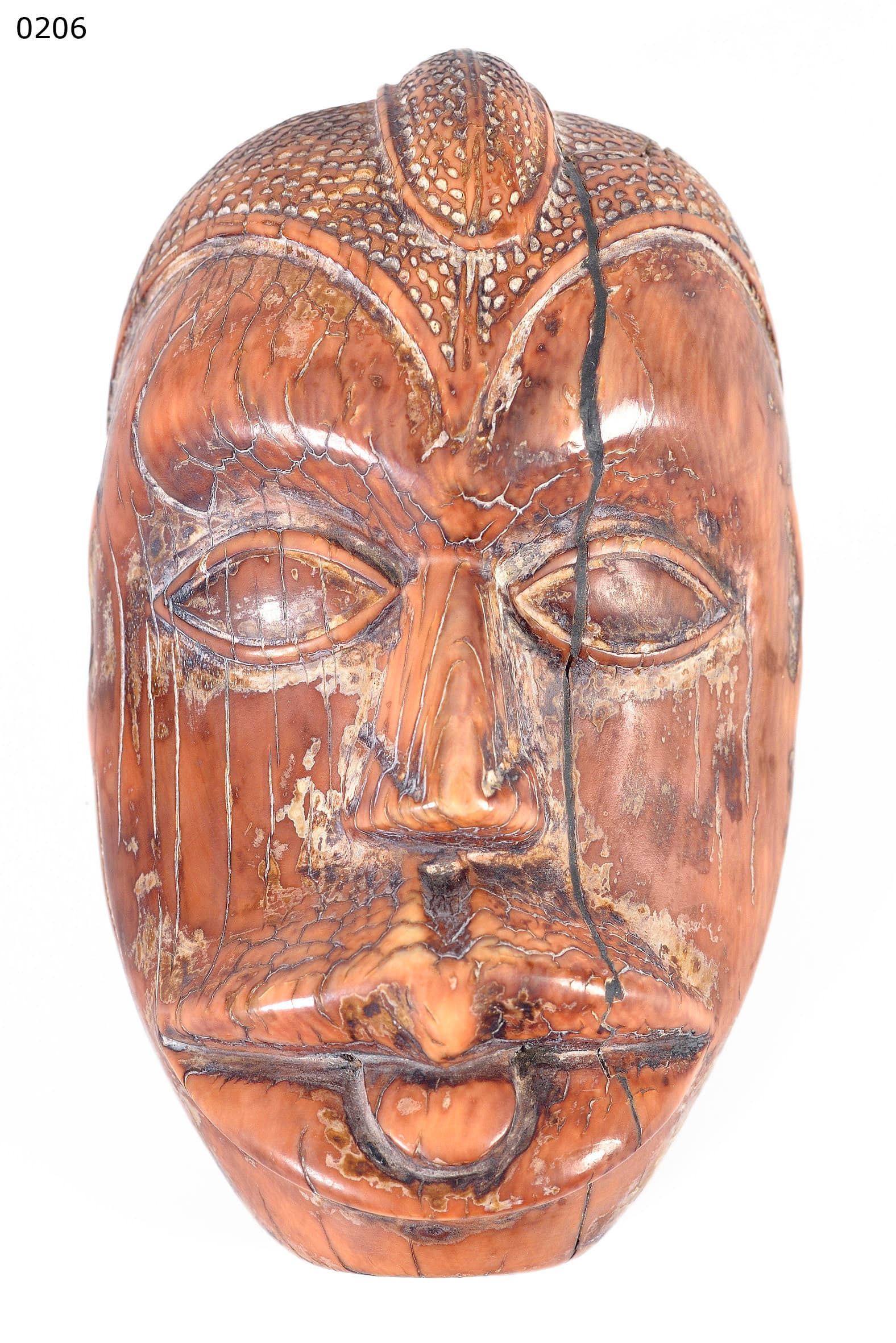
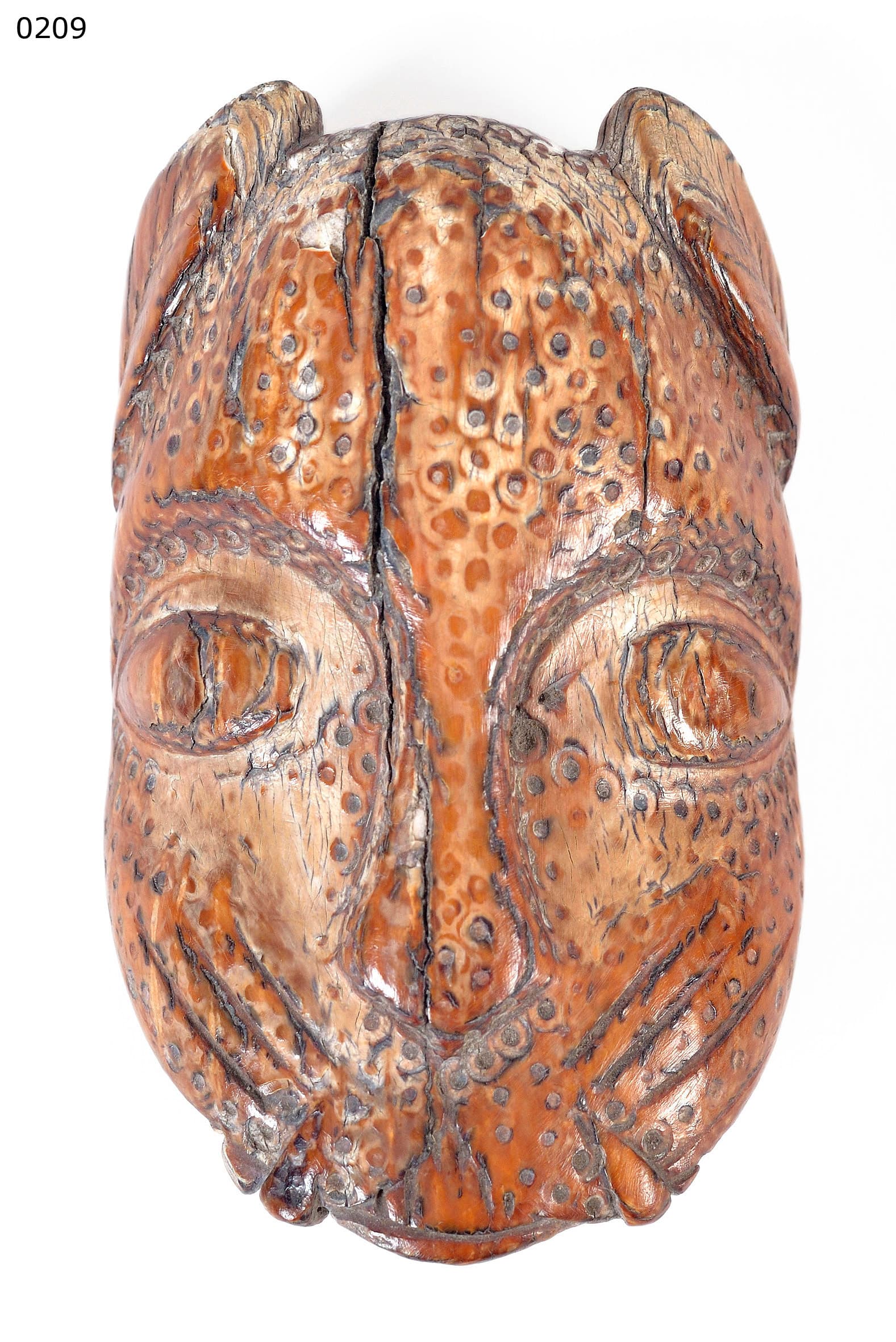
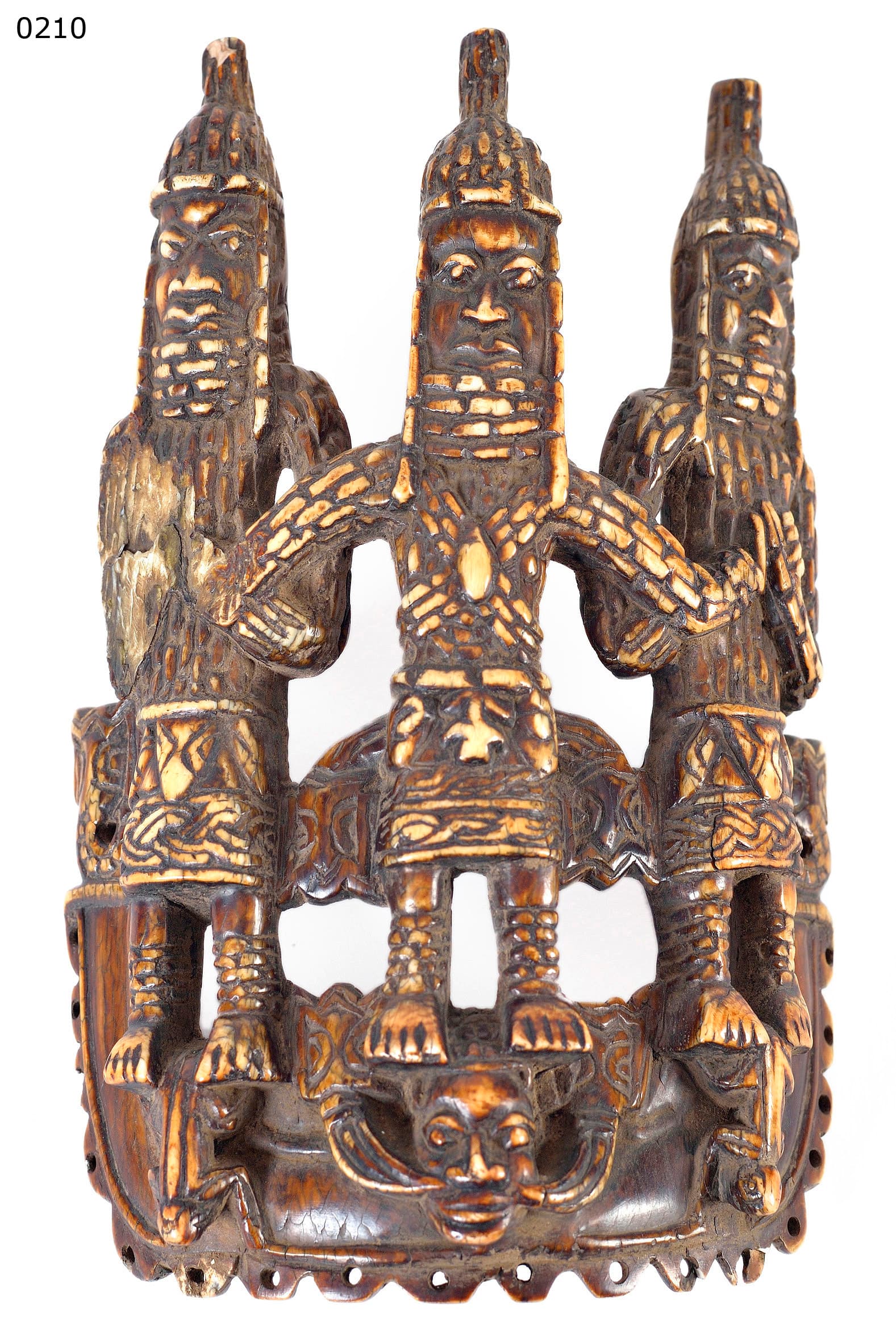
Eine Miniatur-Leopardenmaske aus Elfenbein (spätes Benin, 13 cm) aus der Edo-Zeit in Nigeria - das Leopardengesicht ist mit gebohrten, erhabenen, kreisförmigen Motiven bedeckt, die die Flecken darstellen. Das Elfenbein ist in einem reichen, honigbraunen Glanzton gealtert.
1. Tupfen als gebohrte Rosetten
Im Gegensatz zur Variante mit eingelegtem Pflock sind die Flecken des Leoparden bei dieser Maske als gebohrte, erhabene kreisförmige Motive dargestellt.
- Ganzheitlich geschnitzte Oberfläche: Das gesamte Muster ist im Elfenbein selbst ausgeführt - es wurde kein Fremdmaterial eingefügt.
- Licht und Schatten: Die konzentrischen, erhabenen Rillen fangen das Licht anders ein als flache Intarsien und verleihen der Maske eine lebendigere Oberfläche, wenn sie gegen die dunklen Gewänder eines Edo-Häuptlings getragen wird.
2. Das kompakte Hofamulett
Mit 13 cm ist dies die kleinere der beiden Benin-Leoparden-Hüftmasken.
- Verwendung in niedrigeren Rängen: Die kleinere Größe entspricht oft den etwas niedrigeren Rängen in der Hofhierarchie, obwohl das Elfenbeinmaterial den Besitz auf die königliche Umgebung beschränkt.
- Gleiche Schutzfunktion: Trotz der geringeren Größe ist die amulettische Logik identisch - die Ikonographie von Elefant und Leopard erzeugt immer noch ein Kraftfeld gegen bösartige Magie.
3. Späte Benin-Honig-Patina
Die Farbe und der Zustand des Elfenbeins bestätigen die Datierung in die späte Benin-Zeit.
- Reiche Karamell-Sättigung: Jahrzehntelange Salbung mit Palmöl und Hautkontakt haben das ursprünglich reinweiße Elfenbein in einen tiefen Karamell-Honig verwandelt.
- Age-Stabilität: Die Oberfläche zeigt keine modernen Schwabbeln oder Bleichen - die Patina ist die komprimierte Aufzeichnung eines Jahrhunderts von Hof Gebrauch.
Zusammenfassung
Diese Maske ist die kleinere der beiden Benin-Leoparden-Elfenbein-Paare und vermittelt die gleiche königliche Ikonographie durch ein anderes technisches Vokabular. Die gebohrten Rosettenflecken und die tiefe honigfarbene Oxidation kennzeichnen sie als authentisches Hofamulett aus der späten Benin-Periode.
KI-unterstützt erstellt aus Sammlungsgutachten, Objektfotografie und eigener Recherche, redaktionell geprüft. Fehler sind möglich — Hinweise darauf sind uns willkommen. Zum Verfahren →