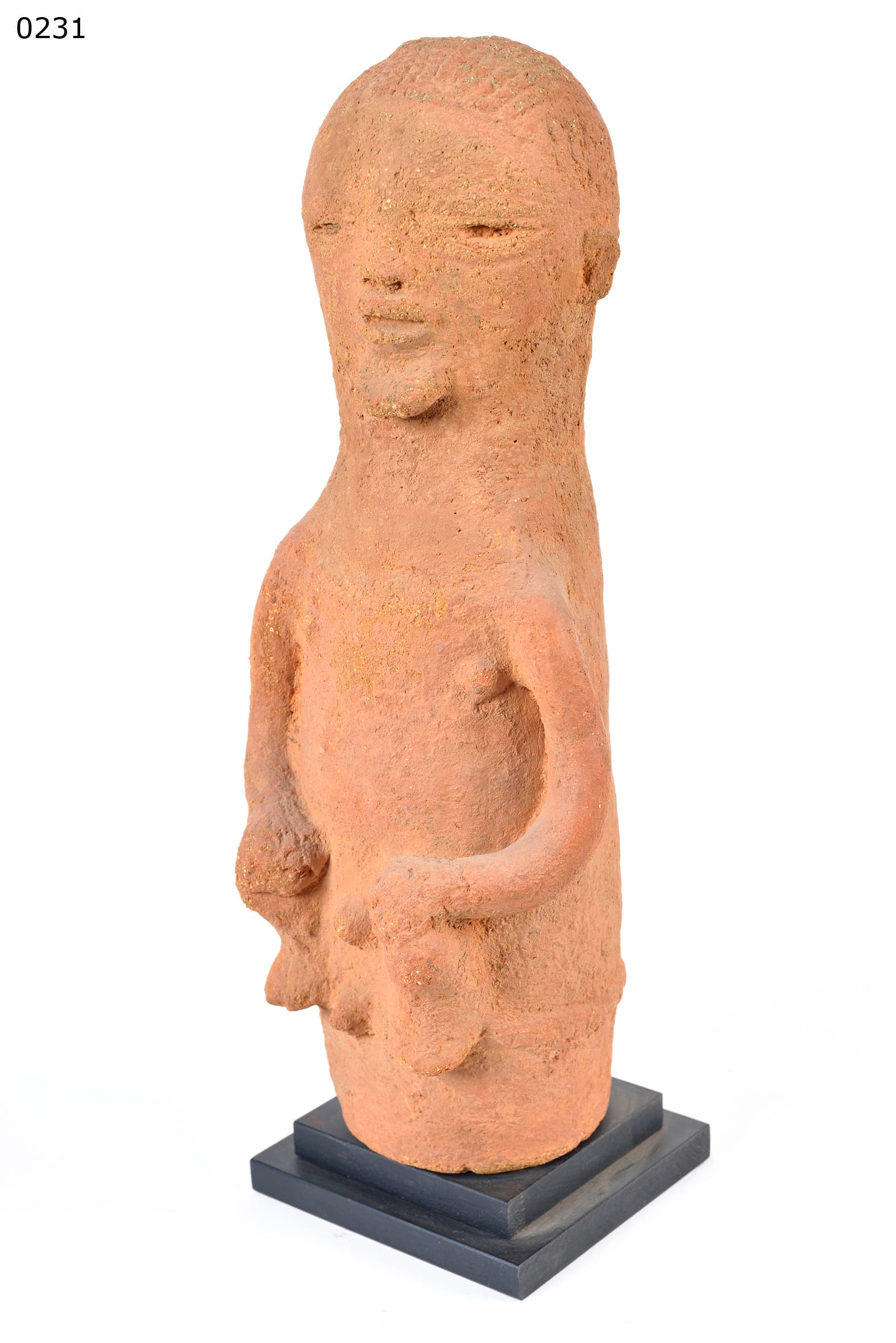
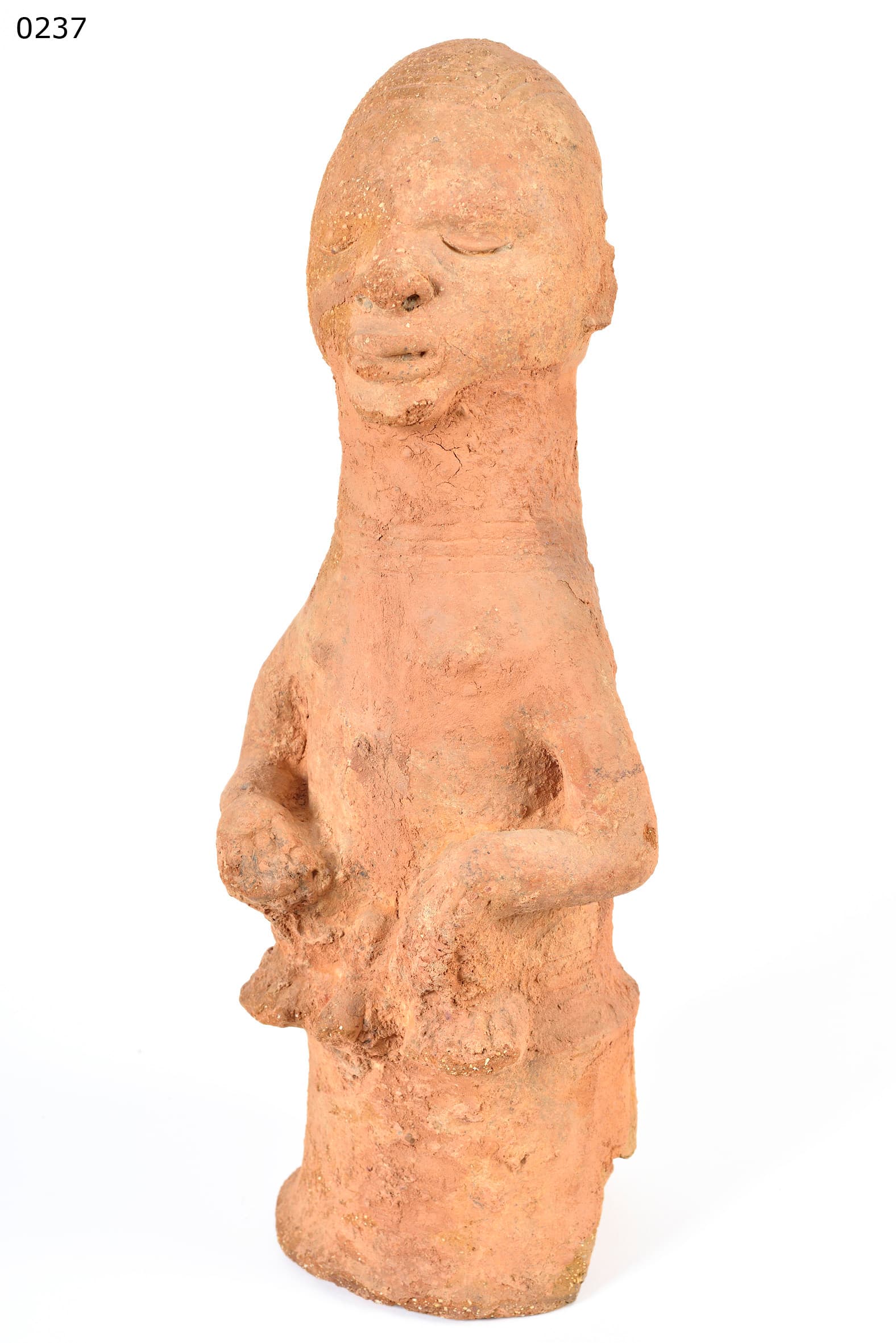
Eine antike, sehr röhrenförmige männliche Terrakotta-Figur (ca. 2.000 Jahre alt, 50 cm) aus Katsina in Nigeria - ein sanft gewölbter Kopf mit minimalen Gesichtseinschnitten, die Arme sind in hohem Relief dargestellt und falten sich eng über den Bauch. Der dichte, rötliche Ton ist stark verwittert und weist tiefe Grübchen und natürliche Kalkablagerungen auf.
1. Katsina Eisenzeit Abstraktion
Die Terrakotta-Tradition von Katsina (oder Katsina Ala) ist zeitgleich mit der Nok- und Sokoto-Kultur (ca. 500 v. Chr. - 200 n. Chr.).
- Extreme röhrenförmige Geometrie: Gefeiert für eine fast modernistische röhrenförmige Abstraktion - der menschliche Körper reduziert auf einen reinen Zylinder.
- Minimiertes Gesicht: Die Gesichtszüge sind auf einfache Einbuchtungen reduziert, während die über den Bauch gelegten Arme das primäre skulpturale Relief bilden - innere Beherrschung und ewige Ruhe werden gegenüber der äußeren Beschreibung betont.
2. Eingeschlossenheit und Ruhe der Ahnen
Die geschlossene, in sich geschlossene Haltung mit gekreuzten Armen ist ein wiederkehrendes Motiv in alten nigerianischen Terrakotten.
- Gestus der Endgültigkeit: Wird häufig als Geste der Endgültigkeit, des Todes oder der ewigen Meditation gedeutet.
- Elite-Grabbeigaben: Die Figuren wurden wahrscheinlich in Elitegräbern oder unterirdischen Schreinen beigesetzt - die strenge röhrenförmige Geometrie fängt den Geist des Verstorbenen ein und schließt ihn auf ewig ein und fungiert als symbolischer Anker für eine Kultur, die in die Eisenzeit übergeht.
3. Taphonomische Indizien für ein hohes Alter
Die Terrakotta weist Merkmale auf, die auf ein Alter von rund 2.000 Jahren hindeuten, und zeigt deutliche Spuren umweltbedingter Alterung.
- Abgeriebene Brennhaut: Die Oberfläche hat den gesamten ursprünglichen Brennschlicker verloren und weist eine stark strukturierte, grobe Matrix auf.
- Kalzifizierte Vertiefungen: Tiefe unregelmäßige Grübchen und blasse kalzifizierte Bodenablagerungen, die dauerhaft in die Vertiefungen der gekreuzten Arme eingeschmolzen sind, sprechen für ein hohes archäologisches Alter.
Zusammenfassung
Diese Terrakottafigur aus Katsina ist ein faszinierendes Beispiel für die antike röhrenförmige Abstraktion und ein Relikt aus der frühen Eisenzeit Nigerias. Ihre hochgradig geschlossene Körperhaltung und die ausgeprägten, auf ein hohes Alter hindeutenden Verwitterungsspuren machen sie zu einem außergewöhnlichen historischen Artefakt.
KI-unterstützt erstellt aus Sammlungsgutachten, Objektfotografie und eigener Recherche, redaktionell geprüft. Fehler sind möglich — Hinweise darauf sind uns willkommen. Zum Verfahren →