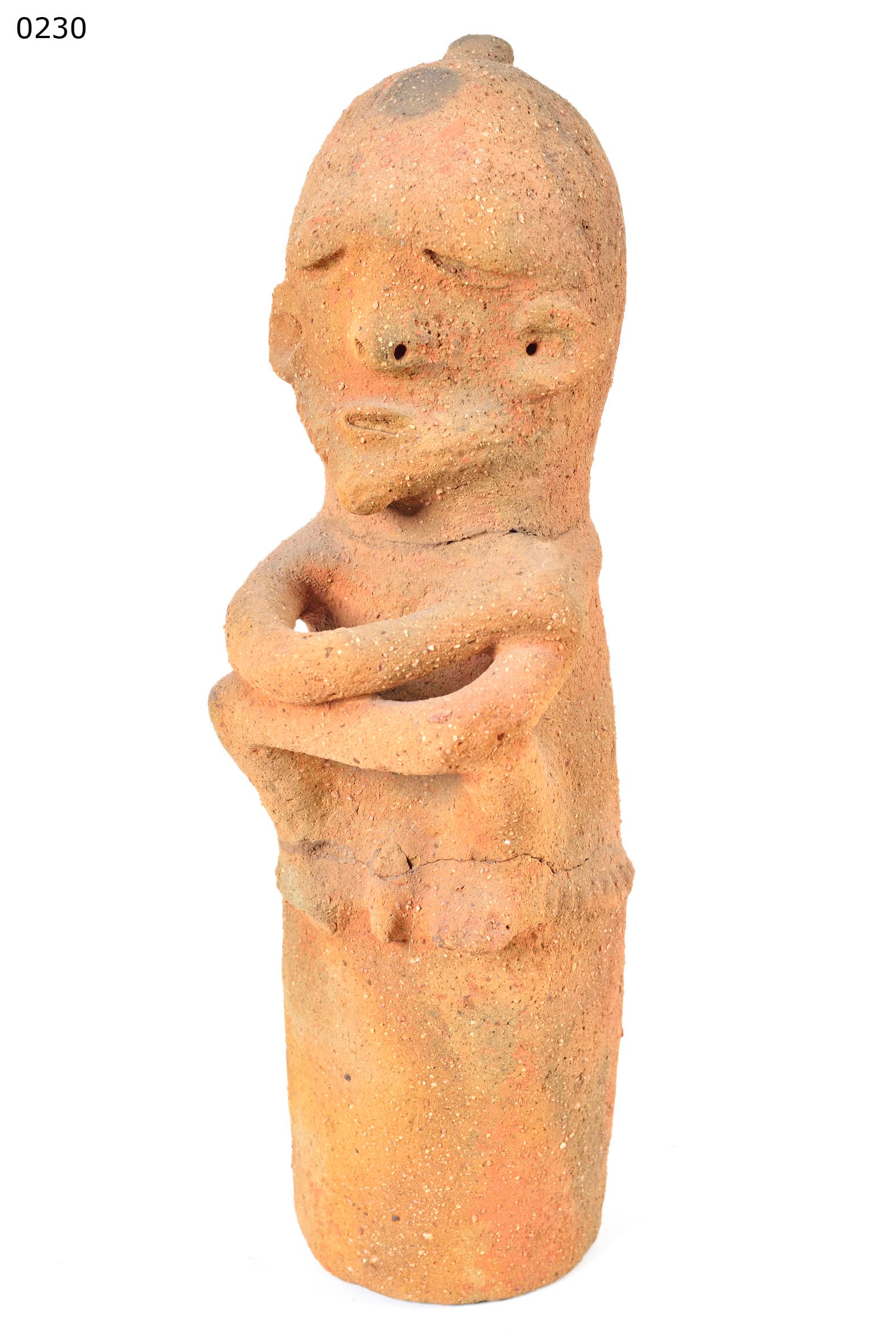
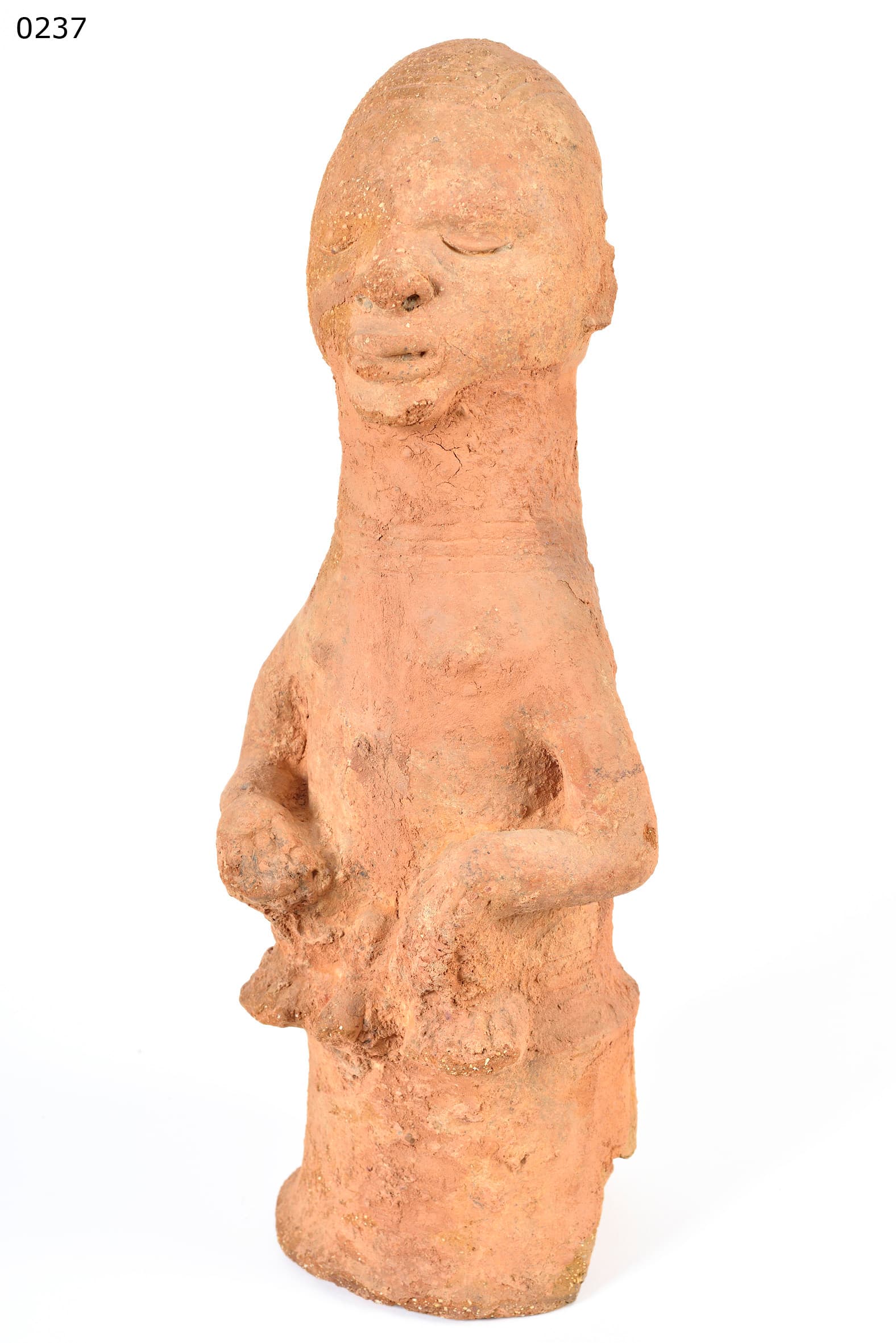
Eine zweite antike röhrenförmige Katsina-Terrakotta (ca. 2.000 Jahre alt, 48 cm) aus Nigeria - stilisiertes Männchen mit sanft gewölbtem Kopf, minimalen Gesichtseinschnitten, hochreliefierten Armen, die sich eng über den Bauch falten. Der dichte rötliche Ton ist stark verwittert und weist tiefe Grübchen und natürliche Verkalkungen auf.
1. Ein Werkstatt-Geschwisterpaar
Mit 48 cm ist diese Figur das nahe Gegenstück zum 50 cm großen Katsina-Männchen (Art. 230).
- Geschwisterliche Herkunft: Die stilistische Identität lässt vermuten, dass beide Stücke aus derselben Werkstatt oder demselben Zeremonialprogramm stammen - vielleicht wurden sie für dasselbe Elitegrab in Auftrag gegeben.
- Kanonische Proportionen: Der röhrenförmige Zylinder, der gewölbte Kopf und die eng über dem Bauch gekreuzten Arme sind die diagnostischen Merkmale, die das Katsina-Idiom definieren.
2. Eingeschlossenheit multipliziert
Gepaarte Einschließungsfiguren verstärken die Kosmologie des Einzelbeispiels.
- Kollektive Verankerung: Wo eine Figur einen einzelnen Geist verankert, stellen zwei gemeinsam agierende Figuren eine dauerhaftere Form der angestammten Eingrenzung dar - eine doppelte Garantie gegen geistiges Abdriften.
- Gestik der Endgültigkeit: Die gekreuzten Arme signalisieren weiterhin Tod, Meditation oder ewige Ruhe - verschlossene Haltungen, die ein geistiges Entkommen verbieten.
3. Identische Chemie des Alters
Die Oberflächenstratigraphie spiegelt fast genau die des 50 cm großen Geschwisters wider.
- Gleiche Bodensignatur: Die kalzifizierten Ablagerungen, die in den Gesichtsvertiefungen und entlang der Arme verschmolzen sind, weisen Übereinstimmungen mit der gepaarten Figur auf – was für einen gemeinsamen Bestattungskontext spricht.
- Zwei Jahrtausende nahegelegt: Tiefgreifende Lochfraßspuren, aufgelöster Schmelzschlicker und freiliegende körnige Matrix stützen die Annahme eines eisenzeitlichen archäologischen Ursprungs.
Zusammenfassung
Diese 48 cm große Figur ist das Gegenstück zu dem größeren Katsina-Männchen in der Sammlung und weist die gleiche eisenzeitliche Ikonographie und taphonomische Signatur auf. Zusammen verweisen die beiden auf eine kohärente alte nigerianische Bestattungspraxis.
KI-unterstützt erstellt aus Sammlungsgutachten, Objektfotografie und eigener Recherche, redaktionell geprüft. Fehler sind möglich — Hinweise darauf sind uns willkommen. Zum Verfahren →