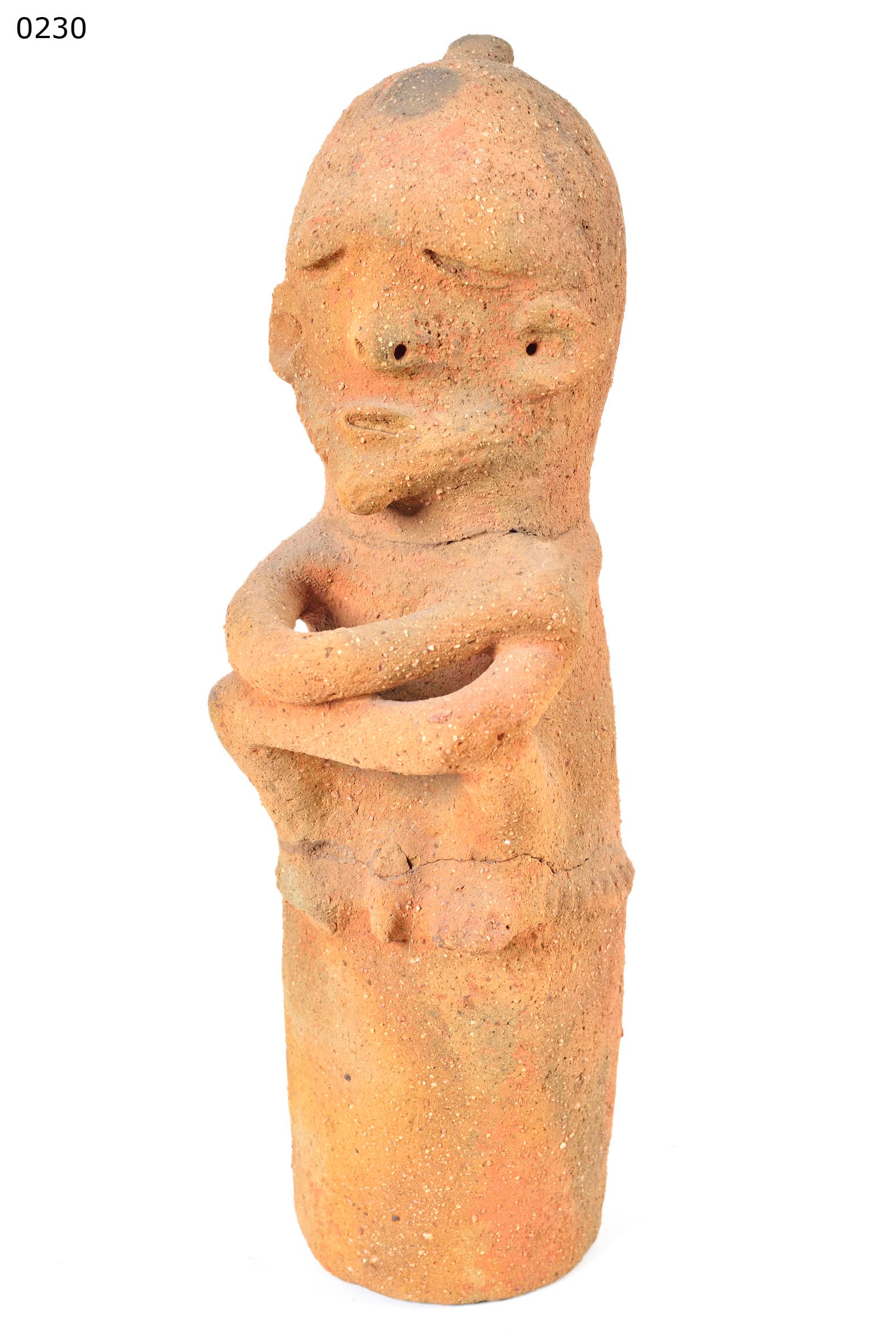
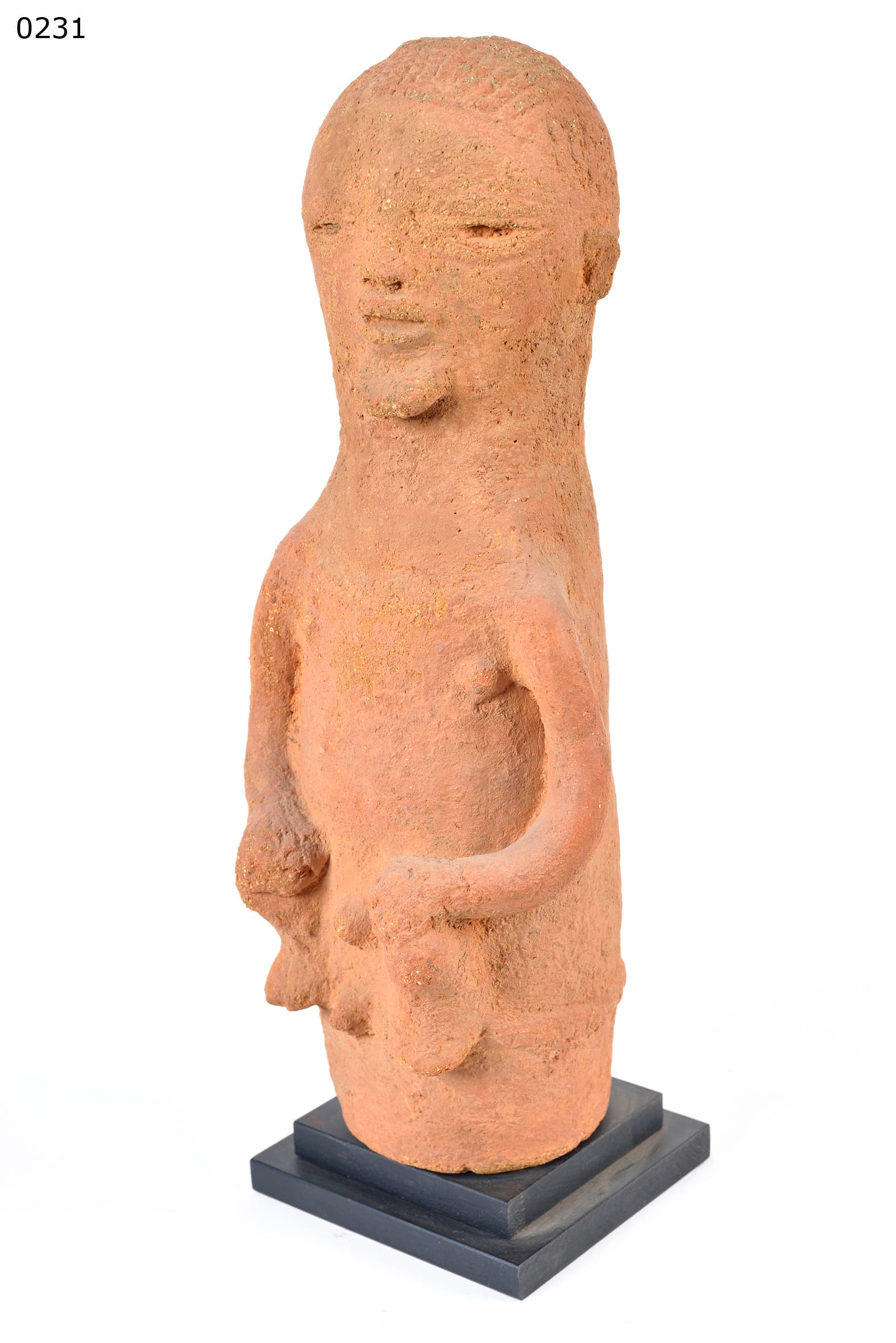
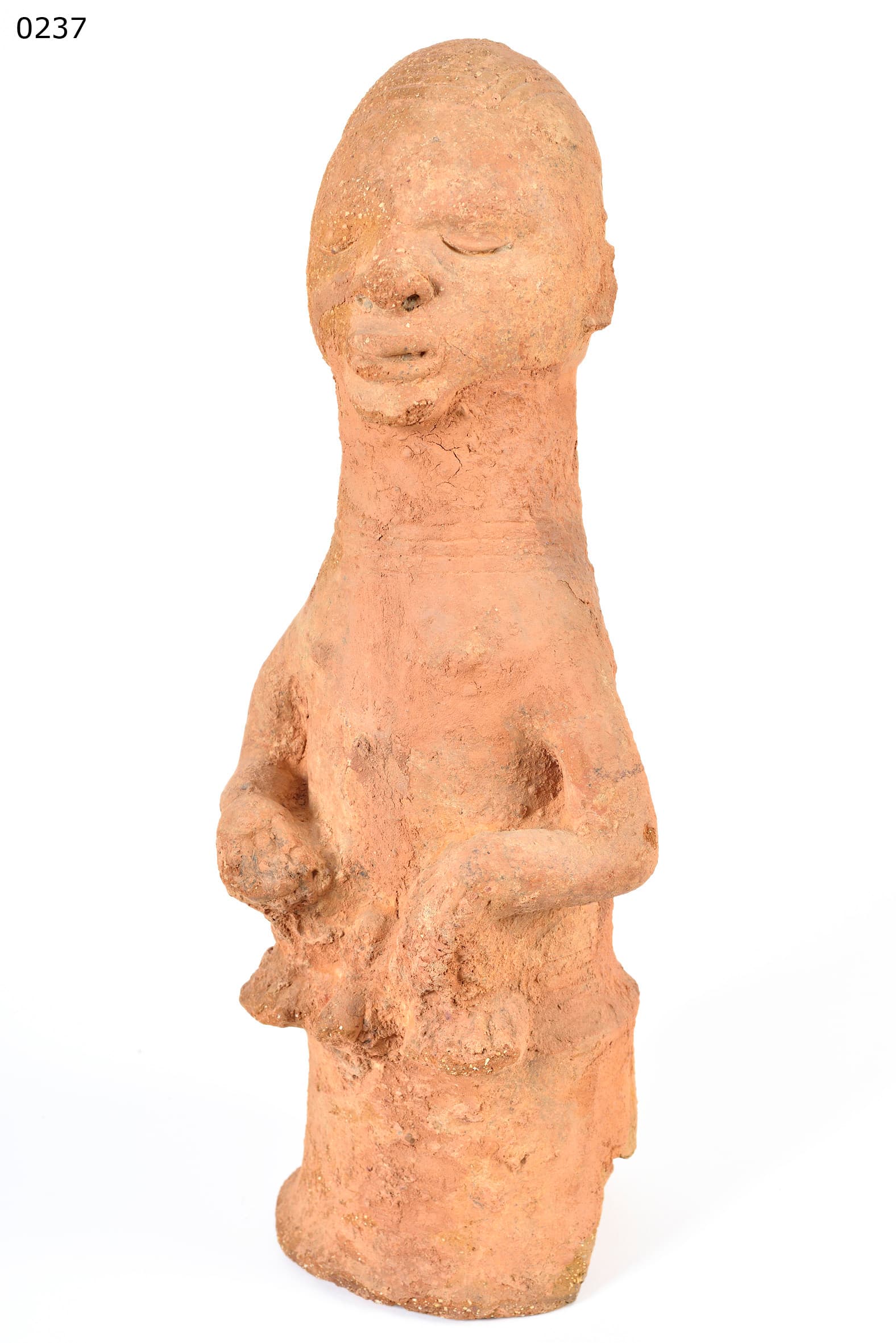
Eine hochkomplexe zweiköpfige Katsina-Janus-Figur (ca. 2.000 Jahre alt, 52 cm) aus Nigeria - sitzend auf einem ausgestellten Sockel, die Arme seitlich abstehend, die dichte rötliche Terrakotta stark abgeschliffen, stark angefressen und stark mit heller Erde verkrustet.
1. Janus-Ikonographie in der Antike
Dieses Stück stellt ein seltenes Beispiel der antiken Katsina-Tradition dar.
- Ungewöhnliche Form: Die (zweiköpfige) Janusform ist in ganz Afrika ein starkes ikonografisches Motiv, aber in der frühen nigerianischen Keramik der Eisenzeit sehr ungewöhnlich.
- Symbolische Allwissenheit: Die in entgegengesetzte Richtungen blickenden Zwillingsköpfe symbolisieren traditionell die Fähigkeit, die Vergangenheit und die Zukunft gleichzeitig zu sehen - die physische und die spirituelle Welt - und verweisen auf eine umfassende spirituelle Macht.
2. Höchste schamanische Autorität
Das einzigartige allwissende Doppelgesicht kennzeichnet dieses Objekt als außergewöhnlich in seinem kulturellen Kontext.
- Zentrales Gemeinschaftsheiligtum: Dies legt eine Nutzung als bedeutendes Objekt innerhalb eines Gemeinschaftsheiligtums nahe, das über eine übliche Ahnengedenkstätte hinausgegangen sein könnte.
- Formidable Guardian: Dient als spiritueller Wächter, der Bösartigkeit oder Hexerei aufspürt, die sich aus jeder Richtung nähern. Die seitlichen Arme suggerieren eine umarmende oder blockierende Bewegung, die die schützende Aura physisch umsetzt.
3. Jahrtausendalte archäologische Integration
Die Taphonomie stützt die Altersschätzung von ca. 2.000 Jahren.
- Brutale Verwitterung: Der Ton ist brutal verwittert und weist eine grobkörnige Oberfläche auf, die keinen ursprünglichen Brennschlamm mehr aufweist.
- Tiefe Erddurchdringung: Die blasse kalkhaltige nigerianische Erde hat die poröse Keramik tief durchdrungen und die Einschnitte der Gesichtszüge und die tiefen Vertiefungen unter den Armen ausgefüllt - was eine jahrtausendelange ungestörte Lagerung im Boden nahelegt.
Zusammenfassung
Diese seltene Janusfigur aus Katsina wird mit Vorstellungen von Allwissenheit und spiritueller Macht assoziiert. Ihre doppelköpfige Geometrie und die tiefgreifende antike Oberflächenverwitterung machen sie zu einem bedeutenden Zeugnis der nigerianischen Eisenzeit-Keramik.
KI-unterstützt erstellt aus Sammlungsgutachten, Objektfotografie und eigener Recherche, redaktionell geprüft. Fehler sind möglich — Hinweise darauf sind uns willkommen. Zum Verfahren →