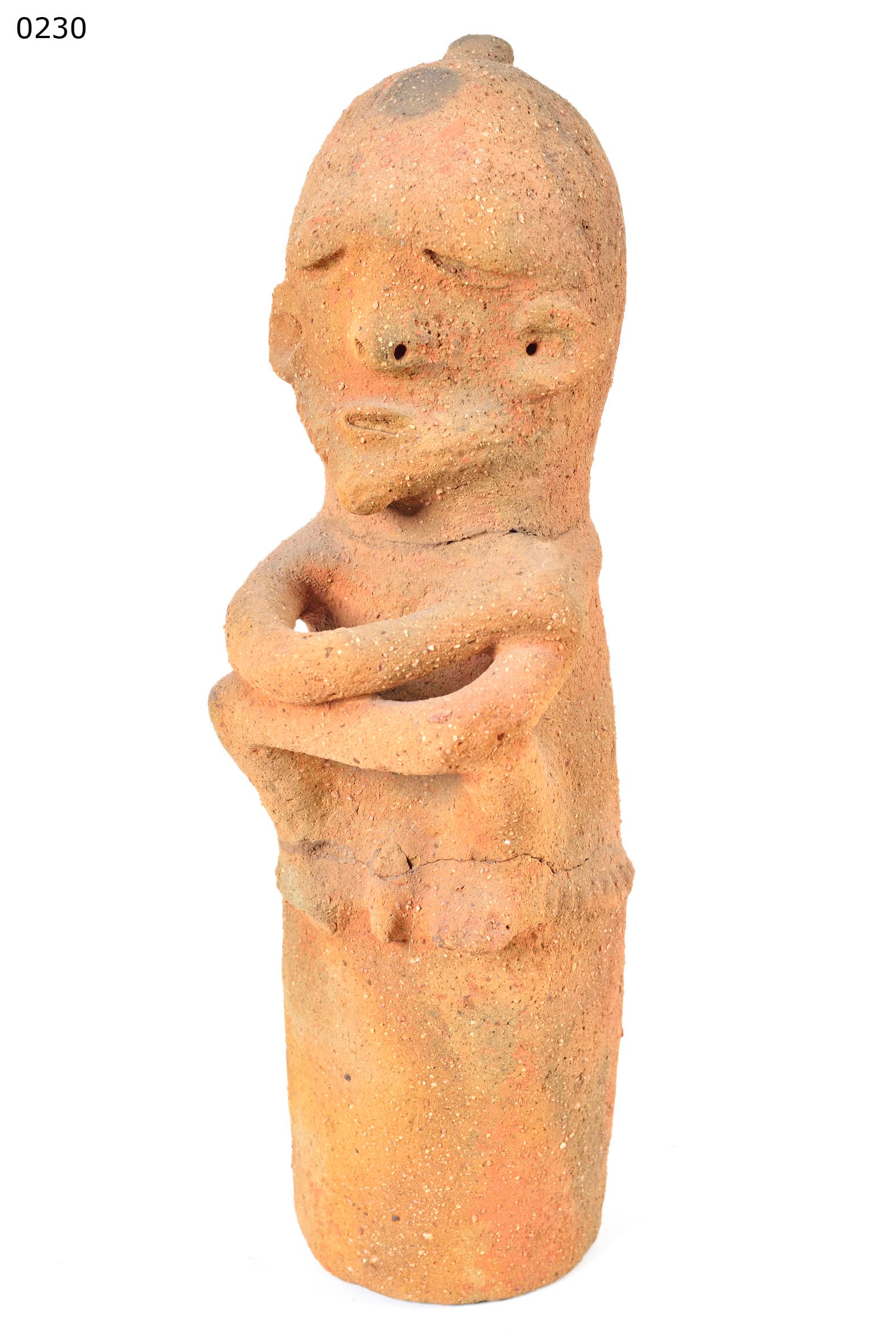
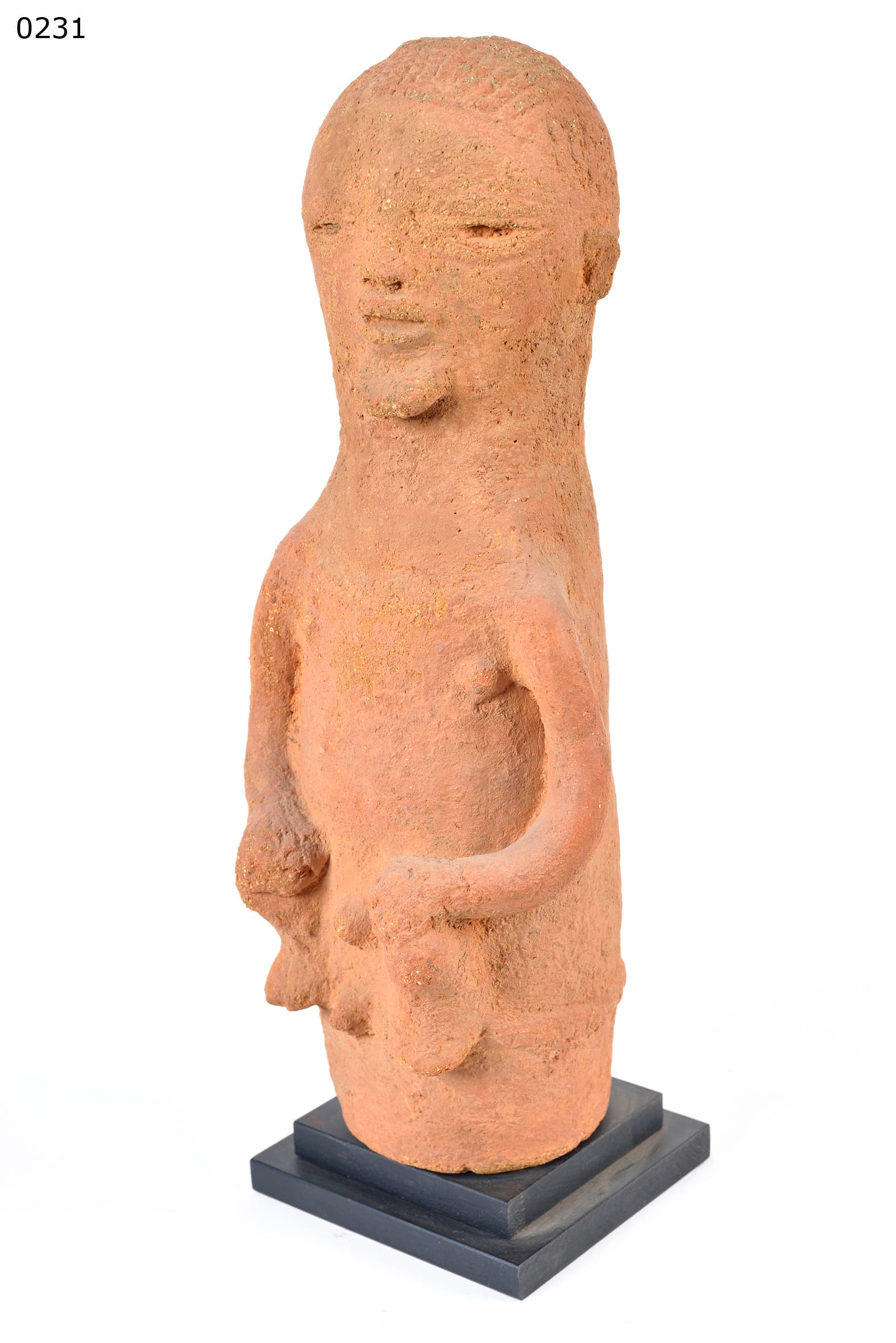
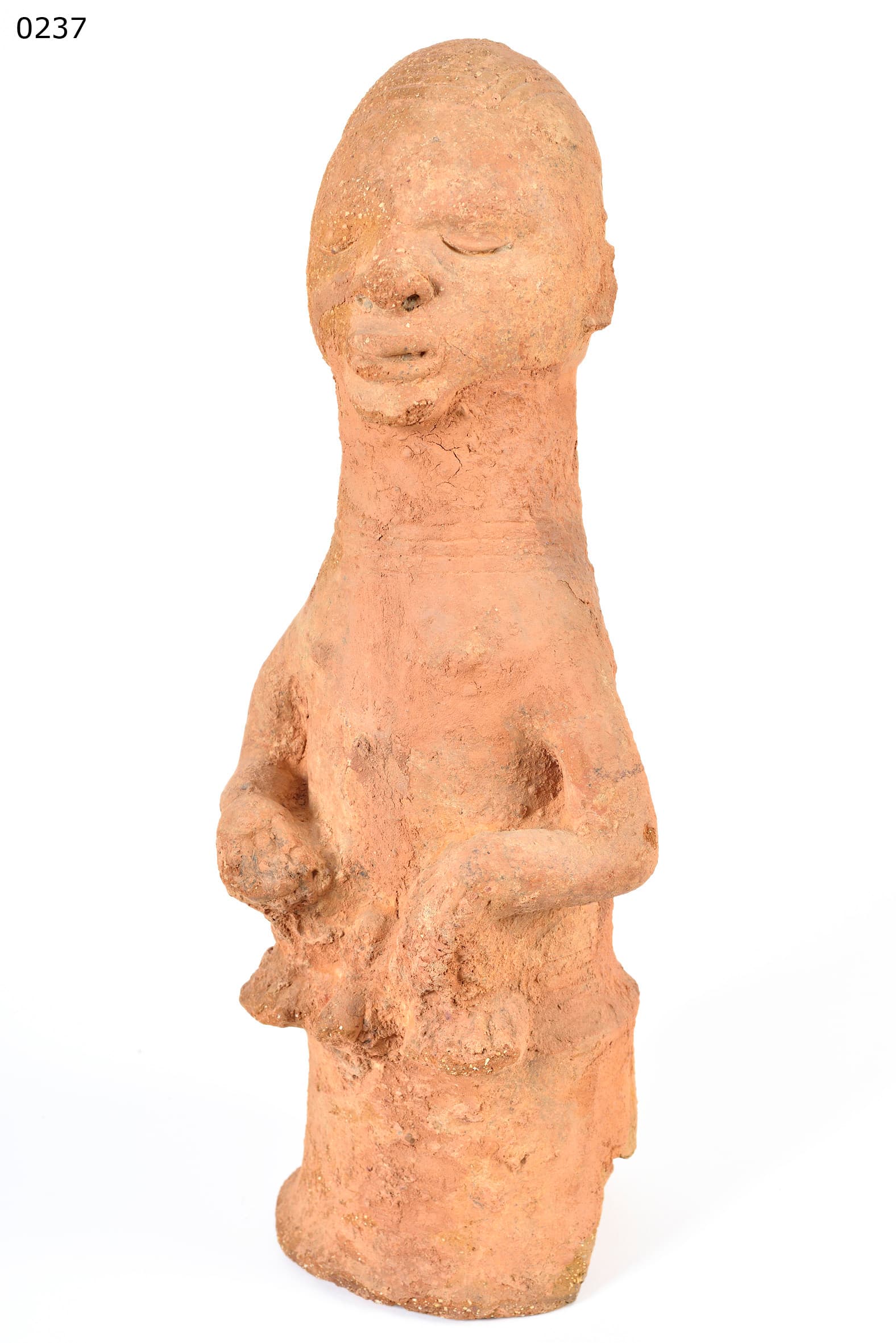
Eine röhrenförmige Terrakottafigur (ca. 2.000 Jahre alt, 45 cm) aus dem nigerianischen Katsina - ein runder, ausdrucksstarker Kopf mit einer auffälligen, strukturierten Frisur oder Kappe, die Arme ruhen fest auf der unteren Taille, der rötlich-braune Ton ist stark strukturiert, vollständig von seinem ursprünglichen Schlicker befreit und stark abgenutzt.
1. Kopfbedeckung und Status in der Eisenzeit
Diese Figur hält sich zwar an die strenge röhrenförmige Abstraktion des Katsina-Stils, unterscheidet sich aber durch die aufwendige Ausarbeitung des Kopfes.
- Texturierte Kappe oder Frisur: Die auffällige Kopfbedeckung verweist vermutlich auf einen elitären sozialen Status, Reichtum oder einen speziellen Initiationsrang.
- Kopf als Sitz der Macht: In den alten nigerianischen Kulturen hob die Veränderung des Kopfes durch komplexe Frisuren oder Kopfbedeckungen das Individuum visuell über die gewöhnliche Bevölkerung hinaus - Kopfbedeckung war sichtbar gemachte Zivilisation.
2. Begräbnis- oder Schreingefäße
Zeitgleich mit den Nok (ca. 500 v. Chr. - 200 n. Chr.) waren Katsina-Figuren dieser Größenordnung vermutlich ein zentraler Bestandteil komplexer Leichenzusammenstellungen.
- Entschlossene Wachsamkeit: Die fest in die Hüfte gestemmten Arme vermitteln eine Haltung der entschlossenen Präsenz und ewigen Wachsamkeit.
- Ewiges Surrogat: Mit dem Verstorbenen begraben oder in unterirdischen Altären aufgestellt, diente die Figur vermutlich als Surrogat, das den Status und die Macht des Ahnen bewahren sollte.
3. Starker keramischer Abrieb
Die Spuren des hohen Alters sind deutlich auf der Oberfläche ablesbar.
- Aufgelöster Schlicker: Extremer Abrieb hat die glatte äußere Brennhaut entfernt und die grobe sandige Innenmatrix und Quarzeinschlüsse freigelegt.
- Eingebetteter Boden: Tiefe Mikrolöcher und die dauerhafte Verschmelzung alter nigerianischer Böden in den Vertiefungen des Gesichts und der Arme stützen die Authentizität und sprechen für ein hohes archäologisches Alter.
Zusammenfassung
Diese Katsina-Figur ist ein charakteristisches Beispiel für die frühe nigerianische Terrakotta-Kunst und strahlt die Aura einer antiken, entschlossenen Autorität aus. Die komplizierte Kopfbedeckung und der tiefe Oberflächenabrieb sprechen für das hohe Alter dieser außergewöhnlichen Antiquität.
KI-unterstützt erstellt aus Sammlungsgutachten, Objektfotografie und eigener Recherche, redaktionell geprüft. Fehler sind möglich — Hinweise darauf sind uns willkommen. Zum Verfahren →