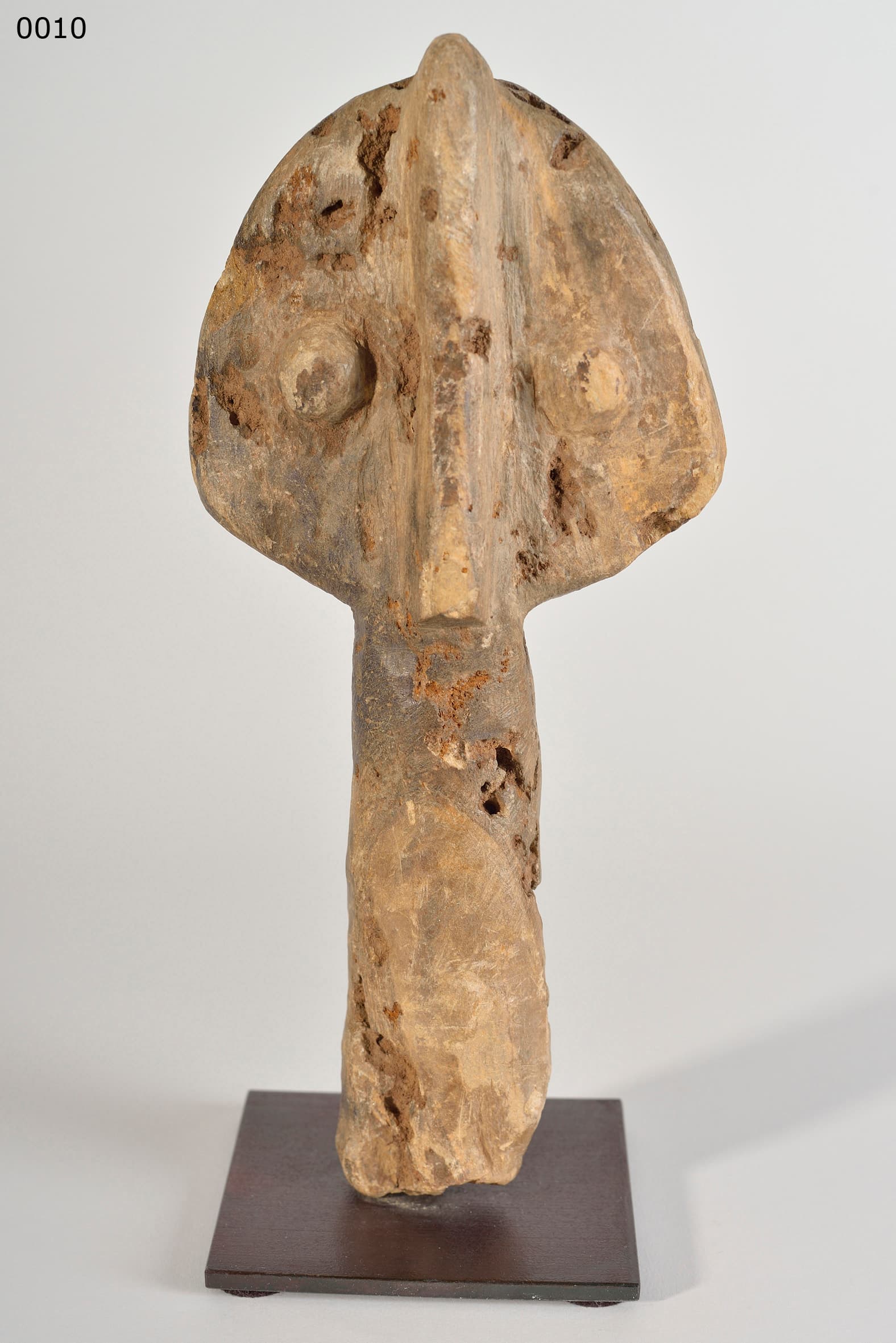
Ein hoher, geschnitzter lithischer Monolith (3.-11. Jh., 40 cm) aus der Bura-Kultur von Niger/Burkina Faso - spitz zulaufende Phallusform mit stark erodierten abstrakten Gesichtszügen im Flachrelief. Der unglaublich schwere, dichte Stein ist durch geologische Erosion stark zerklüftet, zerkratzt und texturiert.
1. Lithische Denkmäler aus dem Niger-Tal
Während die Bura vor allem für ihre Terrakotta-Urnen bekannt sind, pflegten sie parallel dazu auch eine spezialisierte Tradition der Steinmetzkunst für Bestattungszwecke.
- Unnachgiebiges Medium: Der örtliche Stein verlangte eine reine, brutalistische Geometrie - der Schnitzer konnte sich nicht mit feinen Details abgeben.
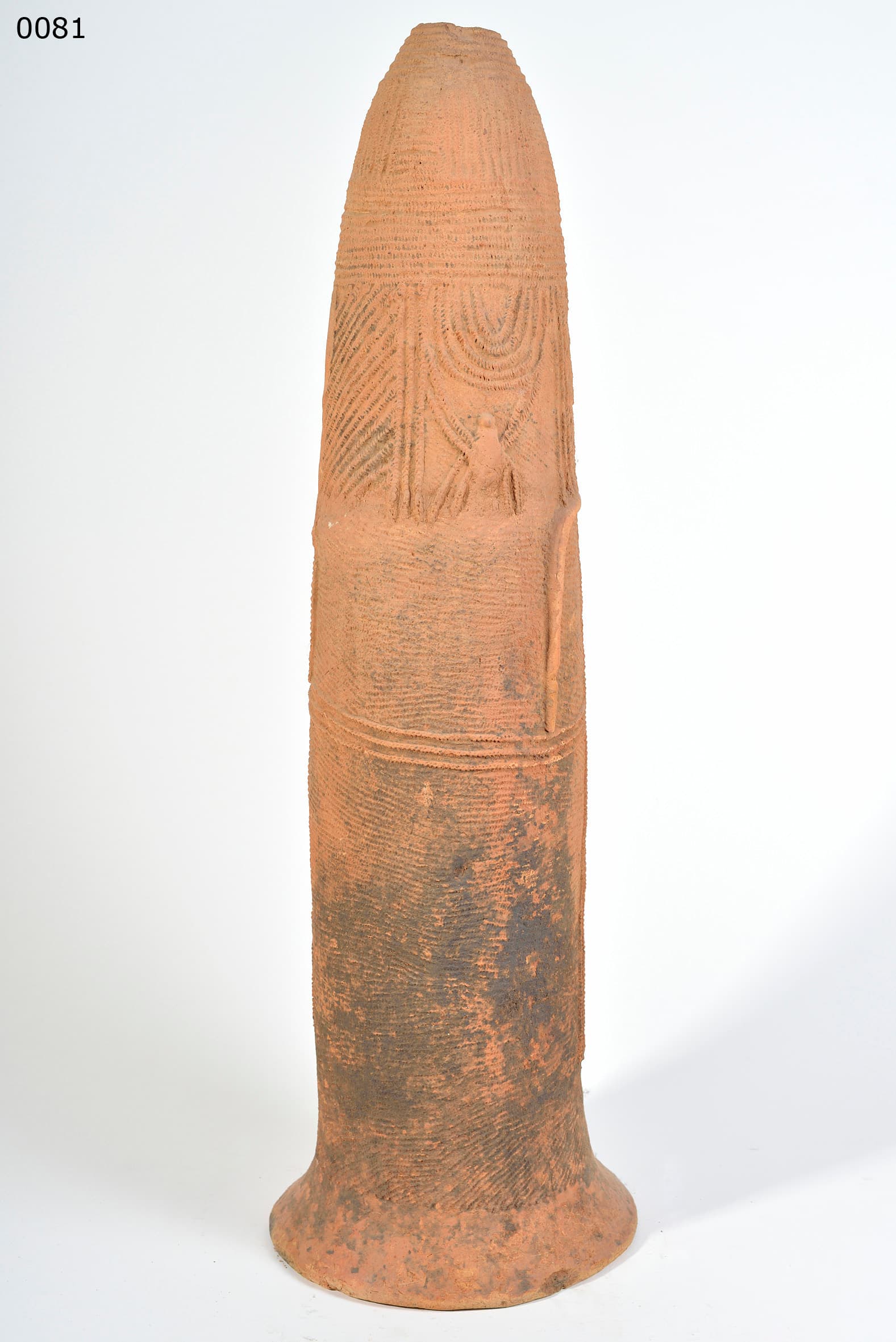
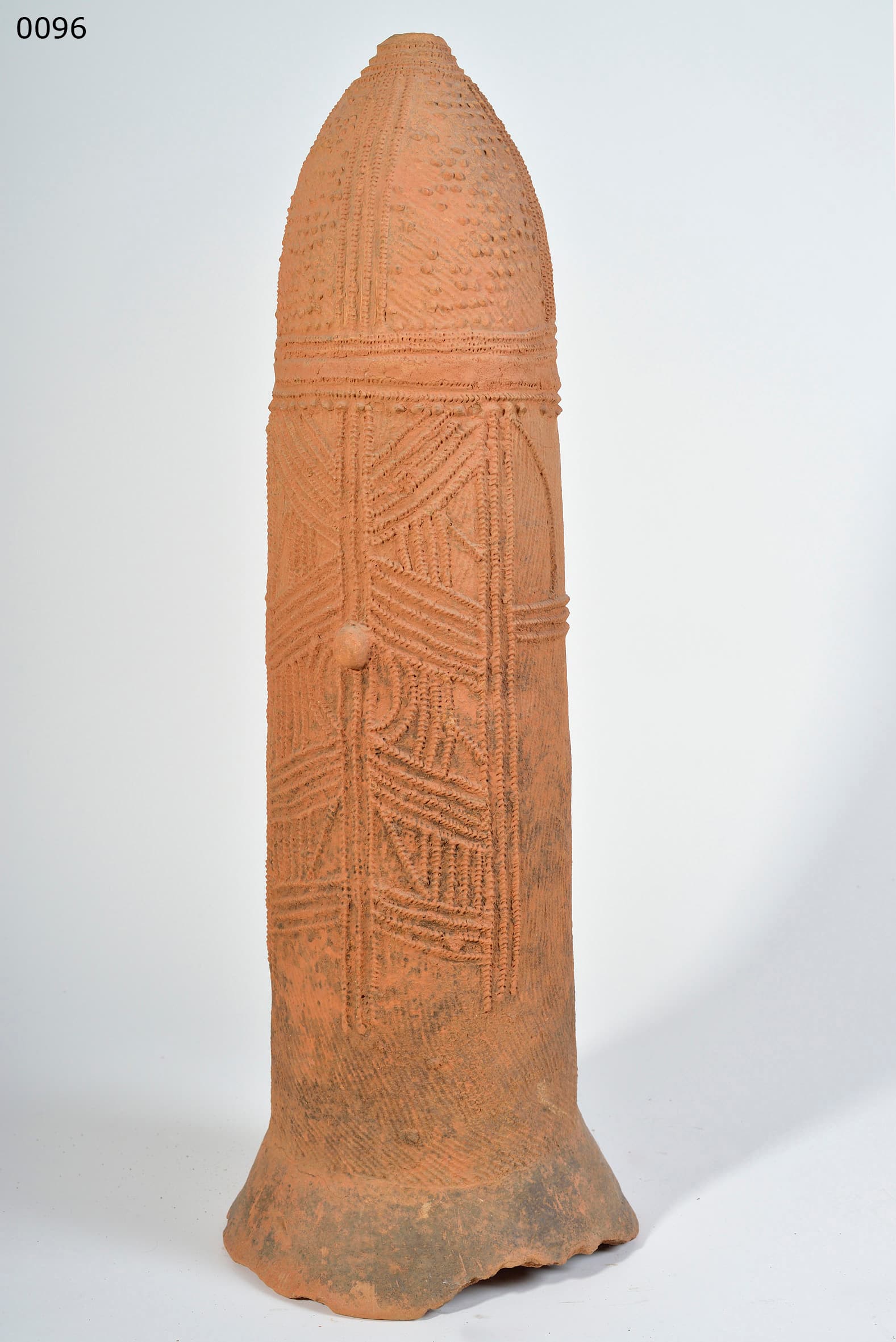
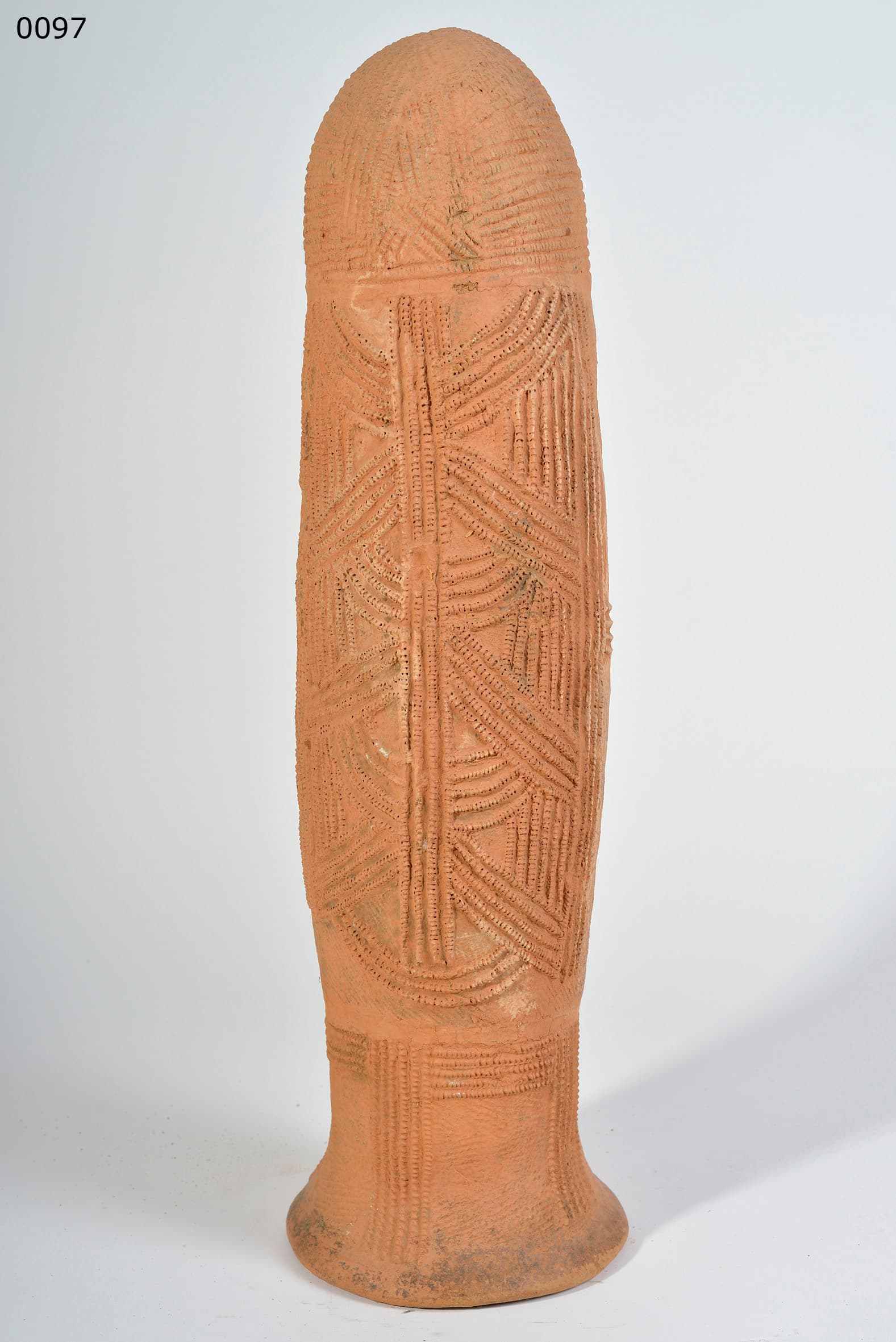
- Kontinuität der Silhouette: Die Künstler behielten dieselbe phallische Ahnensilhouette bei, wie sie in den Keramikgefäßen zu sehen ist, übersetzten sie aber in ein Medium, das absolute Beständigkeit in die sahelische Landschaft projiziert.
2. Ewige Wächter der Nekropole
Diese schweren Steinfiguren, die vertikal an den Köpfen der Gräber in den riesigen Bura-Gräbern aufgestellt wurden, dienten als ewige Wächter.
- Seelenanker: Der Stein verankerte buchstäblich die wandernde Seele des Verstorbenen und hielt sie für die Lebenden für Gebete und Opfergaben zugänglich.
- Unsterblich, wo Lehm versagt: Im Gegensatz zu Terrakotta, die zerbrechen kann, garantiert Stein die dauerhafte Integration des Ahnen in die spirituelle Geografie der Gemeinschaft.
3. Geologische Taphonomie und Winderosion
Die physische Degradierung spricht für ein hohes Alter.
- Schwammartige Oberfläche: Im Laufe von etwa einem Jahrtausend haben abrasive Wüstenwinde und saisonale Monsunregen die weicheren Mineraleinschlüsse aufgelöst.
- Wissenschaftliche Indizien: Die daraus resultierende kraterartige Textur verweist auf geologische Taphonomie – Merkmale, die für archäologische Überreste im Vergleich zu modernen lithischen Reproduktionen charakteristisch sind.
Zusammenfassung
Diese Grabfigur aus Bura-Stein ist ein Monument antiker Beständigkeit und bietet einen seltenen Einblick in die frühen lithischen Traditionen Westafrikas. Ihre tiefgreifende geologische Verwitterung und ihre elementare phallische Geometrie machen sie zu einem faszinierenden archäologischen Schatz.
KI-unterstützt erstellt aus Sammlungsgutachten, Objektfotografie und eigener Recherche, redaktionell geprüft. Fehler sind möglich — Hinweise darauf sind uns willkommen. Zum Verfahren →