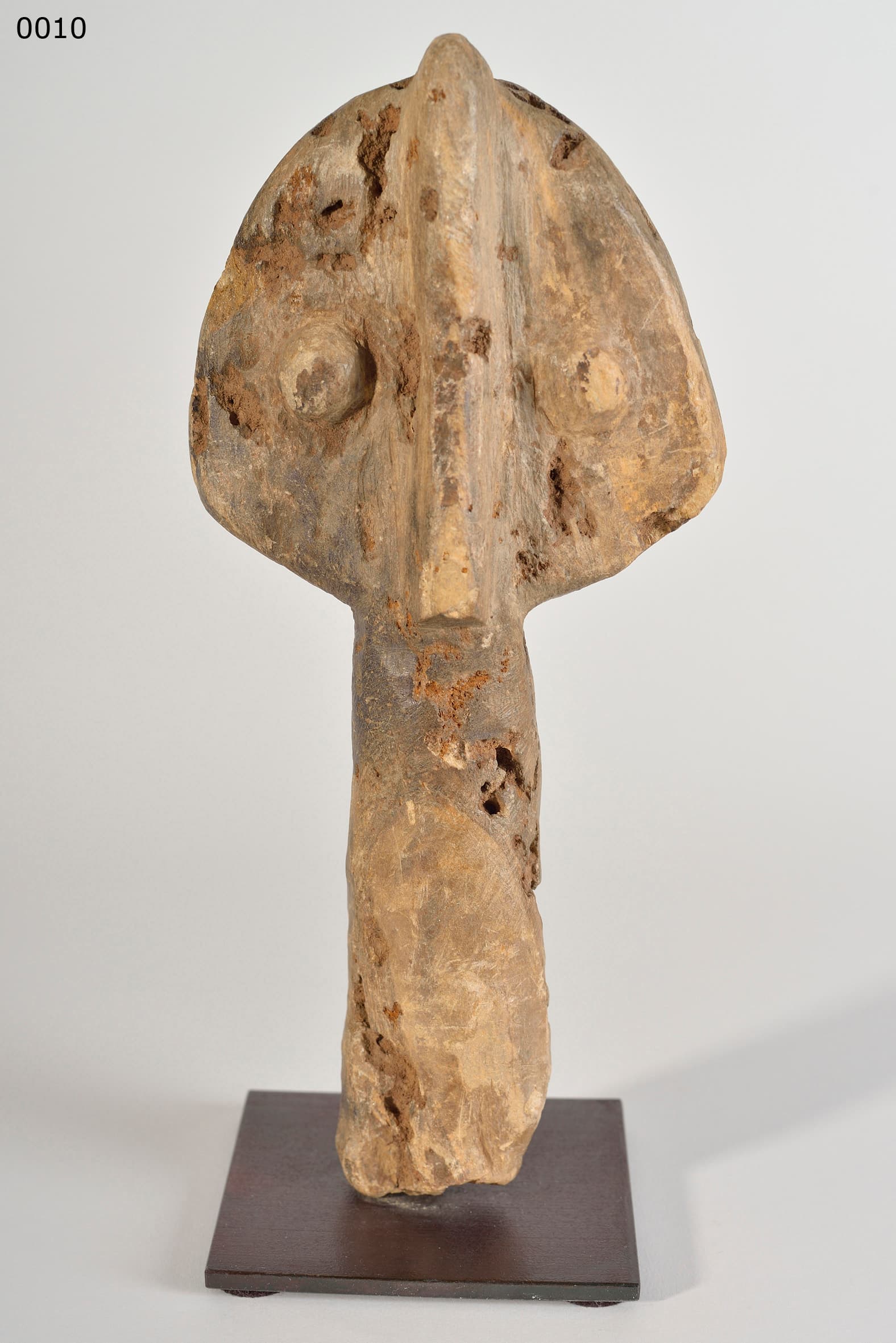
Ein hoher antiker Grabmonolith aus Stein (3.-11. Jh., 46 cm) aus Bura in Niger/Burkina Faso - ein phallischer Pfosten mit Gesichtszügen, die in der Nähe des Scheitelpunkts in Flachrelief eingemeißelt sind. Der dichte, helle Stein ist stark entsteint, verkrustet und geologisch degradiert.
1. Lithisches Gegenstück zu den Bura-Urnen
Neben den berühmten Terrakotta-Urnen gab es in den Nekropolen von Bura-Asinda auch eine hochentwickelte lithische Tradition.
- Übersetzte Ästhetik: Die Steinfiguren übersetzen das zentrale Bura-Vokabular - strenge röhrenförmige Abstraktion und minimale Gesichtsgeometrie - in ein unnachgiebiges, ewiges Medium.
- Phallische Standardform: Dieses 46 cm große Exemplar folgt der kanonischen Bura-Silhouette: ein röhrenförmiger Pfosten, dessen Reliefgesicht das Stück eher als menschlichen Vorfahren denn als rein abstrakte Markierung verankert.
2. Wächter der Nekropole
Dieser Monolith wurde senkrecht in die Gräberfelder des unteren Nigers gepflanzt und diente als unsterblicher Wächter.
- Seele an den Ort gebunden: Der Stein band die wandernde Seele physisch an die Grabstätte und verwandelte den Friedhof in eine aktive spirituelle Landschaft.
- Lokalisierter Ahnen-Avatar: Indem der Stein ein Gesicht bekam, schuf der Steinmetz einen dauerhaft wachsamen Avatar eines bestimmten Vorfahren - die Lebenden konnten ihre Trankopfer und Gebete an einen bestimmten Geist richten, anstatt sich an ein allgemeines Reich zu wenden.
3. Tausendjährige Verwitterung
Die physische Verwitterung gilt als wesentliches Indiz für das Alter des Werks.
- Verlorene Werkzeugspuren: Tausend Jahre sahelianischer Wind und saisonaler Regen haben die ursprünglichen Werkzeugspuren vollständig aufgelöst.
- Kraterförmige Haut: Die daraus resultierende kraterförmige, schwammartige Oberflächenstruktur ist kaum künstlich nachzubilden und legt eine antike Herkunft nahe.
Zusammenfassung
Dieser 46 cm große Wächter ist der größere der beiden Bura-Steinmonolithen und trägt die klassische Ikonographie der Phallusform in den oberen Bereich der Bura-Steinskala. Seine dichte, vom Wind zerkratzte Oberfläche stützt die Annahme einer Entstehung im ersten Jahrtausend vor Christus.
KI-unterstützt erstellt aus Sammlungsgutachten, Objektfotografie und eigener Recherche, redaktionell geprüft. Fehler sind möglich — Hinweise darauf sind uns willkommen. Zum Verfahren →